
Reviewed · CASERTA ROYAL PALACE TOURS
Campania: Royal Palace of Caserta Guided Private Tour
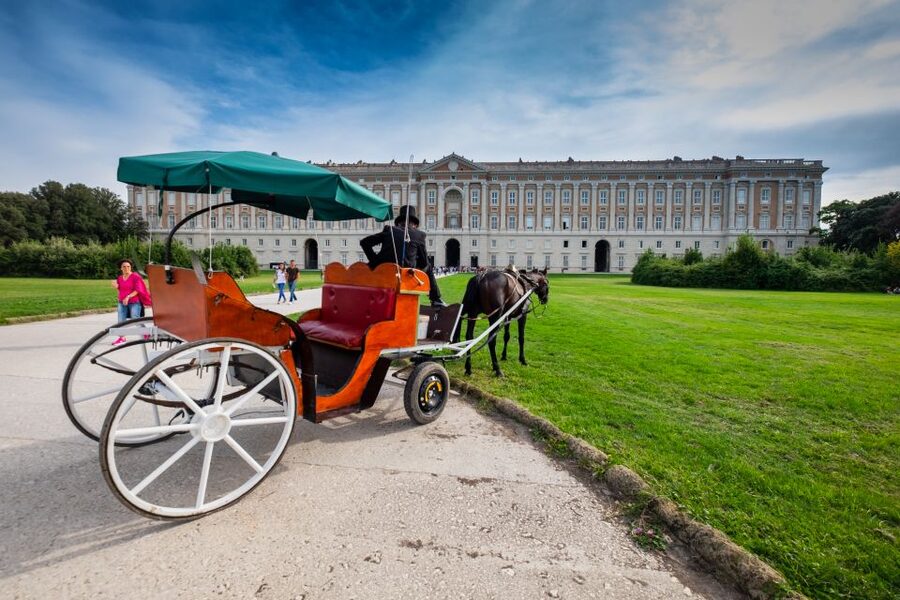
Caserta’s Royal Palace is not simply a grand home. It is a carefully planned show of royal power, with 1,200 rooms, 34 staircases, and 1,970 windows. A two-hour private tour gives you a clear route through the palace’s most important spaces without leaving you to guess which gilded door matters.
I like the 116-step marble staircase and the way it leads through the atrium toward the upper vestibule and Palatine Chapel. I also like the mix of Rococo decoration and Neoclassical order, plus the chance to see both the King’s apartment and Murat’s apartment. Guides named Anna and Serena have been singled out for clear explanations, warmth, and special care with young children.
The main drawback is time. Two hours is enough for a focused look at the palace, but not for every room or the full royal grounds. You will also need to arrange your own transportation, food, and drinks, and the tour is not suitable for wheelchair users.
In This Review
- Key points about the Caserta palace tour
- Why Caserta’s scale changes the visit
- The 116-step staircase makes the first impression
- The Palatine Chapel and upper vestibule
- Rococo rooms meet Neoclassical order
- What the King’s and Murat’s apartments add
- Why a private guide is worth the $47 price
- How to use the two hours well
- Guides, languages, and the human side of the visit
- Who should book this Caserta tour?
- Should you book it?
- FAQ
- How long is the Royal Palace of Caserta guided tour?
- Where does the tour meet?
- What does the tour include?
- Is transportation included?
- Which languages are available?
- Is the tour suitable for wheelchair users?
Key points about the Caserta palace tour

- The palace is enormous: You see selected rooms from a complex containing 1,200 rooms and 34 staircases.
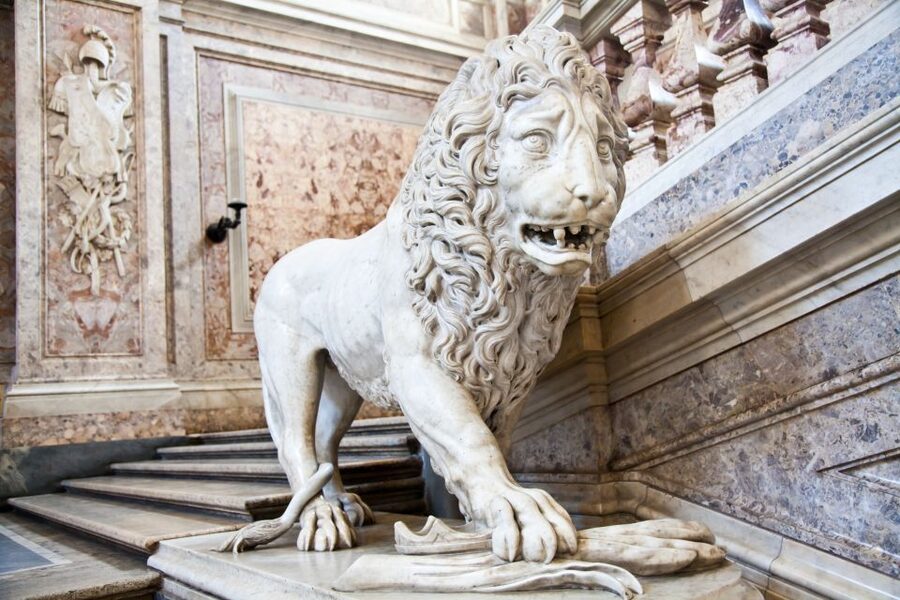
- The grand staircase is the visual high point: Its 116 marble steps and statues create the first great palace reveal.
- Two royal apartments bring the past closer: The King’s apartment and Murat’s apartment show different chapters of court life.
- A guide adds useful context: The decoration is easier to understand when someone explains the painters, cabinet makers, and Bourbon rulers behind it.
- Private touring keeps the pace flexible: A private group is available, with guides in six languages.
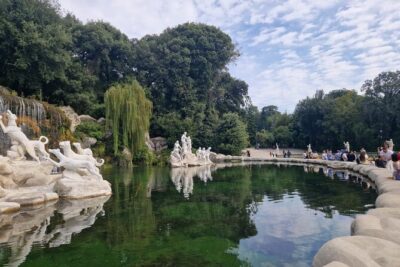
- The palace deserves more than a quick glance: After the guided portion, you have time remaining to visit the gardens on your own.
Why Caserta’s scale changes the visit
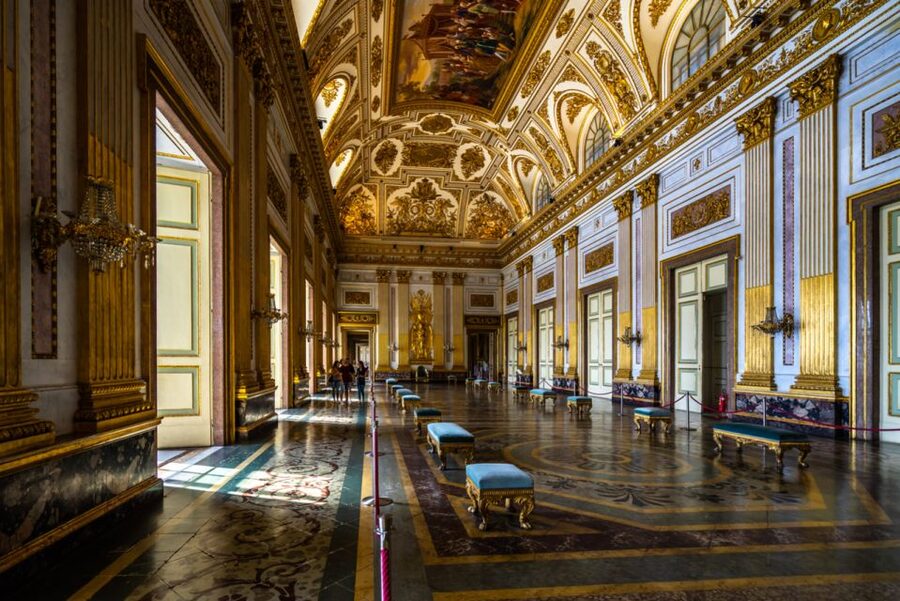
The Royal Palace of Caserta was commissioned by King Charles of Bourbon in 1751. His aim was not to build a modest country retreat. The palace was designed to compete with the great royal residences of Europe, and its size tells you plenty about Bourbon ambition.
You can feel that ambition before reaching the decorated apartments. The main building contains 1,200 rooms, connected by 34 staircases and lit by 1,970 windows. Those figures are not just trivia. They explain why a first visit can feel confusing without a route or some help deciding where to look.
A two-hour tour is therefore a sensible introduction rather than a complete survey. You see selected spaces with a guide explaining why they matter. I prefer this approach to wandering through a giant palace and remembering only the biggest chandelier.
The tour begins at Piazza Carlo di Borbone, at the main entrance portal under the flags. Look for the guide holding an ASKOS TOURS sign. This meeting point is straightforward, but you should arrive ready to start promptly because the palace is large and the tour has a fixed two-hour window.
More Caserta palace trips:
- Naples: Royal Palace and Monumental Area Small Group Tour
★ 4.8 · 1,191 reviews - Caserta Royal Palace & Gardens Small Group Tour with Shuttle
★ 4.9 · 632 reviews - Caserta: Small-Group Royal Palace Tour
★ 4.8 · 461 reviews
The 116-step staircase makes the first impression
The atrium’s grand staircase is the palace’s natural opening scene. It rises 116 steps and is framed by marble statues, giving you a strong sense of ceremony before you reach the upper vestibule.
This is the point where architecture becomes theater. The staircase was not made merely to move people between floors. It was designed to make an entrance feel important. As you look upward, notice how the scale controls your attention and turns a practical route into a royal display.
A guide can help you read the space rather than simply photograph it. You will learn how the building’s design supported the image of the Bourbon court and how the decorative details fit into the wider palace plan.
The stairs may also be the first practical test of the tour. The activity is not suitable for wheelchair users, and anyone who finds long stairways difficult should take that seriously. The supplied information does not specify an alternative accessible route, so ask before booking if mobility is a concern.
The Palatine Chapel and upper vestibule
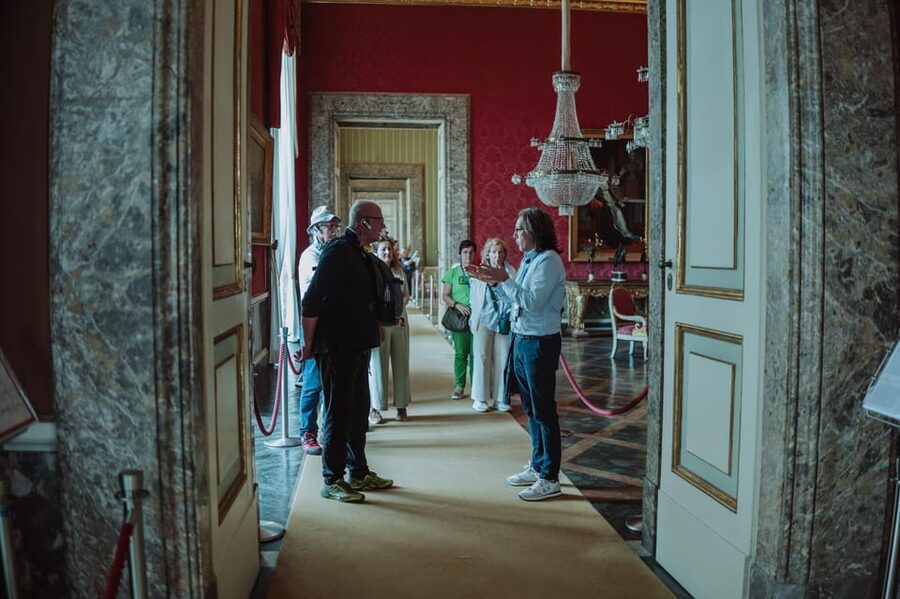
At the top of the staircase, the route reaches the upper vestibule and Palatine Chapel. The chapel has vaulted ceilings and gilded rosettes, a combination that shifts the mood from grand public entrance to formal worship.
The chapel matters because it shows how closely court life and religious ceremony were linked. The decoration is not isolated from the palace’s larger message. It forms part of the royal setting, where architecture, ritual, and rank worked together.
You may find the chapel more rewarding after seeing the staircase first. The transition gives you a useful contrast: the staircase is broad and dramatic, while the chapel draws your eyes upward into its ceiling details. This is one reason a live guide helps. Without context, it is easy to give every ornate surface the same quick glance.
The tour is offered in English, Spanish, Italian, French, German, and Portuguese. Choose the language in which you can best follow art and architectural explanations, since the value of the visit depends heavily on understanding what you are seeing.
Rococo rooms meet Neoclassical order
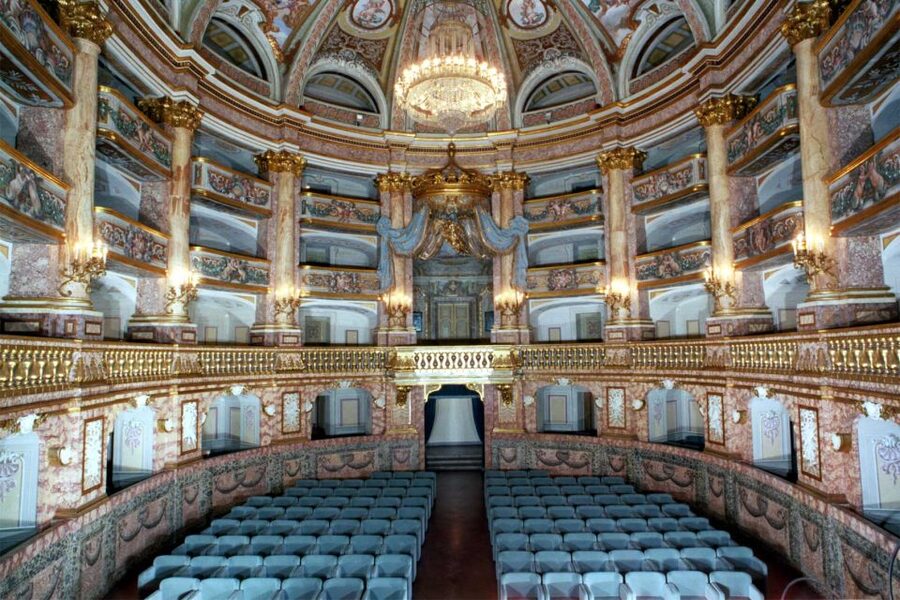
The royal apartments are decorated in both Rococo and Neoclassical styles. That pairing gives the tour more range than a single stretch of lavish decoration.
Rococo tends toward lightness, ornament, and elaborate detail. Neoclassical design brings a more controlled sense of proportion and classical reference. You do not need a background in art to enjoy the contrast, but it helps to have a guide point out the change in mood, shape, and decoration from one room to another.
The rooms also show the work of highly skilled painters and cabinet makers. Look beyond the broad impression of gold and marble. Furniture, wall surfaces, painted elements, and ceiling details all contributed to the palace’s final effect. The point was not simply to fill rooms with expensive objects. The court wanted every part of the interior to support its image.
The King’s apartment is a key stop. It brings the palace’s grand design back to the person who commissioned the project and the court he represented. Murat’s apartment adds another layer, linking the palace to a different period of rule. Seeing both helps you understand that the building was not frozen in one moment.
A few more Naples trips worth weighing up
- Exclusive Naples Private Food Tour: 6 or 10 Tastings
★ 5.0 · 596 reviews - Private Day Tour: Sorrento, Positano, Amalfi, Ravello from Naples
★ 4.5 · 546 reviews - Private Day tour of Positano, Amalfi and Ravello from Naples
★ 5.0 · 522 reviews - Private Amalfi Coast Tour – Enjoy it with our local english speaking driver
★ 5.0 · 475 reviews
What the King’s and Murat’s apartments add
The King’s apartment represents Bourbon authority and the original royal purpose of the palace. It is where the grand architectural plan becomes more personal, through rooms designed for royal living, ceremony, and display.
Murat’s apartment offers a useful comparison. The tour does not treat the palace as a single ruler’s time capsule. Instead, you see how later occupants and political changes left their mark on the residence.
This is where a good explanation can make a major difference. A room may look beautiful on its own, but the story behind its use gives it more weight. The information supplied for this tour places strong emphasis on explaining the important details and the history behind them. That is exactly the kind of guidance I want in a palace, where decorative overload can otherwise blur together.
Families may find this route workable. Serena is specifically praised for keeping two children, ages five and six, involved while explaining the palace. That does not mean every child will enjoy two hours of interiors, but it suggests the private format can allow a guide to adjust attention and storytelling for a family group.
Why a private guide is worth the $47 price
At $47 per person, this is not the cheapest way to enter Caserta. The value comes from combining admission, skip-the-line access, and private guidance in a place too large for a quick unscripted visit.
The skip-the-line feature matters most when the ticket queue is long. You are not paying only for a person to walk beside you. You are buying a more organized start and a focused explanation of the palace’s main spaces.
The private format is especially useful for families, couples, and small groups with a shared interest in architecture or royal history. You can ask questions as you go, and the guide can give more attention to your group than a large public tour normally allows.
Still, the price is easier to justify if you want interpretation. If you mainly want to enter, walk at your own pace, and read signs, a guided visit may feel less essential. The palace is visually impressive even without commentary, but its scale and many styles make it harder to understand on your own.
The tour includes private guidance and skip-the-line admission fees. Transportation, food, and drinks are not included. Plan your route to Caserta separately and do not expect the tour price to cover a meal or transfer.
How to use the two hours well

The itinerary is simple: meet at the main entrance, then spend two hours inside the Royal Palace of Caserta with your guide. That simplicity is useful because you are not losing time moving between unrelated sites.
The guide’s route focuses on the palace’s major architectural and royal highlights. Expect the staircase and Palatine Chapel early in the experience, followed by selected royal apartments and other decorated spaces, including the King’s apartment, Murat’s apartment, and the court theater.
Because the palace contains so much, the tour cannot cover all 1,200 rooms in two hours. Think of it as a carefully chosen introduction. If you want to examine every apartment or spend long periods studying individual furnishings, you will need more time after the guided part.
One practical advantage is that the tour can leave you with time to continue independently. Enrico specifically notes that the gardens can be visited after the guided tour. The information provided does not say that garden admission or a garden tour is included, so treat the remaining time as an opportunity for your own visit, not as part of the two-hour guided itinerary.
Wear or bring whatever helps you manage a large palace and its stairs comfortably. The supplied details do not provide a dress code or a precise amount of walking, so I would not assume the route is effortless simply because it lasts two hours.
Guides, languages, and the human side of the visit
The guide can make or break a palace tour. Here, Anna is described as capable and available, while Serena is praised for expertise, humor, and close attention to children. Those details matter because they point to a style that aims to explain rather than simply recite dates.
You can book the live tour in English, Spanish, Italian, French, German, or Portuguese. A private group is available, which makes the language choice and group arrangement more personal than a standard large-group visit.
I would particularly consider this tour if you are visiting with children or with someone who does not usually enjoy museums. Serena’s approach with young children suggests that a guide can turn the palace’s story into something more approachable. Just remember that private attention cannot change the basic nature of the site: it is a very large royal interior with substantial decoration and walking.
The strongest praise centers on explanation. The palace has plenty to look at, but the details can feel disconnected without a story. A guide helps you understand the people, styles, and craftsmanship behind the rooms, which is the main reason to choose this experience over a simple admission ticket.
Who should book this Caserta tour?
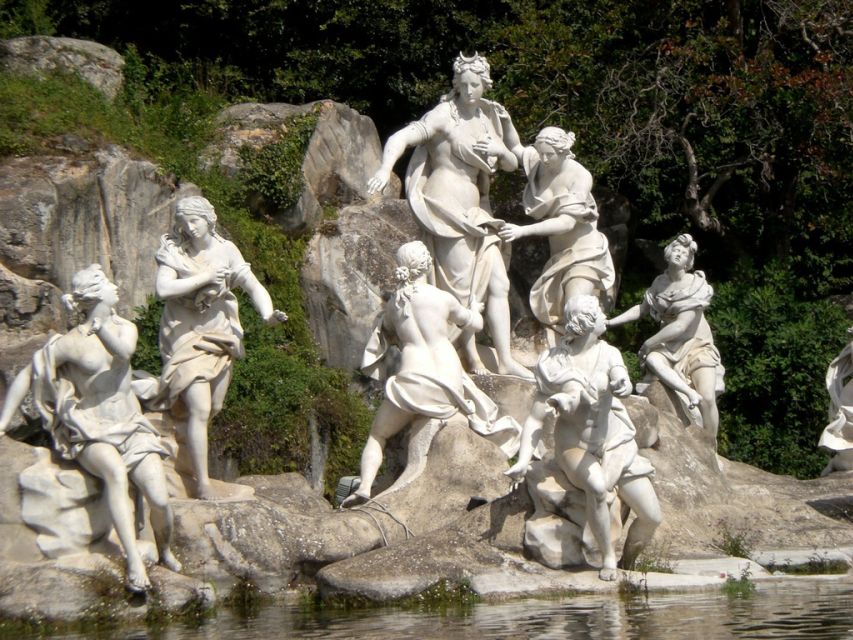
I would choose this tour if you have only a short window in Caserta and want to see the main palace interiors with a clear plan. It also suits first-time visitors who want to understand the Bourbon court, the building’s design, and the contrast between Rococo and Neoclassical decoration.
Families should give it serious thought, especially if a private guide can help keep younger children engaged. The personal format is also useful for mixed-interest groups, since you can ask questions without worrying about slowing down a large tour.
You may want another option if you use a wheelchair, since the activity is specifically marked as unsuitable for wheelchair users. You should also reconsider if your priority is a relaxed, room-by-room exploration of the whole palace. Two hours offers focus, not total coverage.
The tour has a 4.8 rating from 93 reviews, with repeated praise for the guides’ explanations, friendliness, and ability to make the palace easier to understand. I would treat that as a strong sign of consistent satisfaction, while still remembering that the experience depends on your guide, language, interests, and tolerance for a fast look at a very large building.
Should you book it?
Book this Caserta palace tour if you want skip-the-line entry plus a private explanation of the building’s finest interiors. The grand staircase, Palatine Chapel, royal apartments, and court theater give you plenty to see, while the guide supplies the order and context that a palace of this size needs.
At $47 per person, it is a fair choice for a focused two-hour visit, especially for families and small groups. Allow extra time afterward for the gardens if you want to extend your visit, and arrange transportation separately. Skip it only if you need wheelchair access or prefer to explore independently without a fixed guided route.
FAQ
How long is the Royal Palace of Caserta guided tour?
The guided tour lasts two hours.
Where does the tour meet?
Meet at the main entrance portal of the Royal Palace, under the flags. The guide will hold an ASKOS TOURS sign.
What does the tour include?
The tour includes private guidance and skip-the-line admission fees.
Is transportation included?
No. Transportation, food, and drinks are not included.
Which languages are available?
The live guide is available in English, Spanish, Italian, French, German, and Portuguese.
Is the tour suitable for wheelchair users?
No. The activity is listed as not suitable for wheelchair users.
Just added around Naples
- Full-Day Tour of the Amalfi Coast and Pompeii from Naples★ 4.5 · 3 reviews
- The Ultimate Neapolitan Cooking Class with Local★ 5.0 · 3 reviews
- Naples: Old City Center Street Food Tour with Spritz★ 4.7 · 3 reviews
- Visit in Pompeii – Naples Private Tour with Ada★ 5.0 · 3 reviews
- Transfer from Naples to Sorrento or viceversa★ 5.0 · 3 reviews
- Naples: National Gallery of Capodimonte Tour★ 5.0 · 3 reviews
- Visit 2 wine producers with tasting and transportation included★ 5.0 · 3 reviews
- Naples: Mozzarella experience★ 5.0 · 3 reviews
Caserta Royal Palace Tours, compared.
Royal Palace and Monumental Area Small Group Tour
Read our review →
Caserta Royal Palace & Gardens Small Group Tour with Shuttle
Read our review →
Caserta Palace Ticket and Train with Audioguide
Read our review →Caserta Royal Palace & Gardens Small Group Tour with Shuttle
Read our review →
Royal Palace Entry Ticket with Digital Audio Guide
Read our review →
Browse the lists this tour appears in