

Reviewed · CASTLES & PALACES
Naples: National Gallery of Capodimonte Tour
Capodimonte gives you Naples through its art, its royal past, and its setting in a large park. The museum began as a palace for the Kings of Naples, and its rooms still carry that grand purpose. Inside, you move from the Farnese Collection to Neapolitan painting, then on to modern work such as Andy Warhol’s Vesuvius.
I like the private format, which lets your guide set the pace instead of shepherding you through a large crowd. I also like the range: you can see Titian, Masaccio, Raphael, Michelangelo, Caravaggio, and Warhol in one visit. The main consideration is time. Two hours gives you a strong introduction, but not a slow look at every room.
In This Review
- Key points to know before you book
- Why Capodimonte is worth your time in Naples
- Starting at the former royal palace
- The Farnese Collection and the first floor
- Neapolitan painting from the Middle Ages to Caravaggio
- The contemporary floor and Warhol’s volcano
- What the two-hour private format changes
- Ticket-line access and practical timing
- Who will get the most from this visit
- Price, flexibility, and overall value
- Should you book the Capodimonte tour?
- FAQ
- Where does the Capodimonte tour begin?
- Where does the activity end?
- How long does the tour last?
- What time does the tour start?
- What languages are available?
- Is this a private tour?
- Are museum entrance tickets included?
- Does the tour include skip-the-ticket-line access?
- Is transportation included?
- Is the museum wheelchair accessible?
- Can I cancel for a full refund?
- Can I reserve now and pay later?
Key points to know before you book

- The Farnese Collection opens the visit: See major works by Titian, Masolino, and Masaccio, along with drawings by Raphael and Michelangelo.
- Caravaggio provides the dramatic finish to the Neapolitan galleries: His Flagellation is one of the museum’s key works.
- The building is part of the attraction: You tour a former royal palace with monumental stairs and royal apartments.
- The experience is private: The listed price is $249.23 for a group of up to one person, with an English or Italian-speaking guide.
- The collection reaches the present day: Andy Warhol’s Vesuvius gives the final floor a sharp modern contrast.
- You return to the starting point: The visit begins and ends at the Museo e Real Bosco di Capodimonte, with no transportation included.
Why Capodimonte is worth your time in Naples
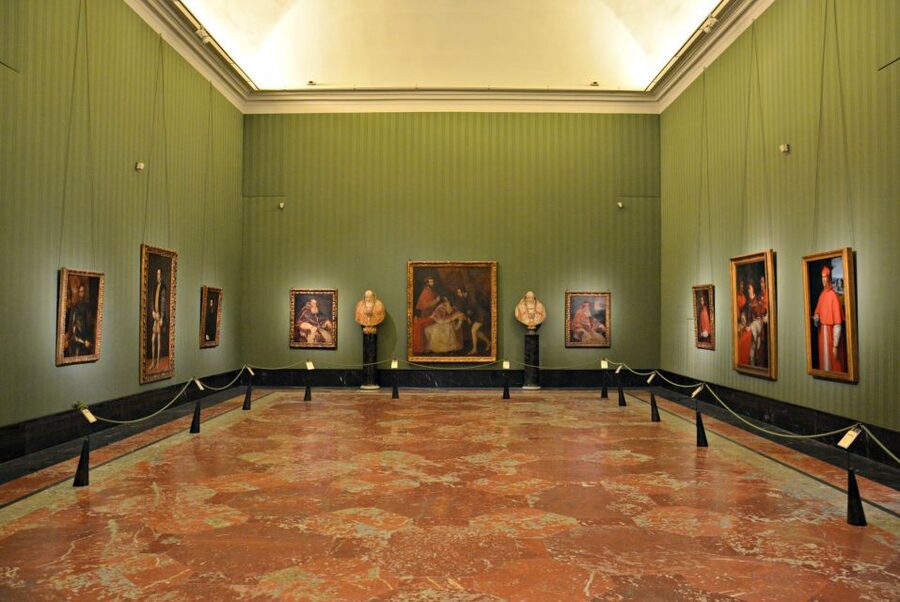
Many Naples art visits focus on churches, street life, or archaeological remains. Capodimonte offers something different. It gathers important paintings in a former royal residence, then places the whole institution inside the Museum and Royal Wood of Capodimonte.
That setting matters. You are not entering a bare gallery built only for display. The palace was designed to hold royal collections, so the architecture, scale, and arrangement are part of the visit. Monumental stairs lead you into rooms that once served the monarchy, while the park outside gives the museum some breathing room from central Naples.
I especially like the way the collection connects Naples to the wider story of European art. The first floor brings together works connected to the Farnese family and the Italian Renaissance. The second floor shifts attention to artists working in Naples. The third floor moves into contemporary art. In only two hours, you get a broad sweep instead of a narrow look at one period.
The tradeoff is simple: breadth means selectivity. You will not have time to study every painting closely. A private art historian helps solve that problem by choosing the works that best explain the collection and by giving you a clear route through a very large museum.
More castles and palaces in Naples:
- Capodimonte Museum in Naples
★ 4.0 · 115 reviews - Naples: Capodimonte Museum small group tour
★ 4.8 · 51 reviews - Naples: San Martino and Sant’Elmo Castle Guided Tour
★ 4.9 · 48 reviews
Starting at the former royal palace
Your meeting point is the Museo e Real Bosco di Capodimonte. Arrive 10 minutes before the scheduled start so you can meet your guide without cutting into the two-hour visit.
The museum’s original role shapes what you see. The building was created as a Royal Palace, with rooms intended to house the collections gathered by the Kings of Naples over many generations. That gives the visit a useful thread: the art is not a random group of famous names. It reflects the collecting habits, family connections, and political reach of the Neapolitan monarchy.
The first architectural impression is the monumental staircase. It sets a formal tone before you reach the galleries, and it helps explain why the museum feels different from a modern art center. If you enjoy historic interiors as much as paintings, make sure you give yourself a moment to look at the building rather than rushing straight to the works.
The museum is wheelchair accessible, which is important in a large palace complex. Since transportation is not included, you need to arrange your own way to the Capodimonte meeting point. The tour itself begins and ends there.
The Farnese Collection and the first floor
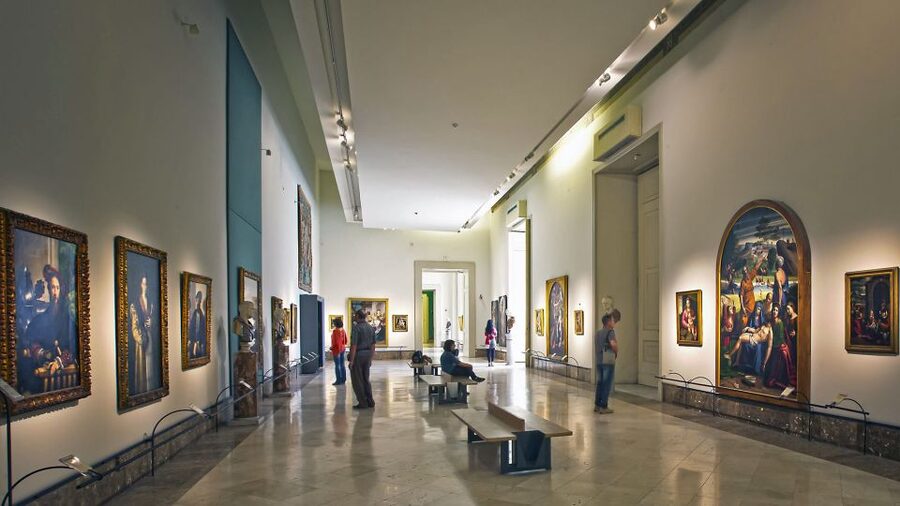
The first major section centers on the Farnese Collection. This is where the visit begins its journey through Italian art, with works linked to Titian, Masolino, and Masaccio, plus drawings by Raphael and Michelangelo.
For many people, this will be the strongest reason to book a guided visit. Famous names can blur together when you see them without context. A guide can help you understand why a Titian painting matters, how Masaccio changed the language of Renaissance painting, or why a drawing by Raphael or Michelangelo deserves careful attention even when it is not a finished altarpiece.
I like the fact that these works appear early in the route. You get the museum’s major artistic credentials right away, then have the rest of the visit to see how painting in Naples developed alongside broader Italian styles.
The rooms also show the advantage of a palace museum. You are looking at paintings in surroundings built for a royal collection, not simply moving through a neutral hallway. That does not make every room equally easy to navigate, but it gives the collection a sense of place.
The first floor ends with the Royal Apartments. This is a useful pause from the paintings. The apartments bring the royal owners back into view and help you picture how the palace functioned before it became a public museum. If architecture interests you, this part may be as memorable as the art.
Neapolitan painting from the Middle Ages to Caravaggio
The second floor changes the emphasis. Here, the collection focuses on Neapolitan art from the Middle Ages through the Renaissance and Mannerism.
This section is valuable because it keeps Naples from becoming a footnote to Florence, Rome, or Venice. You see local painting develop on its own terms, while also responding to major movements elsewhere in Italy. The path runs through several centuries, so your guide’s explanations are especially useful. Without a clear route, the changes in style can feel like a long sequence of names and dates.
The stated highlight at the end of this corridor is Caravaggio’s Flagellation. Its position gives the second floor a natural climax. Caravaggio’s work is known for forceful light, strong physical presence, and emotionally direct scenes. After moving through earlier Neapolitan painting, reaching this work helps you see how dramatic Baroque art changed the mood of religious painting.
I would not plan this tour around Caravaggio alone. The museum’s strength is the connection between periods. Still, if Caravaggio is high on your list, this painting gives the visit a clear payoff. The guide can also help you place it within the wider story of Baroque art rather than treating it as an isolated masterpiece.
The museum’s own description identifies the second floor as the home of Neapolitan art, so this is the part to prioritize if your main interest is Naples itself. You can also expect the guide to point out how local artists fit into the larger Renaissance and Mannerist picture.
More museums and sites in Naples:
- Naples: National Archaeological Museum Ticket & Audio App
★ 4.4 · 617 reviews - Naples: National Archaeological Museum of Naples Guided Tour
★ 4.8 · 498 reviews - Naples: National Archaeological Museum Tour & Digital Guide
★ 4.2 · 177 reviews - Naples: National Archaeological Museum audio guide
★ 4.0 · 155 reviews
The contemporary floor and Warhol’s volcano
The third floor brings you into the contemporary collection. This can feel like a sharp turn after Renaissance and Baroque painting, but it is one of the museum’s more useful contrasts.
The major named work here is Andy Warhol’s Vesuvius. The subject is instantly tied to the region, while Warhol’s modern treatment changes the way you think about Naples and its volcano. After seeing royal rooms and centuries of Italian painting, a contemporary image of Vesuvius shows that Capodimonte is not locked in the past.
I like ending with modern art because it prevents the visit from becoming a procession of old masters. You leave with a more complete sense of the institution, one that reaches from medieval and Renaissance work into contemporary practice.
Still, expectations matter. If you want a full contemporary art tour, two hours at Capodimonte will not provide that. The third floor is one part of a larger route, and the museum’s main emphasis remains its historic Italian and Neapolitan collections.
What the two-hour private format changes
A two-hour tour is short enough to fit into a busy Naples schedule. It is also long enough for a guided introduction to the main collection, provided you accept that this is a highlights visit rather than an exhaustive inspection.
The private format is the biggest practical advantage. You do not have to follow the interests or pace of a large group. If you want more time with Caravaggio, the Farnese works, or the royal apartments, you can use the guide’s attention where it helps you most. The experience is available in English or Italian.
The guide is described as a local art historian, which suits this museum well. Capodimonte covers too much ground for a purely general introduction. You want someone who can explain not only what you are seeing, but also why the museum brings these works together.
The small amount of available feedback points to two qualities worth emphasizing: a guide who was kind and went beyond the basic tour, and a very competent explanation in an impressive museum. I would read that as a sign that the human part of this experience matters. The paintings are already in the building. The guide determines how clearly the connections come through.
Because the price is $249.23 for a private group of up to one person, value depends heavily on your travel style. For a solo visitor who wants direct attention from an art historian, the price buys a focused visit and included admission. For a larger group, check the exact booking terms carefully, since the supplied price is specifically stated for a group up to one person and may not describe every party size.
Ticket-line access and practical timing

Entrance tickets are included, and skip-the-ticket-line access is provided. That saves you from spending part of a short visit dealing with admission arrangements.
You should still arrive 10 minutes early. The tour does not include transportation, so you are responsible for reaching Capodimonte and returning from the same meeting point after the visit. The activity ends where it starts, which makes it easier to plan around another Naples activity if you allow enough time for the journey.
Check availability for the actual starting times. The experience lasts two hours, but the available schedule is not specified in the supplied details. That matters if you are fitting Capodimonte between other reservations.
A short break and photo stop are included in the itinerary. Since the museum is in the Royal Wood of Capodimonte, the setting gives you a chance to appreciate more than the interior galleries. The main focus remains the guided museum visit, so do not treat this as a full park tour.
Who will get the most from this visit
I would choose this tour if you want an organized introduction to Italian art and do not want to spend your limited Naples time sorting out a large museum on your own.
It is especially well suited to:
- Solo visitors who value private attention from a guide
- Couples or families interested in different periods of art
- First-time visitors to Capodimonte
- People who want Renaissance, Baroque, Neapolitan, and contemporary art in one route
- Anyone who appreciates historic buildings as well as paintings
- Visitors who need wheelchair-accessible arrangements
It may be less suitable if you want to spend a full morning with a single artist or period. It may also feel too short if your ideal museum visit includes long, quiet study in every gallery. In that case, the two-hour format works best as a carefully chosen introduction.
The tour is also not designed to handle your transport. You need to plan that part yourself. That is not a serious problem, but it is an important detail because Capodimonte is not simply a museum you reach as part of this package.
Price, flexibility, and overall value
At $249.23 for a group up to one person, this is a premium private visit rather than a budget museum entry. The value comes from the combination of admission, ticket-line access, a dedicated art historian, and a route through one of Italy’s major collections.
For one person, the cost is high if you only want to enter the museum and look around. You can get more from it if you care about the meaning behind the works and want help choosing where to focus. The private format also matters more here than it would in a small gallery because Capodimonte covers several floors and centuries of art.
The two-hour limit keeps the price from turning into an all-day commitment. You can see the Farnese Collection, the Royal Apartments, the Neapolitan galleries, Caravaggio, and the contemporary floor without giving up the rest of your day in Naples.
Free cancellation up to 24 hours before the start adds useful flexibility. You can also reserve now and pay later, which helps when your Naples schedule is still shifting. These policies do not change the art itself, but they reduce the risk of booking a costly private activity too early.
Should you book the Capodimonte tour?
Book it if you want a clear, private route through a large museum and you value expert explanation more than the lowest possible price. The strongest reasons are the Farnese Collection, Caravaggio’s Flagellation, the former royal interiors, and the surprising final turn toward Warhol.
Skip it if you prefer to wander alone, need more than two hours for close study, or are looking for transportation as part of the package. For the right visitor, this is a smart way to make sense of Capodimonte without getting lost in its scale. It gives you the major works, the royal setting, and a sharper understanding of how Naples fits into Italian art.
FAQ
Where does the Capodimonte tour begin?
The tour begins at the Museo e Real Bosco di Capodimonte.
Where does the activity end?
The activity ends back at the starting point, the Museo e Real Bosco di Capodimonte.
How long does the tour last?
The guided visit lasts two hours.
What time does the tour start?
Starting times depend on availability. Check the schedule when selecting your date.
What languages are available?
The live guide is available in English or Italian.
Is this a private tour?
Yes. The activity is offered as a private group experience.
Are museum entrance tickets included?
Yes. Entrance tickets are included in the tour.
Does the tour include skip-the-ticket-line access?
Yes. Skip-the-ticket-line access is included.
Is transportation included?
No. You need to arrange your own transportation to and from the meeting point.
Is the museum wheelchair accessible?
Yes. The activity is listed as wheelchair accessible.
Can I cancel for a full refund?
Yes. You can cancel up to 24 hours in advance for a full refund.
Can I reserve now and pay later?
Yes. The reserve-now, pay-later option lets you hold the booking without paying at the time of reservation.
Just added around Naples
- Full-Day Tour of the Amalfi Coast and Pompeii from Naples★ 4.5 · 3 reviews
- The Ultimate Neapolitan Cooking Class with Local★ 5.0 · 3 reviews
- Naples: Old City Center Street Food Tour with Spritz★ 4.7 · 3 reviews
- Visit in Pompeii – Naples Private Tour with Ada★ 5.0 · 3 reviews
- Transfer from Naples to Sorrento or viceversa★ 5.0 · 3 reviews
- Visit 2 wine producers with tasting and transportation included★ 5.0 · 3 reviews
- Naples: Mozzarella experience★ 5.0 · 3 reviews
- Pompeii Vesuvius Sorrento from Naples★ 5.0 · 3 reviews
Castles & Palaces, compared.



Naples Saint Elmo’s Castle Skip the Line Entry Ticket
Read our review →

Browse the lists this tour appears in