
Reviewed · POMPEII TOURS
Castellammare di Stabia: Mount Vesuvius & Pompeii Ruins Trip
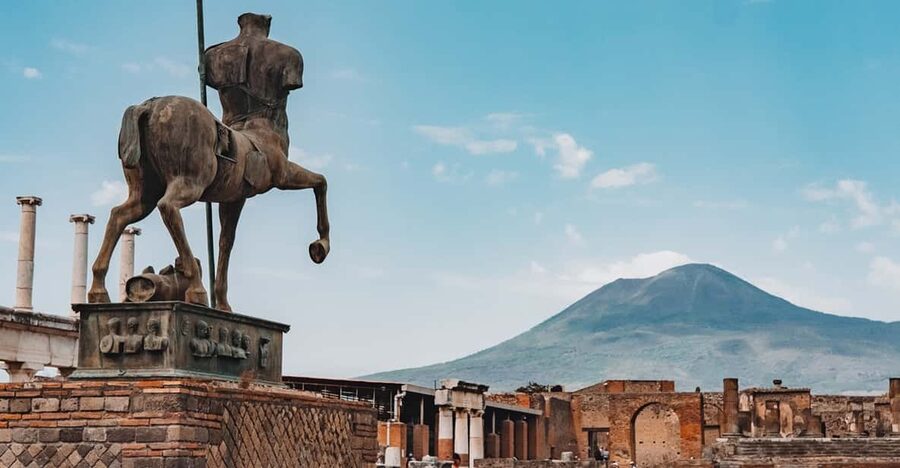
Mount Vesuvius and Pompeii make a natural pair: one shows you the volcano that shaped Campania, the other shows what happened when it erupted in AD 79. This six-hour trip takes you from Castellammare di Stabia to both sites by bus, with time for the Vesuvius crater walk and a two-hour visit to Pompeii.
I like the simple transport plan and the useful audio guide, available in ten languages. I also like the way the day includes the broad views from Vesuvius as well as Pompeii’s frescoes, streets, and lupanar. The main drawback is the pace: one and a half hours on the mountain and two hours at Pompeii give you a good introduction, but not enough time to explore either place at length.
In This Review
- Key points
- Why pair Vesuvius with Pompeii?
- Meeting at Piazza Papa Giovanni XXIII
- Walking to the Vesuvius crater at 1,000 meters
- Views over the Gulf of Naples and Sorrento Coast
- The ride from Vesuvius to Pompeii
- Two hours among Pompeii’s streets
- Frescoes, the lupanar, and the human side of Pompeii
- How the bus and ticket arrangements affect the day
- What happens if weather closes Vesuvius?
- Who will get the most from this six-hour trip?
- Final verdict: a smart pairing with a brisk pace
- FAQ
- Where does the trip begin?
- How long does the full experience last?
- How much time do I get at Mount Vesuvius?
- Is the walk to the Vesuvius crater difficult?
- What languages are available for the Pompeii audio guide?
- What happens if Vesuvius National Park closes?
- Can I cancel the booking?
Key points
- Two major sights in six hours: Visit Vesuvius and Pompeii without arranging separate buses, tickets, and transfers.
- Crater walk at 1,000 meters: The route involves a real uphill workout, though it is described as manageable.
- Big Gulf of Naples views: On a clear day, you can look toward the Gulf of Naples and the Sorrento Coast.
- Two hours inside Pompeii: Choose from several routes and use an audio guide in English, Italian, French, German, Spanish, and other languages.
- Weather backup: If Vesuvius National Park closes because of bad weather, the plan changes to the Herculaneum excavations.
Why pair Vesuvius with Pompeii?
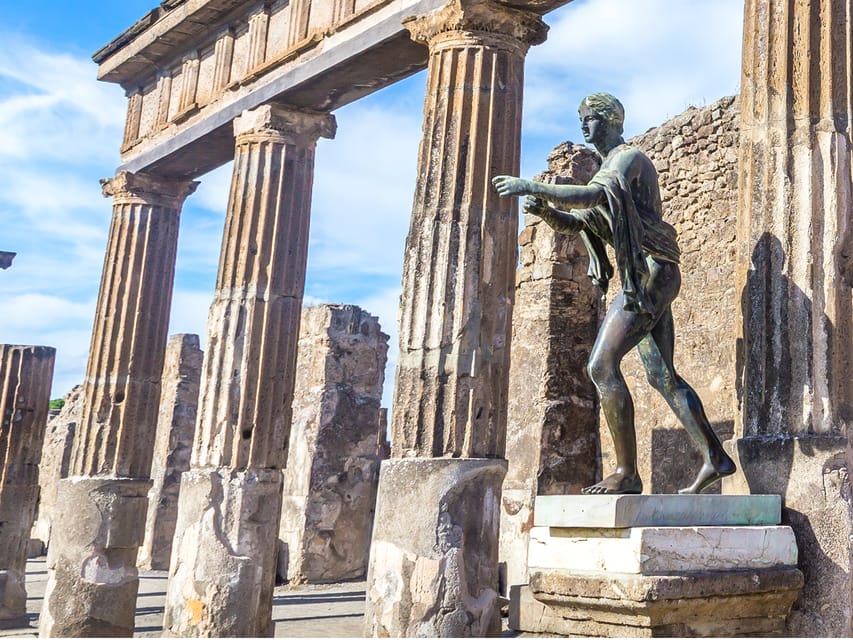
Pompeii is often treated as the main event, and rightly so. Its streets, homes, public buildings, wall paintings, and shops give you a close look at Roman life before the eruption buried the city.
But Pompeii makes more sense after you have seen Vesuvius. From the mountain, you get a physical sense of the volcano’s size and location above the Bay of Naples. The two stops are not just a convenient combination. They explain one another.
This is also a practical choice if you are staying in Castellammare di Stabia. You avoid piecing together local transport, timed entries, and separate return journeys. The bus ride takes about 40 minutes to the national park, another 40 minutes to Pompeii, and about 30 minutes back to town.
The tradeoff is time. Six hours sounds generous, but transfers and boarding reduce the time on site. I would think of this as a strong first look rather than a full archaeological study.
More ways to see Pompeii:
- From Naples: Pompeii Ruins & Mount Vesuvius Day Tour
★ 4.3 · 11,459 reviews - Naples or Sorrento: Full-Day Pompeii and Mount Vesuvius Tour
★ 4.6 · 4,235 reviews - Pompeii & Mt.Vesuvius Day Tour from Naples with Pizza Lunch
★ 4.0 · 2,901 reviews
Meeting at Piazza Papa Giovanni XXIII
The trip begins at the bus stop in Piazza Papa Giovanni XXIII in Castellammare di Stabia. The published meeting coordinates are 40.6954345703125, 14.47964859008789, which can help you confirm the exact spot on your map.
The meeting point matters because this is a bus-based trip, not a hotel pickup service. Give yourself enough time to reach the stop and identify the correct vehicle. The driver speaks English and Italian, so basic tour communication is covered, but the information inside Pompeii comes mainly through the audio guide.
Once aboard, the first ride lasts about 40 minutes. That gives you a chance to settle in before the more physical part of the day.
Walking to the Vesuvius crater at 1,000 meters
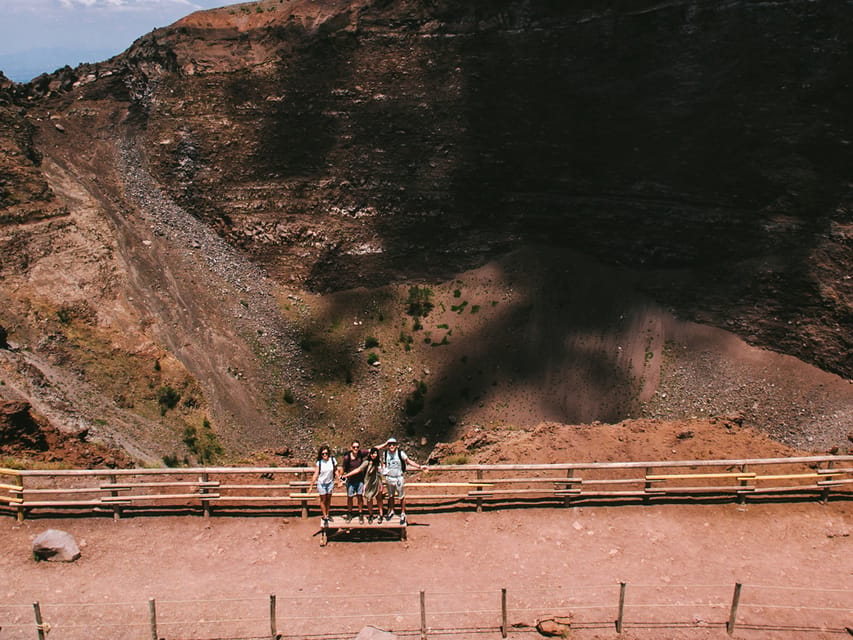
The bus takes you to Vesuvio National Park, where you get off at an elevation of about 1,000 meters. From there, you have around one and a half hours for the visit.
The walk to the crater is the part to take seriously. One participant described it as a workout, but still manageable. That is a fair way to picture it. You are not simply stepping off the bus at a viewpoint. You walk along the volcano and down toward the crater area, with uneven ground and a steady physical effort.
Wear shoes that are comfortable for walking. This is not the place for smooth soles or footwear chosen only for photographs. The mountain stop is short enough that you should keep moving, but do not rush so much that you miss the views.
The crater itself gives the stop its force. You are looking into the source of the eruption that destroyed Pompeii, not merely at a distant mountain. The visit is less polished than an indoor museum and more exposed to wind, sun, and changing weather. That raw quality is part of the appeal, but it also means conditions can affect the day.
Views over the Gulf of Naples and Sorrento Coast
The reward for the climb is the view. From Vesuvius, you can look across the Gulf of Naples toward the coast, with the Sorrento Coast included in the wide panorama.
Clear weather makes a major difference here. On a good day, the view helps you understand the geography of Campania in a way no map can manage. You see how the coast, towns, sea, and volcano fit together.
The mountain stop is not only about scenery. It gives context to the entire region. Pompeii was not an isolated Roman settlement in a flat archaeological park. It sat in the shadow of a powerful volcano, surrounded by a busy coastal world.
You get free time at the national park rather than a long guided lecture. That suits visitors who prefer to walk and look at their own pace. It also means you should pay attention to the return time. With only 90 minutes available, a slow start can leave you hurrying back to the bus.
More Vesuvius climbs and crater trips:
- Mount Vesuvius: Skip-the-Line Ticket and Smart Digital Guide
★ 4.2 · 2,780 reviews - Naples: Pompeii & Mt Vesuvius All-Inclusive Small Group w/ Lunch
★ 4.5 · 2,748 reviews - From Naples: Pompeii and Vesuvius Guided Day Trip with Lunch
★ 4.8 · 2,237 reviews - From Naples: Mount Vesuvius Transfer with Entry Tickets
★ 4.3 · 1,247 reviews
The ride from Vesuvius to Pompeii
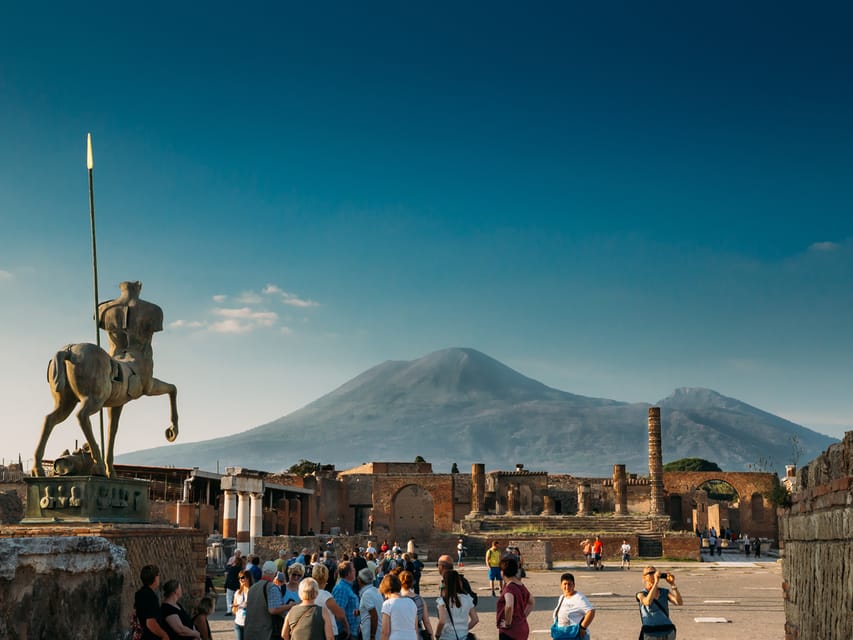
After the mountain visit, the bus takes roughly 40 minutes to Pompeii. This transfer breaks up the morning and gives you time to rest after the climb.
Pompeii is a very different stop. Vesuvius is open, steep, and weather-dependent. Pompeii is broad, built, and full of details that need explanation. The audio guide becomes especially useful here because the ruins can otherwise look like a maze of stone walls and empty rooms.
At Pompeii, you choose from a range of suggested routes before entering the archaeological park. The choice gives you some control, though two hours is still a limited window. I would pick a route that matches your interests rather than trying to see every corner.
Two hours among Pompeii’s streets
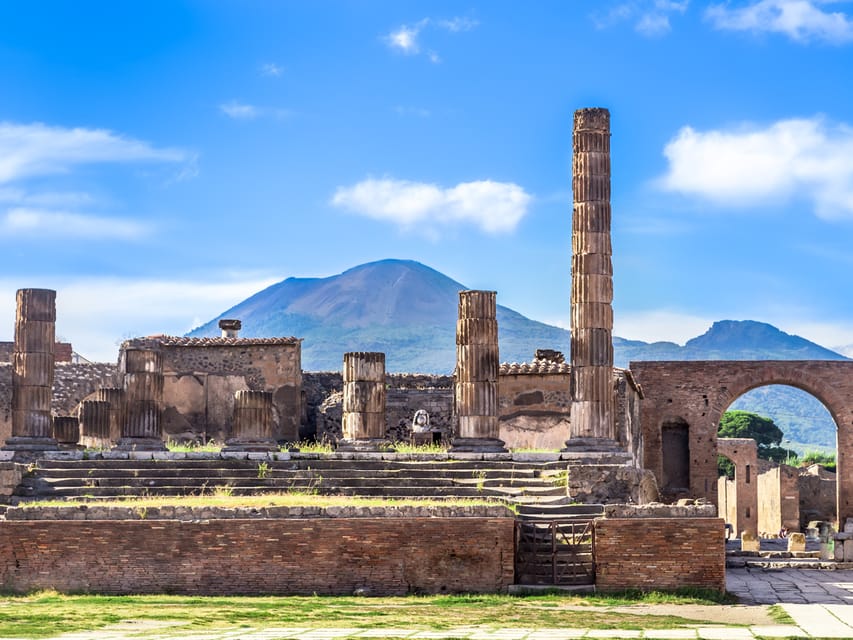
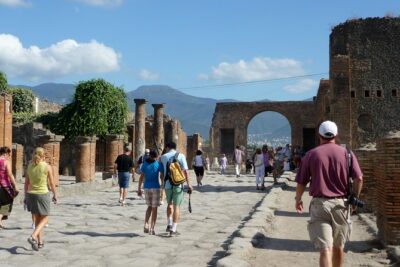
Pompeii was buried after the eruption of AD 79, preserving streets and buildings that would usually have vanished or been heavily altered over time. The value of the site is its scale and variety. You are not viewing one famous monument in isolation. You are moving through parts of an entire Roman city.
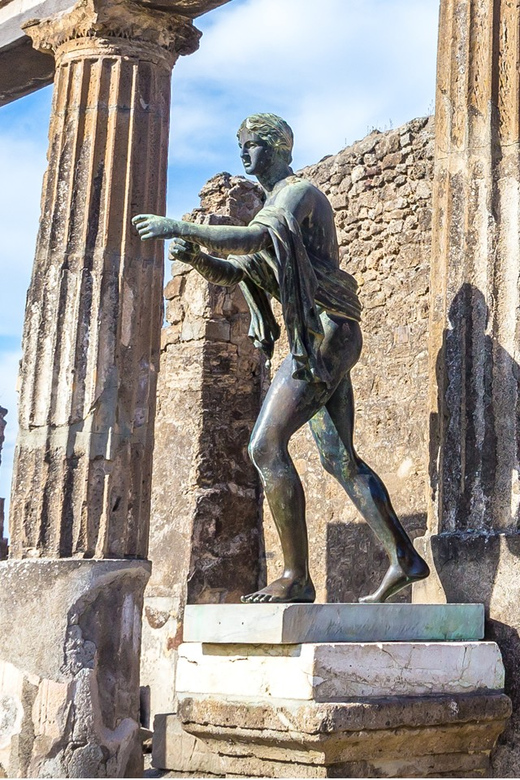
Look for the ordinary details as well as the grand remains. Ancient homes, painted walls, public spaces, and street layouts help you picture daily life. The frescoes are a major reason to use the audio guide, since a short explanation can turn faded color and plaster into evidence of how rooms were used.
The two-hour visit should be enough for a meaningful introduction. It is not enough for every house, bath, temple, and public building. If Pompeii is your chief reason for coming to Campania, you may prefer a longer dedicated visit on another day. If you want to see the key parts while also visiting Vesuvius, the timing is sensible.
The site can also be tiring after the volcano walk. Pace yourself. You do not need to inspect every wall to gain something from Pompeii, and the audio guide lets you choose where to spend your attention.
Frescoes, the lupanar, and the human side of Pompeii
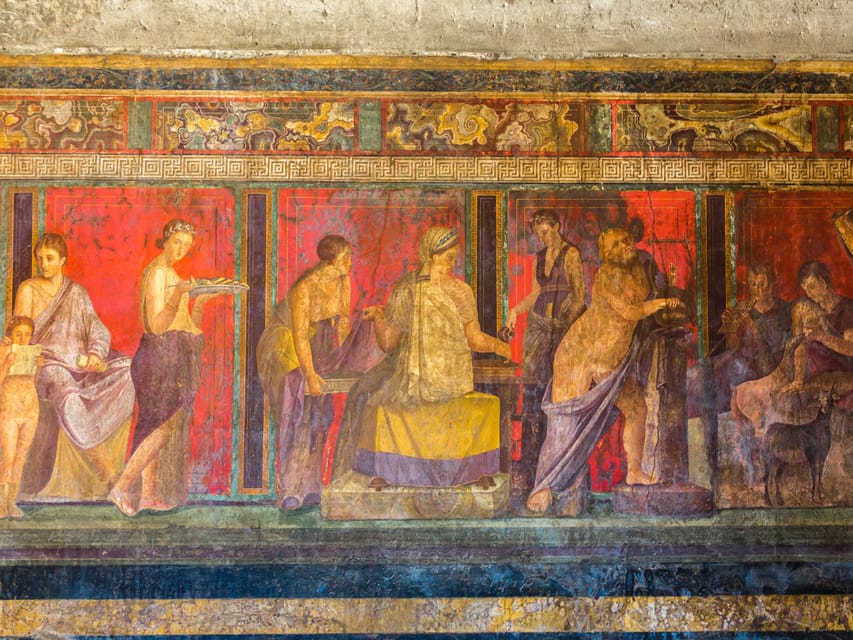
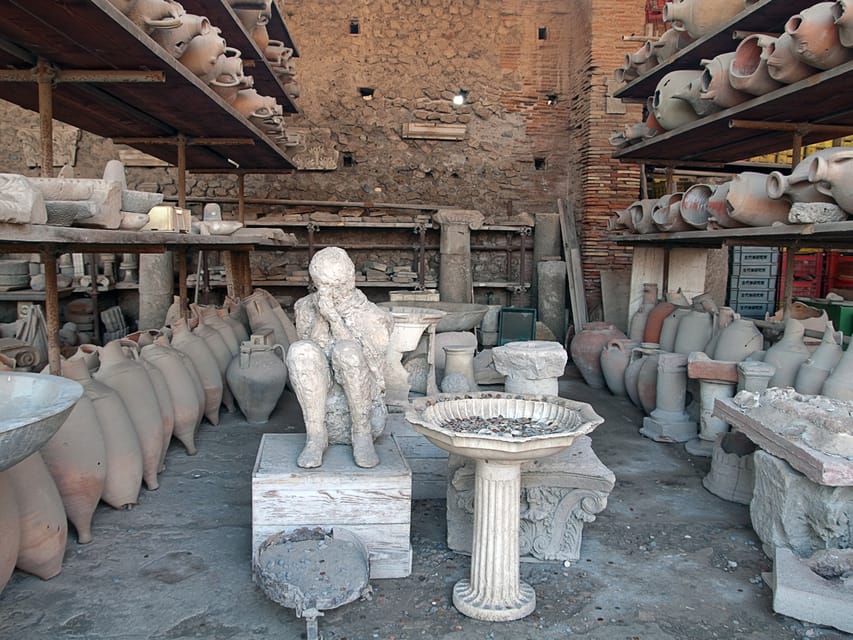
The visit includes the chance to see ancient frescoes and the lupanar, Pompeii’s brothel. These details make the city feel less like a collection of ruins and more like a place where people lived, worked, entertained themselves, and made private choices.
The lupanar is one of the site’s best-known stops, but it is worth treating it as part of the wider city rather than the whole attraction. The frescoes and domestic spaces often offer just as much insight into Roman life.
This is where the audio guide earns its place. It is available in Chinese, Dutch, English, French, German, Hebrew, Italian, Portuguese, Russian, and Spanish. You can listen in a language you understand well, which matters when the site offers more visual remains than written explanation.
The audio guide is not the same as having a live archaeologist beside you. You cannot ask follow-up questions, and the quality of your visit depends on following the route and listening at the right points. Still, for a short visit, it provides structure and keeps you from wandering past important buildings without context.
How the bus and ticket arrangements affect the day

The strongest practical feature is the round-trip bus service. You do not need to work out a separate route between Castellammare di Stabia, Vesuvius, and Pompeii, then find your way back after a long day in the sun.
Skip-the-line entry is also included as a feature of the visit. That can save useful minutes, especially when your Pompeii stop is limited to two hours. The bus driver speaks English and Italian, while the Pompeii commentary comes through the multilingual audio system.
The exact price is not provided in the information available here, so I cannot judge the booking against a stated fare. I can judge the value of the package itself. It is strongest for you if convenience matters, you want both headline sights, and you would otherwise pay separately for transport and entry arrangements.
Keep one cost detail in mind: the Mount Vesuvius National Park entry fee of €12 is non-refundable if you cancel. That means a cancellation may not return the full amount connected with the mountain ticket, even when the wider booking allows cancellation up to 24 hours before departure.
The reserve-now-and-pay-later option also gives you some flexibility. You can hold a place without paying immediately, which is useful when your Campania plans are still shifting.
What happens if weather closes Vesuvius?
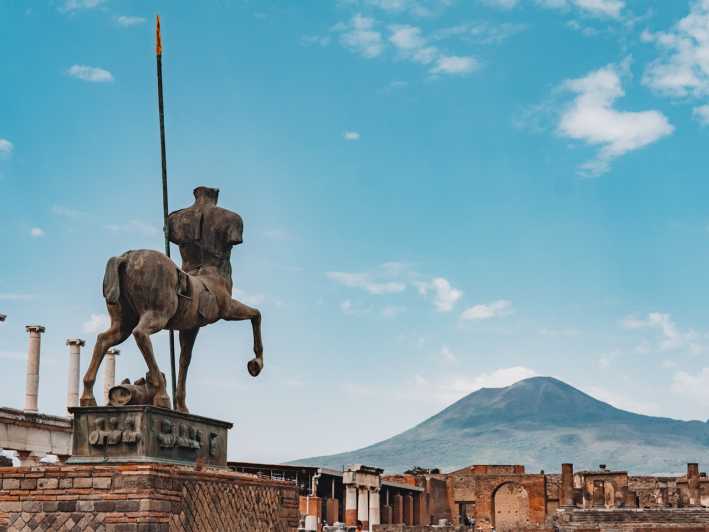
Vesuvius is an outdoor mountain visit, so weather can change the plan. If the national park closes because of inclement weather, the substitute is a visit to the Herculaneum excavations.
That is a sensible replacement because Herculaneum offers another important archaeological site connected to the same AD 79 eruption. It is not the same experience as looking into Vesuvius’s crater, so you should book this trip knowing that the mountain portion is weather-dependent.
The €12 Vesuvius entry fee remains the important cancellation detail. The supplied information says that this fee is non-refundable in case of cancellation. It does not provide a separate price breakdown for the Herculaneum replacement, so you should confirm any fee questions before booking.
Who will get the most from this six-hour trip?
I would choose this trip if you are based in Castellammare di Stabia and want an efficient day with both Vesuvius and Pompeii. It suits first-time visitors who prefer a clear schedule to independent transport planning.
It is also a good fit if you like a mix of scenery and archaeology. Vesuvius gives you an active walk and broad coastal views. Pompeii gives you streets, buildings, art, and a closer look at Roman daily life.
Families and mixed-age groups should consider the mountain walk carefully. The route is described as manageable, but it is still a workout. The Pompeii stop adds more walking, often on uneven archaeological surfaces, so this is not a sit-back-all-day outing.
I would be more cautious if you want a slow, detailed study of Pompeii. Two hours passes quickly, especially if you stop often for the audio guide. You may also prefer another option if your main aim is a fully guided archaeological tour, since the listed driver languages are English and Italian and the site commentary is audio-based.
Final verdict: a smart pairing with a brisk pace
I recommend booking this Mount Vesuvius and Pompeii trip if you value easy transport, want the two major sights in one day, and are comfortable with a moderate amount of walking. The best parts are the practical bus service, the crater walk, the Gulf of Naples views, and the audio guide that gives Pompeii some shape.
I would not choose it for a relaxed mountain day or an exhaustive Pompeii visit. The schedule is tight, and the climb may feel demanding after a long transfer. For most visitors staying in Castellammare di Stabia, though, it offers a useful balance: one dramatic natural site, one major archaeological site, and a return to the same starting point without a complicated transport puzzle.
FAQ
Where does the trip begin?
The meeting point is the bus stop at Piazza Papa Giovanni XXIII in Castellammare di Stabia. The stated coordinates are 40.6954345703125, 14.47964859008789.
How long does the full experience last?
The trip lasts six hours. The schedule includes about 40 minutes by bus to Vesuvius, one and a half hours at the national park, 40 minutes to Pompeii, two hours at the archaeological park, and about 30 minutes back to Castellammare di Stabia.
How much time do I get at Mount Vesuvius?
You have about one and a half hours at Vesuvio National Park, including free time and the walk toward the crater from an elevation of 1,000 meters.
Is the walk to the Vesuvius crater difficult?
The walk is a physical workout, but it is described as manageable. Comfortable walking shoes are a sensible choice.
What languages are available for the Pompeii audio guide?
The audio guide is available in Chinese, Dutch, English, French, German, Hebrew, Italian, Portuguese, Russian, and Spanish.
What happens if Vesuvius National Park closes?
If bad weather causes the national park to close, the trip changes to a visit to the Herculaneum excavations.
Can I cancel the booking?
You can cancel up to 24 hours in advance for a full refund, but the €12 Mount Vesuvius National Park entry fee is non-refundable. The reserve-now-and-pay-later option lets you book without paying at the time of reservation.
Just added around Naples
- Full-Day Tour of the Amalfi Coast and Pompeii from Naples★ 4.5 · 3 reviews
- The Ultimate Neapolitan Cooking Class with Local★ 5.0 · 3 reviews
- Naples: Old City Center Street Food Tour with Spritz★ 4.7 · 3 reviews
- Visit in Pompeii – Naples Private Tour with Ada★ 5.0 · 3 reviews
- Transfer from Naples to Sorrento or viceversa★ 5.0 · 3 reviews
- Naples: National Gallery of Capodimonte Tour★ 5.0 · 3 reviews
- Visit 2 wine producers with tasting and transportation included★ 5.0 · 3 reviews
- Naples: Mozzarella experience★ 5.0 · 3 reviews
Pompeii Tours, compared.
Pompeii & Mt.Vesuvius Day Tour from Naples with Pizza Lunch
Read our review →
Pompeii & Mt Vesuvius All-Inclusive Small Group w/ Lunch
Read our review →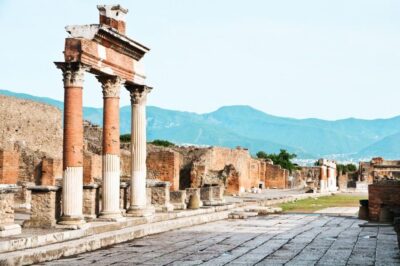

Pompeii & Amalfi Coast Full-Day Trip with Lunch
Read our review →Browse the lists this tour appears in