
Reviewed · NAPLES UNDERGROUND TOURS
Hypogeum of the Crystallines Standard Visit
Twelve meters below Naples, an ancient Greek street leads you past four carved and painted tombs. The Hypogeum of the Crystallines is not a grand open-air ruin. It is a compact underground site where color, myth, and burial customs survive in close quarters.
I like the way the visit brings together Greek tomb design and Roman artistic additions, and I like the rare Medusa carved and painted by the ancient Greeks. The small group, limited to 10 people, should also make it easier to see the details and follow the guide.
The main drawback is the short length. At 25 minutes, this is a focused archaeological visit rather than a long tour of the Rione Sanità. The underground setting also has architectural barriers, so anyone with access concerns should contact the site before booking.
In This Review
- Key Points at a Glance
- Descending Into 4th-Century BC Neapolis
- Four Tombs With Greek Craftsmanship
- The Medusa That Makes This Visit Special
- Frescoes, Myths, and the Meeting of Two Cultures
- What the Rione Sanità Adds
- The Virtual Reconstruction Helps You Picture the Past
- Why the $11 Price Makes Sense
- Timing, Group Size, and Practical Limits
- Who Will Enjoy the Hypogeum Most
- A Focused Visit With Real Character
- Should You Book the Hypogeum of the Crystallines?
- FAQ
- How long does the Hypogeum of the Crystallines visit last?
- How much does the standard visit cost?
- Are children under 8 allowed?
- What languages are available?
- How large is the group?
- Can I cancel or pay later?
Key Points at a Glance
- Four Hellenistic tombs: See ancient burial chambers carved and painted by Greek artists.
- A 2,400-year-old street: Walk along an original road from 4th-century BC Neapolis.
- A rare Medusa: Look for the carved and painted Medusa, described as a one-of-a-kind piece.
- Twelve meters underground: The descent gives the visit a strong sense of moving through Naples’ earlier layers.
- Small groups of 10: The limited size suits a close look at frescoes, architecture, and myths.
- A short, affordable visit: At $11 per person, the 25-minute experience fits neatly into a day in Naples.
Descending Into 4th-Century BC Neapolis
The visit begins with a descent into the underground world of ancient Naples. Twelve meters below the modern city, you reach part of Neapolis, the Greek settlement that shaped the city’s earliest form.
That change in level matters. You are not simply looking at isolated objects behind glass. You are moving through a section of the ancient city, including its original street. The setting gives the tombs a clear connection to daily urban life above them.
A guide from Rione Sanità welcomes you to the archaeological site and leads the visit in Italian, English, Spanish, or French. Since the group is capped at 10 people, you should have a better chance of seeing the painted details than you would in a large crowd.
The 25-minute length keeps the visit easy to fit into a busy Naples schedule. You can pair it with time in the Rione Sanità or other nearby sights without giving away half a day. Still, the short format means the guide must keep a brisk pace. If you want a long lesson in Greek funerary customs, this will feel brief.
More of the city underground:
- Naples: Catacombs of San Gennaro Entry Ticket & Guided Tour
★ 4.6 · 7,941 reviews - Naples: Spanish Quarters Underground Guided Tour
★ 4.8 · 5,064 reviews - Naples: The Bourbon Tunnel Guided Tour with Entrance Ticket
★ 4.7 · 2,711 reviews
Four Tombs With Greek Craftsmanship
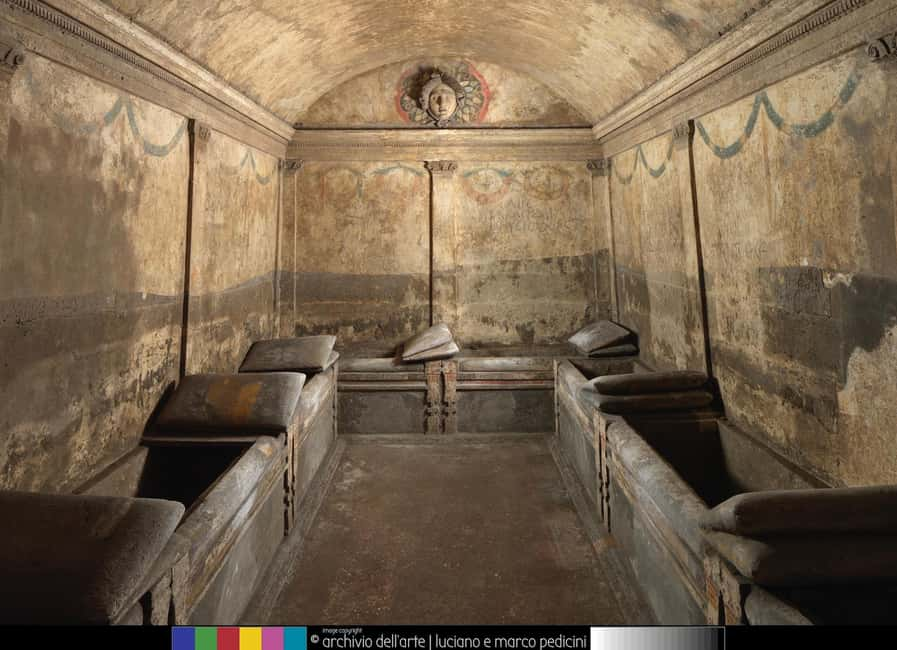
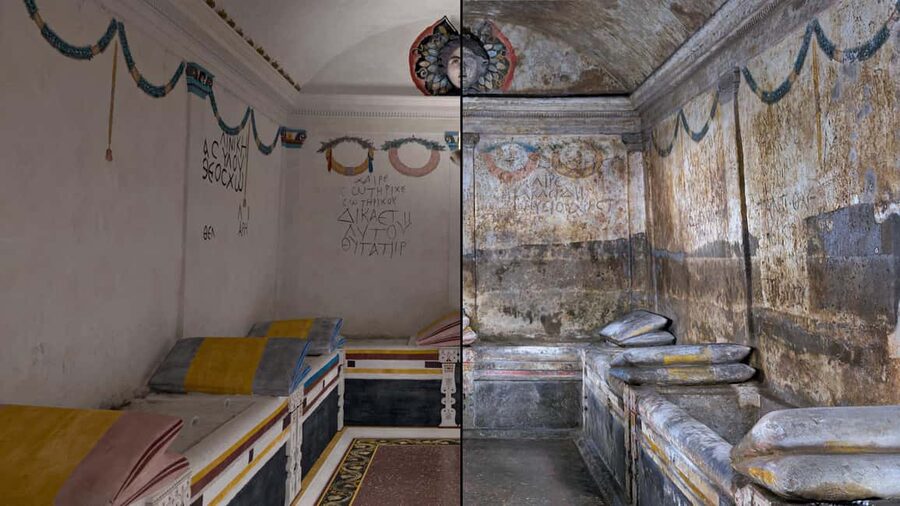
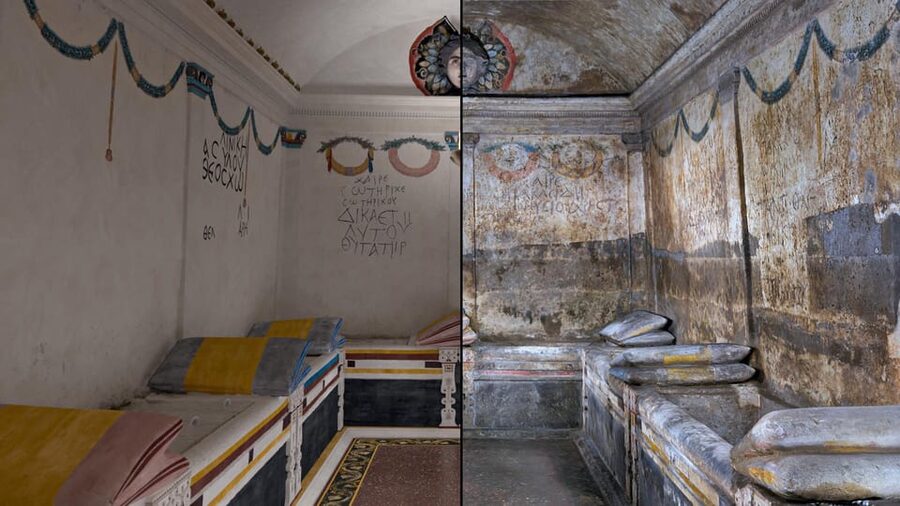
The central part of the visit is the set of four Hellenistic tombs. These chambers were carved and painted by the ancient Greeks, and their survival is the main reason to make time for the Hypogeum of the Crystallines.
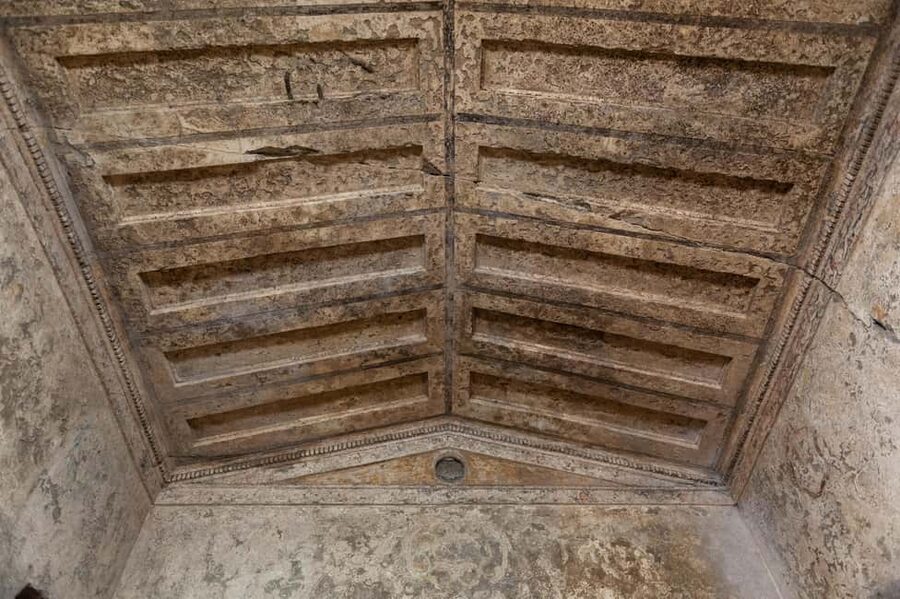
You can examine the details of the frescoes, the carved surfaces, and the architecture at close range. The colors are a major part of the experience. Underground burial sites can easily feel dark and bare, but these tombs retain signs of the artistic care given to them.
The paintings also help you think about the people who commissioned them. This was not only a place for death. The art reflects ideas about family, friendship, love, and care. Those themes give the tombs emotional weight without requiring the site to be large.
I would pay attention to how the Greek work shares space with later Roman additions. The site presents these cultures together rather than treating ancient Naples as a single, unchanging period. You get a compact lesson in how artistic traditions can meet and alter one another over time.
The preservation is impressive, but keep your expectations in check. This is an underground archaeological site, not a polished museum gallery. The experience depends on looking carefully at what remains and listening to the explanation of what the images and architecture mean.
The Medusa That Makes This Visit Special
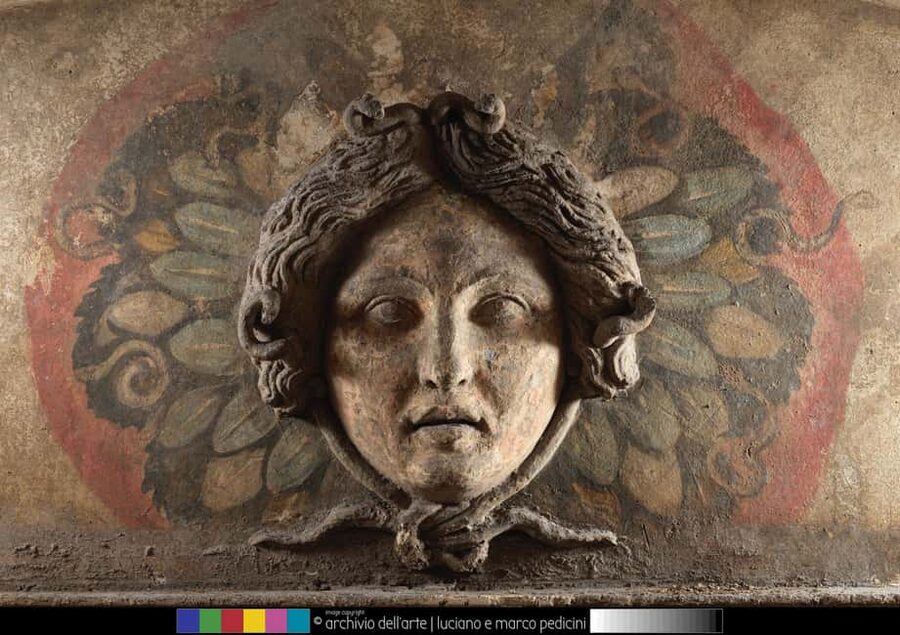
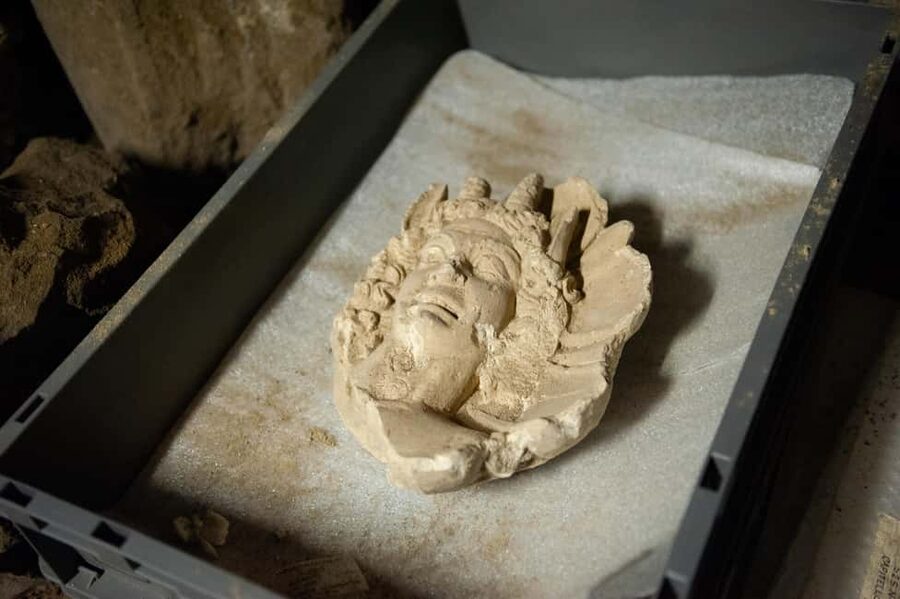
The most unusual detail is the Medusa carved and painted by the ancient Greeks. The site describes it as a precious one-of-a-kind example, which gives the visit a clear centerpiece.
Medusa is one of the most recognizable figures from Greek myth. Her face was often used as a protective image, and here she appears as part of the ancient decorative and funerary world. The combination of carving and paint makes the piece especially important.
You may find that the Medusa is easier to appreciate after seeing the tombs around it. The surrounding architecture shows the broader setting, while the image gives you one precise detail to remember. On a short visit, a strong focal point helps.
The guide’s explanation is valuable here. Ancient symbols can look attractive while their meaning remains unclear. Learning how myth, decoration, and burial traditions meet turns the Medusa from a striking image into a clue about the beliefs of the people who made it.
Frescoes, Myths, and the Meeting of Two Cultures
This visit is most rewarding when you look beyond the age of the site. The frescoes are beautiful, but the real interest lies in what they reveal about the ancient world.
The Hypogeum of the Crystallines shows Greek origins alongside Roman artistic additions. That combination is useful for understanding Naples as a place shaped by more than one culture. The site does not present Greek and Roman influence as separate boxes. Instead, you see how later work became part of an older setting.
The guide also explains the myths connected with the site. That helps you read the paintings and carved forms rather than simply admire their color. You will hear the story of how the hypogeum was discovered by chance in 1889 by Baron Giovanni di Donato, adding a modern chapter to the ancient story.
The word hypogeum refers to an underground structure. Here, that physical setting shapes the mood. You leave the modern streets behind and enter a protected space where the ancient road, tombs, and paintings remain together.
Do not expect a large number of rooms or a long sequence of galleries. The value comes from the quality and setting of the surviving details. If you enjoy archaeology, ancient art, or mythology, the visit gives you plenty to think about in a small amount of time.
A completely different sort of day out of Naples:
- From Naples: Pompeii Ruins & Mount Vesuvius Day Tour
★ 4.3 · 11,459 reviews - From Naples: Sorrento, Positano and Amalfi Full-Day Tour
★ 4.6 · 10,988 reviews - From Naples: Sorrento, Positano & Amalfi Coast – Small Group Tour
★ 5.0 · 8,643 reviews - Naples: Downtown Tour with Veiled Christ & St Clare Tickets
★ 4.9 · 6,462 reviews
What the Rione Sanità Adds
The Hypogeum of the Crystallines is tied closely to the Rione Sanità, a Naples district undergoing a strong process of sociocultural redevelopment. That local connection makes the experience more than a visit to an old monument.
A guide from Rione Sanità welcomes you, linking the archaeological site with the neighborhood around it. You learn not only about the ancient tombs, but also about how attention to local heritage can support a district’s changing identity.
The underground site tells one part of the area’s story. The neighborhood above it tells another. Together, they show how a city can use archaeology to reconnect people with places that were once overlooked or difficult to access.
You should not expect this brief visit to explain every part of Rione Sanità. It does, however, give you a reason to look at the district with more care. If you have extra time, walking around the area after the visit can help you place the hypogeum within its modern setting, though the supplied experience itself focuses on the archaeological site.
The Virtual Reconstruction Helps You Picture the Past
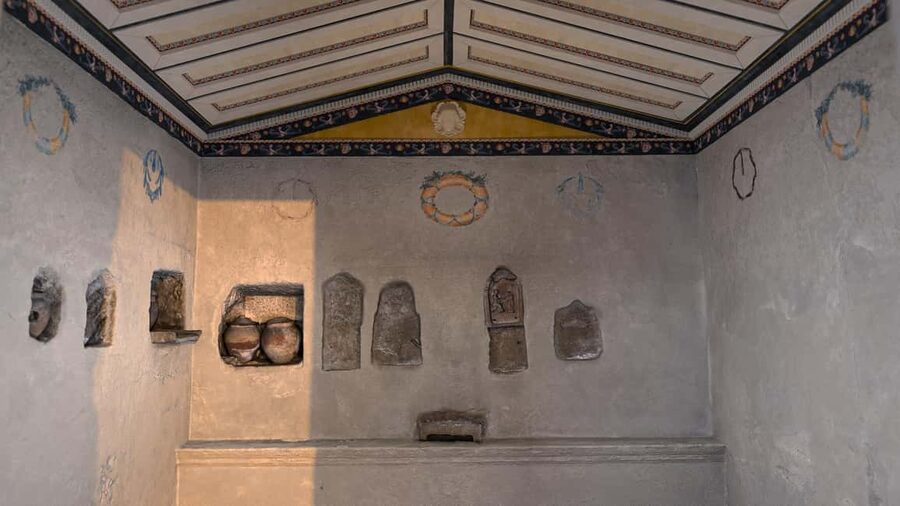
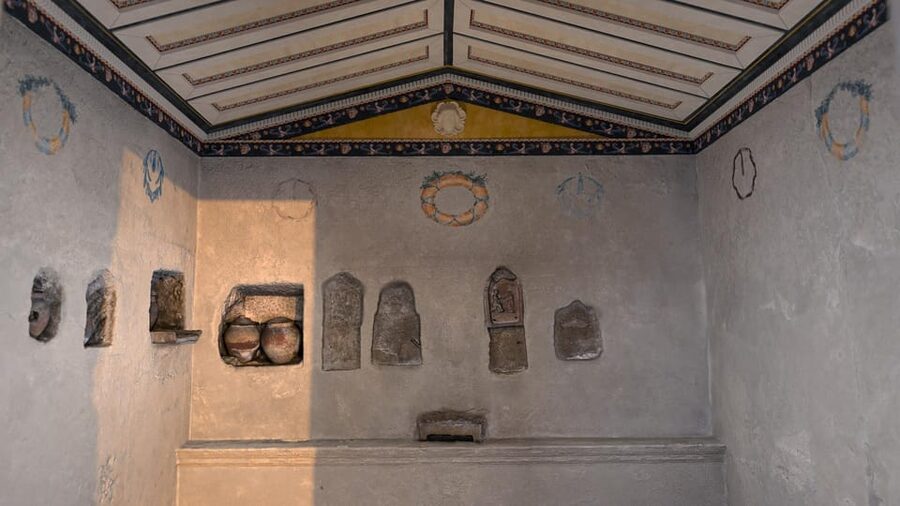
The visit includes a video with a virtual reconstruction of the archaeological site. This is a practical addition because ruins can be hard to imagine in their original form.
Paint may be incomplete. Stonework may be worn. Rooms may be empty. A reconstruction can show how the site might have looked when its roads, tombs, and decoration formed part of a functioning ancient setting.
The video also helps connect the separate parts of the visit. You first see the actual street and tombs, then receive a visual aid for understanding how the ancient site fit together. For a 25-minute tour, that extra layer makes the archaeology easier to follow.
Keep in mind that a reconstruction is an interpretation, while the carved and painted remains are physical evidence. The best approach is to use the video as a guide to the site, then return your attention to the original surfaces and surviving colors.
Why the $11 Price Makes Sense
At $11 per person, this is a modestly priced cultural stop in Naples. The price is especially reasonable if you want a guided explanation rather than simply entering a site and reading a few signs on your own.
You are paying for access to a distinctive archaeological setting, a guide from the local district, an explanation of the tombs and myths, and the virtual reconstruction. The small group also adds value. With no more than 10 participants, the experience should feel more personal than a large organized tour.
The short duration keeps the total commitment low, but it also limits how much can be covered. I see this as a strong value for a compact visit, not as a replacement for a full archaeological tour of Naples.
Free cancellation up to 24 hours before the start gives you useful flexibility. You can also reserve now and pay later, which helps if your Naples schedule is still changing. Starting times vary, so check availability before planning the rest of your day.
The experience includes skip-the-ticket-line access. That matters most when you are building a tight sightseeing plan and want to avoid spending part of your morning waiting at the entrance.
Timing, Group Size, and Practical Limits
The standard visit lasts 25 minutes. That makes it suitable before lunch, between neighborhood walks, or alongside another short attraction. You should arrive ready to focus from the start because the visit does not have much spare time.
Groups are limited to 10 people. This is one of the strongest practical features. A small group should make it easier to hear the guide, look closely at the frescoes, and ask a brief question without holding up a large crowd.
The tour is offered in Italian, English, Spanish, and French. Select the language you need when checking availability. The host or greeter language information means the welcome and guiding support are available across these four languages.
Children from ages 8 to 12 are free. Children under 8 are not permitted. The site has architectural barriers because of its historical structure, so visitors with disabilities should contact the operator before the visit to discuss access.
The underground setting and preserved architecture mean this is not the right choice for everyone. If stairs, narrow historic spaces, or uneven access are a concern, get specific advice before paying.
Who Will Enjoy the Hypogeum Most
I would recommend this visit to you if you enjoy ancient art but do not want to spend several hours in a large museum. The combination of a real ancient street, painted tombs, Greek myths, and a rare Medusa gives the experience a clear focus.
It also suits visitors who want to understand Naples through more than its famous food and street life. The site connects the modern Rione Sanità with the Greek and Roman past beneath it.
Families with children aged 8 and above may find the short length manageable, especially if the children like myths or unusual places. The Medusa gives younger visitors a memorable image to look for, while the virtual reconstruction can help explain what they are seeing.
You may want to skip it if you need a long, slow archaeological tour or if underground access is difficult for you. The visit is compact, and the site’s barriers cannot be separated from its historic character.
A Focused Visit With Real Character
The strongest part of the Hypogeum of the Crystallines is its sense of direct contact with the ancient city. You walk along an original Neapolis road, look into tombs made by Greek artists, and see Roman additions layered into the same setting.
The site also benefits from its local connection. A guide from Rione Sanità gives the visit a human link to the neighborhood’s current redevelopment, while the story of Baron Giovanni di Donato’s chance discovery adds a touch of modern adventure.
The archaeological preservation is a major strength. The frescoes, carved architecture, and Medusa have survived for roughly 2,400 years, giving you details that feel far more personal than a broad historical summary.
At the same time, the experience has a firm limit: 25 minutes is not long. Plan to see it as one sharp, memorable stop rather than the main event of your day. If that matches your schedule, the low price and small group make the decision easy.
Should You Book the Hypogeum of the Crystallines?
Book it if you want a short guided look at ancient Naples with details you will not find in a standard city walk. The Greek tombs, original street, and painted Medusa give the visit a strong identity, and $11 is fair for the access and explanation provided.
Before booking, check the starting time, language, age rules, and access conditions. If you can manage the underground setting and want something unusual in Rione Sanità, this is a worthwhile addition to your Naples plans.
FAQ
How long does the Hypogeum of the Crystallines visit last?
The visit lasts 25 minutes. Starting times vary, so check availability when booking.
How much does the standard visit cost?
The listed price is $11 per person. Children aged 8 to 12 are free.
Are children under 8 allowed?
No. Children under the age of 8 are not permitted to visit the Hypogeum of the Crystallines.
What languages are available?
The host or guide service is available in Italian, English, Spanish, and French.
How large is the group?
The experience is a small-group visit limited to 10 participants.
Can I cancel or pay later?
You can cancel up to 24 hours in advance for a full refund. The reserve-now, pay-later option lets you book without paying at the time of reservation.
Just added around Naples
- Full-Day Tour of the Amalfi Coast and Pompeii from Naples★ 4.5 · 3 reviews
- The Ultimate Neapolitan Cooking Class with Local★ 5.0 · 3 reviews
- Naples: Old City Center Street Food Tour with Spritz★ 4.7 · 3 reviews
- Visit in Pompeii – Naples Private Tour with Ada★ 5.0 · 3 reviews
- Transfer from Naples to Sorrento or viceversa★ 5.0 · 3 reviews
- Naples: National Gallery of Capodimonte Tour★ 5.0 · 3 reviews
- Visit 2 wine producers with tasting and transportation included★ 5.0 · 3 reviews
- Naples: Mozzarella experience★ 5.0 · 3 reviews
Naples Underground Tours, compared.
Catacombs of San Gennaro Entry Ticket & Guided Tour
Read our review →
The Bourbon Tunnel Guided Tour with Entrance Ticket
Read our review →
Naples Underground Spanish Quarters with Guide
Read our review →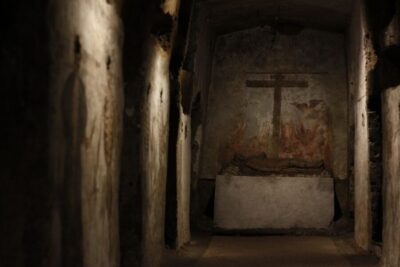
Naples Underground Official Skip-the-line Ticket
Read our review →
Naples Walking Tour with Underground Roman Ruins Ticket
Read our review →
City Walking Tour w/ Underground Roman Ruins Ticket
Read our review →Browse the lists this tour appears in