
Reviewed · HISTORIC CENTRE WALKING TOURS
Naples Historic Center: Traditions, Legends & Folklore Tour
Naples reveals itself through stories as much as monuments. This two-hour walking tour links the Duomo, Spaccanapoli, San Gregorio Armeno, the skulls of Purgatory, and Gesù Nuovo Square, giving you a fast look at the city’s sacred customs and strange old legends.
I like the route’s mix of major churches and unusual stops. I also like the focus on local traditions, from Saint Gennaro’s blood miracle to the lucky Pulcinella statue. The main caution is guide quality: Ludovica earned strong praise for clear explanations, humor, and a helpful manner, but one review reports a guide with weak art-history knowledge and little connection with the group.
In This Review
- Key points to know before you book
- What this Naples folklore tour is really about
- Starting at Naples’ Duomo and the Saint Gennaro miracle
- Via Duomo and Jorit’s Saint Gennaro street art
- Spaccanapoli, the Dolls Hospital, and close-up city life
- San Gregorio Armeno and Naples’ nativity makers
- Via dei Tribunali, famous pizzerias, and the Purgatory skulls
- Pulcinella’s lucky touch
- Music near Italy’s oldest conservatory
- Port’Alba and its seventeenth-century gate
- Santa Chiara and the final look at Gesù Nuovo
- Guide quality matters more than usual
- What $51.24 buys you
- Who should book this Naples walking tour?
- Should you book it?
- FAQ
- Where does the tour start?
- Where does the tour finish?
- How long does the tour last?
- What language is the tour conducted in?
- How much does the tour cost?
- What is included in the price?
- Are food and drinks included?
- Is hotel pickup and drop-off provided?
- Is the tour suitable for wheelchair users?
- How large can the group be?
- Can I cancel for a full refund?
- Do I have to pay when I reserve?
Key points to know before you book
- Saint Gennaro starts the story: Begin at Naples’ Duomo with the famous blood-liquefaction tradition.
- Spaccanapoli brings the city close: Walk a historic central street before reaching the Dolls Hospital and artisan quarter.
- San Gregorio Armeno is a hands-on look at craft: See workshops known for nativity figures and other handmade pieces.
- Purgatory offers the tour’s strangest stop: Visit Santa Maria delle Anime del Purgatorio ad Arco and hear the folk tale linked to its skulls.
- Pulcinella adds a playful ritual: Touch the statue for good luck as you pass through the old center.
- The route ends with major symbols: See Santa Chiara and Gesù Nuovo Square after passing Port’Alba and the old conservatory.
What this Naples folklore tour is really about
This is not a church interiors tour or a straight list of famous buildings. It is a walking introduction to the ideas Naples has carried through generations: devotion to saints, respect for the dead, neighborhood craft, theatrical characters, music, and stories that sit somewhere between faith and superstition.
That approach makes the tour useful early in your stay. You get the basic map of the historic center, but you also gain a way to read what you see afterward. A shrine, a skull, a handmade nativity figure, or a strange mark on a building can mean more once someone explains the local tradition behind it.
The tour is conducted in English with a live guide and has a maximum of 20 people. That is large enough to keep the price reasonable, but small enough for a guide to manage a walking conversation in narrow streets. At $51.24 per person, the value depends heavily on the guide. You are paying for interpretation and local storytelling, not admission to a long list of paid attractions or a meal.
More walks through the old centre:
- Naples: Spanish Quarters Underground Guided Tour
★ 4.8 · 5,064 reviews - Naples Underground Spanish Quarters with Guide
★ 5.0 · 1,886 reviews - Naples Spanish Quarters Walking Tour Street Art, Folklore & Sweet
★ 5.0 · 797 reviews
Starting at Naples’ Duomo and the Saint Gennaro miracle
Meet outside the Duomo, or Cattedrale di Santa Maria Assunta. The cathedral gives the tour a fitting opening because the first story concerns Saint Gennaro, Naples’ patron saint, and the famous claim that his blood liquefies during special ceremonies.
You do not need to know the religious details in advance. The guide’s job is to explain why the miracle matters to Naples and how belief in Saint Gennaro fits into the city’s daily identity. This is a good example of what makes the tour different from a basic sightseeing walk: the subject is not only what the building looks like, but what it means to local people.
The meeting point outside the cathedral is easy to understand, but give yourself time to find it. The tour does not include hotel pickup, and the guide is listed as the only included service. Food and drinks are also not included, so eat or carry water before setting out if you prefer not to stop along the way.
Via Duomo and Jorit’s Saint Gennaro street art
From the Duomo, the route follows Via Duomo and pauses at a Saint Gennaro mural by the artist Jorit. This stop adds a modern layer to the older religious story.
That contrast is one of the route’s strengths. You move from a major cathedral and an old saintly tradition to public art created for the street. The pairing helps you see Naples as a city where formal religion, popular devotion, and contemporary expression can occupy the same few blocks.
The mural stop is also a practical reminder that this tour is about the city outside its ticketed monuments. You are not spending the whole two hours inside museums. You are walking, looking up, and listening while Naples carries on around you.
Spaccanapoli, the Dolls Hospital, and close-up city life
The walk continues along Spaccanapoli, one of the principal streets through Naples’ historic center. The route uses this busy central artery to connect the better-known sights with smaller, more unusual stops.
The Dolls Hospital is one of those unusual places. Even the name suggests the offbeat tone of the tour. You can expect the guide to use it as a window into a less formal side of Neapolitan culture rather than simply rushing past another church façade.
Spaccanapoli is also where the walking format matters. Streets in the old center are part of the experience, not just spaces between attractions. You should expect an urban walk rather than a quiet museum visit. The route may feel crowded, and one poor review specifically objected to visiting a crowded Naples on foot. If tight streets and city noise frustrate you, that is worth considering. If you want the old center as it actually feels, the setting is the point.
A few more Naples trips worth weighing up
- Naples: Street Art & History Tour in the Spanish Quarters
★ 4.9 · 540 reviews - Naples: Historic Center and Sansevero Chapel Walking Tour
★ 4.8 · 208 reviews - 360 ° Naples. THE historic center of the city
★ 5.0 · 85 reviews - Naples Walking tour of the Historical Center
★ 5.0 · 75 reviews
San Gregorio Armeno and Naples’ nativity makers
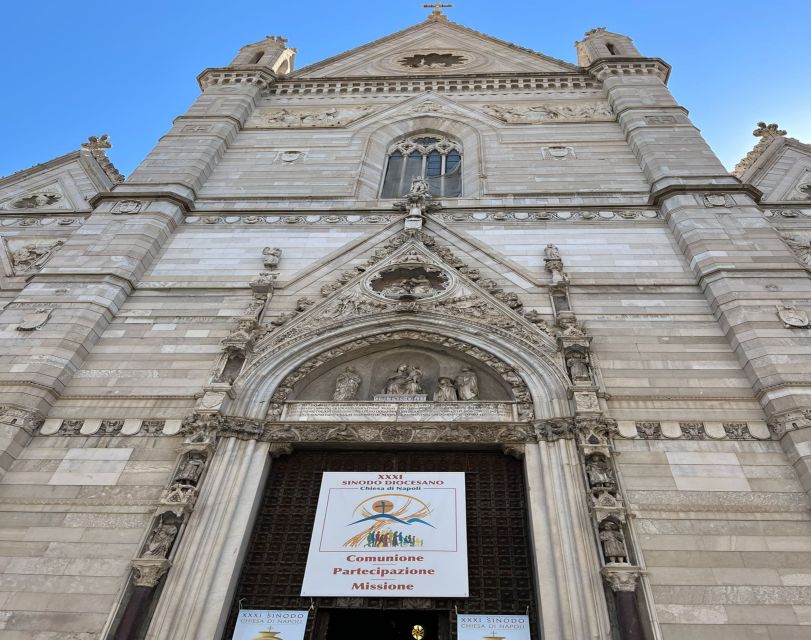
Next comes San Gregorio Armeno, known for artisans who create nativity scenes and related figures. This is one of the tour’s most distinctive stops because it connects religious tradition with practical craft.
The street is especially useful for first-time visitors who might otherwise see the workshops as a colorful shopping lane and move on. With an explanation, you can better understand why nativity making holds such a visible place in Naples. The guide can also help you notice the skill and humor in the figures rather than treating them as ordinary souvenirs.
Do not expect a full workshop class or a dedicated shopping session. The tour information promises a look at the artisans’ work, not a purchase or hands-on craft lesson. If you want to browse carefully, ask the guide where the route allows enough time, since the entire walk lasts only two hours.
Via dei Tribunali, famous pizzerias, and the Purgatory skulls
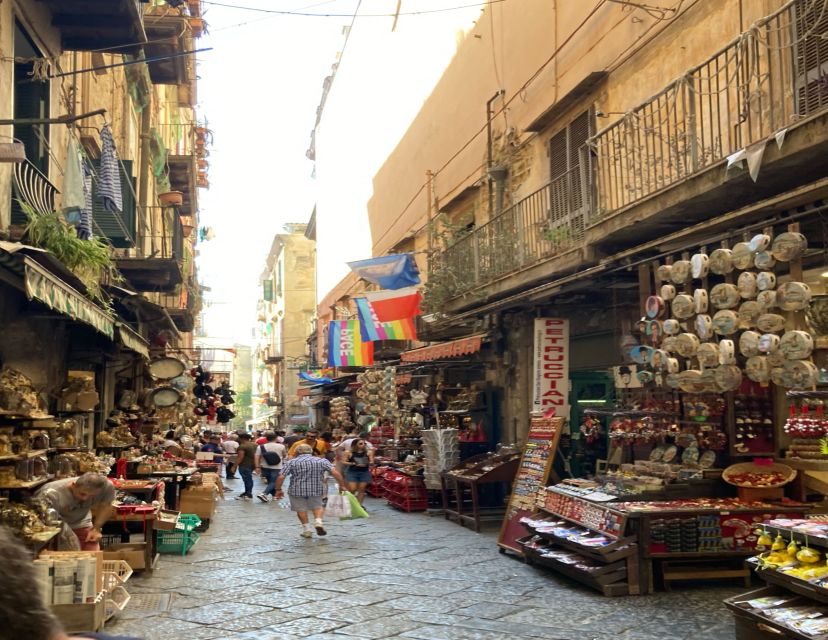
The route then reaches Via dei Tribunali, a street known for some of Naples’ most famous pizzerias. Food is not included, but the setting gives the group a chance to connect the city’s folklore with one of its best-known foods.
This is not a pizza tour, so you should not book it expecting tastings or a restaurant stop. Still, passing the pizzerias helps place the route in the real center of Naples, where sacred sites, craft shops, and places to eat sit close together.
The most unusual visit comes at the Complesso Museale Santa Maria delle Anime del Purgatorio ad Arco. The site is known for its skulls, described as the souls of purgatory, and for the folk legend connected to them.
For many people, this will be the tour’s most memorable stop. It offers a direct look at the way death, prayer, and popular belief meet in Neapolitan tradition. The atmosphere is likely to feel more serious than the Pulcinella stop or the artisan streets, so you should be comfortable with a religious site centered on skulls and the dead.
The value here lies in context. Without explanation, the skulls could seem like a macabre curiosity. With a guide, they become part of a larger story about how people in Naples have expressed care for souls in purgatory. The supplied details do not promise a private visit or extended interior access, so expect a guided stop within a compact walking itinerary.
Pulcinella’s lucky touch
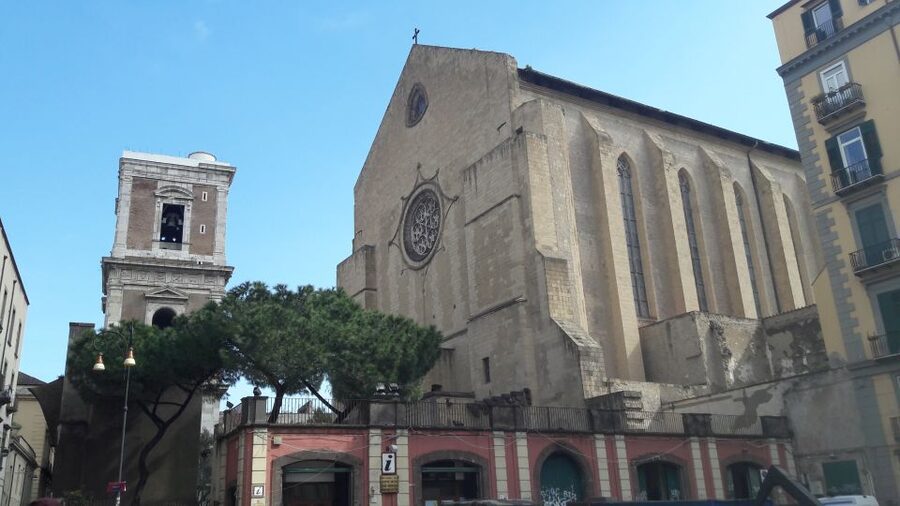
After the Purgatory site, the tour includes the Statue of Pulcinella. You are invited to touch it for good luck.
This is a small moment, but it gives the walk a welcome change of mood. Naples’ folklore is not only solemn. It also includes comic figures, public rituals, and ordinary gestures that visitors can join for a moment.
Pulcinella is especially useful for families and for anyone who likes a tour with a bit of play. You do not have to treat the custom as serious belief. You can simply enjoy the chance to take part in a local ritual instead of standing outside a monument while a guide talks.
Music near Italy’s oldest conservatory
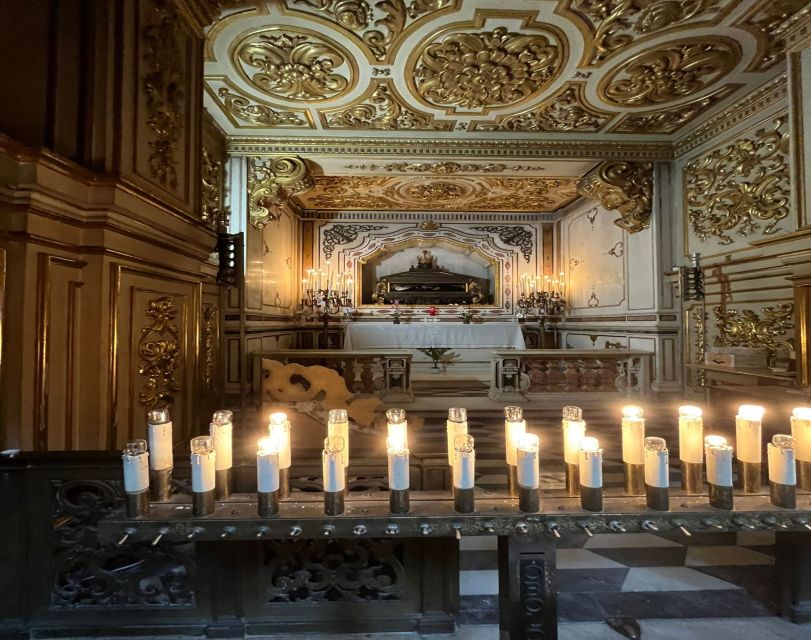
The route passes the oldest conservatory in Italy. If you are fortunate, you may hear music along the way.
The wording matters here. Music is a possibility, not a scheduled performance or an included concert. You should enjoy it if it happens, but do not book the tour expecting a musical program.
This stop gives the walk another sound-based detail. You have already heard stories about saints, artisans, and the dead. The conservatory adds music to that picture and shows how the historic center’s traditions are not limited to architecture and legends.
Port’Alba and its seventeenth-century gate
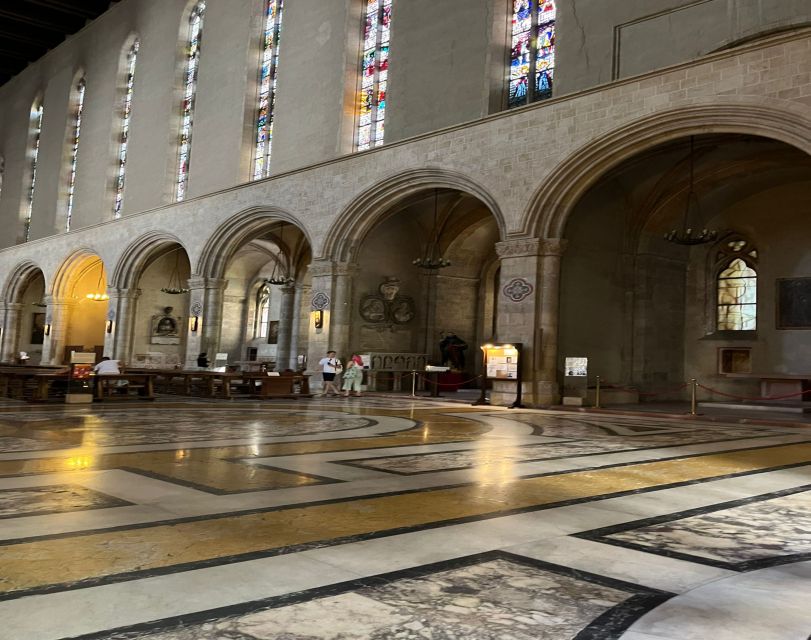
The walk continues to Port’Alba, described as one of Europe’s most beautiful seventeenth-century gates because of its size, architecture, and legends.
The important point for you is that Port’Alba is not presented as a simple photo stop. Its old stonework comes with stories. The guide’s explanation should help you notice the gate as part of Naples’ past rather than just another arch in the street.
This part of the route also shows why comfortable shoes matter. The tour covers several central streets on foot, and the schedule is compact. You will get more from the guide if you are not distracted by sore feet or trying to keep up while taking photos.
Santa Chiara and the final look at Gesù Nuovo
The final major church on the route is Saint Chiara, an austere Gothic church and an important symbol of Naples. The description does not promise an extended interior visit, so think of this as a guided look at the church and its place in the city rather than a full church tour.
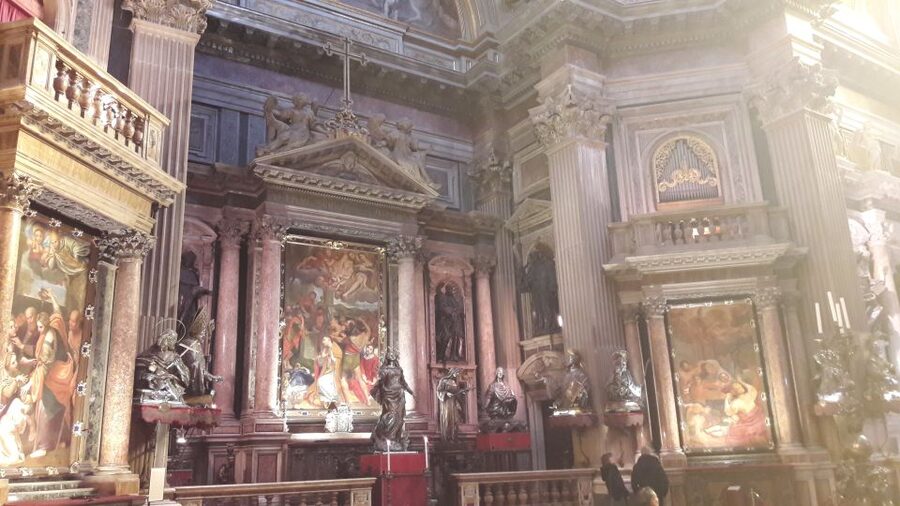
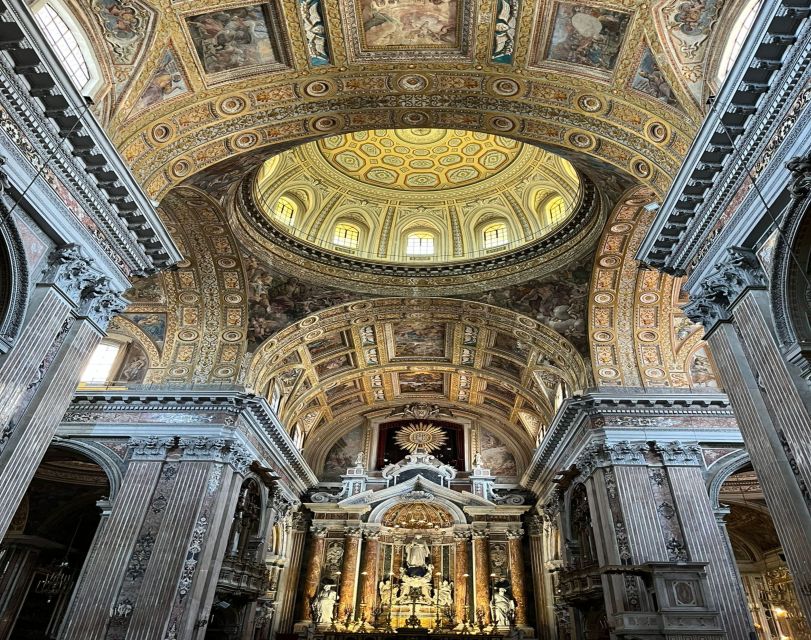
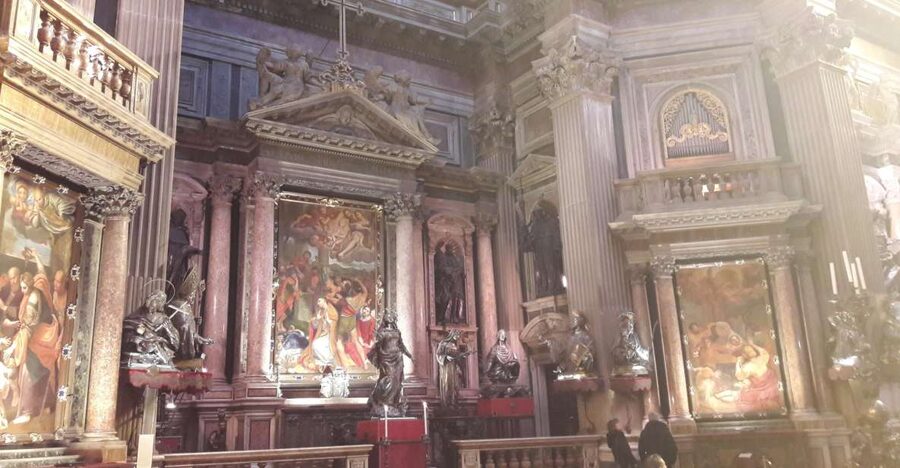
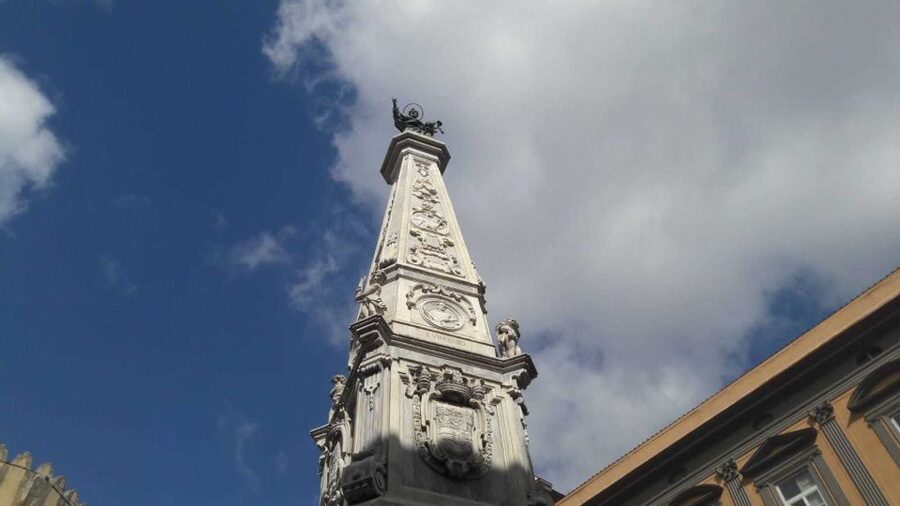
The walk finishes at Gesù Nuovo Square, where the guide explains the history behind the front wall of the Church of Gesù Nuovo. That closing subject is a fitting one because the façade itself invites questions. The guide draws your attention beyond the surface and toward the building’s past.
There is a small logistical wrinkle here. The route description says the tour concludes at Gesù Nuovo Square, while the activity details also say it ends back at the meeting point. Since those points are not described in exactly the same way, confirm the final endpoint when you book or meet the guide. Either way, Gesù Nuovo Square gives you a central place from which to continue exploring.
Guide quality matters more than usual
This tour depends on storytelling. You are not simply entering a major museum with labels to read. The meaning of Saint Gennaro, the Purgatory skulls, Port’Alba, and Gesù Nuovo comes through the guide’s explanations.
Ludovica received especially strong praise for giving plenty of information with humor, clear explanations, and a helpful, smiling manner. That is the kind of guide this route needs. A good leader can connect the stops and help you understand why a local custom matters without turning the walk into a lecture.
You should also know that guide quality may vary. One critical assessment described a guide as weak on art history and unable to connect with the group. That is a serious concern for a tour built around interpretation. The maximum group size of 20 is reasonable, but it cannot solve a lack of preparation or energy.
If your booking allows you to see the assigned guide, Ludovica is a name worth noting. If not, arrive with realistic expectations: this is a folklore and city-context walk, not a specialist art-history seminar.
What $51.24 buys you
At $51.24, the tour is not the cheapest way to walk around Naples. You can pass many of these streets on your own. The question is whether the stories and route planning justify the fee.
For me, the strongest value comes from the number of themes packed into two hours. You get a cathedral, street art, Spaccanapoli, the Dolls Hospital, nativity artisans, pizzerias, Purgatory skulls, Pulcinella, a conservatory, Port’Alba, Santa Chiara, and Gesù Nuovo Square. That is a lot of ground and a useful first orientation.
The drawback is the limited time. The group cannot linger everywhere. Food, drinks, hotel pickup, and separate attraction fees are not included. You are paying for a local English-speaking guide and a planned route through places that can be confusing to connect on your own.
Free cancellation up to 24 hours before the tour and the option to reserve now and pay later make the booking less risky. The tour is not suitable for wheelchair users, so accessibility should be considered before booking.
Who should book this Naples walking tour?
I would recommend it to a first-time visitor who wants more than a checklist of churches. It suits you especially well if you enjoy legends, public art, religious customs, unusual memorials, artisan work, and short historical explanations.
It also works for travelers with only a short time in Naples. Two hours gives you a useful introduction without taking an entire day. You can then return to the stops that interest you most, such as San Gregorio Armeno, the Purgatory complex, Santa Chiara, or the area around Gesù Nuovo.
I would be more cautious if your priority is detailed art history, long interior visits, food tastings, or a quiet walk. The route is in the historic center, and Naples can be crowded. The guide’s skill will shape the experience more than any single monument.
Should you book it?
Book this tour if you want Naples explained through its customs and stories, not just its grand buildings. The Saint Gennaro miracle, Jorit’s mural, San Gregorio Armeno, the Purgatory skulls, Pulcinella, Port’Alba, and Gesù Nuovo give the walk a memorable range.
At $51.24, I would book it early in your Naples visit, provided you are comfortable walking for two hours and checking the final meeting point. I would also keep expectations realistic about guide variation. With a strong guide such as Ludovica, this can give you a much clearer sense of Naples’ character. With a weak guide, the same route may feel rushed and thin.
FAQ
Where does the tour start?
The meeting point is outside the Duomo, also called Cattedrale di Santa Maria Assunta, in Naples.
Where does the tour finish?
The route description says it concludes at Gesù Nuovo Square. The activity details also state that it ends back at the meeting point, so confirm the final endpoint when booking or meeting the guide.
How long does the tour last?
The walking tour lasts two hours.
What language is the tour conducted in?
The tour has a live English-speaking guide.
How much does the tour cost?
The listed price is $51.24 per person.
What is included in the price?
A local and professional guide is included.
Are food and drinks included?
No. Food and drinks are not included.
Is hotel pickup and drop-off provided?
No. Hotel pickup and drop-off are not included.
Is the tour suitable for wheelchair users?
No. The activity is not suitable for wheelchair users.
How large can the group be?
The tour has a maximum group size of 20 people.
Can I cancel for a full refund?
Yes. You can cancel up to 24 hours in advance for a full refund.
Do I have to pay when I reserve?
No. The reserve-now-and-pay-later option lets you hold a place without paying immediately.
Just added around Naples
- Full-Day Tour of the Amalfi Coast and Pompeii from Naples★ 4.5 · 3 reviews
- The Ultimate Neapolitan Cooking Class with Local★ 5.0 · 3 reviews
- Naples: Old City Center Street Food Tour with Spritz★ 4.7 · 3 reviews
- Visit in Pompeii – Naples Private Tour with Ada★ 5.0 · 3 reviews
- Transfer from Naples to Sorrento or viceversa★ 5.0 · 3 reviews
- Naples: National Gallery of Capodimonte Tour★ 5.0 · 3 reviews
- Visit 2 wine producers with tasting and transportation included★ 5.0 · 3 reviews
- Private Tour: Pompeii & Wine Tasting at the Slopes of Mt Vesuvius★ 5.0 · 3 reviews
Historic Centre Walking Tours, compared.
Naples Underground Spanish Quarters with Guide
Read our review →
Naples Spanish Quarters Walking Tour Street Art, Folklore & Sweet
Read our review →
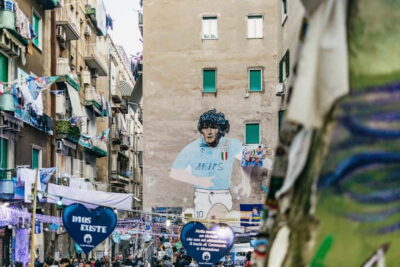
Street Art & History Tour in the Spanish Quarters
Read our review →

Historic Center and Sansevero Chapel Walking Tour
Read our review →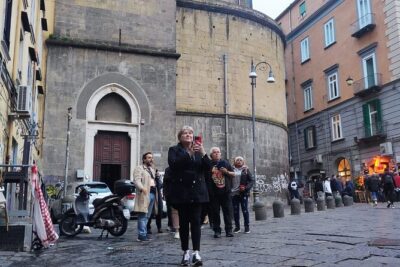
Browse the lists this tour appears in