
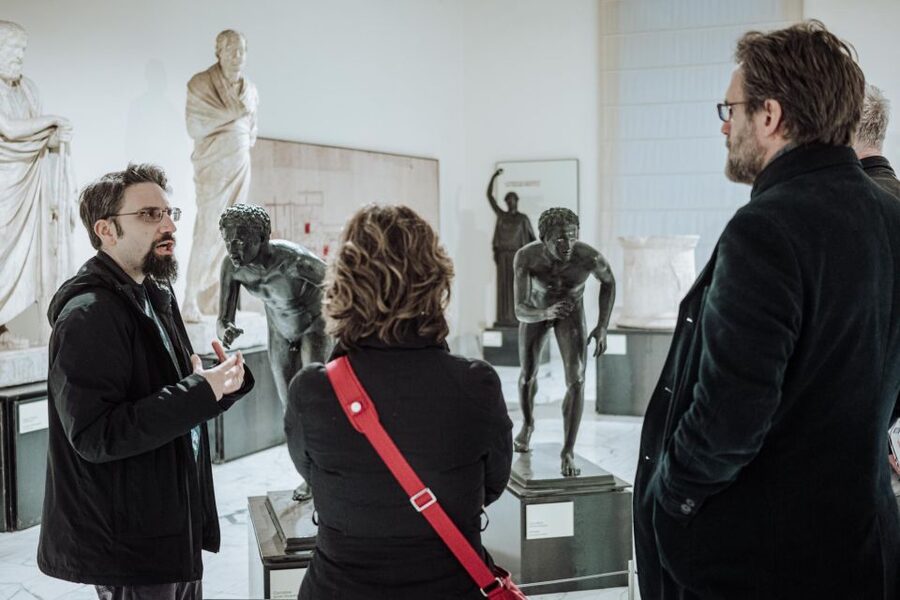
Reviewed · ARCHAEOLOGICAL MUSEUM TOURS
Naples: National Archaeological Museum of Naples Guided Tour
Naples’ National Archaeological Museum holds the pieces that make Pompeii and Herculaneum suddenly make sense: vivid wall paintings, intricate mosaics, huge Roman sculptures, and portraits of gods and emperors. A two-hour guided visit gives you a clear route through this enormous museum instead of leaving you to guess which rooms matter most.
I like the archaeologist guides, especially when they connect museum objects with sites around the Bay of Naples. I also like the chance to remain inside after the tour, so you can revisit the Farnese Hercules or explore rooms the group could not reach.
The main drawback is simple: two hours is only an introduction. The museum is so large that you will not see every floor, and some people have found it hard to hear when the sound system was weak. Large bags, strollers, and wheelchairs are not permitted, so check those restrictions before booking.
In This Review
- Key points to know before you book
- Why this museum makes a better second stop after Pompeii
- Meeting the guide outside the ticket office
- Entering the museum and finding a route through the collection
- The Farnese Hercules and the museum’s giant sculptures
- Pompeii mosaics and frescoes preserved by Vesuvius
- Greek gods, Roman emperors, coins, and wall paintings
- What a two-hour guided tour can and cannot cover
- Price, group value, and the skip-the-line benefit
- Who should book this Naples museum tour
- Practical details that affect your day
- Should you book the Askos Tours museum visit?
- FAQ
- How long is the guided tour?
- What does the tour include?
- Where do I meet the guide?
- What languages are available?
- Can I bring a large bag or stroller?
- Can I cancel the booking?
Key points to know before you book
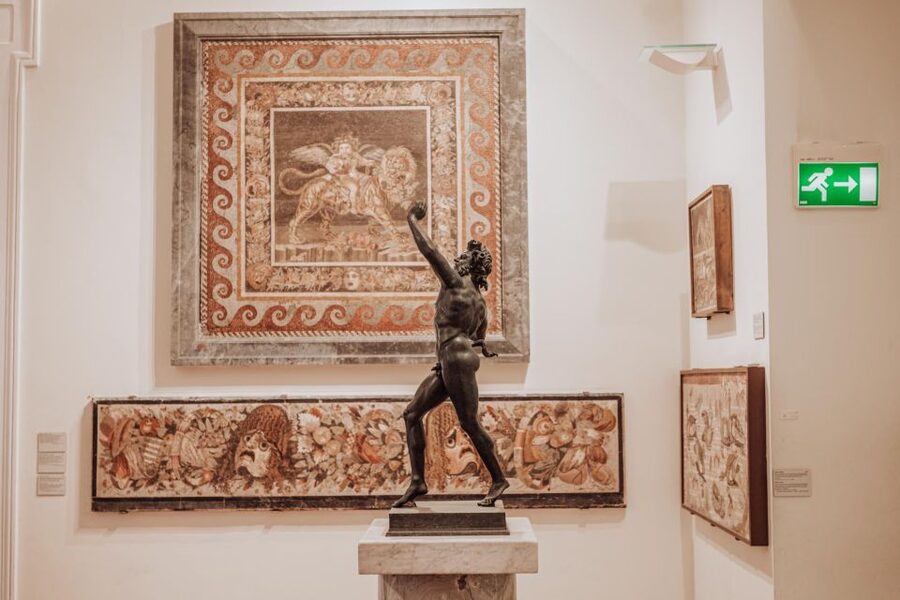
- The Farnese collection anchors the visit: See the Farnese Hercules, Toro Farnese, and other major Greek and Roman sculptures.
- Pompeii and Herculaneum take center stage: Frescoes and mosaics preserved by the eruption of Mount Vesuvius in 79 AD help bring those archaeological sites to life.
- A guide matters here: The museum is vast, and a good route keeps you from wandering past important works without context.
- The guides have strong academic backgrounds: Past tours have been led by practicing archaeologists and university teachers, including Silvia and Nicoletta.
- You can keep exploring afterward: The two-hour tour ends inside the museum, letting you return to favorite objects or see more galleries at your own pace.
- Plan for a light day: The tour requires standing and walking, and the museum does not suit visitors with mobility impairments or wheelchair users.
Why this museum makes a better second stop after Pompeii
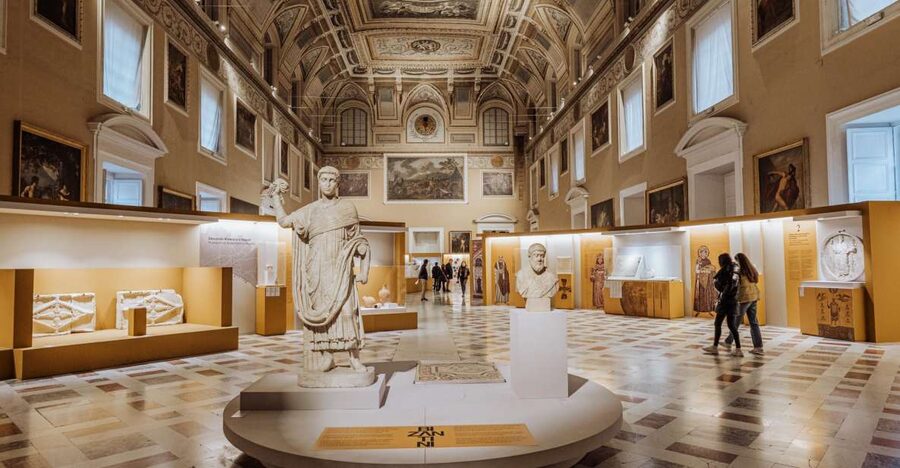
The National Archaeological Museum is not just another collection of ancient statues. It is the place where many objects found in Pompeii and Herculaneum are now displayed, protected from the weather and arranged beside works from the wider Greek and Roman world.
I especially recommend visiting Pompeii first if your schedule allows. Once you have walked through a house, bakery, or public building at the excavated site, a fresco or mosaic in the museum feels less like an isolated artwork and more like part of a real home.
The same applies to Herculaneum. That smaller site is known for exceptionally preserved material, while the museum lets you study selected objects at close range. Guides such as Silvia and Nicoletta have been praised for making these links clear, explaining how the art around the Bay of Naples reflects both Greek influence and Roman life.
You do not need prior knowledge to enjoy the tour. The guide explains what you are looking at, why it matters, and how to read an ancient work of art. That last point is useful because a museum full of marble figures can become a blur of similar-looking bodies and faces without a little direction.
More Archaeological Museum visits:
- Naples: National Archaeological Museum Ticket & Audio App
★ 4.4 · 617 reviews - Naples: National Archaeological Museum Tour & Digital Guide
★ 4.2 · 177 reviews - Naples: National Archaeological Museum audio guide
★ 4.0 · 155 reviews
Meeting the guide outside the ticket office
The meeting point is outside the museum ticket office at the Museo Archeologico Nazionale di Napoli. Look for the guide holding an ASKOS TOURS sign.
This is a practical arrangement, since you do not need to find a separate office or travel elsewhere in Naples. You are responsible for getting to the museum, though, as transportation is not included. Food and drinks are also not part of the booking.
The tour includes entry and skip-the-line access. That saves time at a busy museum, but it does not remove the need to arrive at the correct meeting point. I would allow a little extra time to find the ticket office, especially if you are coming through central Naples and are still getting used to the city’s busy streets.
The tour is offered in English or Italian. Past English-language groups have included visitors from several countries, and many guides have been praised for clear speech, humor, and patience with questions. Still, one practical point deserves attention: a few people had trouble hearing when the audio equipment was poor or a guide had a sore throat. If hearing clearly is important to you, ask at the start about ear pieces. One visitor with hearing loss found the provided system especially useful.
Entering the museum and finding a route through the collection
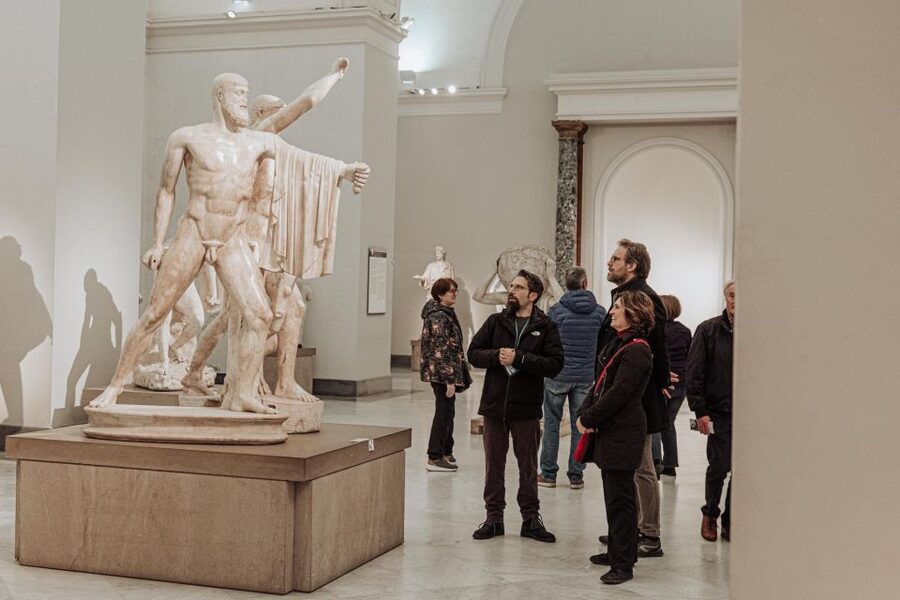
Once inside, your guide takes control of a building that can feel confusing on a first visit. The museum contains Greek and Roman sculpture, coins, wall paintings, mosaics, and material from Pompeii and Herculaneum. Its size is part of the appeal, but it can also make an unguided visit tiring.
The route is designed as a highlights visit rather than a room-by-room survey. That is the right approach for two hours. You get a sense of the collection’s main themes, see important objects, and receive enough explanation to continue alone afterward.
Guides have different personalities, but the strongest examples in this tour have included Silvia, a practicing archaeologist and university teacher, and Nicoletta, praised for her enthusiasm for Naples and the Roman world around the Bay of Naples. Salvatore has also been singled out for making the art approachable and answering a wide range of questions.
Expect a walking tour with regular stops in front of major works. You will need to stay with the group so you can hear the explanation and keep the route moving. The pace has generally been described as comfortable, though the museum’s scale means you should not expect long periods seated in every gallery.
The Farnese Hercules and the museum’s giant sculptures
The Farnese Collection is one of the major reasons to book this visit. It is famous for classical sculpture, and the tour focuses on works such as the Farnese Hercules and the Toro Farnese.
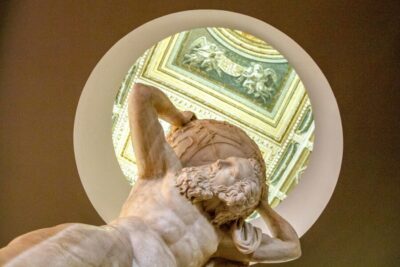
The Farnese Hercules is hard to miss. The figure’s massive scale and muscular back make it a memorable introduction to the museum’s taste for dramatic Roman copies and interpretations of Greek subjects. A guide can help you notice details that disappear when you simply walk around the statue, including how the pose and body shape convey both strength and weariness.
The Toro Farnese offers a different kind of spectacle. Rather than presenting one isolated hero, it shows a complex mythological scene with several figures and a strong sense of movement. This is exactly the sort of object that benefits from a guide because you need help sorting out the story, the characters, and the way the sculpture was designed to be viewed.
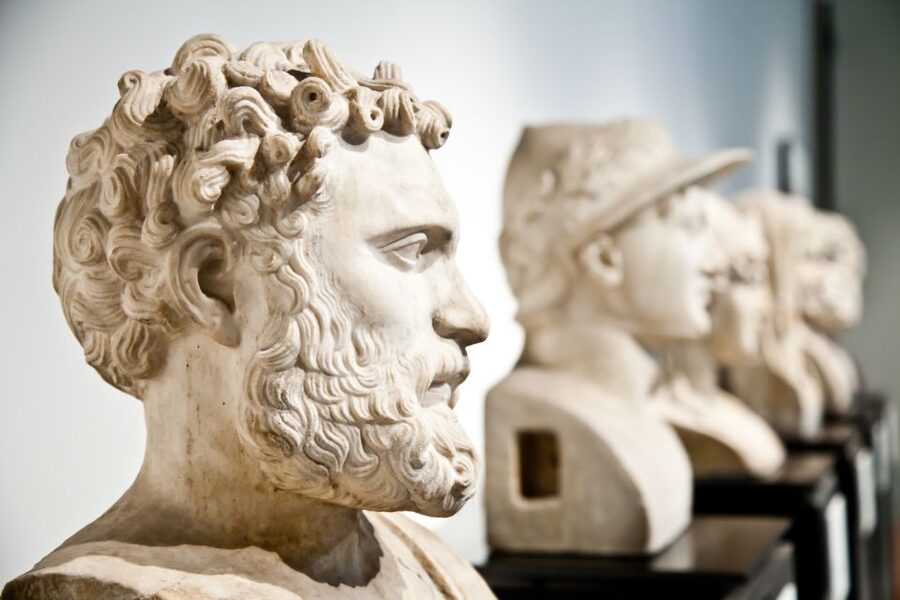
The corridors themselves add to the visit. Busts of Greek and Roman gods, emperors, and other figures line the route, creating a striking procession of marble faces. I like these passages because they show how ancient portraiture worked, though the number of busts can be overwhelming. Your guide helps you pause at the important examples instead of trying to inspect every head.
More museums and sites in Naples:
- Capodimonte Museum in Naples
★ 4.0 · 115 reviews - Sant’Aspreno ai Crociferi: Church & Jago Museum Guided Tour
★ 4.9 · 86 reviews - Skip the Line: National Archaeological Museum of Naples Entry Ticket
★ 3.5 · 82 reviews - National Archaeological Museum of Naples
★ 4.5 · 61 reviews
Pompeii mosaics and frescoes preserved by Vesuvius
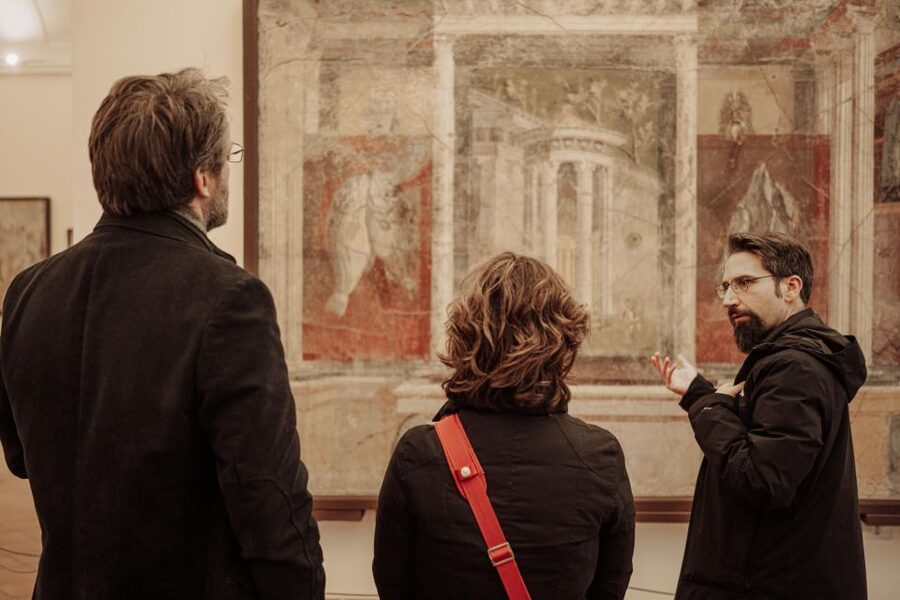
For many people, the most rewarding section is the material from Pompeii and Herculaneum. The eruption of Mount Vesuvius in 79 AD preserved wall paintings and mosaics that would otherwise have been lost. In the museum, you can study their colors, patterns, and small details without the distractions of a large outdoor excavation.
The mosaics are often the visual highlight. Their tiny pieces create figures, scenes, and borders with remarkable precision. One major mosaic showing Alexander the Great and Darius has at times been under restoration, so its availability may change. Even when a famous work is partly covered, the museum still offers plenty to see in the surrounding collection.
The frescoes give you another view of ancient life. They were not made as museum decorations. They belonged to houses and public spaces, and their subjects could include mythology, theatrical scenes, decorative panels, and figures from everyday Roman culture. A guide can explain how to look at the composition and identify repeated artistic ideas.
If you have already visited Pompeii, this part of the tour becomes a useful follow-up. You can recognize styles and subjects from the ruins, then see them preserved and presented as individual works. If you have not yet visited Pompeii, the museum still provides a strong preview, though the experience will not replace walking through the ancient streets.
Greek gods, Roman emperors, coins, and wall paintings
The museum covers far more than the eruption sites. Your route may include representations of Greek gods, Roman emperors, coins, and additional wall paintings. These objects show how Greek art and mythology continued to shape Roman culture.
The sculptures can be read at several levels. You might first notice the polished marble and idealized bodies. Then the guide may point out an attribute, pose, or symbol that identifies the figure. That small piece of information can turn a generic statue into a recognizable god, ruler, or mythological character.
Coins are easy to overlook in a museum filled with giant sculpture. They deserve attention because their small portraits and symbols reveal how rulers presented themselves. They also show the practical side of the ancient world, beyond the grand mythological scenes.
The wall paintings and mosaics reward patience. Some details are easy to miss from a distance, especially when the group needs to keep moving. Ask questions as you go. The best part of a live tour is that you can ask why a scene was painted, what a figure represents, or how an object was found.
What a two-hour guided tour can and cannot cover
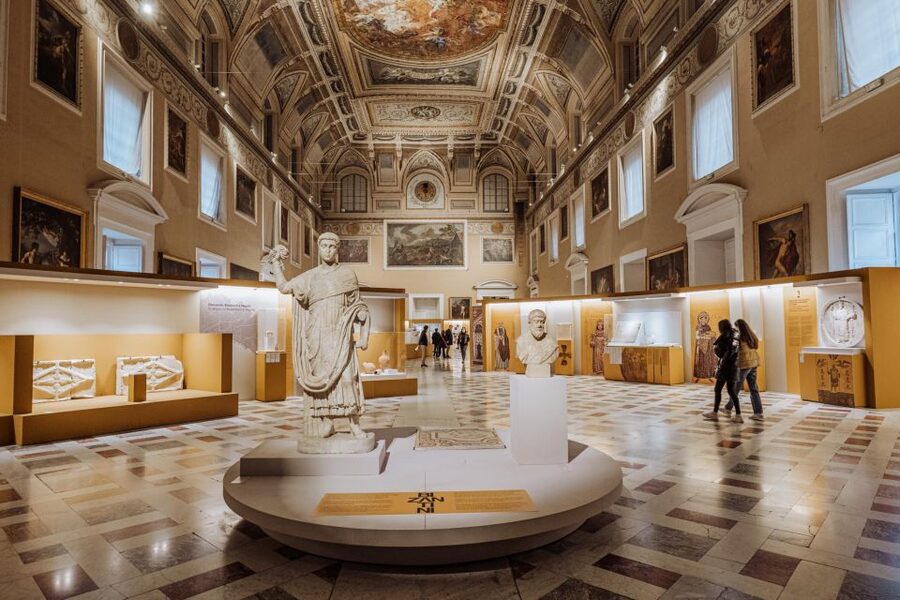
Two hours gives you a strong orientation, not a complete museum visit. Several people have found the tour satisfying because it reaches the main highlights, while also wishing it lasted longer. Both reactions make sense.
A guide keeps the visit focused. You are less likely to spend half an hour in one room and then rush past the Farnese sculpture or Pompeii galleries. The tradeoff is that you may pass exhibits that catch your eye without stopping.
I suggest treating the guided portion as your introduction. Listen closely, ask questions, and note which rooms you want to revisit. Afterward, remain in the museum and use your extra time for personal interests. You might return to the Hercules, spend longer with the mosaics, or seek out paintings and coins that received only a brief mention.
This arrangement works particularly well for first-time visitors. An audio guide can give basic facts, but it cannot respond when you ask a follow-up question or change your pace. Several guides have also allowed time for extra explanations and additional exhibitions when the group’s timing permitted it.
Price, group value, and the skip-the-line benefit
The price is $52 per person. Museum admission is included, listed at 20 euros for an adult and 2 euros for reduced EU citizens aged 18 to 25. The remaining cost pays for the archaeologist guide, organization, and skip-the-line access.
That is not the cheapest way to enter the museum. If you already know the collection, speak Italian or English well, and have plenty of time, independent entry may offer better value. You can also remain inside after the tour, but the booking itself is built around a guided introduction rather than an all-day escort.
For a first visit, I think the price is easier to justify. The museum is big, the key works are spread through different sections, and the historical connections are not always obvious. A good guide can save you from spending your limited Naples time on rooms that are less important to you.
The value is strongest if you pair this visit with Pompeii or Herculaneum. The guide’s explanations give the excavated sites a wider artistic and cultural setting, while the museum helps you recognize what you saw outdoors.
Who should book this Naples museum tour
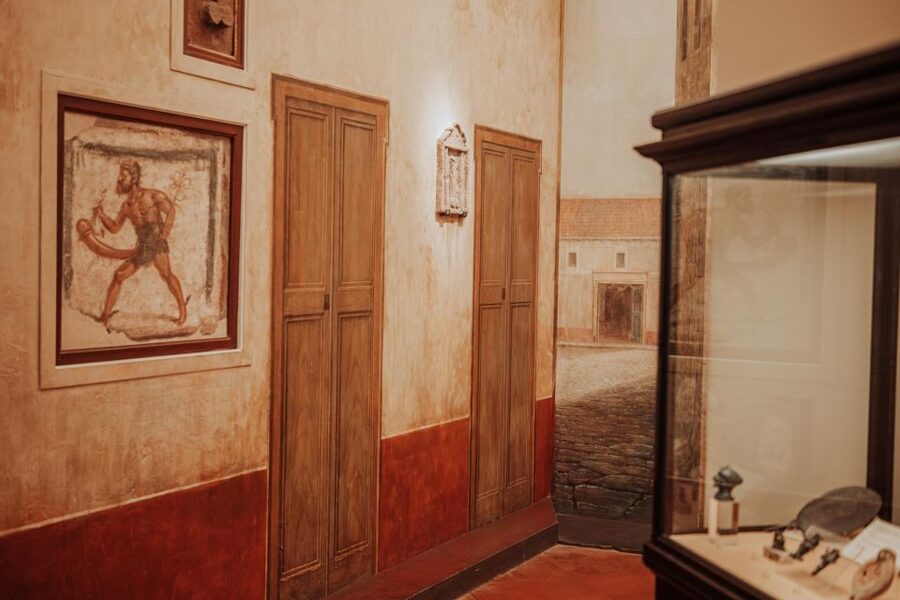
I would choose this tour if you want structure, expert interpretation, and the ability to ask questions. It suits people who find classical art difficult to approach, as well as anyone who wants more than labels beside display cases.
Families and mixed-age groups may also appreciate the clear route. One person took the tour with a grandmother and found it an enjoyable shared visit. The two-hour length gives you a manageable introduction without committing to a full day of ancient art.
History lovers will get the most from the links between the museum, Pompeii, Herculaneum, and the Greek and Roman cultures of Campania. The tour also works for casual sightseers because guides use stories, humor, and visual details rather than assuming advanced study.
I would hesitate if you have mobility limitations. The activity is not suitable for wheelchair users or people with mobility impairments, and non-folding wheelchairs, electric wheelchairs, baby strollers, large bags, and oversize luggage are not allowed. The restrictions are important, not a minor footnote.
Practical details that affect your day
The visit lasts two hours, with starting times depending on availability. Since transportation is not included, plan your route to the museum separately and keep your hands free for walking and listening.
The tour is available in English and Italian. The booking allows cancellation up to 24 hours before the start for a full refund, and you can reserve now and pay later. These options are useful if your Naples plans depend on weather, train schedules, or a changing Pompeii itinerary.
Try to schedule the museum after Pompeii if you can. That order gives the paintings and mosaics an immediate connection to places you have already seen. If the museum must come first, use it as preparation and pay attention to the objects that you may later recognize at the excavations.
Should you book the Askos Tours museum visit?
Book it if this is your first time at the National Archaeological Museum of Naples, especially if you have visited or plan to visit Pompeii and Herculaneum. The combination of skip-the-line entry, an archaeologist guide, major Farnese sculptures, and preserved eruption-era art gives you a strong two-hour foundation.
Skip it if you prefer to move entirely alone, want to examine every gallery at length, or qualify for the very low reduced admission and do not need interpretation. For most first-time visitors, though, the museum’s size makes guidance worthwhile. I would book the tour, listen carefully, then stay inside and explore the rooms that catch your eye.
FAQ
How long is the guided tour?
The guided visit lasts two hours. Afterward, you may stay in the museum and continue looking at the collections on your own.
What does the tour include?
The booking includes the guided tour, an archaeologist guide, and entry to the Archaeological Museum of Naples. Transportation, food, and drinks are not included.
Where do I meet the guide?
Meet outside the ticket office of the Archaeological Museum of Naples. The guide will hold an ASKOS TOURS sign.
What languages are available?
The live tour is available in English and Italian.
Can I bring a large bag or stroller?
No. Oversize luggage, luggage or large bags, and baby strollers are not allowed. Non-folding wheelchairs and electric wheelchairs are also not permitted.
Can I cancel the booking?
Yes. You can cancel up to 24 hours in advance for a full refund. You can also reserve now and pay later.
Just added around Naples
- Full-Day Tour of the Amalfi Coast and Pompeii from Naples★ 4.5 · 3 reviews
- The Ultimate Neapolitan Cooking Class with Local★ 5.0 · 3 reviews
- Naples: Old City Center Street Food Tour with Spritz★ 4.7 · 3 reviews
- Visit in Pompeii – Naples Private Tour with Ada★ 5.0 · 3 reviews
- Transfer from Naples to Sorrento or viceversa★ 5.0 · 3 reviews
- Naples: National Gallery of Capodimonte Tour★ 5.0 · 3 reviews
- Visit 2 wine producers with tasting and transportation included★ 5.0 · 3 reviews
- Naples: Mozzarella experience★ 5.0 · 3 reviews
Archaeological Museum Tours, compared.
National Archaeological Museum Ticket & Audio App
Read our review →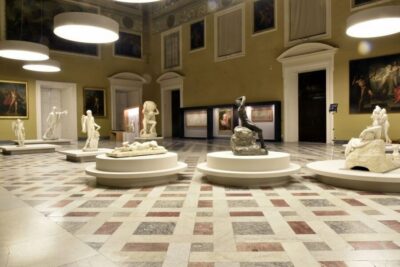
National Archaeological Museum Tour & Digital Guide
Read our review →

Skip the Line: National Archaeological Museum of Naples Entry Ticket
Read our review →

Naples Archaeological Museum 2-Hour Guided Private Tour
Read our review →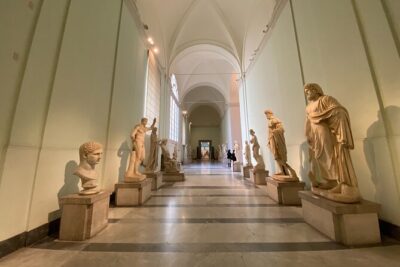
Private Tour of the National Archaeological Museum of Naples
Read our review →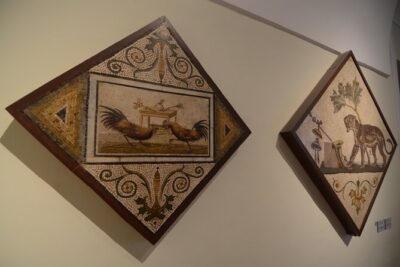
Browse the lists this tour appears in