Reviewed · TICKETS
Naples: San Lorenzo Maggiore and Neapolis Sotterrata Ticket
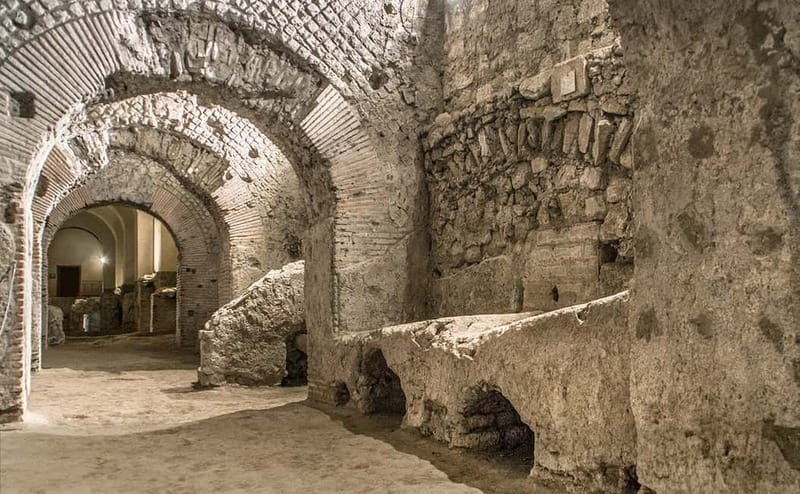
Ten meters below a church in central Naples, an ancient Greek-Roman city waits beneath your feet. At Neapolis Sotterrata, you walk beside an old road and see the remains of the Macellum, the commercial heart of ancient Naples. It is a small excavation, but the setting gives it real force: modern Naples is directly above you.
I like two things especially. First, the visit joins underground archaeology with the beautiful rooms of San Lorenzo Maggiore, so you get more than a single ruin. Second, the $10 price is fair for the church complex, cloister, Gothic halls, museum, and subterranean site. The main caution is scale: this is not the large, half-flooded Napoli Sotterranea route, and some people may find the underground section limited.
In This Review
- Key points
- Start at Piazza San Gaetano, in the heart of old Naples
- San Lorenzo Maggiore gives the visit its wider meaning
- The Cloister and Chapter Hall show medieval Naples
- Sisto V Hall rewards a careful look upward
- Ten meters below, Neapolis Sotterrata changes the scale
- The ancient market is the archaeological highlight
- The museum fills in the missing centuries
- How the $10 ticket compares with the experience
- What the visit feels like in practice
- Who should book San Lorenzo Maggiore
- Practical tips for a smoother visit
- Should you book this ticket?
- FAQ
- Where does the San Lorenzo Maggiore experience start?
- Where does the visit end?
- What does the $10 ticket include?
- Is entry to the Basilica of San Lorenzo Maggiore included?
- What is Neapolis Sotterrata?
- How far underground do you go?
- Is a guided tour included?
- Is an audio guide available?
- Can I cancel or pay later?
Key points
- Walk 10 meters below Piazza San Gaetano: See an ancient road and the remains of the Neapolis market beneath the church.
- Look up at the Sisto V Hall: Its ceiling frescoes provide a striking contrast to the rough archaeological remains below.
- See the Gothic Chapter Hall: A late fourteenth-century portal and Franciscan architecture add an art and architecture stop.
- Allow time for the museum: It traces Naples from the classical age through the nineteenth century with old relics and displays.
- Download the free audio guide on site: It can help explain the ruins, though access to the guide has not always worked smoothly.
- Consider the €2 guided tour: It is available on site and may make the underground remains easier to understand.
Start at Piazza San Gaetano, in the heart of old Naples

The entrance is at Piazza San Gaetano, 316, in the historic center. This is a useful location if you are already exploring central Naples, since San Lorenzo Maggiore sits at the geographic center of the ancient city. You finish back at the same complex, with no transport arranged or needed as part of the activity.
The visit is valid for one day, so you are not locked into a tightly timed route once you enter. Check the available starting times when booking, then plan enough room for the rooms, museum, and underground excavation. The site itself is well suited to a rainy afternoon, and the underground section offers a cool break on a hot day.
I would wear shoes with good support. You are visiting a church complex, museum, cloister, and archaeological excavation, so comfortable clothing makes the whole stop easier. The complex is listed as wheelchair accessible, but the underground areas and historic architecture can still involve surfaces and spaces that deserve a little patience.
A few more Naples trips worth weighing up
- Naples: Catacombs of San Gennaro Entry Ticket & Guided Tour
★ 4.6 · 7,941 reviews - Naples: Downtown Tour with Veiled Christ & St Clare Tickets
★ 4.9 · 6,462 reviews - Naples: Hop-on Hop-off Bus Tour 24-Hour Ticket
★ 4.3 · 5,157 reviews
San Lorenzo Maggiore gives the visit its wider meaning
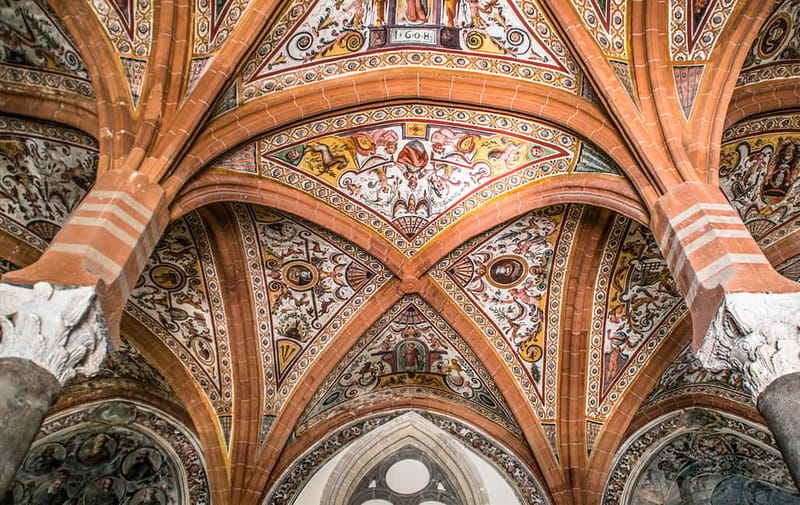
San Lorenzo Maggiore is not simply a doorway to ruins. It is a large religious and architectural complex built over layers of Naples history. That layering is the point: Greek and Roman Naples lies below, while medieval and later religious spaces occupy the levels above.
The Basilica of San Lorenzo Maggiore is free to enter, while the ticket covers the complex around it. That makes it worth seeing the church itself before or after the paid visit. The Franciscan connection is visible in the architecture and decoration, and it helps explain why the complex feels like both a museum and a living religious site.
The best approach is to resist rushing straight underground. The upper rooms provide the visual setting that makes the excavation more interesting. After seeing the Gothic details and painted ceilings, you will have a clearer sense of how many periods are packed into this one address.
The Cloister and Chapter Hall show medieval Naples
The Cloister offers a quieter change of pace from the square outside. It leads you into the complex and toward the Chapter Hall, where a Gothic portal from the late fourteenth century provides one of the clearest architectural details on the route.
I like this part because it slows the visit down. Naples can be noisy and crowded, but the cloister gives you a more measured space before the underground section. The Chapter Hall also helps balance the archaeological focus. You are not only looking at broken walls and excavated foundations. You are seeing the rooms that shaped the later life of the site.
The Gothic character is especially useful for anyone who enjoys buildings as much as archaeology. If your main interest is ancient Rome, you may move through this section quickly. If you like art, architecture, and religious history, give it more time.
Sisto V Hall rewards a careful look upward
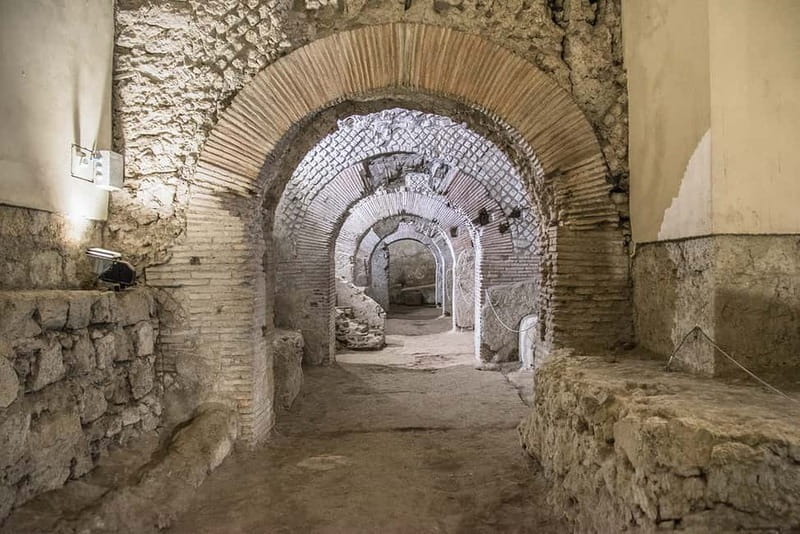
The Sisto V Hall is one of the strongest parts of the visit for visual appeal. Its ceiling frescoes bring color and decoration into a tour that later moves down to stone, brick, and exposed archaeological remains.
I would not treat this room as a quick passage. Look up and give your eyes time to adjust to the paintings. The frescoes show the Franciscan side of the complex at its most decorative, while the nearby Gothic spaces feel more restrained.
This contrast is one of the ticket’s better features. You can move from painted religious interiors to the physical remains of an older city without leaving the building. That change in mood makes the visit feel broader than its modest price suggests.
A completely different sort of day out of Naples:
- From Naples: Pompeii Ruins & Mount Vesuvius Day Tour
★ 4.3 · 11,459 reviews - From Naples: Sorrento, Positano and Amalfi Full-Day Tour
★ 4.6 · 10,988 reviews - From Naples: Sorrento, Positano & Amalfi Coast – Small Group Tour
★ 5.0 · 8,643 reviews - Naples: Pizza-Making Workshop with Drink and Appetizer
★ 4.9 · 5,411 reviews
Ten meters below, Neapolis Sotterrata changes the scale
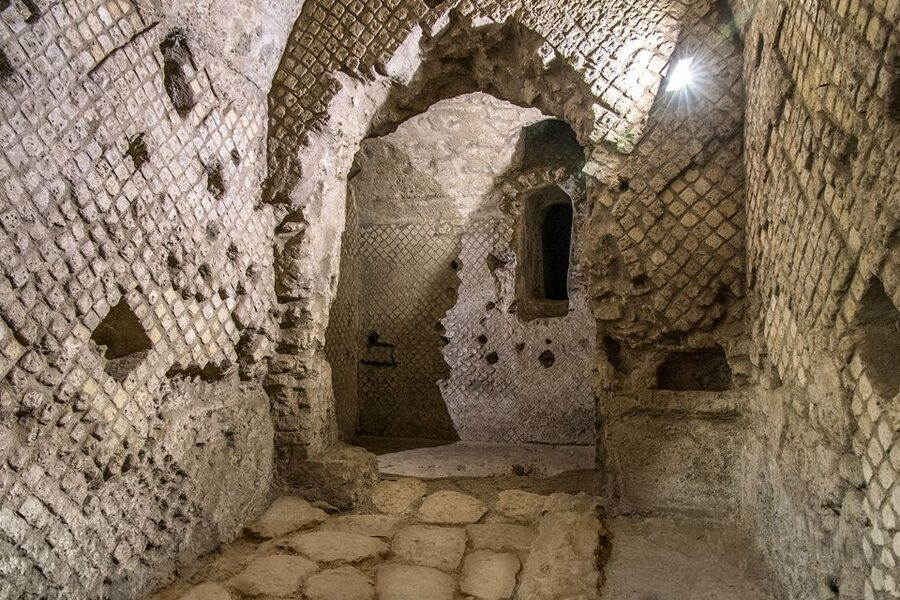
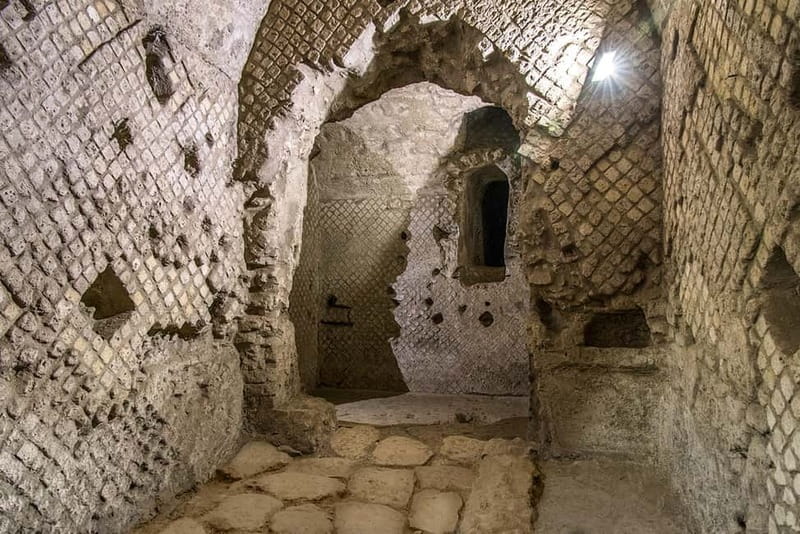
The underground section is the main reason most people buy this ticket. You descend about 10 meters and reach the remains of Neapolis, the Greek-Roman city founded in 470 B.C. Here, the past is not presented as a distant monument. It is beneath the modern city, in the same place where Naples continued to grow over many centuries.
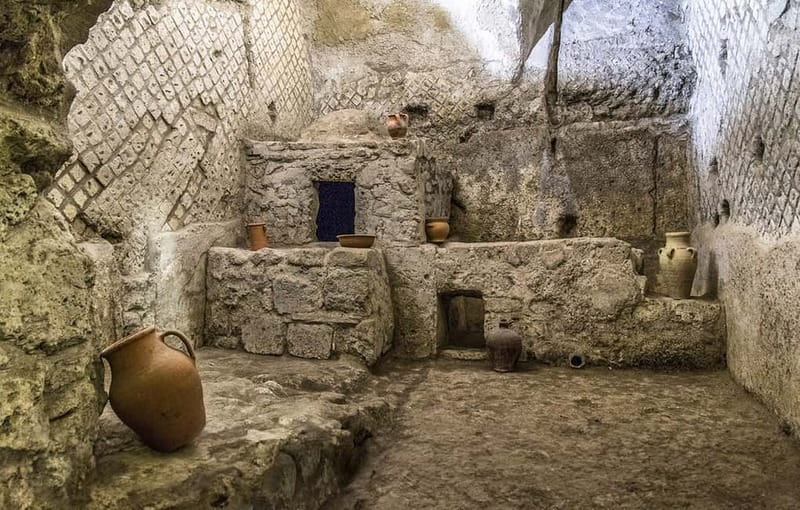
The route includes an ancient road and the remains of the Macellum, an old commercial market. Walking beside these structures gives you a useful sense of how the ancient city was organized. You are looking at the remains of a working urban area, not only a ceremonial building.
The excavation is not huge. You should expect an intimate archaeological visit rather than a vast underground network. There is no amphitheater on this route, and it does not cover every form of subterranean Naples. The section can be appreciated in roughly half an hour, depending on how closely you read the information and how much time you spend examining the remains.
That smaller scale is both a benefit and a limitation. I like that you can take in the site without being hurried through a long maze. The drawback is that the title can create an inflated idea of what you will see. This is the ancient city and market beneath San Lorenzo Maggiore, not the separate, half-flooded underground Naples experience often associated with the broader name Napoli Sotterranea.
The ancient market is the archaeological highlight

The Macellum gives the underground visit its clearest focus. An ancient market tells you something practical about city life: people came here to buy, sell, and carry out ordinary business. That makes the site easier to picture than ruins with no clear purpose.
You can also see recovered artifacts in the underground area and the museum. These objects help connect the large idea of two thousand years of Naples history with the smaller details of daily life. Even if you are not an archaeology specialist, the market setting gives you a simple way to understand what you are seeing.
A guide can help here. The optional guided tour costs €2 and can be booked on site. A strong explanation matters in an excavation because old walls do not always announce their original function. If you want the site to make sense rather than simply look atmospheric, I would consider paying the small supplement.
The available host or greeter languages are English and Italian. A guided visit can vary with the individual guide, so it is sensible to confirm the language and timing on site. You can also use the free audio guide, but download problems have occurred, including trouble getting a QR code to work. If the guide is important to you, do not wait until the last moment to test it.
The museum fills in the missing centuries
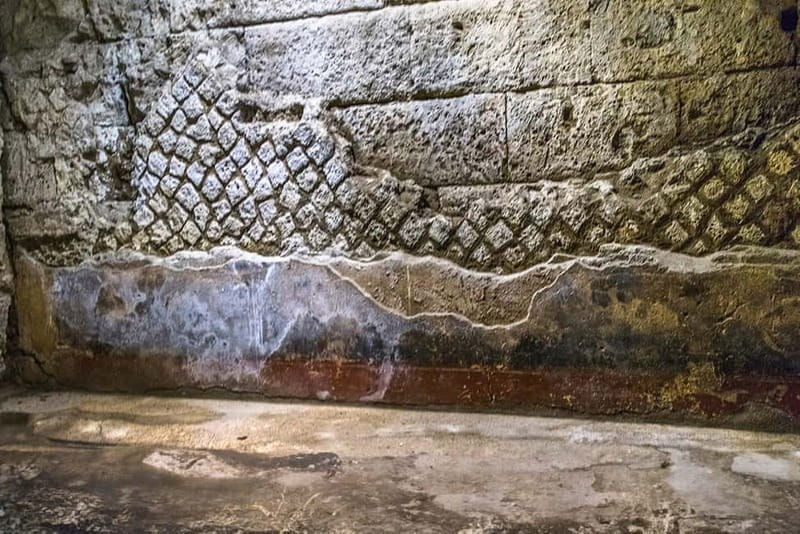
After the underground ruins, make time for the museum. It presents a cross-section of Naples from the classical age through the nineteenth century, which gives the visit its broadest historical reach.
The museum is especially useful because the archaeological area is selective. Underground excavations cannot show every stage of a city’s development. Museum displays and old relics help fill the gaps between ancient Naples, the medieval complex, and later centuries.
I would allow extra time here instead of treating it as an optional hallway. The museum adds context to the objects and structures you have already seen, and it is also a good place to pause after the descent underground. Several rooms, including a library area, add variety to the visit.
The museum will not replace a large national archaeological museum if you want an enormous collection. Its value is different. It gives you a compact overview tied directly to the building beneath your feet.
How the $10 ticket compares with the experience
At $10 per person, this is a good-value cultural stop if you want several modest attractions in one place. Your ticket includes the cloister, Chapter Hall, Sisto V Hall, museum, and Neapolis Sotterrata. The Basilica itself is free, and the audio guide does not add to the ticket price.
The value is strongest for visitors who enjoy variety. In one visit, you get religious art, Gothic architecture, a museum, and an ancient market. You do not need to arrange separate transport, and the central location makes it easy to add before or after other sightseeing in old Naples.
The value is weaker if you are buying the ticket only for an extensive underground adventure. The excavation is limited in size, and the route does not show the larger range of spaces found on other underground tours. In that case, read the name carefully and set your expectations around one archaeological area beneath the church.
The €2 guided tour is a sensible possible upgrade. It is inexpensive, and the underground ruins are easier to appreciate when someone explains what each section represents. If you prefer independent visits, the free audio guide should be enough when it works properly, and the English descriptions on site can still help.
What the visit feels like in practice
This is a flexible, self-paced experience rather than a long guided excursion. You start at the entrance in Piazza San Gaetano, move through the complex, descend to the excavation, and finish at the same meeting point.
The route gives you several natural pauses. The cloister provides a calm transition, the Sisto V Hall offers a visual highlight, the underground section supplies the main archaeological moment, and the museum lets you gather the pieces afterward.
I would not book this expecting a dramatic, hours-long expedition. It works better as a focused stop of about an hour or more, depending on your pace and interest. The underground portion itself may take around half an hour, while the upper rooms and museum deserve additional attention.
Because the activity is valid for one day, check the stated availability and starting times before you arrive. The experience is also covered by free cancellation up to 24 hours in advance, and you can reserve now and pay later, which is useful when your Naples plans are still changing.
Who should book San Lorenzo Maggiore
I would recommend this to you if you like seeing how different periods share one site. It suits people who want ancient ruins but also care about churches, frescoes, cloisters, and museums.
Families and first-time visitors to Naples may find the range helpful. The ancient market gives children a concrete story about city life, while the frescoed rooms and museum offer something for adults with different interests. The cool underground space can also be welcome during hot weather.
It is a good rainy-day choice because much of the visit is indoors. It also works well when you want a central attraction that does not require a full day or complicated transport.
I would be more cautious if you want a major archaeological complex or a large underground route. The excavation is meaningful but compact. You should also choose the guided option if ancient ruins are difficult for you to interpret without explanation.
Practical tips for a smoother visit
Use Piazza San Gaetano, 316 as your destination rather than relying on GPS alone. One person had a route that led past the entrance, so double-check the address and look for the entrance to the San Lorenzo Maggiore complex.
Try the audio guide soon after arriving, especially if you plan to use your phone. If the QR code or download fails, ask on site about the €2 guided tour or use the written information available in English.
Do not skip the museum. The underground ruins are the headline attraction, but the museum helps you understand how Naples changed from the classical age to the nineteenth century.
Wear comfortable shoes, and allow time to look up in Sisto V Hall as well as down in the excavation. The visit rewards attention in both directions.
Should you book this ticket?
Book it if you want a reasonably priced, central visit that combines an ancient market, Franciscan art, Gothic rooms, and a museum. The underground remains are the star, but the upper complex makes the ticket more worthwhile and gives the visit a wider sense of Naples across two thousand years.
Do not book it expecting the full range of subterranean Naples or a huge ruin field. If you understand that Neapolis Sotterrata is a compact archaeological site beneath San Lorenzo Maggiore, the experience offers a thoughtful and manageable look at the city below the city. Add the €2 guided tour if you want clearer explanations, and leave time for the museum.
FAQ
Where does the San Lorenzo Maggiore experience start?
The entrance to the complex is at Piazza San Gaetano, 316, in Naples.
Where does the visit end?
The activity ends back at the meeting point at the San Lorenzo Maggiore complex.
What does the $10 ticket include?
It includes the Cloister, Chapter Hall, Sisto V Hall, Museum, and entry to Neapolis Sotterrata.
Is entry to the Basilica of San Lorenzo Maggiore included?
The entrance to the Basilica is free.
What is Neapolis Sotterrata?
Neapolis Sotterrata is the underground archaeological area beneath San Lorenzo Maggiore. It includes an ancient road and the remains of the Macellum, an old market in the ancient Greek-Roman city.
How far underground do you go?
You descend about 10 meters below ground to reach the ancient ruins.
Is a guided tour included?
A guided tour is not included in the ticket. It is available to book on site for €2.
Is an audio guide available?
A free audio guide is available to download on site. If the download or QR code does not work, you can ask about the guided tour or use the information provided at the complex.
Can I cancel or pay later?
You can cancel up to 24 hours in advance for a full refund. You can also reserve now and pay later, according to the activity terms.
Just added around Naples
- Full-Day Tour of the Amalfi Coast and Pompeii from Naples★ 4.5 · 3 reviews
- The Ultimate Neapolitan Cooking Class with Local★ 5.0 · 3 reviews
- Naples: Old City Center Street Food Tour with Spritz★ 4.7 · 3 reviews
- Visit in Pompeii – Naples Private Tour with Ada★ 5.0 · 3 reviews
- Transfer from Naples to Sorrento or viceversa★ 5.0 · 3 reviews
- Naples: National Gallery of Capodimonte Tour★ 5.0 · 3 reviews
- Visit 2 wine producers with tasting and transportation included★ 5.0 · 3 reviews
- Naples: Mozzarella experience★ 5.0 · 3 reviews
Tickets, compared.
Catacombs of San Gennaro Entry Ticket & Guided Tour
Read our review →
Downtown Tour with Veiled Christ & St Clare Tickets
Read our review →

Mount Vesuvius: Skip-the-Line Ticket and Smart Digital Guide
Read our review →
The Bourbon Tunnel Guided Tour with Entrance Ticket
Read our review →
Galleria Borbonica Entrance Ticket in Standard Route
Read our review →