Reviewed · POMPEII TOURS
Pompeii: Private Tour with an Archaeologist
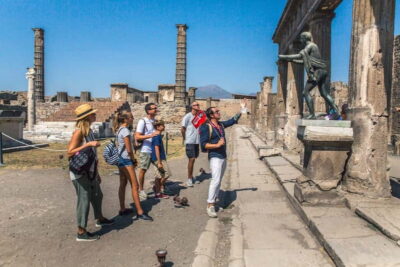
Pompeii is not a museum full of loose objects. It is a Roman town you can walk through, with streets, fountains, shops, villas, baths, theaters, and public squares still laid out under your feet. This private three-hour tour gives the ruins a human scale, especially when your guide points out small details that are easy to miss alone.
I like two things here. First, you get a guide trained in archaeology rather than a general escort reading a script. Second, the private format lets you ask questions, adjust the pace, and follow your interests. Guides such as Nicoletta, Patrizia, Jasmine, Silvia, Serenella, Annalisa, Laura, Diego, Paola, Michele, Mena, and Antonella have been praised for warmth, clear explanations, and personal attention.
The main tradeoff is time. Pompeii is enormous, and three hours gives you a strong introduction rather than every open corner. The tour also costs $508.15 for a group listed as up to one person, so check the final group pricing carefully before booking.
In This Review
- Key things to know before entering Pompeii
- Starting at Porta Marina Superiore
- Porta Marina and the first glimpse of Roman Pompeii
- Temple of Apollo, Forum, and Basilica
- House of Menander and the Forum Baths
- The Lupanare and the human side of the ruins
- House of the Faun and Pompeii’s elite homes
- The Large Theatre and the ancient entertainment district
- House of the Vettii and the final major stops
- Plaster casts and remembering the eruption
- What the private format changes
- Is $508.15 good value?
- Practical details that matter on the day
- Who should book this Pompeii tour?
- Should you book it?
- FAQ
- How long does the Pompeii private tour last?
- Where do I meet the guide?
- Where does the tour end?
- Is transportation included?
- Does the tour include Pompeii admission?
- Which languages are available?
- Is the tour private?
- What should I bring?
Key things to know before entering Pompeii
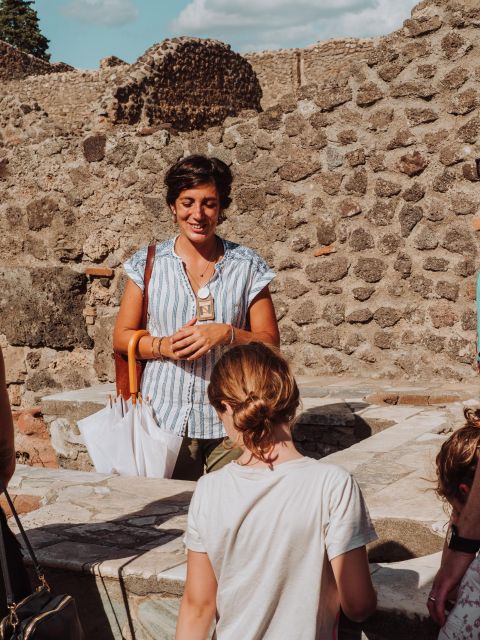
- Meet at Porta Marina Superiore: Find your guide in front of the Hortus bar-restaurant, identified by the lemons and oranges hanging outside.
- Follow the ancient city’s major sights: The route includes the Forum, Temple of Apollo, Basilica, villas, baths, brothel, theaters, and amphitheater.
- Expect a private group: You can ask questions freely and the guide can adapt the route to your interests and the crowds.
- Use skip-the-line entry: Admission fees are included, helping you avoid the regular ticket queue.
- Wear serious walking shoes: Pompeii’s ancient paving can make the three-hour walk tiring.
- Check accessibility before booking: The details describe the activity as wheelchair accessible in one place and not suitable for wheelchair users in another.
Starting at Porta Marina Superiore
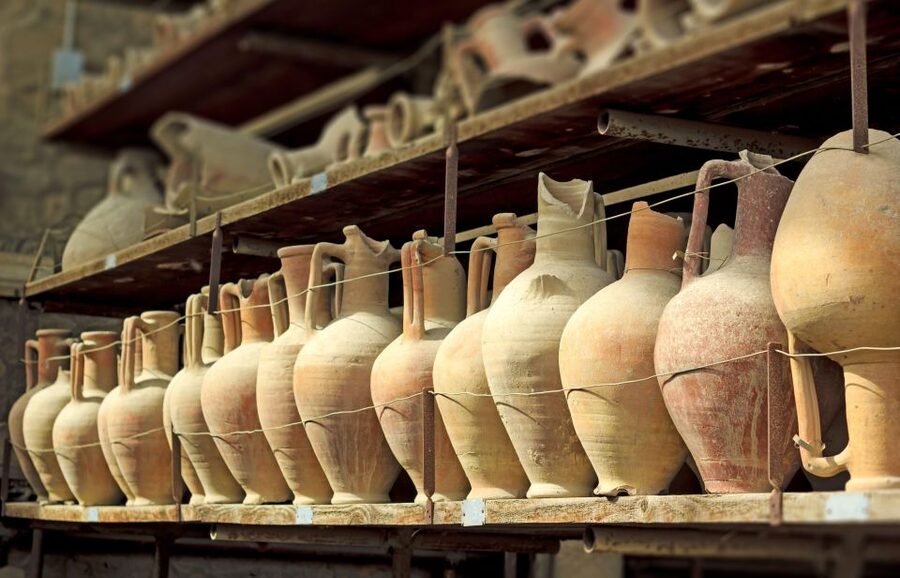
Your meeting point is Pompeii’s main gate, Porta Marina Superiore. Meet your guide in front of the Hortus bar-restaurant, the building with citrus fruit hanging outside. This landmark matters because the entrance area can be busy, and a precise meeting description is much better than simply being told to find the Pompeii gate.
Transportation is not included. You need to make your own way to the entrance, and the tour ends back at the meeting point. That makes this arrangement useful if you are already staying near Pompeii or arranging your own train, taxi, or car transfer. It is less convenient if you expect a guided excursion with transport from Naples, Sorrento, or the Amalfi Coast.
Bring water, though food and drinks are not supplied. Most important, wear comfortable shoes. Pompeii is an archaeological site, not a polished city walkway, and your feet will feel the difference by the end of the morning or afternoon.
More ways to see Pompeii:
- From Naples: Pompeii Ruins & Mount Vesuvius Day Tour
★ 4.3 · 11,459 reviews - Naples or Sorrento: Full-Day Pompeii and Mount Vesuvius Tour
★ 4.6 · 4,235 reviews - Pompeii & Mt.Vesuvius Day Tour from Naples with Pizza Lunch
★ 4.0 · 2,901 reviews
Porta Marina and the first glimpse of Roman Pompeii
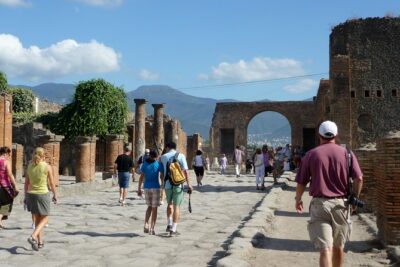
The walk begins at Porta Marina, one of the ancient entrances. From here, your guide introduces Pompeii as a functioning town rather than only the place where the eruption happened.
That change in viewpoint is important. The eruption is dramatic, but the most interesting part of Pompeii is often the ordinary evidence left behind: the way streets were arranged, the location of shops, the public fountains, and the relationship between private houses and civic buildings.
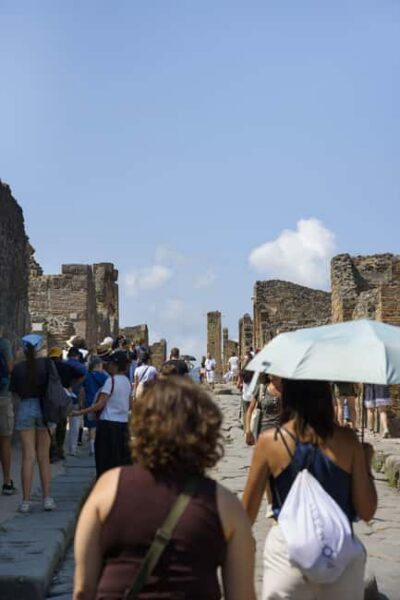
A guide can also help you read the paving stones and street layout. Without context, you may see walls and broken columns. With an archaeologist explaining their use, the site begins to make sense as a place where people worked, worshipped, bathed, shopped, watched performances, and managed public affairs.
Temple of Apollo, Forum, and Basilica
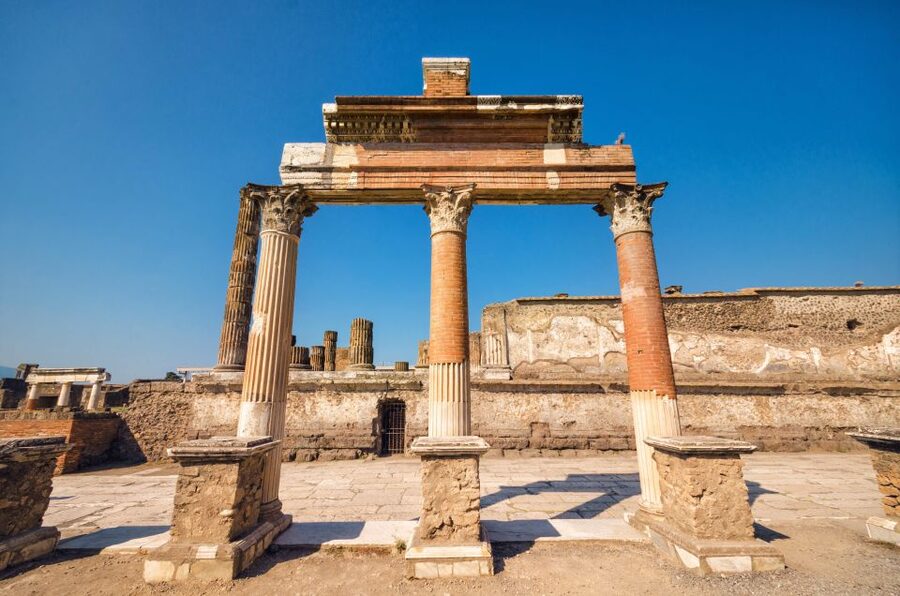
The Temple of Apollo is one of the first major religious sites on the route. Your guide explains its place within the town and helps you distinguish religious space from the civic buildings nearby.
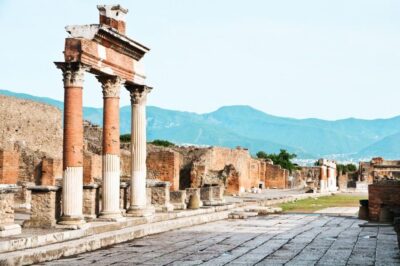
Then comes the Foro Civile di Pompei, the main Forum. This is the heart of the ancient city, surrounded by important buildings and temples. It is also one of the best places to understand Pompeii’s scale. You can look across the broad public space and see how religion, politics, commerce, and daily business met in one central area.
The Basilica follows. Despite its name, this was not a Christian church. In Roman cities, a basilica was a major public building used for legal and commercial business. This is the sort of detail that makes a private guide worthwhile. You are not left to guess what a grand ruin was for, and you can ask how its function fitted into Roman public life.
The itinerary also includes the Temple of Jupiter. Together, these stops give you a useful framework for Pompeii: sacred buildings, civic government, public law, and the city’s relationship with Rome.
House of Menander and the Forum Baths
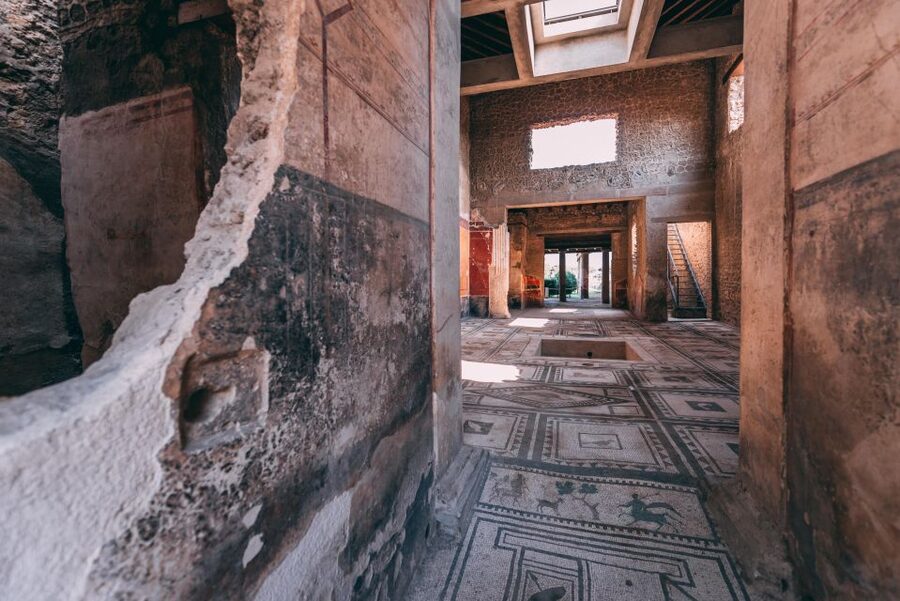
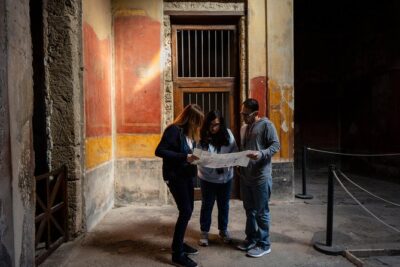
The House of Menander takes you from public Pompeii into private life. This large residence is an important stop because Roman homes were more than sleeping quarters. They were places for family life, social display, work, and receiving guests.
Your guide can draw your eye to the layout, decoration, and signs of status. Several guides have been praised for explaining small details that are easy to walk past, including the way houses reveal social differences and domestic habits. If you enjoy history, art, or anthropology, this is where the tour can become especially rewarding.
The Forum Baths offer another view of everyday life. Roman bathing was social as well as practical, and public baths were central to town life. The stop helps you move beyond the popular image of Pompeii as villas and temples. You see the infrastructure that supported ordinary routines.
This part of the walk can be intense because the site asks you to process many details at once. A private guide helps by selecting what matters instead of giving you a long list of dates and names.
A few more Naples trips worth weighing up
- Exclusive Naples Private Food Tour: 6 or 10 Tastings
★ 5.0 · 596 reviews - Private Day Tour: Sorrento, Positano, Amalfi, Ravello from Naples
★ 4.5 · 546 reviews - Private Day tour of Positano, Amalfi and Ravello from Naples
★ 5.0 · 522 reviews - Private Amalfi Coast Tour – Enjoy it with our local english speaking driver
★ 5.0 · 475 reviews
The Lupanare and the human side of the ruins
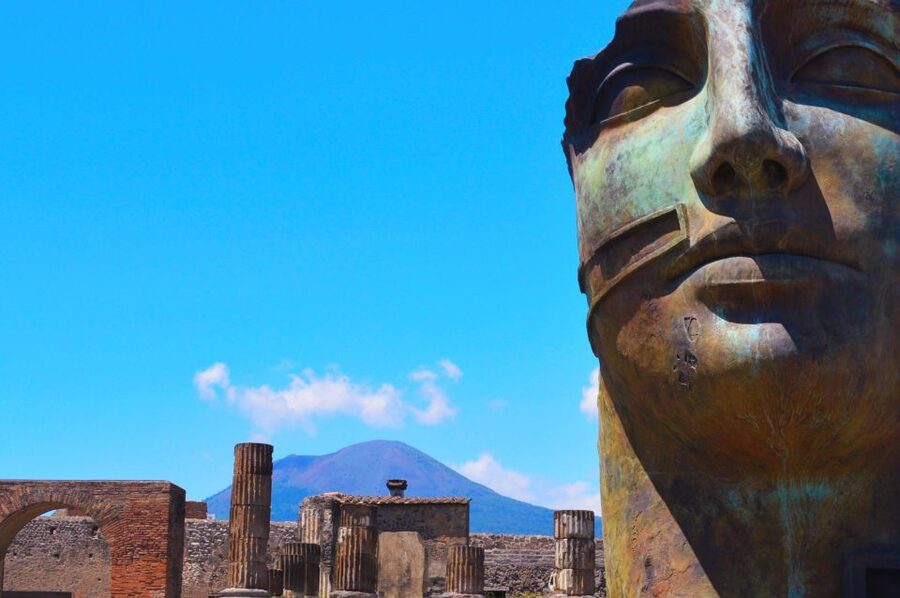
The Lupanare, commonly called the brothel, is one of Pompeii’s most recognizable stops. Its rooms and surviving decoration often attract a crowd, but the value of seeing it with a guide is the surrounding explanation.
A good guide places the building within the wider town instead of treating it as a quick joke or sensational photo stop. The tour descriptions emphasize how Romans lived, and this is one place where social customs, commerce, and private behavior meet.
Several guides, including Nicoletta and Silvia, have been praised for telling human stories and keeping the tone warm without losing respect for the people who lived and died here. That approach matters at Pompeii. The plaster casts later in the route are not props. They represent real individuals caught in a disaster, and the best interpretation keeps their humanity in view.
House of the Faun and Pompeii’s elite homes
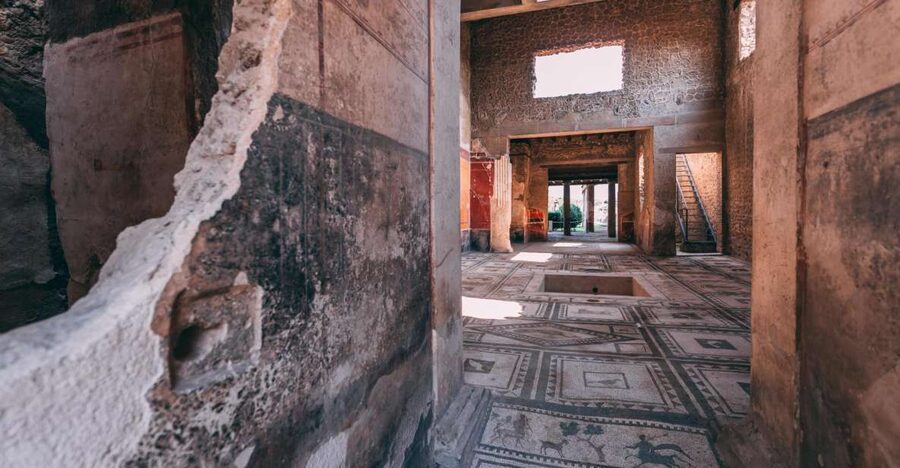
The House of the Faun is one of the major residences on the route. Its size and decoration show the wealth available to Pompeii’s upper class and provide a strong contrast with smaller homes and commercial spaces.
This is a good moment to ask your guide about Roman domestic design. How did guests move through the house? Which areas were meant to impress? How did decoration communicate wealth? The exact discussion will depend on your guide, but private touring gives you room to ask instead of being carried along by a large group.
The tour is particularly suited to people who want more than a quick photograph of a famous mosaic or courtyard. Paola has been praised for explaining the volcano, eruption, excavation, and preservation process, while Diego has been praised for connecting art, culture, and history. Those subjects fit naturally here, where the buildings reveal both taste and social position.
The Large Theatre and the ancient entertainment district
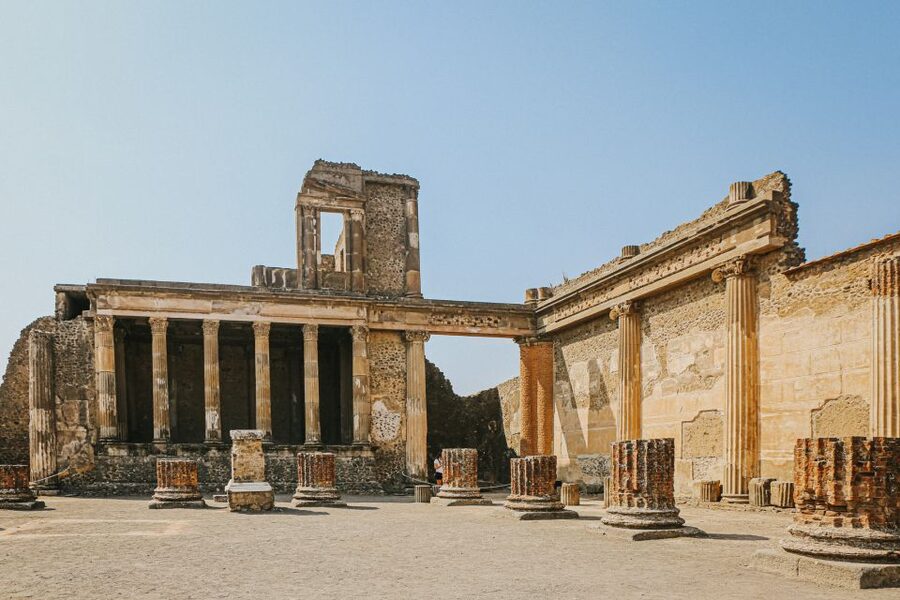
Pompeii’s Large Theatre shows the city as a place of performance and public gathering. Your guide explains how the theater functioned and how it fitted into the town’s social life.
The route may also include the smaller theater area, depending on access and the guide’s handling of the three-hour schedule. The provided stops name the Large Theatre, while the tour description also includes theaters more broadly. Ask your guide to clarify what is open on the day you visit.
These spaces are visually different from the Forum and houses. The curved seating, stage area, and surrounding structure help you picture an audience arriving for an event nearly two thousand years ago. The ruins can feel abstract until you understand how people entered, sat, watched, and interacted.
House of the Vettii and the final major stops
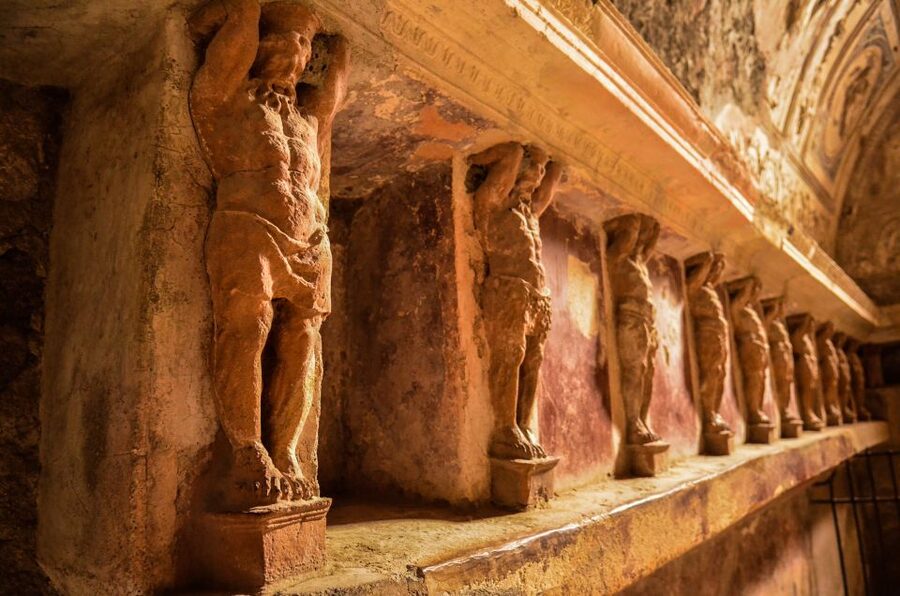
The House of the Vettii is another important private residence, giving you a second chance to compare elite domestic architecture. Seeing more than one house is useful because Pompeii was not a single frozen lifestyle. Homes varied in size, decoration, and purpose.
The Amphitheater of Pompeii completes the main route. It is one of the city’s largest public buildings and shifts the focus from household life to mass entertainment. Along with the theaters, it shows how public events helped shape Roman identity and social order.
The itinerary also includes shops and fountains. These smaller features may be less famous, but they are often what make the city feel real. A counter, a fountain, or a row of storefronts can tell you more about daily movement than a grand column does.
Plaster casts and remembering the eruption
The plaster casts of victims are among the most moving parts of Pompeii. They can be difficult to see, especially for children or anyone sensitive to displays of death. The guide’s tone matters here.
The strongest interpretation does not turn the casts into spectacle. Instead, it explains how they were made and reminds you that Pompeii was a living community. One highly praised guide, Nicoletta, was noted for balancing archaeological detail with respect for the people who lost their lives. That is the right approach for this stop.
The eruption occurred in 79 A.D., when Mount Vesuvius buried the city in ash and volcanic material. The exact experience of seeing the casts depends on which areas are open, but the stop gives the disaster a personal scale that temples and streets cannot.
What the private format changes
A private group is the central reason to choose this tour over a cheaper large-group walk. You can stop to ask about a painting, request more detail about Roman housing, or tell the guide that your children need a shorter explanation.
The private setup also helps with crowded areas. Laura was praised for shifting the route around changing crowds, and other guides were praised for keeping children engaged. That kind of flexibility is hard to achieve when a guide is responsible for a large mixed group.
The guide names associated with especially strong feedback include Nicoletta, Patrizia, Jasmine, Silvia, Serenella, Annalisa, Laura, Diego, Paola, Michele, Mena, Monica, and Antonella. You cannot choose a particular guide from the information provided, so treat the names as examples of the guide team rather than a guarantee.
The advertised languages are Japanese, English, Spanish, Italian, German, French, Portuguese, Chinese, and Russian. Confirm your preferred language when selecting the tour.
Is $508.15 good value?
At $508.15 per group up to one person, this is a premium experience. The price includes skip-the-line admission and a certified archaeologist-guide, but not transport, meals, drinks, or personal expenses.
The value improves if you want a private, question-friendly visit and would otherwise pay for separate tickets and a guide. It is also easier to justify for a special occasion or for people with a strong interest in archaeology, Roman society, art, or the eruption of Vesuvius.
The value is weaker if you only want to see Pompeii quickly or if you are comfortable exploring with a guidebook. Three hours will cover many major sights, but it will not turn Pompeii into a finished checklist. You are paying for interpretation and flexible attention, not simply entry.
Because the price description says up to one person, check how additional members of your party are priced before payment. A private group can be a sound deal when shared by a small party, but you should confirm the total rather than rely on the headline figure.
Practical details that matter on the day
The tour runs in all weather. For rain, the information recommends a small umbrella or raincoat, although umbrellas are also listed among items not allowed. Because those instructions conflict, a raincoat is the safer choice, and you should confirm the current rule before arrival.
Free cancellation is available up to 24 hours in advance, and you can reserve now and pay later. These terms help if your Campania plans are still changing, but they do not solve the practical issue of getting to Porta Marina Superiore on time.
On the first Sunday of each month, entrance is free, but tickets cannot be reserved in advance and entry is not guaranteed. That can reduce the value of paying for skip-the-line admission, yet it also creates a real risk of wasting time in line or being unable to enter. If seeing Pompeii is central to your day, a confirmed paid entry may be worth considering.
The accessibility information is inconsistent. One section says the activity is wheelchair accessible, while another says it is not suitable for wheelchair users. Pompeii’s ancient streets and uneven surfaces may be difficult, but the supplied information does not give enough detail to make a firm accessibility judgment. Contact the provider before booking if anyone in your group uses a wheelchair.
Who should book this Pompeii tour?
I would choose this tour if you want a serious introduction without the stiffness of a lecture. It suits couples, families, history fans, and small groups who value questions and personal attention.
Families may benefit from the guide’s ability to adjust explanations. One guide was praised for keeping children interested, and another tour included 12-year-old twins who enjoyed the visit. Still, the three-hour walk is demanding, so comfortable shoes and sensible pacing matter.
I would hesitate if your budget is tight, you need transport included, or you want a full-day exploration. You may also prefer another option if you need guaranteed wheelchair access until the provider resolves the conflicting information.
Should you book it?
Book this private Pompeii tour if you want the Forum, villas, baths, theaters, and eruption story explained by an archaeology-focused guide rather than left to your own guesswork. The strongest benefit is not speed. It is the chance to ask questions, notice small details, and connect public buildings with ordinary Roman life.
Skip it if $508.15 is too high for your party, if you want transportation bundled in, or if three hours feels too short. For everyone else, the private format and strong record of warm, flexible guides make this a sensible choice for a first visit, provided you confirm the final price, meeting details, and accessibility needs.
FAQ
How long does the Pompeii private tour last?
The tour lasts three hours. Starting times depend on availability.
Where do I meet the guide?
Meet at Porta Marina Superiore, Pompeii’s main gate, in front of the Hortus bar-restaurant. Look for the building with lemons and oranges hanging outside.
Where does the tour end?
The activity ends back at the meeting point at Porta Marina Superiore.
Is transportation included?
No. Transportation, food, drinks, and other personal expenses are not included.
Does the tour include Pompeii admission?
Yes. Skip-the-line admission fees are included.
Which languages are available?
The tour is available in Japanese, English, Spanish, Italian, German, French, Portuguese, Chinese, and Russian.
Is the tour private?
Yes. It is offered as a private group experience with a live guide.
What should I bring?
Bring comfortable shoes. The tour takes place in all weather. The information recommends a small umbrella or raincoat for rain, but umbrellas are also listed as not allowed, so confirm the current rule and consider carrying a raincoat.
Just added around Naples
- Full-Day Tour of the Amalfi Coast and Pompeii from Naples★ 4.5 · 3 reviews
- The Ultimate Neapolitan Cooking Class with Local★ 5.0 · 3 reviews
- Visit in Pompeii – Naples Private Tour with Ada★ 5.0 · 3 reviews
- Transfer from Naples to Sorrento or viceversa★ 5.0 · 3 reviews
- Naples: Old City Center Street Food Tour with Spritz★ 4.7 · 3 reviews
- Naples: National Gallery of Capodimonte Tour★ 5.0 · 3 reviews
- Visit 2 wine producers with tasting and transportation included★ 5.0 · 3 reviews
- Naples: Mozzarella experience★ 5.0 · 3 reviews
Pompeii Tours, compared.
Pompeii & Mt.Vesuvius Day Tour from Naples with Pizza Lunch
Read our review →
Pompeii & Mt Vesuvius All-Inclusive Small Group w/ Lunch
Read our review →