
Reviewed · NAPLES UNDERGROUND TOURS
The Underground of Napoli: a Trip to the Hidden City
Naples reveals its oldest stories below street level. This private walking tour takes you through Neapolis Sotterrata, a Roman section buried about 12 meters beneath the city, then links that ancient world to the cult of the dead at Purgatorio ad Arco and the underground roots of the Duomo.
I like the way the tour connects several very different places in one walk, and I like the private format, which lets a guide adjust the pace and language to your group. The main drawback is cost: the advertised price covers guiding, but entrance tickets are extra, and the visit can feel expensive for a two-hour outing.
In This Review
- Key points at a glance
- Naples begins below the pavement
- Neapolis Sotterrata and the Roman city below
- A coffee break before the city’s cult of the dead
- Purgatorio ad Arco and the Neapolitan relationship with death
- The Duomo’s underground roots
- What the private format is worth
- The two-hour schedule and what it really means
- Who should book this Naples underground tour?
- Should you book it?
- FAQ
- Where does the tour start?
- How long does the tour last?
- What languages are available?
- Are entrance tickets included?
- Are all the underground sites guaranteed to be open?
- Is the tour suitable for wheelchair users?
Key points at a glance
- Roman Naples below a medieval cloister: Enter Neapolis Sotterrata beneath the Basilica and see a genuine section of the ancient city.
- A look at Neapolitan beliefs about death: Purgatorio ad Arco offers a more personal and mysterious stop than a standard church visit.
- The Duomo has an underground story: The cathedral’s lower layers help explain the strength of local devotion.
- A private guide in four languages: English, Italian, Spanish, and French are available.
- Museum access is not guaranteed: Daily opening decisions belong to the site owners and managers.
- Budget for admission separately: Two museum tickets together cost about €20 per person.
Naples begins below the pavement
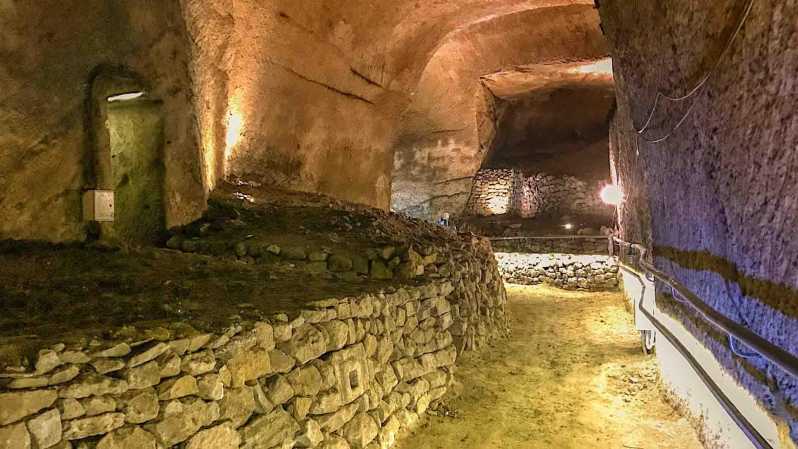
The tour is built around a simple idea: the city you see above ground is only part of Naples. Streets, churches, and modern traffic sit over older Greek and Roman layers, medieval structures, wartime shelters, and places tied to local religious life.
You begin at a meeting point beside the statue in the middle of a square. The exact square is not identified in the tour details, so confirm the meeting instructions before setting out. From there, the route is on foot and returns to the starting point at the end.
The private format matters here. Underground sites can feel cramped, dark, and full of details that are easy to miss. With your own guide, you can ask why a space was built, how it was reused, and how the underground fits into present-day Naples rather than simply moving from room to room.
The tour is offered in English, Italian, Spanish, and French. Daniela is one guide associated with the experience, and she has been praised for speaking excellent French and for adjusting her explanations to keep a 16-year-old engaged. That is useful if your group includes teenagers or family members with different levels of interest.
More of the city underground:
- Naples: Catacombs of San Gennaro Entry Ticket & Guided Tour
★ 4.6 · 7,941 reviews - Naples: Spanish Quarters Underground Guided Tour
★ 4.8 · 5,064 reviews - Naples: The Bourbon Tunnel Guided Tour with Entrance Ticket
★ 4.7 · 2,711 reviews
Neapolis Sotterrata and the Roman city below
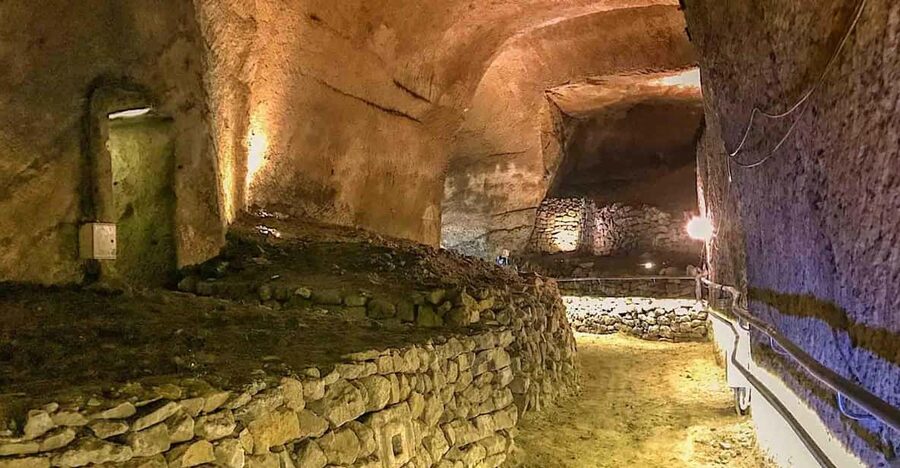
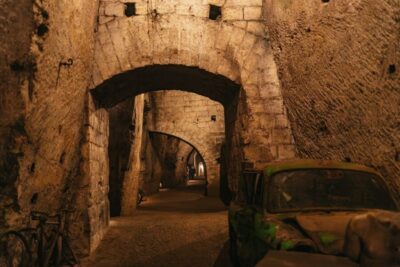
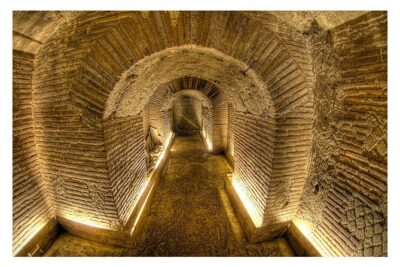
The centerpiece is Neapolis Sotterrata, reached through the medieval cloister beneath the Basilica of San Lorenzo Maggiore. The route leads you down to the remains of Greek and Roman Neapolis, around 12 meters under the present-day city.
That change in level is the point. Above you is the crowded life of central Naples. Below you are traces of the street plan and daily world of the ancient settlement. You are not simply looking at a single isolated ruin. You are seeing how later Naples was built over, around, and on top of earlier Naples.
The entrance through a medieval cloister adds another layer before you even reach the Roman remains. A good guide can help you keep the periods separate: Greek foundations, Roman urban life, medieval religious use, and the modern city all occupy the same vertical space.
I would give this stop the most time and attention. It is the part that makes the tour’s title real. The experience is not only about old stones. It shows why Naples can feel so dense with time, with different eras packed into a small area.
There is one practical point to keep in mind. Underground sites are not ideal for anyone who finds enclosed spaces or uneven walking difficult. The activity is specifically listed as unsuitable for wheelchair users, so check your own mobility needs before booking.
A coffee break before the city’s cult of the dead
After returning to street level, the tour description allows time for a Neapolitan coffee or a sfogliatella, the city’s famous shell-shaped pastry. This is a small detail, but it makes sense in the middle of a walking tour. You have just moved from ancient streets to modern Naples, and a short pause gives you time to reset before the next church.
The coffee or pastry is presented as something you can choose to enjoy, not as an included part of the price. The tour information does not specify a café, the length of the break, or who pays, so treat it as an optional local pause rather than a formal tasting.
This is also a good moment to ask your guide about the city above ground. The tour is strongest when it explains connections between the archaeological sites and the living streets around them. Naples is not a museum city sealed behind glass. Its old layers remain part of the working center.
Purgatorio ad Arco and the Neapolitan relationship with death
The next major stop is the complex of Santa Maria delle Anime del Purgatorio ad Arco on Via dei Tribunali. The visit focuses on an underground church and the cult of the dead, a subject that gives this walk a different mood from the Roman ruins.
At Neapolis Sotterrata, the main question is how people built and lived. At Purgatorio ad Arco, the focus shifts to how people prayed, mourned, and maintained a relationship with the dead. That contrast is one of the tour’s best features.
The word hypogeum refers to an underground chamber or structure. Here it helps explain why the stop can feel more enclosed and mysterious than a normal church visit. You should expect a place shaped by religious practice and local custom, not a broad archaeological site with long open corridors.
The attraction’s opening is not fully within the tour operator’s control. The daily decision belongs to the site owners and managers, so this part may not be available on every departure. The same warning applies to the San Lorenzo Maggiore Complex and the Lapis Museum.
That uncertainty is important. If Purgatorio ad Arco is the main reason you want to book, ask about the planned opening before you commit. If you are happy with a broader underground walk, the flexible plan may work well.
A completely different sort of day out of Naples:
- From Naples: Pompeii Ruins & Mount Vesuvius Day Tour
★ 4.3 · 11,459 reviews - From Naples: Sorrento, Positano and Amalfi Full-Day Tour
★ 4.6 · 10,988 reviews - From Naples: Sorrento, Positano & Amalfi Coast – Small Group Tour
★ 5.0 · 8,643 reviews - Naples: Downtown Tour with Veiled Christ & St Clare Tickets
★ 4.9 · 6,462 reviews
The Duomo’s underground roots
The final planned stop is the underground area of Naples Cathedral, or the Duomo. The cathedral is often thought of as a large above-ground church, but this tour emphasizes its lower layers and its place in Neapolitan devotion.
This portion rounds out the route. Neapolis Sotterrata shows ancient urban life, Purgatorio ad Arco shows a local approach to death and prayer, and the Duomo connects those themes to a major cathedral still central to the city.
The available details do not describe every chamber or artifact you will see beneath the Duomo. That means you should book this part for its religious and historical context rather than expecting a long list of named objects. Your guide’s explanation will be especially useful here, since the significance of underground spaces can be easy to miss without context.
The route may also include the Lapis Museum or the San Lorenzo Maggiore Complex, but admission and opening conditions are not fixed. Lapis is associated with Naples during wartime and with a tank connected to ancient Naples. If it is open, it adds another period to the route, showing that underground spaces were not only ancient or religious but also part of the city’s more recent survival.
What the private format is worth
The listed price is $283.21 per group of up to 10 people. That is a group price, not a per-person fare, so the value changes sharply with group size.
For ten people, the guiding cost works out to about $28.32 per person before entrance tickets. For two people, it is about $141.61 each before tickets. A larger family or group of friends can make better use of the private arrangement than a solo visitor or couple.
The private setup gives you a dedicated guide and avoids being tied to the questions or pace of a large group. It also offers language flexibility. If you need French, Daniela’s reported ability in that language is a useful detail, though you should request your preferred language when booking rather than assume a particular guide will lead your tour.
The tradeoff is that the experience does not include admission. You can decide to buy tickets on the spot, and visiting at least two museums costs about €20 per person in total. That expense is reasonable if both sites are open and central to your plans, but it should be added to the headline price from the start.
One French-speaking participant found the tour interesting and praised Daniela’s way of adapting the visit for a teenage child, but still felt the price was high because tickets had to be paid separately. That is a fair warning for families and small groups.
The two-hour schedule and what it really means
Two hours is enough for an introduction to underground Naples, but it is not a leisurely examination of every site. The route includes walking between locations, going below street level, returning upstairs, and possibly pausing for coffee or a sfogliatella.
If all planned attractions are open, the schedule will need to move at a steady pace. You may get a strong overview rather than long stretches for quiet looking. That is not necessarily a flaw. The tour works best as a first encounter that helps you decide which underground site deserves a longer return visit.
The advertised experience also mentions skip-the-ticket-line access. That can save useful time at popular sites, though it does not remove the need to buy admission when tickets are not included.
Wear practical walking shoes and bring cash for tickets or small purchases. Carry a passport or ID card, and bring a student card if you plan to use student admission. Children also need identification, and a copy is accepted according to the practical information provided.
Who should book this Naples underground tour?
I would recommend it to you if you want a guide-led introduction to several underground sites rather than a single long visit. It suits families, private groups, and people who prefer to ask questions as they go. It is also a good fit if you want history tied to local religious practice, not just ruins.
Teenagers may respond well to the variety. Roman streets, underground churches, cathedral foundations, and wartime recovery give the tour several angles. Daniela’s adjustment for a 16-year-old suggests that a skilled guide can keep the material from becoming a lecture.
The tour is less suitable if you need guaranteed access to one specific museum. Daily openings can change, and the owners or managers make that decision. It is also a poor match for wheelchair users.
Before booking, I would check three things: the language you need, which sites are expected to be open, and the full cost after tickets. If the group is large, the private price becomes easier to justify. If you are a couple focused on one attraction, a single-site ticket and self-guided visit may cost less.
Should you book it?
Book this tour if you want to connect Roman Naples, underground religious life, and cathedral devotion in one compact walk. The strongest reasons are the private guide, the unusual range of sites, and the chance to see Neapolis Sotterrata from below the modern city.
Skip it if your budget is tight, if you want a slow archaeological visit, or if you need guaranteed entry to Purgatorio ad Arco, San Lorenzo Maggiore, or Lapis. For a group of several people, the price can be sensible. For one or two people, the extra museum fees make the value harder to defend.
FAQ
Where does the tour start?
You meet next to the statue in the middle of the square. The activity ends back at the meeting point.
How long does the tour last?
The tour lasts two hours. Starting times depend on availability.
What languages are available?
The live guide can conduct the tour in English, Italian, Spanish, or French.
Are entrance tickets included?
No. Admission tickets are separate, and you can decide to buy them on the spot. Two museum tickets cost about €20 per person in total.
Are all the underground sites guaranteed to be open?
No. The daily openings of Purgatorio ad Arco, the San Lorenzo Maggiore Complex, and the Lapis Museum depend on their owners and managers.
Is the tour suitable for wheelchair users?
No. The activity is listed as unsuitable for wheelchair users.
Just added around Naples
- Full-Day Tour of the Amalfi Coast and Pompeii from Naples★ 4.5 · 3 reviews
- The Ultimate Neapolitan Cooking Class with Local★ 5.0 · 3 reviews
- Naples: Old City Center Street Food Tour with Spritz★ 4.7 · 3 reviews
- Visit in Pompeii – Naples Private Tour with Ada★ 5.0 · 3 reviews
- Transfer from Naples to Sorrento or viceversa★ 5.0 · 3 reviews
- Naples: National Gallery of Capodimonte Tour★ 5.0 · 3 reviews
- Visit 2 wine producers with tasting and transportation included★ 5.0 · 3 reviews
- Pompeii Vesuvius Sorrento from Naples★ 5.0 · 3 reviews
Naples Underground Tours, compared.
Catacombs of San Gennaro Entry Ticket & Guided Tour
Read our review →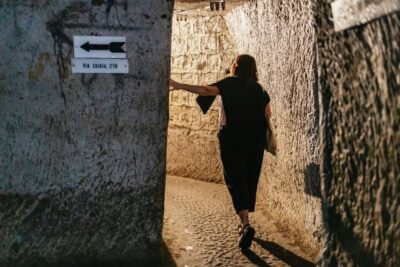
The Bourbon Tunnel Guided Tour with Entrance Ticket
Read our review →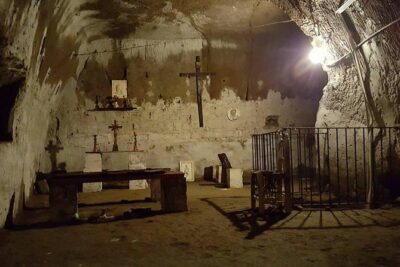
Naples Underground Spanish Quarters with Guide
Read our review →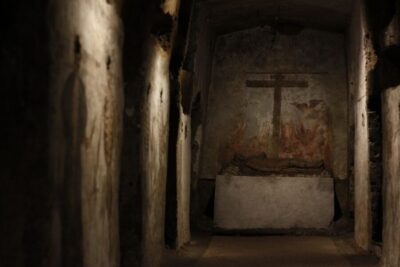
Naples Underground Official Skip-the-line Ticket
Read our review →
Naples Walking Tour with Underground Roman Ruins Ticket
Read our review →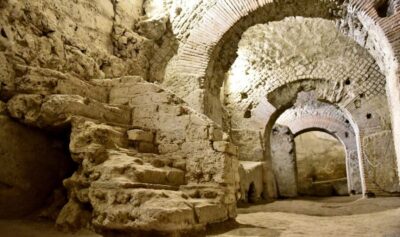
City Walking Tour w/ Underground Roman Ruins Ticket
Read our review →Browse the lists this tour appears in