
Reviewed · 2-HOUR EXPERIENCES
Amphitheater of Ancient Capua: 2-Hour Private Guided Tour
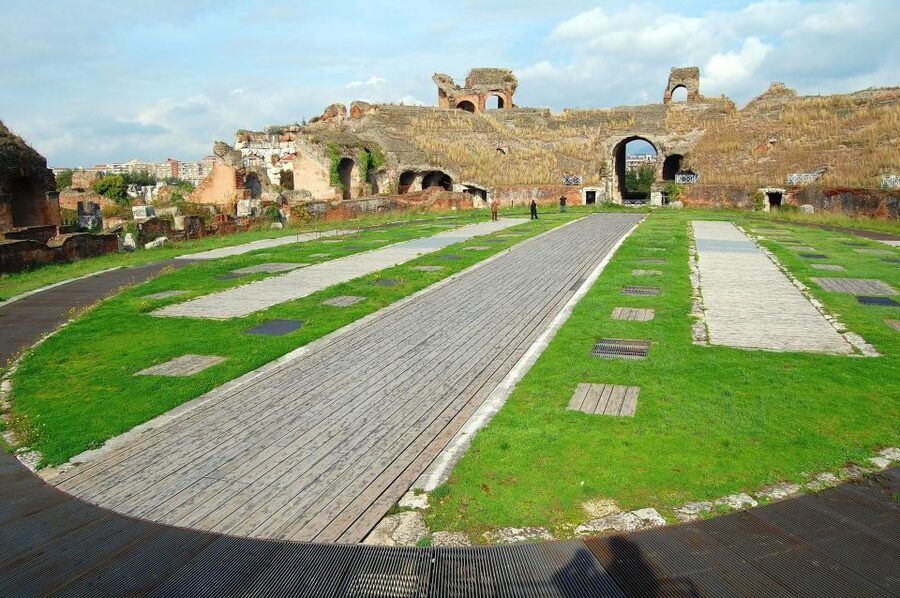
Spartacus’s revolt began here, at the Roman amphitheater of ancient Capua, where gladiators trained and fought under harsh conditions. The arena gives this tour its punch: you are not simply looking at old stones, but at the setting for one of Rome’s best-known slave uprisings.
I like the private format and the tight two-hour plan. Your guide can adjust the pace, explain the games in plain language, and make good use of the shade on a hot day. I also like that the tour adds the Gladiator Museum and the Mithraeum, so you see both public Roman spectacle and a more private religious site.
The main consideration is access to the Mithraeum. It may be closed for restoration, in which case the visit can be replaced with the Archaeological Museum of Capua. Also, the accessibility information is contradictory: the activity is marked wheelchair accessible in one place but unsuitable for wheelchair users elsewhere, so confirm before booking.
In This Review
- Key points about the Capua private tour
- Why Spartacus’s Capua matters
- Starting at the Campanian Amphitheatre
- Inside the Roman amphitheater of Spartacus
- The Gladiator Museum and the human story
- Santa Maria Capua Vetere and the Mithraeum
- What a private two-hour format feels like
- Is the $178.42 price good value?
- Who should book this experience?
- Booking details that affect your day
- My verdict on the Capua amphitheater tour
- FAQ
- How long does the tour last?
- Where does the tour begin?
- Where does the tour end?
- Is transportation included?
- What does the price include?
- Which languages are available?
- Is the amphitheater open on Mondays?
- What happens if the Mithraeum is closed?
- Can I cancel the tour and receive a refund?
Key points about the Capua private tour
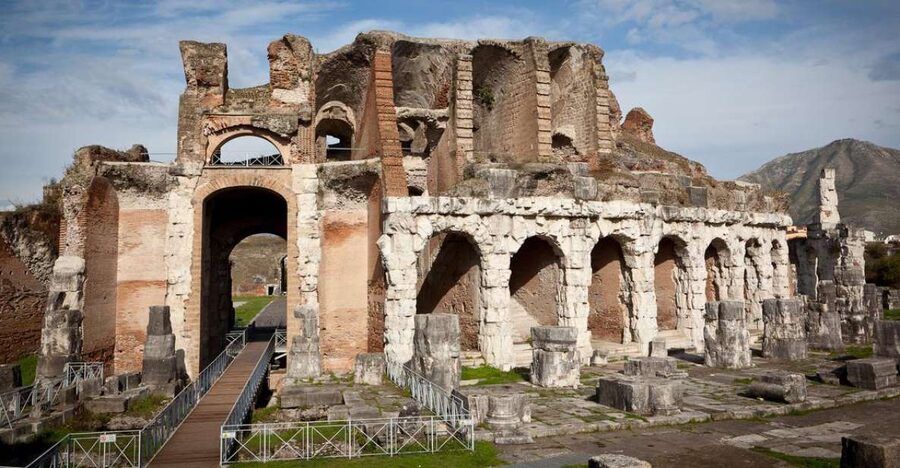
- The amphitheater is the main event: Visit the Roman arena linked with Spartacus and the gladiatorial games.
- The story reaches beyond the arena: Your guide explains the revolt, Spartacus’s defeat, and the mass crucifixions ordered by Crassus along the Appian Way.
- Private guiding changes the pace: You have a guide for your own group rather than following a large shared party.
- The Gladiator Museum adds useful context: Objects and explanations help turn the arena from a ruin into a working institution.
- The Mithraeum offers a different side of Capua: See a sanctuary linked to the Persian-origin cult of Mithras, associated with gladiators and prisoners of war.
- A heat-sensitive plan matters: On very hot days, a good guide can pause explanations in shaded areas, an important detail during the two-hour walk.
Why Spartacus’s Capua matters
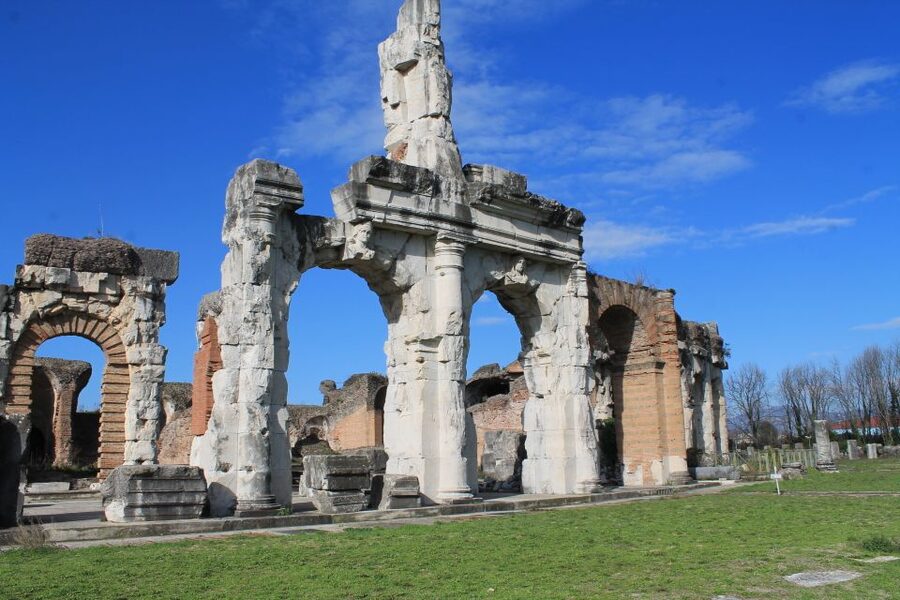
Capua was the birthplace of the gladiator revolt led by Spartacus against Rome. The uprising grew from the brutal conditions imposed on gladiators, who were trained to fight and die for public entertainment.
That background gives the amphitheater a darker feel than a standard Roman ruin. You are looking at a place built for spectacle, but also at the setting for lives controlled by owners, trainers, and an empire that treated combat as mass entertainment.
The revolt eventually ended in complete defeat. Spartacus died on the battlefield, and Crassus ordered thousands of rebels crucified along the Appian Way, the road built by Appius Claudius in 312 BC to connect Rome with Capua.
Your guide should help connect those events to the physical places around you. That is the real value of taking a tour here. Without explanation, an arena can seem like a broad oval of masonry. With the political and human story in place, the structure becomes easier to understand.
A few more Naples trips worth weighing up
- Procida Island Tour by Boat 2h 15m with Swimming and Underwater Photos
★ 5.0 · 344 reviews - Naples Archaeological Museum 2-Hour Guided Private Tour
★ 5.0 · 51 reviews - Naples: 2-Hour Walking Tour w/ Food Tasting Experience
★ 4.4 · 15 reviews
Starting at the Campanian Amphitheatre
You meet at the ticket office of the Anfiteatro Campano e Museo dei Gladiatori. The guide holds a sign with your name, which makes the meeting simple, especially if you are arriving without local knowledge of the site.
The tour includes skip-the-line admission, so you do not need to arrange separate entry for the included attractions. Transportation is not included, and the activity begins and ends at the amphitheater, so you need to plan your own way to Santa Maria Capua Vetere and back to the meeting point if the route between sites requires it.
The precise starting time depends on availability. Since the complete visit lasts two hours, check the time carefully when booking and allow enough margin to reach the ticket office.
The amphitheater is closed on Mondays. That is an easy detail to miss when planning a weekend in Campania, so avoid Monday for this visit unless opening arrangements have changed and the operator confirms otherwise.
Inside the Roman amphitheater of Spartacus
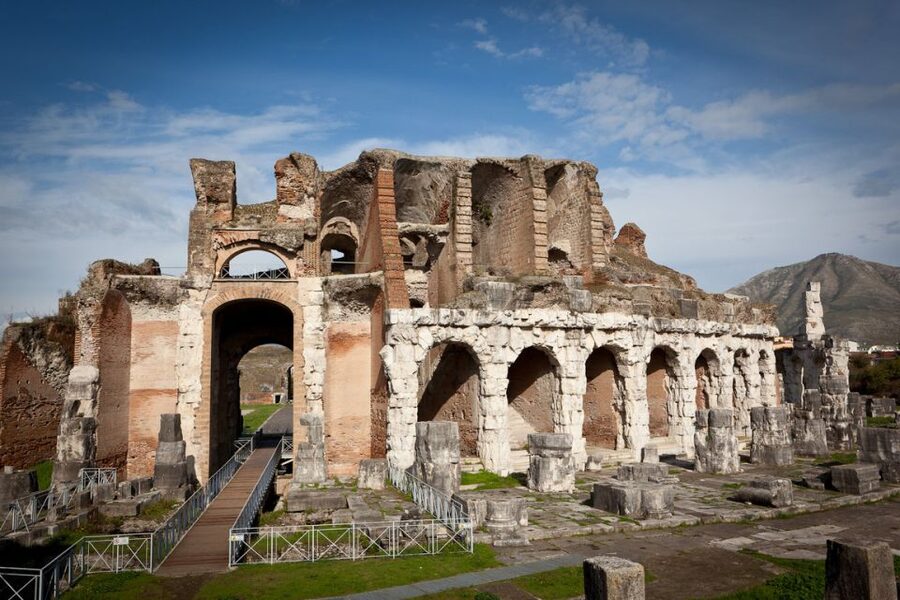
The amphitheater is the heart of the experience. Here, the guide explains how gladiatorial contests worked and why Capua became such an important place in the Roman world of combat and spectacle.
The site is especially useful for anyone who has already visited Rome’s Colosseum and wants a less crowded setting for understanding the same wider culture. The tour is not simply a smaller version of a famous Roman arena. It places the focus on Capua, Spartacus, the local gladiator tradition, and the revolt that began in this area.
I would give this stop your closest attention. The amphitheater alone can justify the journey from other parts of Campania, particularly if Roman military history, slavery, or ancient entertainment interests you.
A private guide can also make a real difference here. Michele, one of the guides associated with this experience, has been praised for explaining old Capua, the gladiators, and the games through detailed stories. Walter has also been praised for being prepared and personable. Guide assignments can vary, but those names give you an idea of the kind of personal interpretation available.
The tour lasts only two hours, so do not expect an unhurried archaeological study of every corner. Instead, you get a concentrated visit with the main story kept in view. That makes the tour a good fit for a first visit, though serious archaeology students may want more time afterward.
The Gladiator Museum and the human story
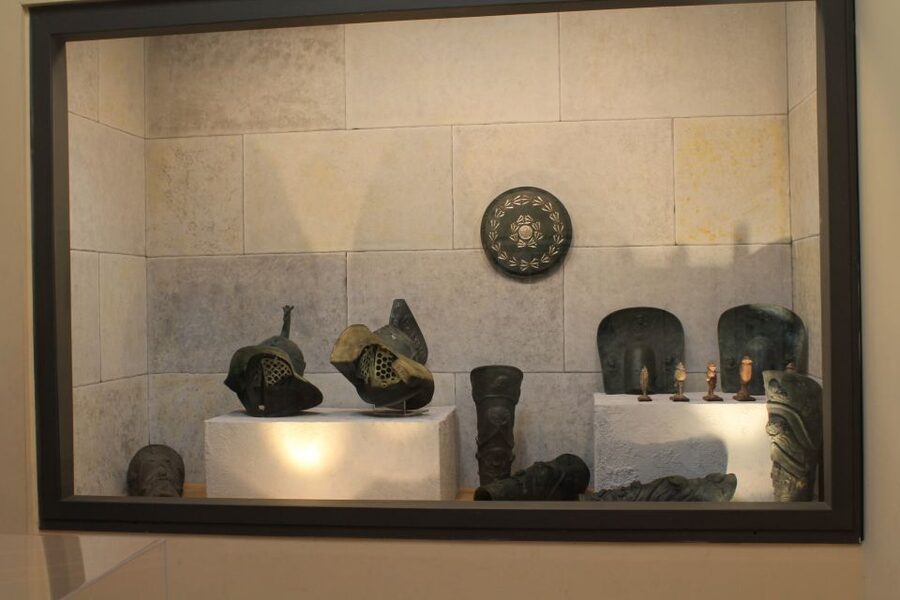
The Gladiator Museum helps fill in the gaps left by the ruins. The amphitheater shows where the action took place. The museum helps explain the people, equipment, and culture surrounding the games.
Your guide accompanies you through the museum, so you do not have to rely only on labels. Ask about the practical side of gladiator life, the way fighters were trained, and how the games fitted into Roman society. The supplied details focus on the inhumane conditions that helped produce the revolt, so expect the museum visit to carry a serious tone rather than present gladiators as simple sports celebrities.
This is also where the private format earns its price. If you have a question, you can ask it immediately. If your group is interested in the military side of the revolt, the guide can lean that way. If you are more interested in daily life and religious beliefs, you can spend more time there instead.
The museum is included in the route, but the amount of time available depends on the guide’s pacing and what is open that day. Since the whole visit is two hours, you should not expect a long museum session followed by an equally long amphitheater visit. The benefit is a clear, connected overview.
A completely different sort of day out of Naples:
- From Naples: Pompeii Ruins & Mount Vesuvius Day Tour
★ 4.3 · 11,459 reviews - From Naples: Sorrento, Positano and Amalfi Full-Day Tour
★ 4.6 · 10,988 reviews - From Naples: Sorrento, Positano & Amalfi Coast – Small Group Tour
★ 5.0 · 8,643 reviews - Naples: Catacombs of San Gennaro Entry Ticket & Guided Tour
★ 4.6 · 7,941 reviews
Santa Maria Capua Vetere and the Mithraeum
The stop at Santa Maria Capua Vetere adds a different layer to the tour. The temple is dedicated to Mithras, a god connected with a cult of Persian origin that reached Rome. The cult was almost certainly brought to Rome by prisoners of war who later became gladiators.
That connection makes the Mithraeum particularly worthwhile here. It brings together the wider Roman world, military captivity, gladiatorial life, and religious practice in one place. You see that ancient Capua was not only about public contests. It was also a community shaped by movement, conquest, belief, and people brought into the Roman system by force.
The Mithraeum may not be open during your visit. Restoration work has closed it at times, and the replacement has been a guided visit to the Archaeological Museum of Capua. That is not an equal experience for every visitor, but it is a sensible alternative if the sanctuary cannot be entered.
If seeing the Mithraeum is the main reason you are booking, confirm its status before you go. If your interest is broader Roman history, the museum substitution still gives the guide a way to keep the tour focused on ancient Capua.
What a private two-hour format feels like
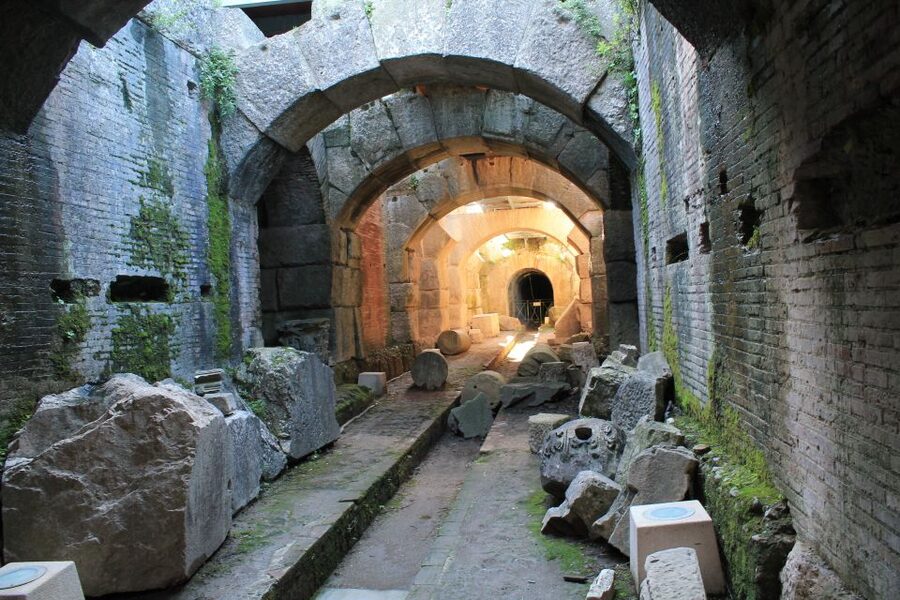
A private group is useful here because the subject benefits from conversation. The story includes slavery, religion, military defeat, and public entertainment, and you may want to stop for clarification rather than move at a fixed group pace.
The two-hour length is also practical. You can fit the amphitheater, the Gladiator Museum, and Santa Maria Capua Vetere into a half-day plan without giving up most of the day. At the same time, the schedule is compact. If you like to read every museum label or sketch every architectural detail, you may want extra time on your own.
The heat is worth taking seriously. A previous tour took place in 39-degree Celsius weather, and the guide, Michele, paused in shaded areas while explaining the site. That is exactly the sort of small practical choice that can preserve your energy. Even so, bring water, wear sun protection, and choose a cooler starting time when possible.
The route is a guided visit rather than a transport service. You arrange your own transportation to the meeting point, and the tour returns there at the end. That makes it easy to combine with a self-planned day, but you need to check your route in advance.
Is the $178.42 price good value?
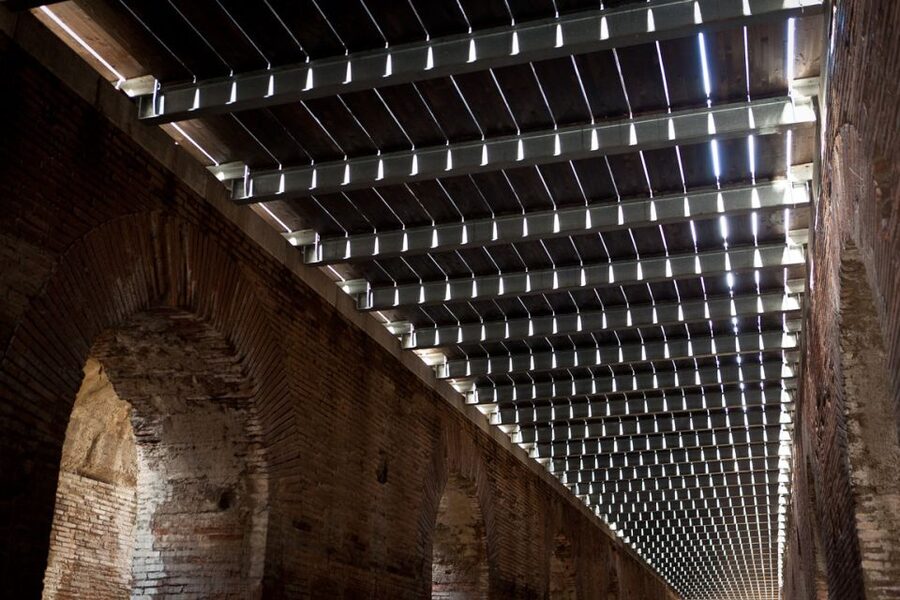
At $178.42 per person, this is not a budget admission ticket. You are paying for a private guide, skip-the-line entry, and a focused interpretation of several archaeological stops.
The value improves if you are traveling as a small group and want direct access to the guide. A private tour means you are not paying for a general lecture aimed at strangers with different interests. The guide can answer questions, adjust the explanation, and make the most of a short visit.
The price is harder to justify if you only want to see the amphitheater quickly or if you are comfortable reading sites without help. The admission itself is only one part of the cost, and the two-hour format may feel brief to visitors who want a detailed archaeological examination.
I would consider it good value for a family, a couple, or a small group with a strong interest in Roman history. It is also useful if you are making a special trip to Capua and do not want to risk missing the meaning behind the ruins.
The price includes the guide and skip-the-line admission fees. It does not include transportation, meals, or other expenses not listed as part of the activity.
Who should book this experience?
You will get the most from this tour if you like history explained through people and events rather than dates alone. The story of Spartacus gives the visit a clear thread, while the amphitheater, museum, and Mithraeum show different sides of Capua.
Families can benefit from the story-driven approach, especially if children are interested in gladiators. The subject includes slavery, violence, and execution, so parents should decide if that material suits their children.
This also works well for visitors who have already seen the Colosseum and want to understand another important Roman arena. Capua offers a different setting and a direct connection to the revolt associated with Spartacus.
You may want to skip it if you have limited interest in Roman history, need a very slow pace, or expect transport to be included. You should also check the Mithraeum’s opening status and clarify the wheelchair policy before committing.
Booking details that affect your day
You can cancel up to 24 hours before the tour for a full refund, and the reserve-now, pay-later option keeps payment flexible. The tour is available in English and Italian.
The guide meets you at the amphitheater ticket office with a sign bearing your name. The activity ends back at that same meeting point, which simplifies the start and finish but leaves transportation to you.
The experience is described as a private group tour. The accessibility details conflict: one section says wheelchair accessible, while another says it is not suitable for wheelchair users. Contact Askos Tours before booking if this matters to you, and ask specifically about the amphitheater, museum, and Mithraeum route.
My verdict on the Capua amphitheater tour
I would book this tour if Spartacus, gladiators, and Roman social history are high on your list. The private guide and small-group attention are the strongest reasons to pay the premium, especially when the heat is intense or when you want to ask detailed questions.
The amphitheater is the essential stop, and the museum gives it useful human context. The Mithraeum can make the visit even more distinctive, but its availability is not guaranteed, so treat it as an important bonus rather than the sole reason to book.
Choose a day other than Monday, confirm the Mithraeum’s status, and clarify accessibility before payment. If those details work for your plans, this is a focused and worthwhile way to understand ancient Capua beyond the usual Rome itinerary.
FAQ
How long does the tour last?
The guided experience lasts two hours.
Where does the tour begin?
You meet at the ticket office of the Anfiteatro Campano e Museo dei Gladiatori.
Where does the tour end?
The activity ends back at the amphitheater meeting point.
Is transportation included?
No. Transportation is not included, so you must arrange your own way to and from the meeting point.
What does the price include?
The price includes a guide and skip-the-line admission fees.
Which languages are available?
The tour is available in English and Italian.
Is the amphitheater open on Mondays?
No. The amphitheater is closed on Mondays.
What happens if the Mithraeum is closed?
If the Mithraeum is closed for restoration, the visit may be replaced with a guided visit to the Archaeological Museum of Capua.
Can I cancel the tour and receive a refund?
Yes. You can cancel up to 24 hours in advance for a full refund. A reserve-now, pay-later option is also available.
Just added around Naples
- Full-Day Tour of the Amalfi Coast and Pompeii from Naples★ 4.5 · 3 reviews
- The Ultimate Neapolitan Cooking Class with Local★ 5.0 · 3 reviews
- Naples: Old City Center Street Food Tour with Spritz★ 4.7 · 3 reviews
- Visit in Pompeii – Naples Private Tour with Ada★ 5.0 · 3 reviews
- Transfer from Naples to Sorrento or viceversa★ 5.0 · 3 reviews
- Naples: National Gallery of Capodimonte Tour★ 5.0 · 3 reviews
- Visit 2 wine producers with tasting and transportation included★ 5.0 · 3 reviews
- Naples: Mozzarella experience★ 5.0 · 3 reviews
2-Hour Experiences, compared.
Procida Island Tour by Boat 2h 15m with Swimming and Underwater Photos
Read our review →
Naples Archaeological Museum 2-Hour Guided Private Tour
Read our review →


2-Hour Authentic Italian Pizza Making Class in Naples
Read our review →
Herculaneum Private Walking Guided Tour 2 hours
Read our review →

Private Transfer Naples to Amalfi Coast + 2 hours stop in Pompeii
Read our review →Browse the lists this tour appears in