

Reviewed · ARCHAEOLOGICAL MUSEUM TOURS
Naples Archaeological Museum 2-Hour Guided Private Tour
The best reason to book this tour is simple: the Naples Archaeological Museum is too important to skim. In two focused hours, you see major Greek and Roman works, Pompeii treasures, and the Farnese Collection with a private guide who can explain why each piece matters.
I like the sharp focus on the Alexander mosaic from Pompeii and the silver from the House of Menander. I also like the private format, since Giulia, Nicoletta, and Raffael have each been praised for clear, thoughtful explanations. The main drawback is time: two hours gives you a strong introduction, not a full museum visit.
In This Review
- Key points at a glance
- Why this museum deserves a guided visit
- Meeting your guide at the main entrance
- The Farnese Collection: muscle, myth, and political power
- Pompeii’s Alexander mosaic
- Silverware from the Villa of Menander
- Roman frescoes and the Blue Vase
- What two hours really gives you
- Is $156.48 per person a fair price?
- Who will enjoy this private museum tour?
- Practical details before you book
- Should you book the Naples Archaeological Museum tour?
- FAQ
- Where does the Naples Archaeological Museum tour begin?
- Where does the tour end?
- How long does the guided museum visit last?
- Is admission to the museum included?
- Is transportation included?
- Which languages are available?
- Is this a private tour?
- Can I cancel for a full refund?
- Is the tour wheelchair accessible?
Key points at a glance

- Pompeii’s Alexander mosaic: See one of the museum’s most famous works, found in the House of the Faun.
- The Farnese Collection: Meet powerful ancient sculpture, including the Farnese Hercules and Toro Farnese.
- A private two-hour visit: Keep the route focused on major works instead of wandering without a plan.
- Everyday Roman life: Examine silverware from the Villa of Menander and the Blue Vase from a Pompeii tomb.
- Skip-the-line admission: Ticket fees and line-skipping entry are included, but transportation is not.
- Several guide languages: Tours are offered in English, Italian, Spanish, French, and German.
Why this museum deserves a guided visit
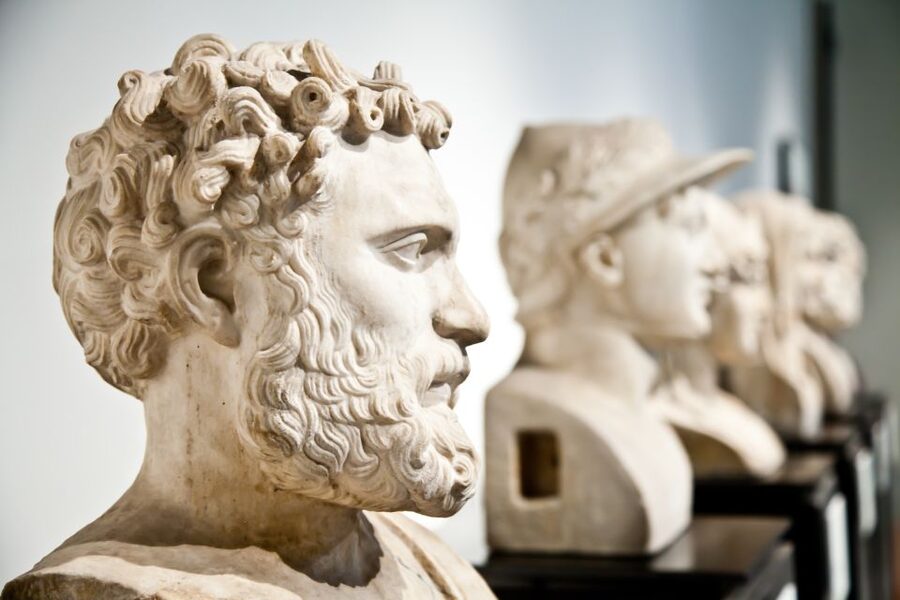
Naples’ National Archaeological Museum is not a small display of pretty fragments. It holds major works from ancient Greece and Rome, along with objects recovered from Pompeii, Herculaneum, Stabiae, Oplontis, and nearby villas.
The museum sits at the northwest corner of Naples’ original Greek wall. That location gives the visit a useful sense of place before you even reach the galleries. You are not viewing ancient objects in isolation. You are in a city with Greek foundations, Roman layers, and a direct connection to the Vesuvian sites whose treasures fill the building.
I find this kind of museum easier to appreciate with a guide. Ancient sculpture can look impressive but puzzling when you see it without context. A guide can point out what an object was made for, where it was found, and how it fits into the wider Greek and Roman world.
The private setting matters here. The museum contains a lot, and its best pieces are spread across different areas. A guide can keep you moving toward the strongest works instead of letting the visit turn into a tiring march through every room.
More Archaeological Museum visits:
- Naples: National Archaeological Museum Ticket & Audio App
★ 4.4 · 617 reviews - Naples: National Archaeological Museum of Naples Guided Tour
★ 4.8 · 498 reviews - Naples: National Archaeological Museum Tour & Digital Guide
★ 4.2 · 177 reviews
Meeting your guide at the main entrance
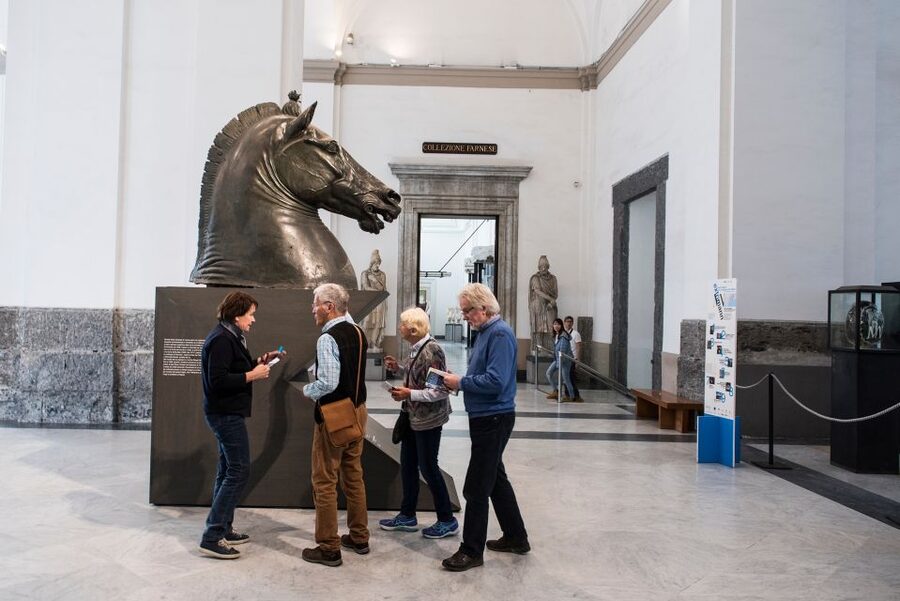
You meet outside the main entrance at the ticket office of the National Archaeological Museum of Naples. Your guide will hold a sign with your name, which makes the meeting point easier to identify in a busy city.
The tour begins and ends at the museum. You do not get transportation, so plan your own way to the building and allow enough time to find the entrance. The guide handles the included admission and skip-the-line access, letting you get to the collection without dealing with the standard ticket queue.
Starting times vary, so you need to check availability for the date you want. A two-hour slot works well in a day that also includes central Naples, but you should avoid placing it too close to another fixed appointment. Museums can take a few minutes to navigate, and you will want to pause for questions rather than watch the clock.
The Farnese Collection: muscle, myth, and political power
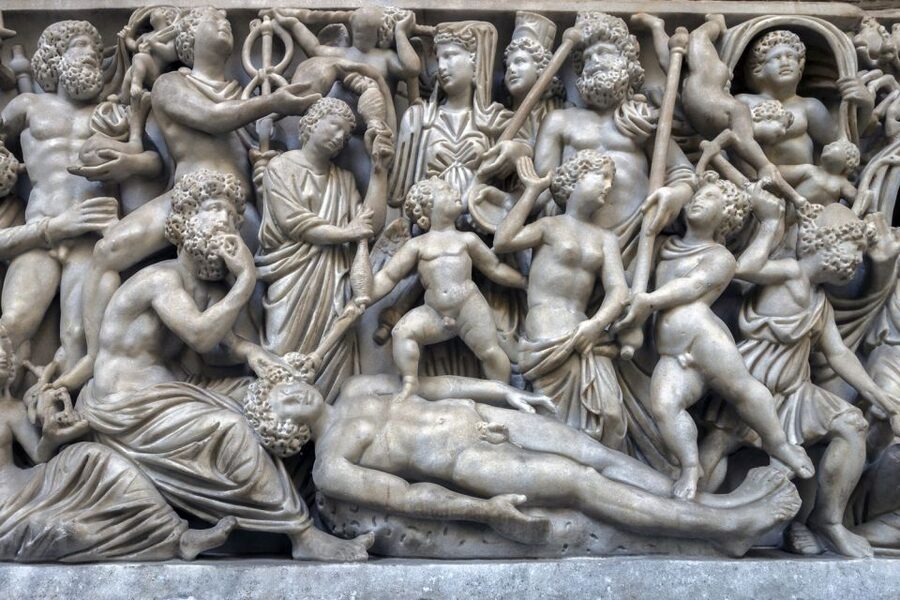
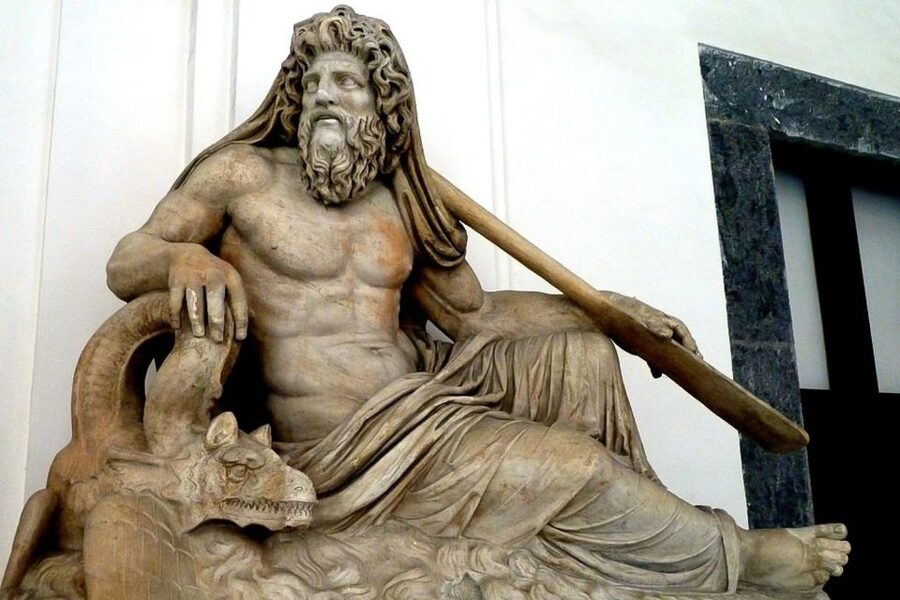
The Farnese Collection forms the heart of the visit. It includes Greek and Roman antiquities collected by the Farnese family, one of the most important groups of ancient sculpture in the museum.
The Farnese Hercules is one of the major sights. The statue shows Hercules at rest, and its scale and physical force make it easy to understand why it became so famous. Your guide can give you the story behind the figure and help you look past the obvious muscles to the pose, expression, and details that define the work.
You also see the two Tyrannicides. These sculptures connect art with public memory and political violence in the ancient Greek world. Without explanation, the subject can be easy to miss. With a guide, the statues become more than attractive marble figures.
Then comes the Toro Farnese, the large group showing the punishment of Dirce. It is a dramatic composition, with several figures and animals joined in a single scene. Its size makes it memorable, but the arrangement can be hard to read at first. This is exactly the kind of work where a guide earns the price of admission by showing you where to look.
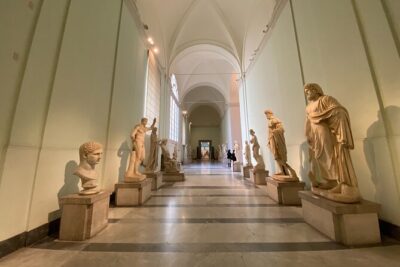
The Farnese galleries are not simply a greatest-hits room. They also show how ancient works were collected, preserved, and presented long after their original use. That gives the sculptures a second story, one tied to the powerful family that assembled them.
Pompeii’s Alexander mosaic
The mosaic of Alexander the Great from the House of the Faun is one of the tour’s most rewarding stops. It was excavated in Pompeii, where it once formed part of a wealthy Roman house.
The scene is a battle between Alexander and the Persian king Darius. Tiny pieces of stone and glass create faces, armor, horses, weapons, and movement on a remarkable scale. You can spend a long time trying to follow the action, but the guide helps you understand the key figures and the choices made by the mosaic artist.
The mosaic also gives you a direct link to Pompeii. At the archaeological site, you see the house and its rooms. Here, you see an exceptional object removed from that setting and protected in a museum. The two experiences work well together, but the museum gives you a closer view of the craft.
I would pay attention to the details around the central figures. A quick look can leave you with only an impression of battle. A careful explanation turns the scene into a lesson in ancient storytelling, wealth, and taste.
More museums and sites in Naples:
- Naples: National Archaeological Museum audio guide
★ 4.0 · 155 reviews - Capodimonte Museum in Naples
★ 4.0 · 115 reviews - Sant’Aspreno ai Crociferi: Church & Jago Museum Guided Tour
★ 4.9 · 86 reviews - Skip the Line: National Archaeological Museum of Naples Entry Ticket
★ 3.5 · 82 reviews
Silverware from the Villa of Menander
The tour also examines silver objects from the House of Menander in Pompeii. These are not grand statues or vast wall paintings. They are household objects, and that makes them especially useful.
Silverware can show how wealthy Romans ate, entertained, and displayed status. The workmanship matters, but so does the setting. Objects from a villa connect ancient art to ordinary actions such as serving food, hosting a meal, and welcoming visitors.
The guide explains the use of the pieces, helping you see them as part of daily life rather than decoration in a glass case. I like this part of the visit because it balances the giant sculptures. After looking at Hercules and Toro Farnese, you get a more intimate view of the people who lived in the Roman world.
The Villa of Menander material also adds depth to a Pompeii visit. You are not only seeing streets and walls frozen by the eruption. You are seeing the possessions of a household and the choices its residents made about display and comfort.
Roman frescoes and the Blue Vase
The museum holds Roman frescoes excavated from the area around Mount Vesuvius. Their colors and painted scenes offer another way to understand Roman homes.
A fresco can be easy to pass quickly. I suggest giving yourself time to look at the framing, figures, and decorative patterns. Your guide can explain how these paintings fit into domestic spaces and why their discovery in the Vesuvian area is so valuable.
The Blue Vase provides a different kind of detail. It came from a tomb in Pompeii and is described as one of the objects discussed during the tour. The name is plain, but the object itself is visually striking. Its connection with a tomb also gives it a different setting from the household silver and villa frescoes.
These smaller works help keep the tour from becoming only a parade of famous statues. You see art made for public display, private rooms, household use, and burial settings. That range is one of the museum’s greatest strengths.
What two hours really gives you
Two hours is enough for an intelligent introduction to the museum’s principal works. It is not enough to inspect every gallery, read every label, or cover every collection.
That limitation can be a benefit. Large archaeology museums often leave you tired and unsure of what you actually saw. A private guide creates a clear route through the collection, with time for questions and a few memorable objects to anchor the visit.
Your exact route may depend on the guide, museum conditions, and the pace of your private group. The advertised focus includes the Farnese Collection, Pompeii mosaics, silver, frescoes, and the Blue Vase. If one item matters most to you, tell the guide early so the available time is used well.
The guide quality appears to be a major part of the experience. Giulia is described as an archaeologist who could discuss the collection and artwork in depth. Nicoletta is praised for explaining the historical meaning of what you see and for making the subject engaging. Raffael is noted for being on time and informative. One guide also helped with a pizza recommendation after the museum, a useful local touch if you still need lunch ideas.
The guide’s personality will shape the visit, but the private format gives you a better chance to ask for the level of detail you want. You can ask about technique, mythology, excavation, household life, or the connection between the museum and Pompeii.
Is $156.48 per person a fair price?
At $156.48 per person, this is not a budget museum entry. You are paying for a private two-hour guide, skip-the-line admission, and a focused route through one of Naples’ major cultural institutions.
The value depends on your priorities. If you enjoy ancient art and want context for the museum’s famous works, the price can make sense. A guide who can explain the Farnese sculptures, identify the key action in the Alexander mosaic, and place the silver and frescoes in their original settings can save you from a shallow visit.
The value is weaker if you prefer to explore slowly on your own. Two hours may feel too short for the cost, especially if you want to read every label or visit areas outside the main highlights. You are also responsible for getting to the museum, since transportation is not included.
For a couple, family, or small private party, the price becomes easier to assess by comparing it with the cost of separate admission and a specialist guide. The private format also avoids being tied to the questions and pace of a large group. Still, I would book it for the quality of interpretation, not just for line-skipping.
Who will enjoy this private museum tour?
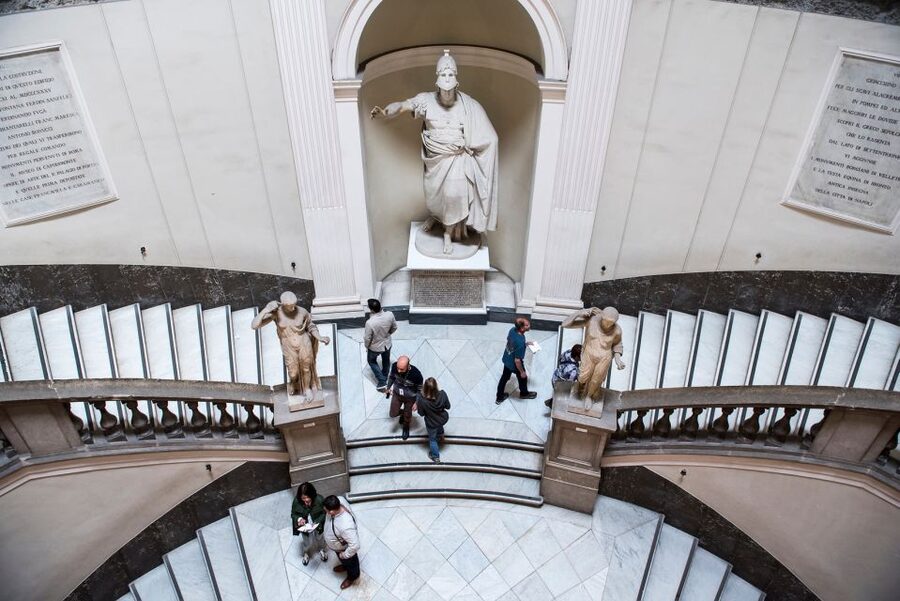
I would choose this tour if you are visiting Pompeii or Herculaneum and want to understand the objects removed from those sites. It works especially well for first-time visitors to Naples who want a strong introduction without spending an entire day indoors.
Art lovers will appreciate the focus on sculpture, mosaic, silver, fresco, and decorative objects. People interested in Roman domestic life will also get a useful look at houses, villas, tombs, and the objects that once filled them.
Families can benefit from the private setting because the guide can adjust explanations and keep the route moving. The museum’s large sculptures and dramatic stories offer natural points of interest, but two hours may still be a long stretch for very young children.
You should think twice if your main goal is independent exploration. This is a guided highlights visit, not an open-ended museum afternoon. You should also confirm accessibility before booking. The information provided says the activity is wheelchair accessible in one place, but also says it is not suitable for wheelchair users elsewhere. That conflict needs clarification with the provider.
The available guide languages are English, Italian, Spanish, French, and German. Choose the language that lets you ask detailed questions, since the explanations are a central part of what you are buying.
Practical details before you book
The tour lasts two hours and begins and ends at the National Archaeological Museum of Naples. The guide meets you outside the main entrance at the ticket office, holding a sign with your name.
Admission and skip-the-line fees are included. Transportation is not. Starting times depend on availability, and the activity can be canceled up to 24 hours before the scheduled time for a full refund. You can also reserve now and pay later, which helps if your Naples schedule is still changing.
The activity is for a private group, not a shared public group. That usually makes it easier to ask questions and keep the pace comfortable. It also means the guide’s skill has a greater effect on your experience, which is why the specific praise for Giulia, Nicoletta, and Raffael is worth noting.
Wear comfortable shoes and keep your plan around the museum manageable. The tour is only two hours, but the collection is substantial and the subject matter rewards attention. If you are visiting Pompeii on the same day, allow enough time between locations rather than trying to force both into a tight schedule.
Should you book the Naples Archaeological Museum tour?
Book it if you want a focused, private introduction to Pompeii’s finest museum treasures and the Farnese Collection. The strongest reasons are the guide-led interpretation, skip-the-line admission, and access to major works such as the Alexander mosaic, Farnese Hercules, Toro Farnese, Villa of Menander silver, frescoes, and Blue Vase.
Skip it if you want several unhurried hours alone with the collection or if $156.48 per person feels high for a two-hour visit. Before paying, confirm the meeting details, language, and wheelchair policy, since the accessibility information is inconsistent.
For most first-time visitors with a serious interest in ancient art, I would consider this a sensible splurge. The museum is large, the objects deserve context, and a private guide helps you leave with a clear memory of what you saw rather than a blur of marble, glass cases, and ancient names.
FAQ
Where does the Naples Archaeological Museum tour begin?
Meet your guide outside the main entrance of the National Archaeological Museum of Naples ticket office. The guide will hold a sign with your name.
Where does the tour end?
The activity ends back at the museum meeting point.
How long does the guided museum visit last?
The guided visit lasts two hours.
Is admission to the museum included?
Yes. The tour includes guide services and skip-the-line admission fees.
Is transportation included?
No. Transportation to and from the museum is not included.
Which languages are available?
The live guide is available in English, Italian, Spanish, French, and German.
Is this a private tour?
Yes. The activity is operated for a private group.
Can I cancel for a full refund?
Yes. You can cancel up to 24 hours in advance for a full refund.
Is the tour wheelchair accessible?
The supplied information gives conflicting details. One section says the activity is wheelchair accessible, while another says it is not suitable for wheelchair users. Confirm the current accessibility arrangements before booking.
More 2-Hour Experiences in Naples
- Procida Island Tour by Boat 2h 15m with Swimming and Underwater Photos
★ 5.0 · 344 reviews - Naples: 2-Hour Walking Tour w/ Food Tasting Experience
★ 4.4 · 15 reviews - Naples: Capodimonte Museum 2-Hour Guided Private Tour
★ 4.5 · 15 reviews - 2-Hour Authentic Italian Pizza Making Class in Naples
★ 4.5 · 14 reviews
Just added around Naples
- The Ultimate Neapolitan Cooking Class with Local★ 5.0 · 3 reviews
- Full-Day Tour of the Amalfi Coast and Pompeii from Naples★ 4.5 · 3 reviews
- Naples: Old City Center Street Food Tour with Spritz★ 4.7 · 3 reviews
- Visit in Pompeii – Naples Private Tour with Ada★ 5.0 · 3 reviews
- Transfer from Naples to Sorrento or viceversa★ 5.0 · 3 reviews
- Naples: National Gallery of Capodimonte Tour★ 5.0 · 3 reviews
- Visit 2 wine producers with tasting and transportation included★ 5.0 · 3 reviews
- Naples: Mozzarella experience★ 5.0 · 3 reviews
Archaeological Museum Tours, compared.
National Archaeological Museum Ticket & Audio App
Read our review →
National Archaeological Museum of Naples Guided Tour
Read our review →
National Archaeological Museum Tour & Digital Guide
Read our review →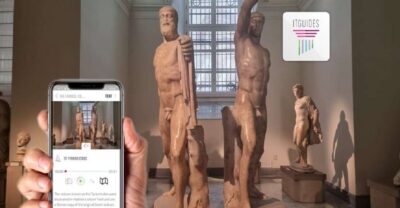

Skip the Line: National Archaeological Museum of Naples Entry Ticket
Read our review →
Private Tour of the National Archaeological Museum of Naples
Read our review →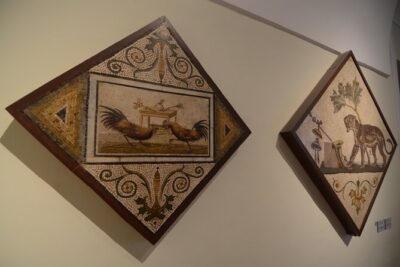
Browse the lists this tour appears in