
Reviewed · MUSEUMS
Naples: City and Lapis Museum Tour with an Archaeologist
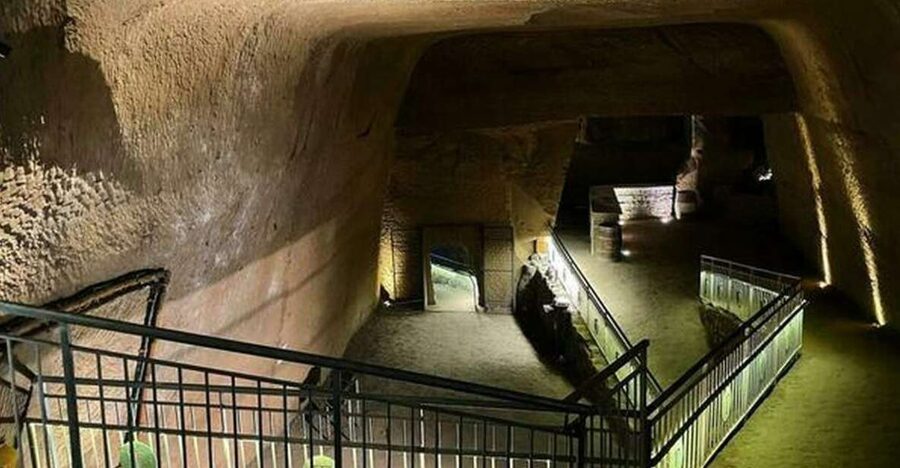
Naples keeps a second city beneath its streets. This two-hour walk leads from Piazza San Gaetano into the LAPIS Museum, where Greek cisterns, Roman water channels, Templar passageways, and WWII shelters occupy the same underground route. It is a striking way to see how one place changed over thousands of years.
I like the strong mix of above-ground streets and underground archaeology, and I like having a professional archaeologist explain what you are seeing rather than simply pointing out old stone. Past guides Riccardo and Theresa earned special praise for making the subject clear, lively, and easy to follow.
The main drawback is physical: this route is not suitable for wheelchair users and includes a descent to about 40 meters below street level. One booking was also canceled by the operator, so I would avoid placing this tour on the only free day of a tightly packed Naples visit.
In This Review
- Key points about the Naples underground tour
- Why Naples has a city beneath the city
- Starting at Piazza San Gaetano and Via dei Tribunali
- Basilica di San Lorenzo Maggiore and the layers below
- The Church of Purgatory and a descent through Santa Maria Maggiore
- Greek cisterns carved into Naples’ stone
- Roman water tanks and the changing purpose of the tunnels
- The WWII shelters and the traces of ordinary life
- What the archaeologist adds to the experience
- Is $53 a fair price for two hours?
- Practical advice before you book
- Who should take this Naples underground tour?
- Should you book the LAPIS Museum tour?
- FAQ
- Where does the Naples City and Lapis Museum Tour begin?
- Where does the tour finish?
- How long does the tour last?
- What languages are available?
- Is admission to the underground museums included?
- Is the tour suitable for wheelchair users?
- What should I bring?
Key points about the Naples underground tour
- Forty meters below Naples: Descend through Santa Maria Maggiore to ancient cisterns and later shelter tunnels.
- A true time tunnel: Greek stonework, Roman water tanks, medieval passageways, and 1943 air-raid shelters share one route.
- LAPIS Museum admission included: Your ticket covers both the Roman Cistern Museum and the WWII Shelters Museum.
- Archaeologist-led explanations: The guide connects the underground structures with Naples’ streets, churches, and local customs.
- Small group of 10: A limited group makes it easier to hear the guide and ask questions.
- Good value at $53: The price covers a two-hour guided walk, a professional guide, and admission to the underground museums.
Why Naples has a city beneath the city
Naples is one of Italy’s oldest urban centers, and its underground spaces preserve the practical side of that long past. Stone was cut below the streets, water was collected and moved through tunnels, and later generations reused the same passages for very different needs.
The route is part museum, part archaeological walk, and part history lesson. You begin among the crowded lanes of the historic center, then move down through church foundations and carved stone. At the lowest point, the setting changes again, from ancient infrastructure to the kitchens, bathrooms, and personal remains of wartime shelters.
That sequence matters. If you visited only an underground museum, you might see impressive structures without understanding how they connect to daily life above. Starting in the old city helps you place the tunnels within Naples itself. The streets, churches, and underground chambers are not separate attractions. They are layers of one settlement.
The tour lasts two hours, so it gives you a focused introduction rather than a long archaeological study. I see that as a strength for most visitors. You get a clear sense of the site without giving up half a day, though anyone wanting a slow and highly detailed examination of every chamber may find the schedule brisk.
More museums and sites in Naples:
- Naples: National Archaeological Museum Ticket & Audio App
★ 4.4 · 617 reviews - Naples: National Archaeological Museum of Naples Guided Tour
★ 4.8 · 498 reviews - Naples: National Archaeological Museum Tour & Digital Guide
★ 4.2 · 177 reviews
Starting at Piazza San Gaetano and Via dei Tribunali
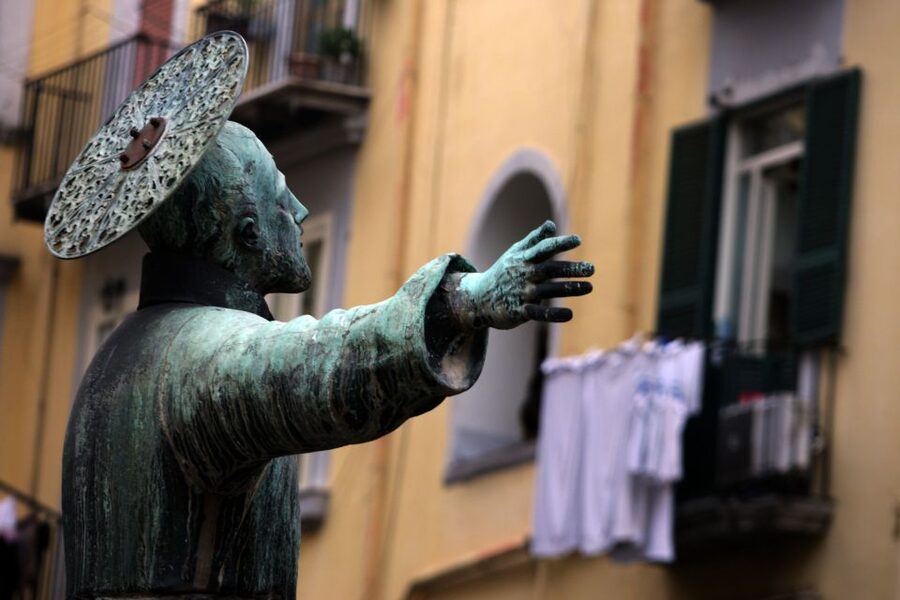
Meet the guide at the foot of the statue in Piazza San Gaetano. Look for the Grand Tour Experience sign. This square was the ancient Greek-Roman center of the area, making it a fitting place to begin a tour about Naples’ layers.
From here, the route follows Via dei Tribunali. This street brings you into the character of old Naples before you go below it. The walk is not just a transfer to the museum. The guide uses the surrounding streets and local culture to explain what is often called the underground cults of Naples.
That opening section gives the tour some needed context. You can look at the city as a living place instead of treating the ancient structures as isolated ruins. The tone of the street changes as you move through the historic center, and the guide begins linking what is visible at street level with what lies underneath.
A small group is useful here. With no more than 10 participants, you should have a better chance of hearing the guide in the narrow streets and asking about details that catch your eye. The tour is offered in English or Italian, so confirm your preferred language when checking times.
Basilica di San Lorenzo Maggiore and the layers below
The next stop is Basilica di San Lorenzo Maggiore, a Gothic church with a glass floor that lets you look down at remains of an earlier ancient mosaic. This is one of the tour’s best examples of how Naples places different centuries almost on top of one another.
The glass floor makes the point quickly. You are standing in a later church while looking at an older surface beneath it. The view is small in scale, but it helps explain why Naples can feel archaeologically dense. The past is not always displayed in a large open ruin. Sometimes it appears through a floor or under a building still used today.
Your guide’s interpretation is particularly important at stops like this. An archaeologist can explain what the visible fragments mean, how they relate to the building above, and why the city developed in layers. The guides who received the strongest praise, including Riccardo and Theresa, were noted for clear explanations and patient answers to questions.
You should keep your expectations realistic. This is a guided look at the church and its remains, not a long independent visit to every part of the basilica. The value comes from the connection between the church, the ancient mosaic, and the underground route that follows.
The Church of Purgatory and a descent through Santa Maria Maggiore
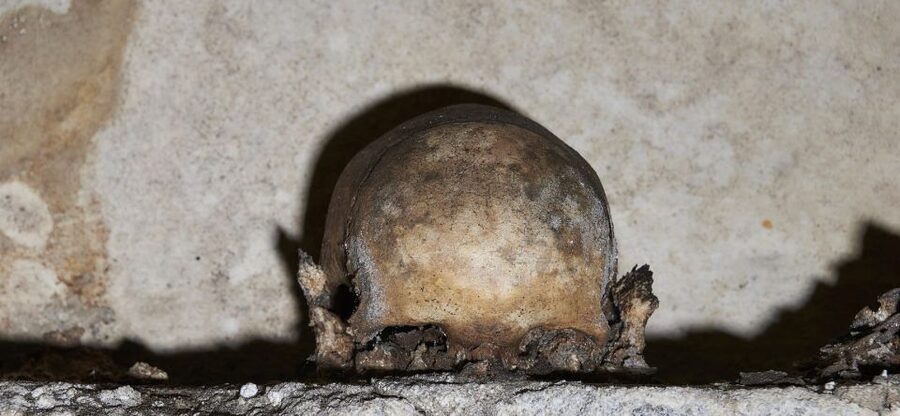
The route continues to the Church of Purgatory, another stop that brings you into Naples’ local religious traditions and underground beliefs. The tour description refers to this as part of understanding the underground cults of Naples, a subject that gives the walk more character than a simple tour of engineering works.
The descent into the underground begins through a doorbell in Santa Maria Maggiore, one of the city’s oldest churches. The church was built on a Pagan Roman temple dedicated to Diana and still contains Roman structures. That detail shows how older foundations were reused instead of erased.
Going below street level through a church gives the experience a strong sense of transition. One moment you are in the historic center, surrounded by ordinary city life. Soon after, you are moving through stone cut for a very different purpose. The route reaches roughly 40 meters below the crowds of Naples, so sturdy shoes are essential.
The exact physical conditions are important to consider. The tour is not suitable for wheelchair users, and the supplied information does not describe the number or style of stairs. If you have trouble walking, enclosed spaces, or uneven underground routes, ask the operator for current details before booking. Comfortable shoes and weather-appropriate clothing are listed as necessities.
A completely different sort of day out of Naples:
- From Naples: Pompeii Ruins & Mount Vesuvius Day Tour
★ 4.3 · 11,459 reviews - From Naples: Sorrento, Positano and Amalfi Full-Day Tour
★ 4.6 · 10,988 reviews - From Naples: Sorrento, Positano & Amalfi Coast – Small Group Tour
★ 5.0 · 8,643 reviews - Naples: Catacombs of San Gennaro Entry Ticket & Guided Tour
★ 4.6 · 7,941 reviews
Greek cisterns carved into Naples’ stone
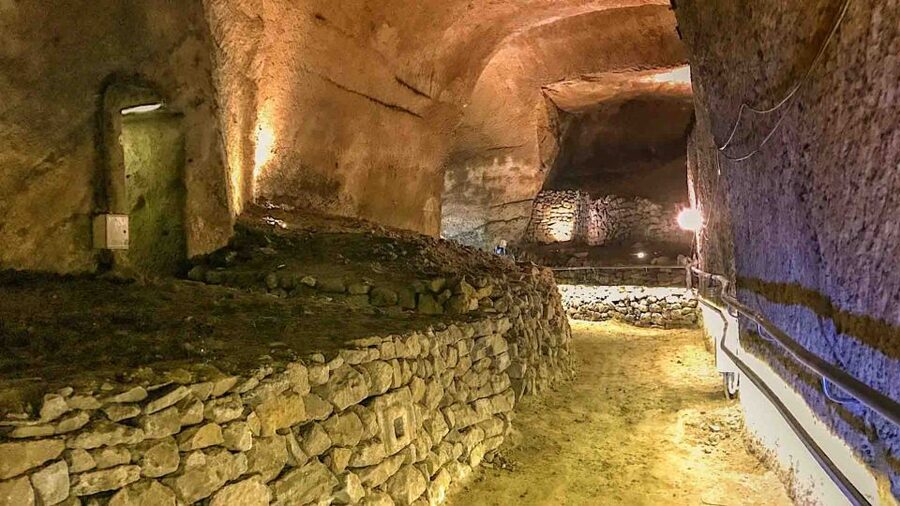
Below Santa Maria Maggiore, the route reaches Greek cisterns carved into the tough stone. These chambers are among the most distinctive parts of the experience because they show how early residents altered the ground beneath the city to manage water.
The cisterns are not merely empty rooms. They are part of a long system that later Romans expanded and used. As you move through the stone, the archaeologist helps you follow the change from Greek construction to Roman water collection. That movement through time is the central pleasure of the tour.
Naples’ underground path is described as the world’s largest, with about 45 percent of the underground area practically empty. You do not see all of that space during this two-hour visit, of course. Instead, you enter one carefully selected section that shows why the city below is so extensive and varied.
This part may appeal most to people who like practical history. Water systems reveal how a city functioned. They tell you about construction, storage, and the daily needs of a growing population. The rough stone also gives the visit a direct, physical quality that a display case cannot provide.
Bring a camera if you want photographs, but do not expect the same conditions as a sunny street walk. The spaces are underground, and your guide’s explanation will be more useful than trying to rush from one chamber to the next for pictures.
Roman water tanks and the changing purpose of the tunnels
At the lowest point of the route, you walk through tunnels toward tanks used to collect water in Roman times. This is where the tour moves from early cisterns to a more developed water system.
The key thing to watch is reuse. The same underground route served different communities across the centuries. Its original purpose was practical, but later generations found new ways to use it. The guide’s job is to make those changes understandable, and this is where the professional archaeological background adds real value.
The route was also used in medieval times as a secret passage by the Templar Knights. That detail adds a more mysterious note, but the site is most interesting when the guide separates documented function from colorful tradition. You should enjoy the story while still listening for the evidence behind it.
The tunnels also served as an airplane retreat in 1943. That phrase points to the wartime use of the underground spaces as protection during air raids. The change from water infrastructure to shelter is a sharp reminder that people in Naples repeatedly adapted the spaces beneath their homes and churches.
The WWII shelters and the traces of ordinary life
The final underground section includes WWII shelters, with bathrooms, kitchens, and memorabilia still preserved. These details make the wartime portion more personal than a bare military display.
A cistern can feel remote. A kitchen or bathroom feels immediate. Those rooms help you picture people spending hours underground, trying to maintain ordinary routines during a dangerous period. The tour therefore moves beyond ancient history and reaches the lives of people who used these spaces within living memory.
Admission to the WWII Shelters Museum is included, along with the Roman Cistern Museum. That matters when you assess the $53 price, since you are paying not only for a walk but also for access to two connected museum experiences and a guide who interprets them.
The wartime section may be the strongest part for anyone interested in social history. It also gives the tour emotional balance. You begin with Greek and Roman engineering, pass through medieval use, and end with a very modern crisis. The underground route becomes a record of changing needs rather than a collection of ancient curiosities.
What the archaeologist adds to the experience
The guide is the most important variable on this tour. The route itself is unusual, but stone chambers can lose their meaning without good interpretation. A professional archaeologist should help you understand construction, dating, reuse, and the connection between the underground spaces and the city above.
The strongest feedback centered on guides who combined subject knowledge with a relaxed manner. Riccardo was described as passionate and well informed, while Theresa was praised for deep subject expertise and for answering questions patiently. Another guide was praised for making the tour both informative and fun.
That is useful advice when choosing this experience. You are not booking a silent museum entry. You are booking a guided explanation, so the quality of the person leading the group affects the value more than it would on a self-guided visit.
The small group limit of 10 should help. You can stay close to the guide and ask about details that interest you, rather than trying to follow a large crowd through the tunnels. Still, guide assignments can change, and the named guides are examples of people who have led the experience, not a promise that one of them will be present on your date.
Is $53 a fair price for two hours?
At $53 per person, this is not the cheapest way to spend two hours in Naples. It is also more than a simple church visit or a walk through Via dei Tribunali. The price makes better sense once you count the professional guide, the small group, the Roman Cistern Museum admission, and the WWII Shelters Museum admission.
I consider it fair value for visitors who want interpretation. The underground path is unusual, and the route combines several periods that would be difficult to connect on your own. You are paying for access and for the story that ties the spaces together.
The value is weaker if you prefer to move independently or if you have already visited several underground sites in Naples. Two hours also leaves little time for a slow personal examination. This works best as a focused introduction to Naples below street level, not as an all-day archaeological study.
The tour finishes at Piazza Bellini. That gives you a useful location from which to continue exploring, though food and drinks are not included. Bring cash and a credit card for your own expenses, and consider carrying a packed lunch if it fits your wider day.
Practical advice before you book
Wear comfortable shoes. The route goes underground, and the listing specifically advises suitable footwear and weather-appropriate clothing. A camera is allowed and recommended, though the most useful part of the tour will be the guide’s explanation.
Pets are not allowed, except for assistance dogs. The tour is not suitable for wheelchair users. If mobility or enclosed underground spaces are a concern, get more route information before paying.
The meeting point is precise: Piazza San Gaetano, at the foot of the statue. Look for the guide holding a Grand Tour Experience sign. Arriving with enough time to find the statue and sign is sensible, since the tour moves through several locations and does not begin at the museum entrance.
Free cancellation is available up to 24 hours before the start for a full refund, and you can reserve now while paying later. One recorded booking was canceled by the operator, so I would still keep some flexibility in your Naples schedule. That is a small warning, not a reason to dismiss the tour, but it is worth remembering if your itinerary leaves no backup plan.
Who should take this Naples underground tour?
I would recommend it to you if you enjoy archaeology, old churches, engineering, or the way ordinary people reuse historic spaces. It is also a strong choice if you want a break from Naples’ street crowds without leaving the historic center.
Families with older children may find the changing purposes of the tunnels easier to grasp than a conventional museum display. The wartime kitchens and bathrooms can make the history feel concrete, while the Greek cisterns and Roman tanks add a sense of discovery.
You should think twice if you dislike enclosed spaces, have difficulty with stairs or uneven surfaces, or want a leisurely street-food experience. Food and drinks are not included, and the tour is built around walking and underground access rather than meals or shopping.
Language is another simple point. Live guiding is available in English and Italian. Check the starting time and language before reserving, since availability can change.
Should you book the LAPIS Museum tour?
Book this tour if you want Naples explained from below, not just viewed from the street. The combination of Greek cisterns, Roman water tanks, medieval passageways, and 1943 shelters gives you a clear sense of how one city kept adapting to its past.
I especially recommend it for a first visit, when you want a short, well-organized introduction to the historic center’s underground world. The price is reasonable once museum admission and an archaeologist-led small group are included.
Skip it if you need step-free access, dislike underground routes, or have only one rigidly scheduled day. For everyone else, this is a compact and unusual Naples experience, with enough history to make the streets above look different when you return to them.
FAQ
Where does the Naples City and Lapis Museum Tour begin?
The tour begins at Piazza San Gaetano, at the foot of the statue. Look for a guide holding a Grand Tour Experience sign.
Where does the tour finish?
The route finishes at Piazza Bellini.
How long does the tour last?
The tour lasts two hours.
What languages are available?
Live guiding is available in English and Italian.
Is admission to the underground museums included?
Yes. The price includes admission to the Roman Cistern Museum, also called the LAPIS Museum, and the WWII Shelters Museum.
Is the tour suitable for wheelchair users?
No. The experience is listed as unsuitable for wheelchair users.
What should I bring?
Bring comfortable shoes, a camera, a credit card, cash, a packed lunch, and clothing suited to the weather. Pets are not allowed, although assistance dogs are permitted.
Just added around Naples
- Full-Day Tour of the Amalfi Coast and Pompeii from Naples★ 4.5 · 3 reviews
- The Ultimate Neapolitan Cooking Class with Local★ 5.0 · 3 reviews
- Naples: Old City Center Street Food Tour with Spritz★ 4.7 · 3 reviews
- Visit in Pompeii – Naples Private Tour with Ada★ 5.0 · 3 reviews
- Transfer from Naples to Sorrento or viceversa★ 5.0 · 3 reviews
- Naples: National Gallery of Capodimonte Tour★ 5.0 · 3 reviews
- Visit 2 wine producers with tasting and transportation included★ 5.0 · 3 reviews
- Naples: Mozzarella experience★ 5.0 · 3 reviews
Museums, compared.
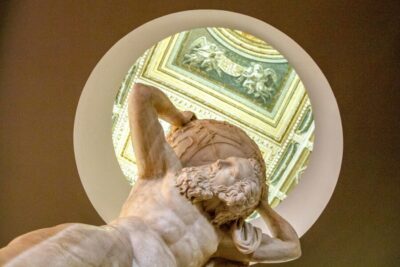
National Archaeological Museum Ticket & Audio App
Read our review →
National Archaeological Museum of Naples Guided Tour
Read our review →
National Archaeological Museum Tour & Digital Guide
Read our review →


Sant’Aspreno ai Crociferi: Church & Jago Museum Guided Tour
Read our review →
Skip the Line: National Archaeological Museum of Naples Entry Ticket
Read our review →
Browse the lists this tour appears in