
Reviewed · STREET ART
Naples: Diego Maradona Guided City Walking Tour
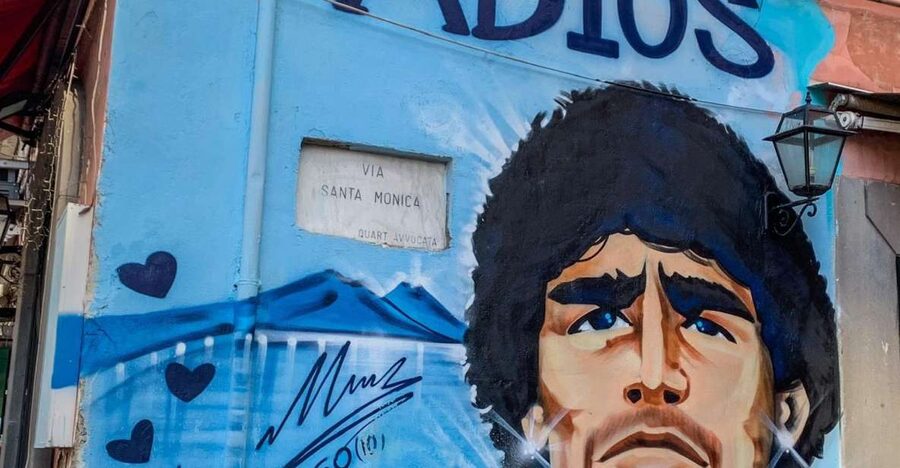
Diego Maradona is still present in Naples, not only in football shirts and faded posters, but in shrines, murals, stencils, and the everyday pride of the Spanish Quarter. This 1.5-hour walking tour follows that bond from Teatro San Carlo to the famous Maradona mural, with a local guide explaining why the city treats its former number 10 almost like a civic saint.
I like the route for two reasons. First, it links major Naples sights such as Piazza del Plebiscito and Galleria Umberto I with smaller corners that are easy to miss. Second, the Spanish Quarter gives you more than football facts: you get a look at how Maradona became a symbol of hope, pride, and Naples identity. The main drawback is that the tour is short, so it offers a focused introduction rather than a complete history of Maradona or Napoli football.
In This Review
- Key points to know
- Why Maradona matters so much in Naples
- Meeting at Teatro San Carlo
- Piazza del Plebiscito and the first part of the walk
- Galleria Umberto I and Naples in grand scale
- Entering the Spanish Quarter
- Vico Lungo del Gelso and the open-air art
- Piazza Maradona and the famous mural
- What the guide adds to the experience
- Is $61 a fair price?
- Who should book this walking tour?
- Practical tips for a better visit
- Should you book the Maradona tour?
- FAQ
- Where does the Diego Maradona walking tour begin?
- How early should I arrive?
- How long does the tour last?
- What languages are available?
- Where does the tour end?
- Does the tour visit the Spanish Quarter?
- Which Maradona art sites are included?
- Is a professional guide included?
- How much does the tour cost?
- Can I cancel the booking?
Key points to know
- Maradona’s Naples story: Learn how his arrival and success with Napoli changed the mood of the city.
- A route through central Naples: Start at Teatro San Carlo and walk via Piazza del Plebiscito and Galleria Umberto I.
- The Spanish Quarter is the heart of the tour: Narrow streets lead to shrines, murals, and fan-made tributes.
- An open-air art stop: See the famous works in Vico Lungo del Gelso and Piazza Maradona.
- Guides praised for clear storytelling: Palmira and other local guides have been singled out for strong English and a warm manner.
- Good value for football fans: At $61, the price is easiest to justify if you care about Maradona, Napoli, or local culture.
Why Maradona matters so much in Naples
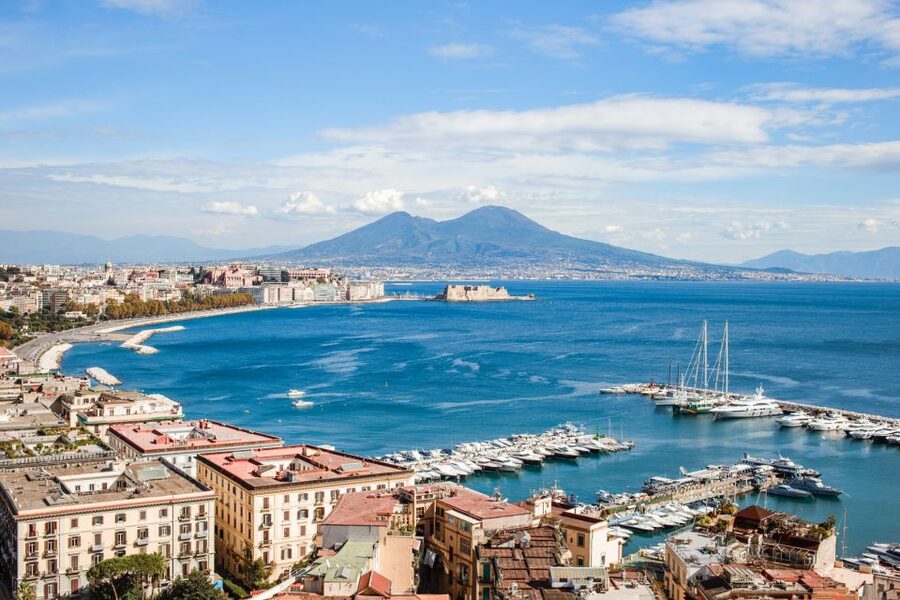
In most cities, a famous footballer might appear on a mural or two. In Naples, Maradona’s image is woven into the streets. This tour helps you understand that the devotion is not simply about goals, trophies, or celebrity.
Maradona arrived at Napoli in 1984, when the club had never won Italy’s top league title. He helped Napoli win its first championship in 1987, then another in 1990. The achievement carried special meaning in a city that often felt overlooked by wealthier and more powerful parts of Italy.
Your guide explains that wider setting as you walk. The point is not to turn the tour into a statistics lesson. It is to show why one player became tied to the self-respect of an entire city. That context gives the murals more weight. You are not just looking at painted portraits. You are seeing how Naples remembers a period of joy and recognition.
The tour also touches on Maradona’s connection with ordinary Neapolitans, especially in the Spanish Quarter. Several descriptions of the experience point to his importance for the local community and to the way he gave children a figure who represented hope and a better future. That social meaning is one of the strongest reasons to take the tour even if you are not a serious football fan.
More street art walks in Naples:
- Naples Spanish Quarters Walking Tour Street Art, Folklore & Sweet
★ 5.0 · 797 reviews - Naples: Street Art & History Tour in the Spanish Quarters
★ 4.9 · 540 reviews - Naples: Maradona Stadium Guided Exterior Walking Tour
★ 4.3 · 113 reviews
Meeting at Teatro San Carlo
The walk begins in front of Teatro San Carlo, one of Naples’ best-known cultural landmarks. Arrive 15 minutes before the scheduled start so you have time to find the guide without rushing.
This is a useful place to begin because it places two sides of Naples next to each other. Teatro San Carlo represents formal culture, royal history, and grand architecture. Within minutes, the route moves toward the open squares, arcades, and tight lanes where Maradona’s story is lived on a much more personal scale.
The meeting point is central and easy to connect with the rest of your sightseeing. If you are already visiting the historic center, this tour can fit neatly into a day of walking. It also gives you a strong orientation to the area around the Spanish Quarter.
You should expect a walking experience rather than a museum visit. The only included feature is the professional guide, so the value comes from the route, explanations, and access to places that mean more when someone explains their meaning.
Piazza del Plebiscito and the first part of the walk
From Teatro San Carlo, the group walks to Piazza del Plebiscito. The walk is listed at about 15 minutes, with the guide providing commentary along the way.
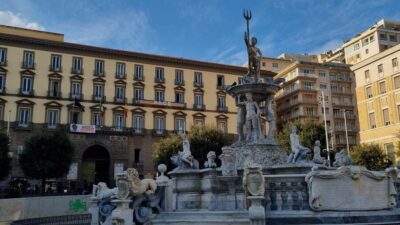
The square is one of Naples’ grandest public spaces, and it provides a sharp contrast with the lanes that come later. Your guide uses the setting to place Maradona’s story within the wider city. Naples is not one-note. It has royal buildings, opera, open civic spaces, crowded lanes, neighborhood shrines, and football devotion, all within a short walk.
This stop is not presented as a separate Maradona museum or exhibit. Its value is in the transition. You begin with the monumental side of Naples, then move toward places where local memory appears on walls and doorways.
I like this part of the route because it prevents the experience from becoming a simple search for murals. You get a sense of the city around them first. If you have limited time in Naples, the walk also gives you an efficient look at a few central sights while keeping the main focus on Maradona.
Galleria Umberto I and Naples in grand scale
The next stop is Galleria Umberto I, another short walk of roughly 15 minutes. This elegant covered arcade is known for its high glass roof and decorative interior, and it adds another architectural layer to the route.
The gallery helps show how quickly Naples can change character. One moment you are in a formal public space, and soon you are heading toward the Spanish Quarter, where the streets become narrower and the walls carry more personal messages.
Your guide’s role matters here. A basic route map can show you the gallery and the square, but it cannot explain how these places connect to the emotional geography of Naples. A strong guide makes the change in surroundings feel like part of the story rather than a series of unrelated photo stops.
The experience is offered in English or Spanish. Clear communication is important on a short tour, and Palmira has been praised for speaking English clearly and explaining the link between Maradona and the city in an engaging way. Other guides have also been described as local and well prepared, so the quality seems to depend on the individual guide while the central subject remains consistent.
More walking tours in Naples:
- Naples: Street Food Walking Tour with Local Guide
★ 4.8 · 4,256 reviews - Naples: Old Town Guided Walking Tour
★ 4.8 · 553 reviews - Naples: Panoramic Walking Tour with Funicular
★ 4.8 · 543 reviews - Naples Walking Tour with Underground Roman Ruins Ticket
★ 4.5 · 510 reviews
Entering the Spanish Quarter
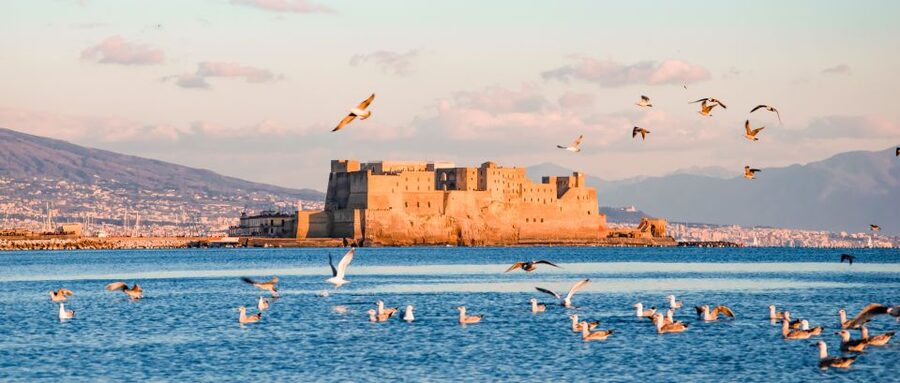
The Spanish Quarter is where the tour becomes most personal. Its narrow streets and close-set buildings create a very different mood from Piazza del Plebiscito and Galleria Umberto I.
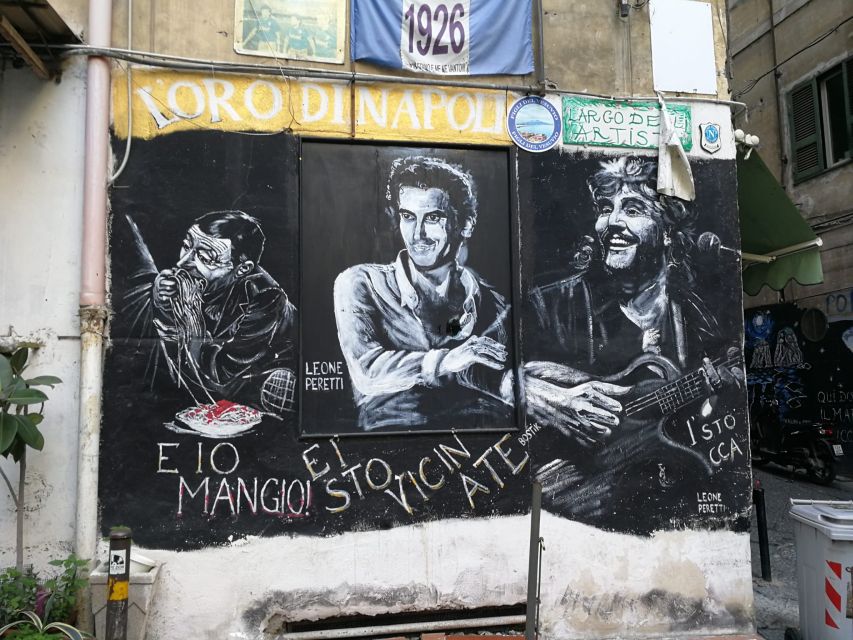
You walk through streets where Maradona’s image appears in murals, small shrines, flags, and painted tributes. The guide points out details you might pass without understanding on your own. This is one of the most useful parts of the experience because the area can feel visually overwhelming. A local explanation helps you separate the major memorials from the everyday decoration.
The Spanish Quarter is also where the tour connects football with neighborhood life. Maradona is not presented only as a sports figure. Your guide explains how his success gave people a reason for pride and celebration, and why his name remains tied to the area.
Several especially positive accounts of the tour praise the local guides for explaining the Spanish Quarter as well as Maradona. That balance is important. If you only want football facts, you can find those elsewhere. Here, you get a short introduction to the people and streets that made Maradona’s story matter so much.
The streets are narrow, so stay close enough to hear the guide. Keep your camera ready, but do not expect every stop to be a neat, open plaza. Part of the pleasure is seeing how the tributes fit into a working neighborhood rather than a purpose-built attraction.
Vico Lungo del Gelso and the open-air art
The route continues to Vico Lungo del Gelso, one of the key places connected with Maradona street art. The tour treats this area as an open-air museum, but it does not feel like a conventional gallery with labels and controlled lighting.
The art is part of the street. You may see large painted portraits, smaller stencils, devotional details, and football imagery close together. Your guide explains what you are looking at and why particular works matter.
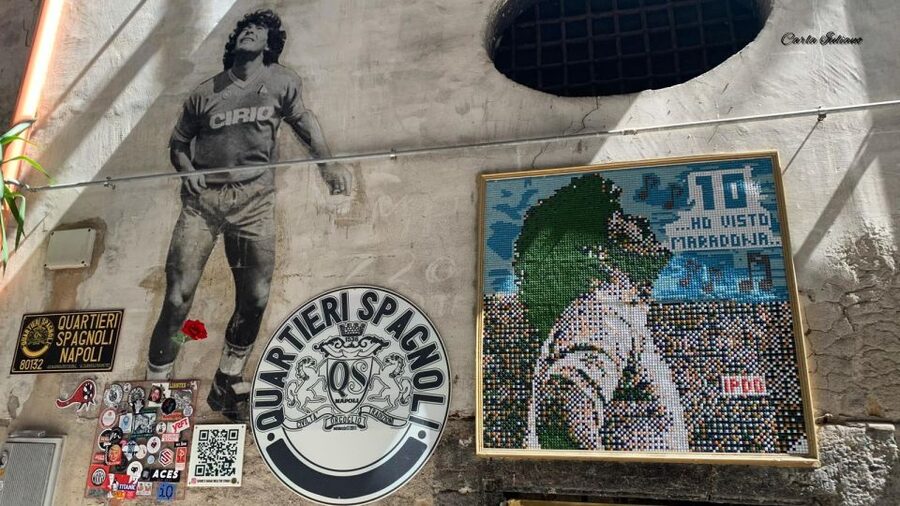
One notable piece is a ceramic mosaic donated by two Italian-French artists. Another is a stencil by the Argentinian street artist San Spiga, created to mark the 30th anniversary of Napoli’s first championship. These details give the stop a wider reach. The art is not only Neapolitan, and the celebration is not only local. Maradona’s appeal crossed borders while remaining firmly rooted in Naples.
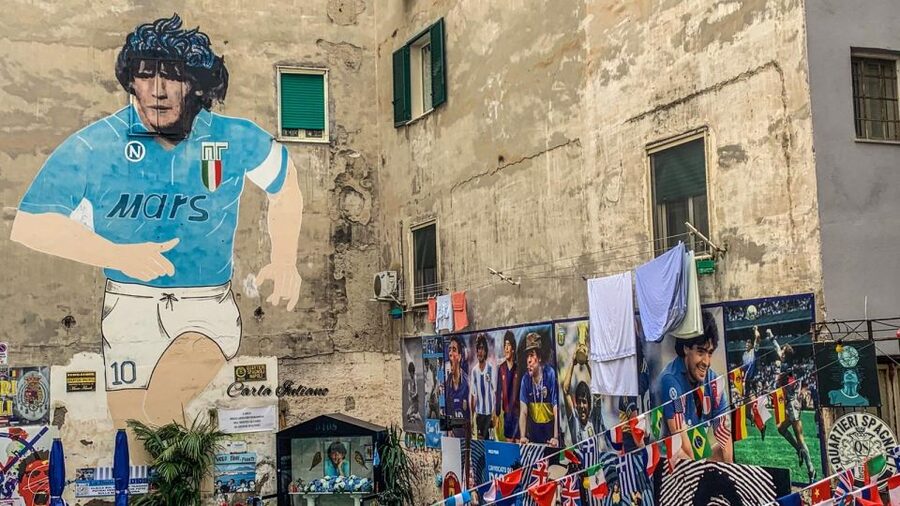
You also see a full-length stencil of Maradona dribbling. It is a simple image to understand, but it works because it shows him in motion rather than as a formal portrait. The guide’s explanation adds the missing layer: the art reflects both admiration for the player and affection for what he represented.
This is a good place to pause for photographs. Still, the tour is not designed as an art-history course. If you want technical discussion of street-art methods or a long photo session, the 30-minute final section may feel brisk.
Piazza Maradona and the famous mural
The final walk follows Via Emanuele De Deo to Piazzetta Diego Armando Maradona, often called Piazza Maradona. This is the emotional center of the tour.
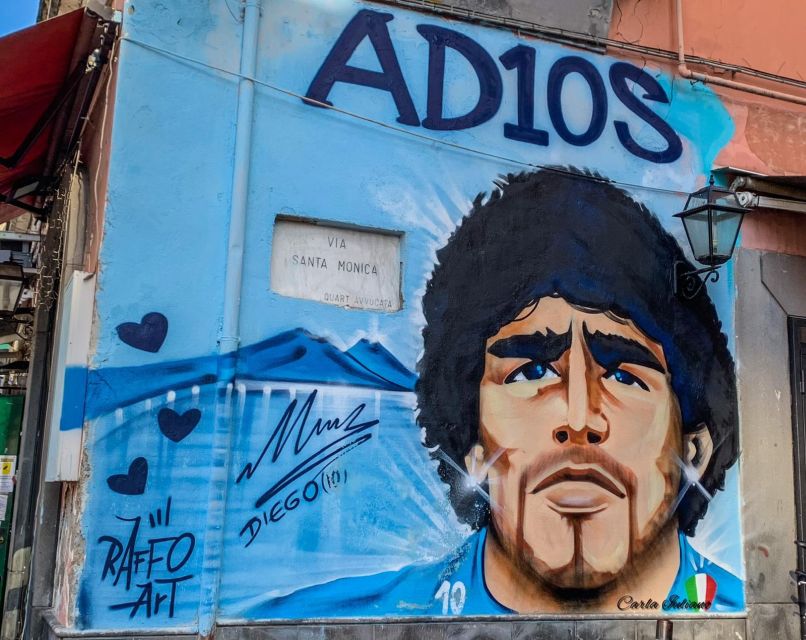
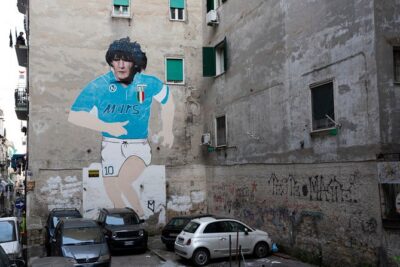
The famous mural here has become a destination for Napoli supporters and Maradona fans. It is surrounded by other images and tributes, creating a space that feels more like a shrine than a standard sightseeing stop.
Your guide explains how the mural grew into a place of pilgrimage. That word is useful here in a practical sense: people come to remember, take photographs, and share in the city’s attachment to its former hero. You do not need to be a devoted supporter to understand the force of the place, although football fans will get the most from it.
The tour ends here, rather than returning to Teatro San Carlo. Plan your next activity from the Spanish Quarter, not from the original meeting point. This is a small logistical point, but it matters if you have a timed reservation elsewhere.
The final stop is scheduled for about 30 minutes, giving you more time with the murals than at the earlier landmarks. That is sensible. The first parts of the route set the scene, while the last section delivers the main attraction.
What the guide adds to the experience
The guide is the difference between a mural walk and a meaningful city tour. The strongest guide feedback centers on clear explanations, local insight, and genuine feeling for the subject.
Palmira has been praised for professional presentation, excellent English, and an ability to explain the bond between Maradona and Napoli in a way that feels direct and human. Other descriptions point to guides who knew both Maradona’s story and the Spanish Quarter well. Mira is another guide name that has been remembered positively, though guide assignment can vary.
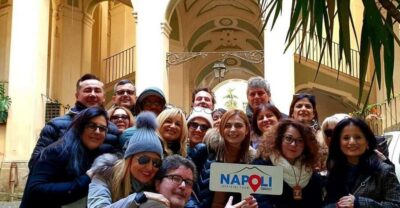
You should expect a live guide in either English or Spanish. The tour is not an audio route, and the information is not simply delivered from a printed script. A good guide can respond to the mood of the group and explain why a certain shrine or wall matters.
The best approach is to arrive with a little curiosity. You do not need to know Maradona’s career in detail. If you do know the football history, the local angle should still add something new, especially around the Spanish Quarter and the role of neighborhood memory.
Is $61 a fair price?
The cost is $61 per person. That is not a low-cost casual walk, especially since the tour lasts only 90 minutes and includes no food, transport, tickets, or museum entry.
The value depends on what you want. If you are a Maradona fan, a Napoli supporter, or someone interested in how football shapes a city’s identity, the price can be fair. You are paying for a professional guide and a focused route through several central sights and the main murals, not just for directions to a wall.
The price is harder to justify if you only want to see the famous mural. You can visit the Spanish Quarter independently, though you would miss the explanations about the first championship, San Spiga’s stencil, the ceramic mosaic, and Maradona’s place in local life.
I see this as a specialist cultural walk with a short city introduction built in. It is not the best choice for a general Naples sightseeing tour, but it gives a Maradona-focused visit more meaning than a self-guided photo stop.
Who should book this walking tour?
I would recommend it most strongly to:
- Maradona fans and Napoli supporters
- Visitors who want to understand football as part of local identity
- First-time visitors who want a guided introduction to the Spanish Quarter
- People interested in murals, stencils, and neighborhood shrines
- Anyone who prefers a short walking experience over a full-day tour
Families may also find the subject accessible because the tour connects football with hope, pride, and community. Still, the narrow streets and walking format may not suit everyone. The supplied details do not specify accessibility arrangements, group size, or a minimum age, so ask the provider if those points matter for your party.
You should also choose your language carefully when booking. English and Spanish are available, and the quality of the storytelling depends on how well you can follow the guide.
Practical tips for a better visit
Arrive 15 minutes early at Teatro San Carlo. The walk begins promptly, and you do not want to start the tour searching for the meeting point.
Wear comfortable shoes. The route is only 1.5 hours, but it covers several areas on foot and includes the narrow streets of the Spanish Quarter.
Bring a camera, but give yourself time to listen. The murals are easy to photograph, while the social meaning behind them is what you cannot get from a quick independent visit.
Keep your afternoon flexible after the tour. Since it ends at Piazza Maradona in Via Emanuele De Deo rather than returning to the theater, you can continue exploring the Spanish Quarter from there.
The tour allows free cancellation up to 24 hours before the start and offers reserve-now, pay-later booking. Those terms are useful if your Naples schedule may change, but they do not alter the basic question of value: book it for the guide and the story, not simply for access to a mural.
Should you book the Maradona tour?
Book this tour if you want to understand why Maradona is still treated as the King of Naples, and if you like the idea of seeing the city through its walls, shrines, and neighborhood memories. The Spanish Quarter, Vico Lungo del Gelso, and Piazza Maradona provide the strongest moments, while the guide connects them to Naples’ first championship and the pride it created.
Skip it if you are not interested in football, Maradona, or local street art. At $61 for 90 minutes, it is too specialized to be a sensible general tour of Naples.
For the right audience, though, it is a compact and worthwhile experience. The best guides make the subject about more than a famous player. They show you how one athlete became part of a city’s identity, and why his image still appears around corners long after his playing days ended.
FAQ
Where does the Diego Maradona walking tour begin?
The tour begins in front of Teatro San Carlo in Naples.
How early should I arrive?
You should arrive 15 minutes before the tour starts.
How long does the tour last?
The tour lasts 1.5 hours.
What languages are available?
The live tour guide speaks English or Spanish.
Where does the tour end?
The tour ends at Piazzetta Diego Armando Maradona, also known as Piazza Maradona, on Via Emanuele De Deo.
Does the tour visit the Spanish Quarter?
Yes. The route includes the Quartieri Spagnoli, or Spanish Quarter, with guided walking and explanations about its connection with Maradona.
Which Maradona art sites are included?
The walk includes Vico Lungo del Gelso, the Maradona murals, Piazza Maradona, a ceramic mosaic, and stencils including one by Argentinian street artist San Spiga.
Is a professional guide included?
Yes. A professional live guide is included.
How much does the tour cost?
The listed price is $61 per person.
Can I cancel the booking?
Yes. You can cancel up to 24 hours in advance for a full refund. The activity also offers reserve-now, pay-later booking.
Just added around Naples
- Full-Day Tour of the Amalfi Coast and Pompeii from Naples★ 4.5 · 3 reviews
- The Ultimate Neapolitan Cooking Class with Local★ 5.0 · 3 reviews
- Naples: Old City Center Street Food Tour with Spritz★ 4.7 · 3 reviews
- Visit in Pompeii – Naples Private Tour with Ada★ 5.0 · 3 reviews
- Transfer from Naples to Sorrento or viceversa★ 5.0 · 3 reviews
- Naples: National Gallery of Capodimonte Tour★ 5.0 · 3 reviews
- Visit 2 wine producers with tasting and transportation included★ 5.0 · 3 reviews
- Naples: Mozzarella experience★ 5.0 · 3 reviews
Street Art, compared.
Naples Spanish Quarters Walking Tour Street Art, Folklore & Sweet
Read our review →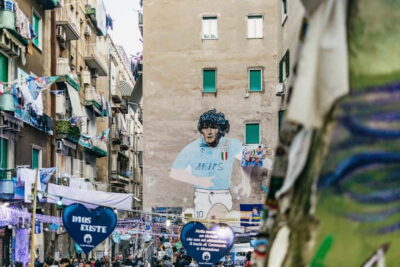
Street Art & History Tour in the Spanish Quarters
Read our review →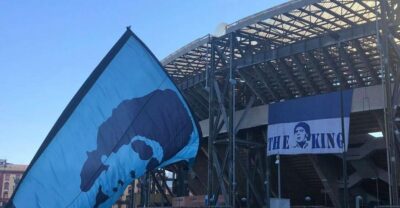
Naples Essentials: Monuments, Local Life & Street Art
Read our review →
Rione Sanità tour among baroque, revival, street art & food
Read our review →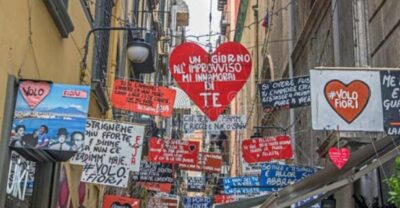
The Spanish Quarters, Street Art and Local Market
Read our review →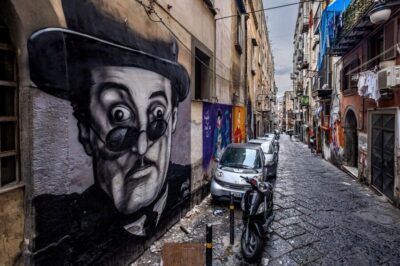
Street art tour of the Spanish Quarters & Maradona idol
Read our review →Browse the lists this tour appears in