
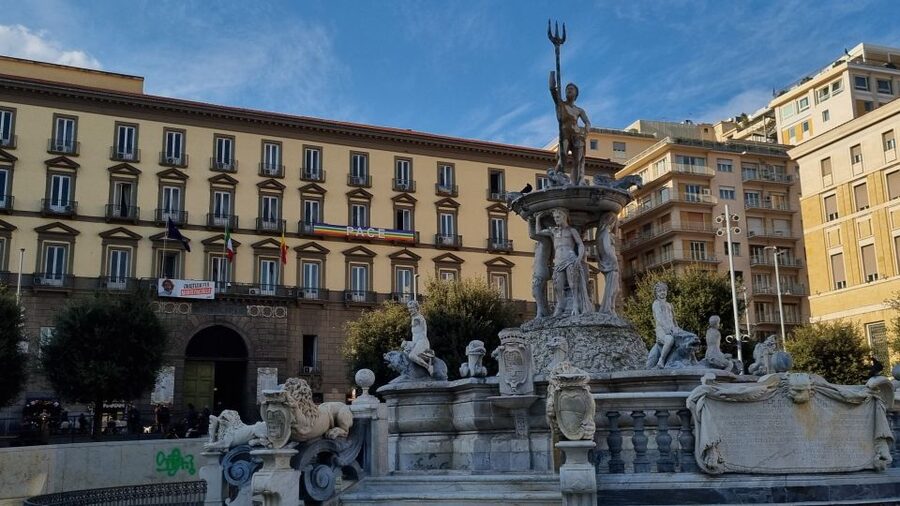
Reviewed · STREET ART
Naples Essentials: Monuments, Local Life & Street Art
Naples reveals itself best when grand monuments and ordinary street life share the same route. This two-hour walk moves from Piazza del Plebiscito and the Royal Palace into the narrow lanes of Quartieri Spagnoli, where laundry, murals, local voices, and Maradona devotion explain more about the city than polished sights alone. I especially like the clear progression from royal Naples to modern Naples, and the way the guide connects history with daily customs. Davide has a lively style and a good sense of humor, which helps keep the history from feeling like a lecture.
I also like that the tour ends near Toledo Metro Art Station, giving you a useful orientation point for the rest of your stay. The main consideration is the pace and footing: you will walk through busy areas and uneven streets, and the itinerary can change slightly because of local events or conditions. This is not a gentle sightseeing stroll, and it is not suitable for children under 10 or wheelchair users.
In This Review
- Key points at a glance
- Why this two-hour Naples walk works
- Piazza del Plebiscito and Naples’ royal face
- San Carlo Opera House and the city of spectacle
- Castel Nuovo and the Arch of Triumph
- Galleria Umberto I and Belle Époque Naples
- Quartieri Spagnoli: the most personal part of the route
- Maradona murals and the meaning of football devotion
- Via Toledo and the Toledo Metro Art Station
- What the $28 price gives you
- Walking conditions, languages, and group choices
- Who should book this Naples experience
- Should you book Naples Essentials?
- FAQ
- How long does the Naples Essentials tour last?
- Which languages are available?
- Does the price include entry to the monuments?
- Is the tour suitable for children?
- Is the tour accessible for wheelchair users?
- What should I bring?
Key points at a glance
- Piazza del Plebiscito sets the scene: See the Royal Palace, Basilica of San Francesco di Paola, and San Carlo Opera House from the outside.
- Naples’ royal and medieval sides meet: Continue to Castel Nuovo and its striking Arch of Triumph.
- Quartieri Spagnoli shows everyday Naples: Walk narrow streets with overhead laundry, street art, and neighborhood life.
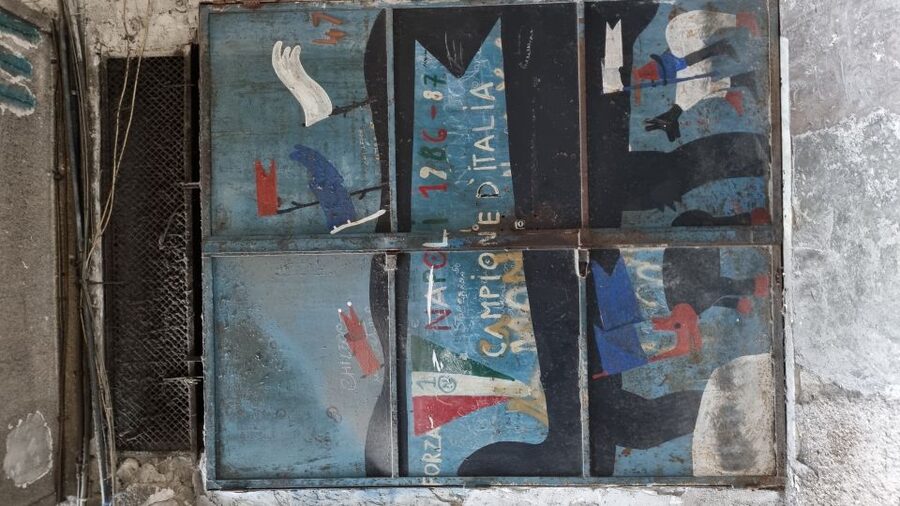
- Maradona is treated as part of local culture: Learn why his murals carry such strong meaning in the city.
- Toledo provides a practical finish: End near the famous Metro Art Station and Via Toledo.
- The tour earns strong marks for its guiding: Davide is praised for humor, warmth, detail, and the ability to keep even reluctant teenagers interested.
Why this two-hour Naples walk works
Naples can feel confusing at first. The city moves quickly, its streets do not always follow a simple pattern, and important sights sit close to ordinary homes, shops, and busy road crossings. This tour gives you a useful first framework without asking you to spend half a day indoors or follow a long museum program.
The route covers the monumental center and Quartieri Spagnoli, two areas that show very different sides of Naples. You get royal architecture, medieval power, nineteenth-century elegance, neighborhood streets, football devotion, and modern transport design in one compact outing.
I see this as an orientation tour more than a complete survey of Naples. Entry to the attractions is not included, so you will admire the Royal Palace, San Carlo, and Castel Nuovo from outside. That keeps the walk moving, but it also means you should not book it expecting interior visits or extended time at one monument.
The guide is the main value. A local guide can explain why a square matters, point out how a neighborhood functions, and connect Maradona to Neapolitan identity in a way a plaque cannot. The guide speaks English, Spanish, or Italian, and headsets are supplied when needed for clear audio.
More street art walks in Naples:
- Naples Spanish Quarters Walking Tour Street Art, Folklore & Sweet
★ 5.0 · 797 reviews - Naples: Street Art & History Tour in the Spanish Quarters
★ 4.9 · 540 reviews - Naples: Maradona Stadium Guided Exterior Walking Tour
★ 4.3 · 113 reviews
Piazza del Plebiscito and Naples’ royal face
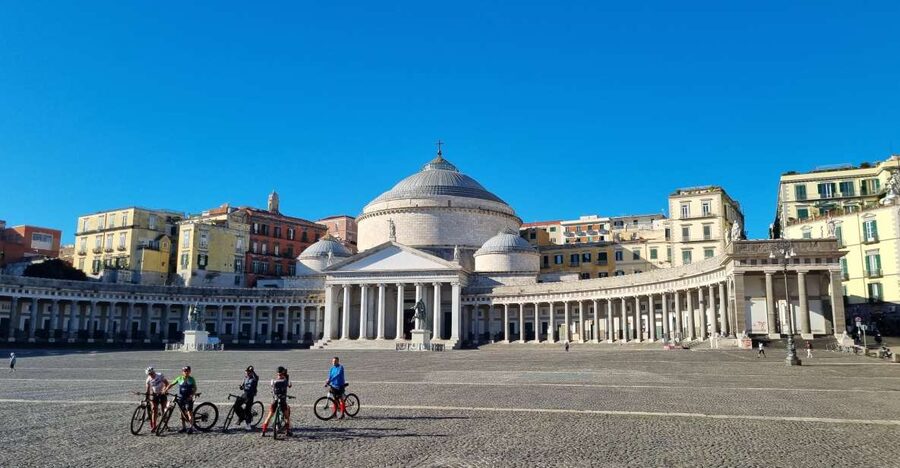
The walk begins in Piazza del Plebiscito, one of the city’s great open spaces and an easy place to feel the scale of Naples. The square is framed by the exterior of the Royal Palace and the Basilica of San Francesco di Paola, with broad views across the monumental part of the city.
This opening works well because it introduces Naples through power and ceremony. The Royal Palace recalls the city’s role as a capital ruled by kings, while the basilica gives the square its grand religious counterpoint. Your guide can add the stories and political background that make the buildings more than attractive facades.
You will not go inside the Royal Palace or the basilica as part of this activity. That is worth knowing before you book. Still, the exteriors provide a strong first look, and the guide can help you read the square as a public stage rather than just a photo stop.
The square is also a meeting point for local life. It is not presented only as a royal monument, but as a place Neapolitans use and recognize. That balance is one of the better features of the route. You begin with official Naples, then gradually move toward the city people live in every day.
San Carlo Opera House and the city of spectacle
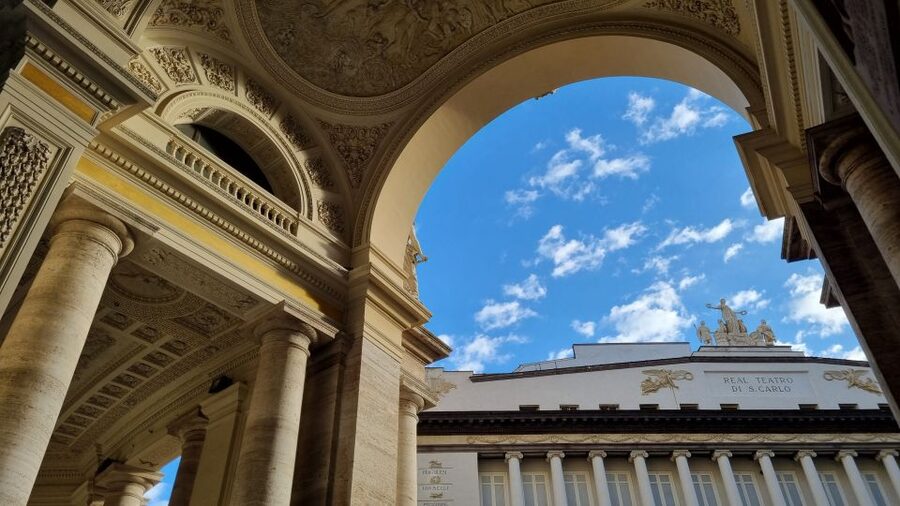
From the square, the route includes the exterior of Teatro di San Carlo, the oldest opera house still in use in Europe. You do not need to be an opera fan to appreciate this stop. San Carlo helps explain Naples as a city that valued public performance, royal display, and music on a very large scale.
The guide’s role matters here. A quick look at an ornate building can blur into the next sight unless you understand why it was built and what it meant to the city. The tour uses stories and historical details to make the monument part of Naples’ larger story.
This is also a good point to notice the contrast between the formal architecture and the energy of the streets around it. Naples rarely keeps its grand past behind glass. Traffic, pedestrians, shops, and daily errands continue beside the monuments.
Castel Nuovo and the Arch of Triumph
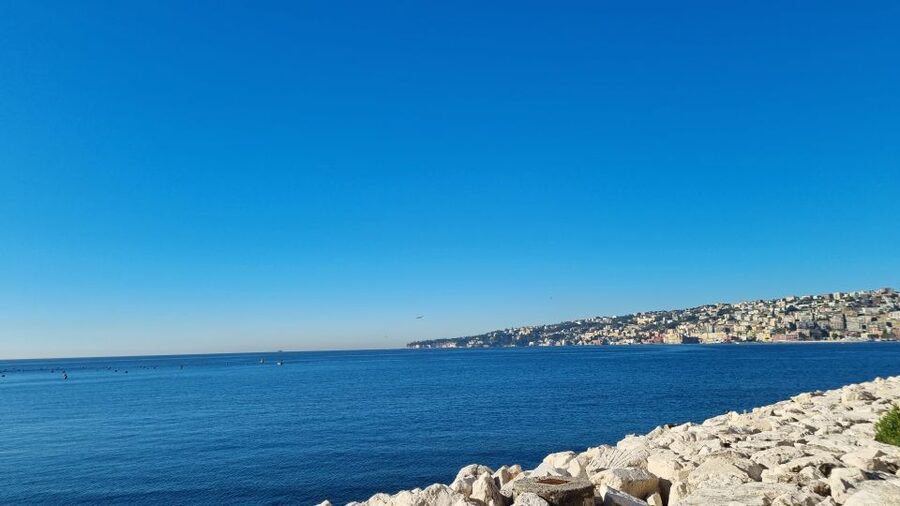
Next comes Castel Nuovo, also known as Maschio Angioino. Its heavy medieval form is one of Naples’ clearest symbols. The castle recalls the city’s role as a Mediterranean capital and a prize contested by powerful rulers.
The Arch of Triumph gives the exterior a more ceremonial quality. Its carved stone facade marks a passage between medieval fortress architecture and the public image of royal authority. Your guide can connect the castle to Naples’ changing rulers and ambitions, giving you a sharper sense of why this building matters.
Again, the tour does not include entry. If you want to explore the castle’s interior, you will need to arrange that separately. For a two-hour introduction, I think the outside stop makes sense. You see the most recognizable features without giving up the neighborhood walking that makes this tour different from a standard monument circuit.
If you enjoy architecture, allow yourself a little time to look upward. The castle can feel imposing at street level, and the Arch of Triumph rewards a slower glance. The group may need to keep moving, especially in crowded city conditions, so this is not a detailed architectural study.
A completely different sort of day out of Naples:
- From Naples: Pompeii Ruins & Mount Vesuvius Day Tour
★ 4.3 · 11,459 reviews - From Naples: Sorrento, Positano and Amalfi Full-Day Tour
★ 4.6 · 10,988 reviews - From Naples: Sorrento, Positano & Amalfi Coast – Small Group Tour
★ 5.0 · 8,643 reviews - Naples: Catacombs of San Gennaro Entry Ticket & Guided Tour
★ 4.6 · 7,941 reviews
Galleria Umberto I and Belle Époque Naples
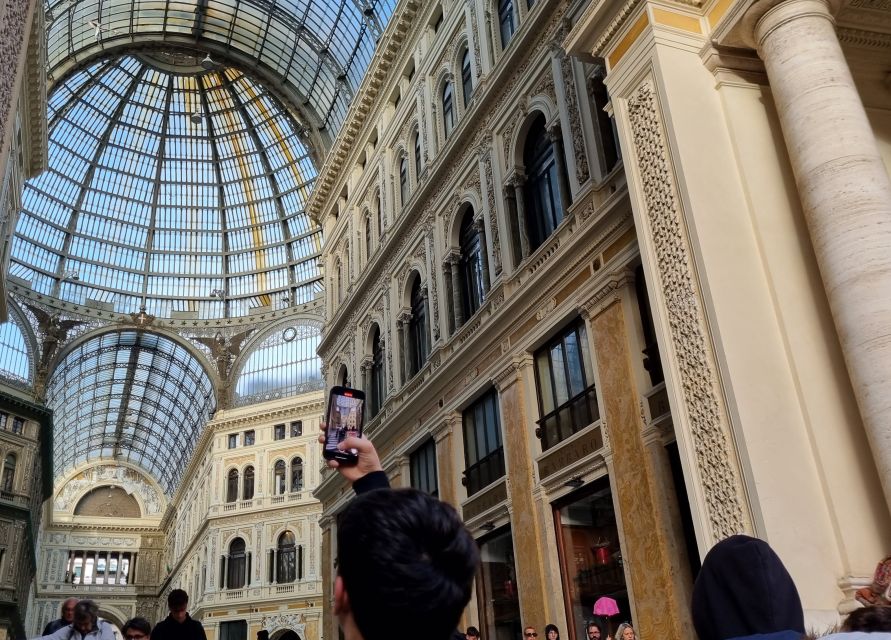
The route then passes through Galleria Umberto I, an elegant covered arcade with a spectacular glass dome. Its scale and decoration offer a change of mood after the fortress walls of Castel Nuovo.
The gallery represents a later Naples, shaped by grand urban design and the Belle Époque atmosphere of the late nineteenth and early twentieth centuries. It is a useful reminder that the city is not one single historic period. Medieval castles, royal buildings, nineteenth-century arcades, and modern metro art all sit within the same walk.
The glass roof also gives you a break from the weather. Bring an umbrella anyway, since the tour runs in all weather and much of the route is outside. Comfortable shoes matter more than stylish ones here. You will be walking on city streets, not a smooth museum floor.
Quartieri Spagnoli: the most personal part of the route

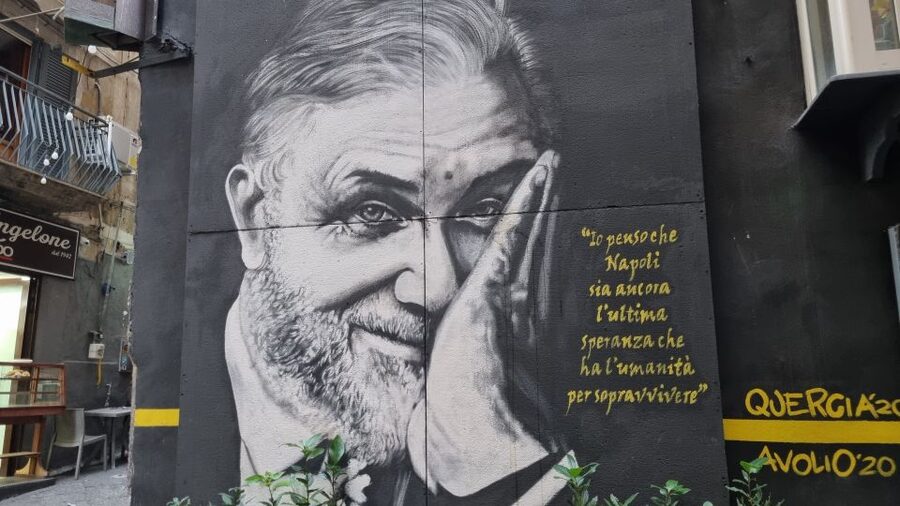
The strongest part of the experience for many people will be Quartieri Spagnoli. This dense neighborhood feels very different from Piazza del Plebiscito and the waterfront monuments. Its narrow streets are full of character, with laundry overhead, street art on walls, and local voices carrying through the alleys.
This is where the tour moves beyond sightseeing. You are not simply looking at old buildings. You are seeing how people use tight urban space, how neighborhoods create identity, and how Naples’ public life spills into the street.
The area can also feel crowded and intense. You should expect uneven paving, busy passages, and less personal space than in the large central squares. That is part of the point, but it may not suit you if you prefer calm streets and long stops for photography.
The guide helps you read the neighborhood without treating it as a stage set. The emphasis is on real Neapolitan life, not just picturesque details. Laundry and murals are not placed there for visitors. They are part of a lived-in district, and the walk gives you context for what you see.
This is also where the tour’s balance becomes clear. It does not pretend Naples is only elegant palaces and polished streets. It gives you the rough edges too, along with the warmth, humor, and strong sense of belonging that make the city memorable.
Maradona murals and the meaning of football devotion

The Maradona street art is more than a quick celebrity photo stop. Diego Armando Maradona remains a major figure in Naples, and the murals express a local attachment that goes well beyond sport.
Your guide explains the cultural meaning behind the images. You will hear why Maradona is still loved and celebrated, and how football became tied to pride, identity, and the city’s place in Italy. If you know little about football, this part can still be useful because it shows how a public figure can become part of a city’s shared memory.
The subject may invite playful debate. One Italian and Brazilian exchange even turned into a joking comparison between Maradona and Pelé. That kind of humor fits the stop well, as long as you are ready for strong opinions and enthusiastic football talk.
I like this section because it gives the tour an emotional center. The earlier monuments explain Naples’ rulers and institutions. The murals show what many people feel about the city now. Together, the two sides create a fuller picture.
Via Toledo and the Toledo Metro Art Station
The walk ends along Via Toledo, one of Naples’ main streets. This is a practical finish because you are left in a central area where history and modern city life meet. You can continue exploring, stop for food independently, or use the metro connection to reach another part of Naples.
The route includes the historic Bank of Naples, another reminder that this is not only a shopping street or transport corridor. Financial institutions, old buildings, pedestrians, and everyday commerce share the same space.
The final sight is Toledo Metro Art Station, often considered one of Europe’s most beautiful metro stations. Its design gives the tour a modern closing note after the palaces, castle, church, arcade, and old neighborhood streets.
This ending is especially helpful on a first visit. You finish with a clear reference point rather than an isolated monument. If you plan to use public transport later, the station is easy to remember. If you are continuing on foot, Via Toledo gives you a straightforward route through central Naples.
What the $28 price gives you

At $28 per person, the tour is reasonably priced for a two-hour guided walk, particularly if you are visiting Naples for the first time. The fee covers a licensed local guide, the guided route, and headsets when required. It does not cover food, drinks, or entry to attractions.
The value comes from the range of places covered and the interpretation between them. You are not paying for admission tickets, so the comparison is with exploring the same streets alone. A self-guided walk costs less, but you would need to supply the historical context and figure out how the monuments and neighborhoods connect.
I would book this before paying for a longer city tour if you want a short introduction with a strong local angle. I would not choose it as your only Naples activity if your main goal is to tour the interiors of the Royal Palace, San Carlo, or Castel Nuovo.
A 4.9 rating from 79 bookings suggests the format is working well for many people. The most consistent strengths are the guide’s humor, clear storytelling, and ability to link history, culture, and present-day Naples. Davide is specifically praised for being professional, engaging, and able to hold the attention of a teenager who did not want to join a guided city tour in the first place.
Walking conditions, languages, and group choices
Plan on moderate walking through busy urban areas. Wear comfortable shoes, bring an umbrella, and leave large luggage behind. The activity does not accept electric wheelchairs, and it is not suitable for wheelchair users or children under 10.
The tour runs in all weather, and the route may shift slightly because of events or local conditions. That flexibility is normal for a city walk, but it means you should not treat the published order as fixed.
Guiding is available in English, Spanish, and Italian. A private group can be arranged if available, which may suit families with older children, friends who want a slower pace, or anyone who prefers to ask more questions. Contact the guide through GetYourGuide messages if you want to discuss a private option or another time slot.
The meeting point can vary with the option you book, so check your confirmation carefully. Cancellation is flexible up to 24 hours before the start, with a full refund, and you can reserve now and pay later.
Who should book this Naples experience
I would recommend this tour to a first-time visitor who wants to get oriented quickly. It suits you if you like a mix of famous sights and ordinary streets, and if you prefer stories and local context to a long list of dates.
It is also a good choice for couples, friends, and small groups who want an active introduction without committing to a full-day program. The private option may be worth asking about if your group has its own interests, such as architecture, local culture, or football.
You may want something else if you need step-free access, dislike uneven streets, or want substantial time inside monuments. It is also not the best match for families with young children because of the age restriction and the walking conditions.
Should you book Naples Essentials?
Book it if you want to see Naples as both a historic capital and a living neighborhood city. The route covers the major monuments efficiently, then gives the Quartieri Spagnoli and Maradona murals enough attention to add local feeling.
I especially like the combination of Piazza del Plebiscito, Castel Nuovo, Galleria Umberto I, and Quartieri Spagnoli. You get beauty, power, street life, humor, and modern design in two hours. The tradeoff is clear: no attraction entries, some crowded and uneven walking, and an itinerary that can adjust to city conditions.
For a first morning or afternoon in Naples, this is a smart use of $28. It gives you a map in your head, a few stories to carry onward, and a better sense of why the city cannot be reduced to its monuments.
FAQ
How long does the Naples Essentials tour last?
The walking tour lasts two hours. Starting times vary, so check availability when selecting your date.
Which languages are available?
The live guide can conduct the tour in English, Spanish, or Italian.
Does the price include entry to the monuments?
No. The price includes the licensed guide, walking tour, and headsets when required. Food, drinks, and attraction entry fees are not included.
Is the tour suitable for children?
The activity is not suitable for children under 10 years old.
Is the tour accessible for wheelchair users?
No. The tour is not suitable for wheelchair users, and electric wheelchairs are not allowed. The route includes moderate walking, busy areas, and uneven streets.
What should I bring?
Wear comfortable shoes and bring an umbrella. Large bags and luggage are not allowed.
Just added around Naples
- Full-Day Tour of the Amalfi Coast and Pompeii from Naples★ 4.5 · 3 reviews
- The Ultimate Neapolitan Cooking Class with Local★ 5.0 · 3 reviews
- Visit in Pompeii – Naples Private Tour with Ada★ 5.0 · 3 reviews
- Transfer from Naples to Sorrento or viceversa★ 5.0 · 3 reviews
- Naples: Old City Center Street Food Tour with Spritz★ 4.7 · 3 reviews
- Naples: National Gallery of Capodimonte Tour★ 5.0 · 3 reviews
- Visit 2 wine producers with tasting and transportation included★ 5.0 · 3 reviews
- Naples: Mozzarella experience★ 5.0 · 3 reviews
Street Art, compared.
Naples Spanish Quarters Walking Tour Street Art, Folklore & Sweet
Read our review →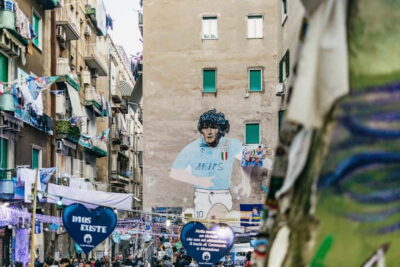
Street Art & History Tour in the Spanish Quarters
Read our review →


Rione Sanità tour among baroque, revival, street art & food
Read our review →
The Spanish Quarters, Street Art and Local Market
Read our review →
Street art tour of the Spanish Quarters & Maradona idol
Read our review →Browse the lists this tour appears in