
Reviewed · PIZZA MAKING CLASSES
Naples: Premium Pizza-Making Class at a Pizzeria
Naples takes pizza seriously, and this class puts you inside a 2017 World Pizza Championship-winning pizzeria with flour on your hands and a wood-fired oven close by. You learn the full process, from four basic ingredients to a baked Margherita, rather than simply watching a chef work.
I like the individual workstation and the small-group format. I also like that the lesson includes both a savory pizza and a sweet fried-dough treat, plus a drink and limoncello. The main consideration is timing: two hours is enough for a useful introduction, but not enough for a long fermentation lesson or a full professional training session.
In This Review
- Key points at a glance
- From four ingredients to Neapolitan dough
- Why staglio matters more than it sounds
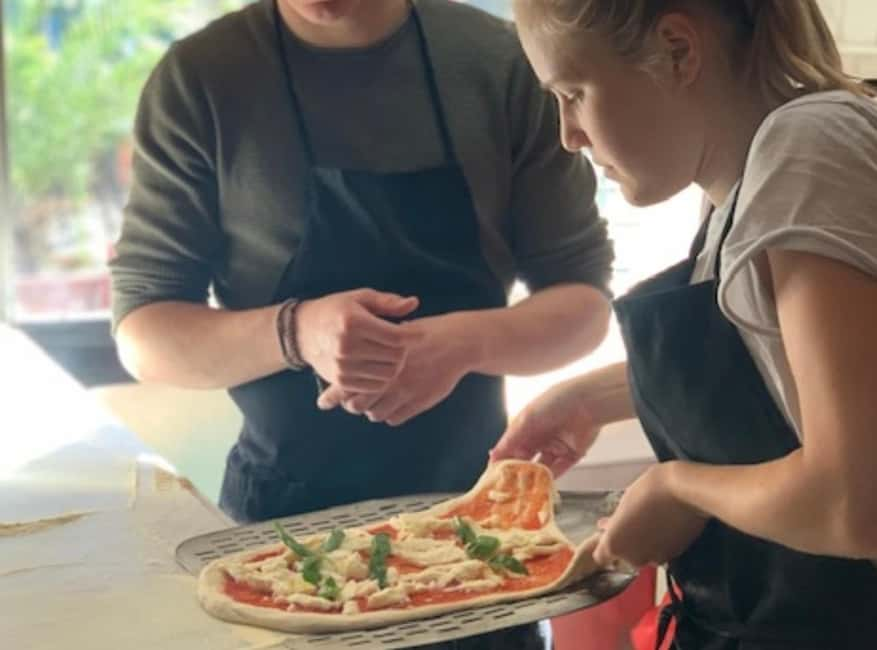
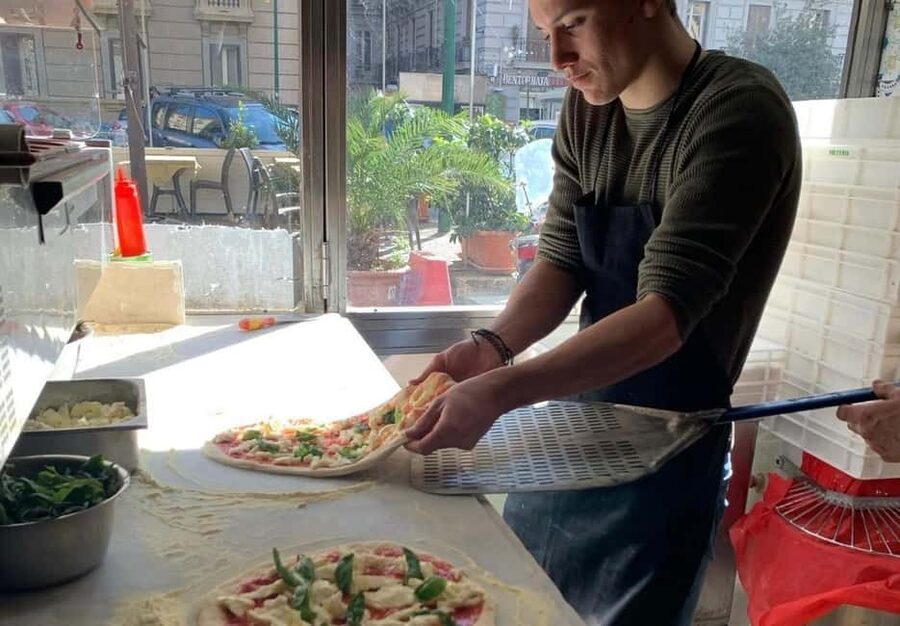
- Shaping and topping your own Margherita
- The wood-fired oven and your first bite
- Fried pizza dough and the sweet finish
- The guides make the difference
- What the two-hour schedule really gives you
- Is $67.19 a fair price?
- Who will enjoy this class most?
- Practical tips before you book
- Should you book it?
- FAQ
- How long does the pizza-making class last?
- How much does the experience cost?
- What ingredients do I use to make the dough?
- Do I make my own pizza?
- What kind of pizza do I make?
- Is food and drink included?
- Is the class available in English?
- Can I cancel the booking?
Key points at a glance
- A true hands-on class: You mix, knead, shape, stretch, top, and bake your own pizza instead of standing at the edge of a demonstration.
- Personal workstation for each person: Small groups make it easier to get help with dough texture and shaping.
- The traditional staglio method: You learn how dough is divided into smooth portions called panetti.
- Simple local ingredients: San Marzano tomatoes, buffalo mozzarella, basil, and DOP extra virgin olive oil do the work.
- A sweet finish: Fried pizza dough filled with chocolate spread gives the meal a distinctly Neapolitan street-food ending.
- Helpful bilingual teaching: English-speaking guides such as Francesca, Lucia, Sabrina, Federica, and Dora may translate the pizzaiolo’s Italian instructions.
From four ingredients to Neapolitan dough
The class begins with a lesson in restraint. Traditional Neapolitan dough does not need a long shopping list. Water, flour, salt, and yeast form the base, and the skill lies in handling them correctly.
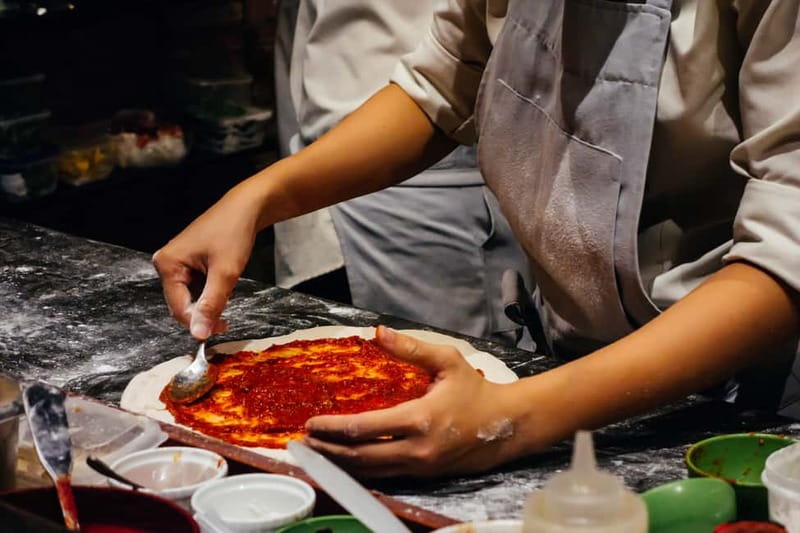
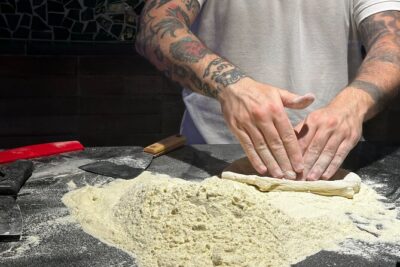
A master pizzaiolo demonstrates how the ingredients come together, then you work at your own station. You should expect to mix and knead the dough by hand, paying attention to its feel rather than relying only on a printed recipe. That tactile part matters. Pizza dough can look simple, but the right texture comes from knowing when it is smooth, elastic, and ready for the next step.
English instruction is available, though the exact teaching arrangement can vary. Several sessions have paired an English-speaking guide with an Italian-speaking chef. Francesca, Lucia, Sabrina, and Federica are among the guides praised for translating clearly and keeping the group involved, while pizzaioli including Maurizio, Alessandro, and Lorenzo have demonstrated the technical side of the work.
That pairing can be a strength. The chef can focus on the dough and oven, while the guide explains the method, local customs, and background in English. You may not have a long conversation directly with the pizzaiolo, but the translation keeps the lesson understandable.
More pizza classes in Naples:
- Naples: Pizza-Making Workshop with Drink and Appetizer
★ 4.9 · 5,411 reviews - Authentic Pizza Making Class in Naples with Appetizers and Drink
★ 5.0 · 3,178 reviews - Naples: Neapolitan Pizza and Tiramisù Making Class
★ 4.8 · 839 reviews
Why staglio matters more than it sounds
One of the most useful parts of the class is staglio, the traditional method of portioning dough. The large mass is divided into individual dough balls, or panetti, which are then shaped for later use.
This is not just a bit of Italian vocabulary. Proper portioning affects the size, thickness, and final texture of your pizza. You learn to handle the dough without tearing it or squeezing out all the air. A light touch helps preserve the structure that later becomes the soft, airy edge of a Neapolitan pizza.
The two-hour schedule limits how much fermentation science can be covered. One particularly useful practical detail is that dough made during a short class may not have enough time to fully prove before baking. In that situation, the pizzeria can use it for bread rather than waste it. This is worth understanding before you book: you are learning the complete basic method, but you are not recreating the long professional production cycle in real time.
The digital recipe sent afterward helps bridge that gap. You can take the instructions home and allow the dough more time when you make it yourself. Several participants found the method clear enough to repeat in a domestic kitchen, although your home oven will not behave exactly like a traditional wood-fired oven.
Shaping and topping your own Margherita
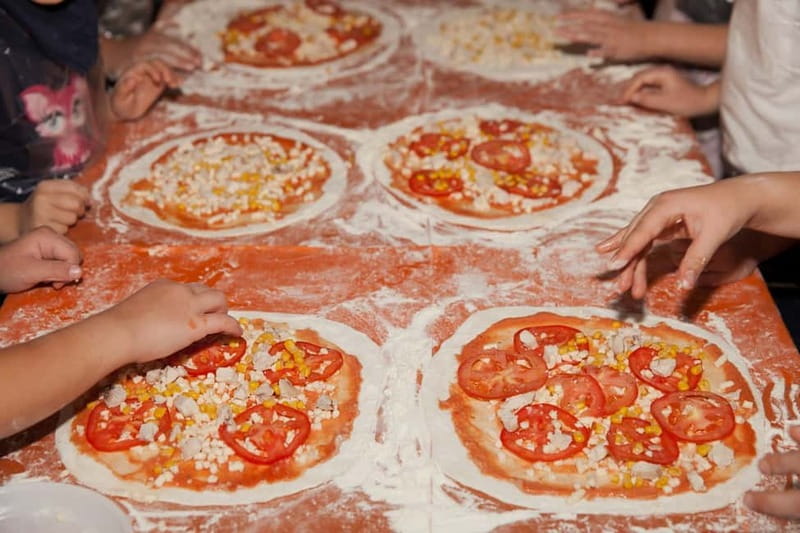
Once your dough is ready, you shape it by hand. The goal is a thin center with a raised rim, not a perfectly uniform circle made with a rolling pin. You will stretch the dough carefully, learning how to keep the edge intact and avoid pressing away the air.
This is where the personal workstation pays off. You are not passing one ball of dough around a crowded table. Each person gets space to make mistakes, ask for help, and try again. In a small group of four, the instructor can spot a troublesome fold or uneven stretch before the pizza goes into the oven.
The toppings follow the classic Neapolitan pattern:
- San Marzano tomatoes
- Buffalo mozzarella
- Fresh basil
- DOP extra virgin olive oil
The ingredient list is short by design. You taste the tomato, dairy, basil, olive oil, and baked dough without a heavy layer of extra toppings covering everything. The lesson also explains why quantities and ingredient quality matter. As Francesca has done in past classes, the guide may discuss the place of Margherita pizza in Naples and the local preference for keeping the recipe direct.
Do not expect to create a restaurant-perfect circle on your first attempt. That is part of the appeal. The chef demonstrates how simple the process can look, then helps you manage the small details that are harder than they appear.
The wood-fired oven and your first bite

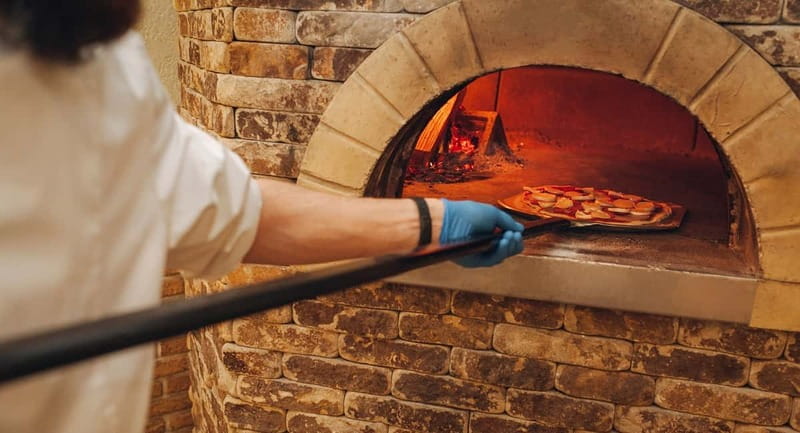
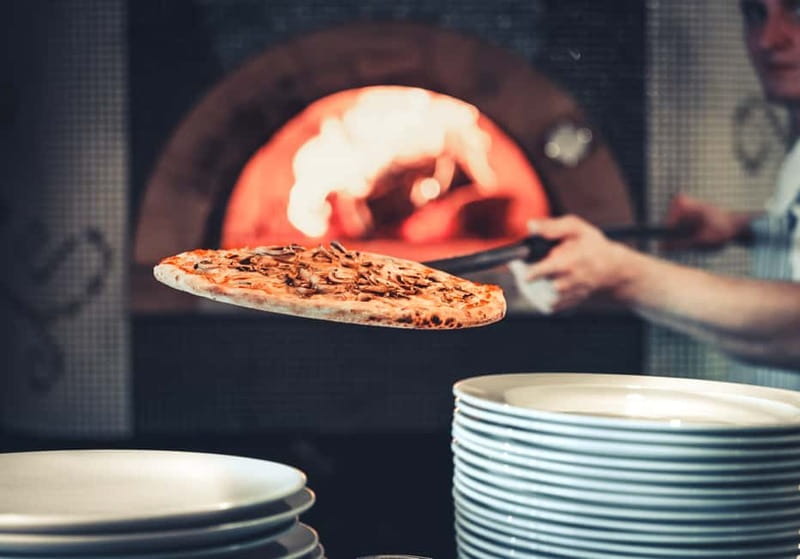
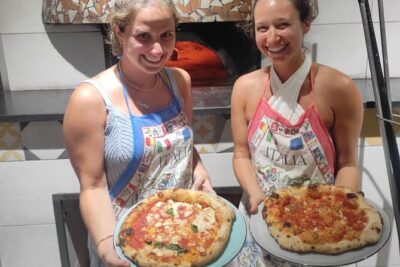
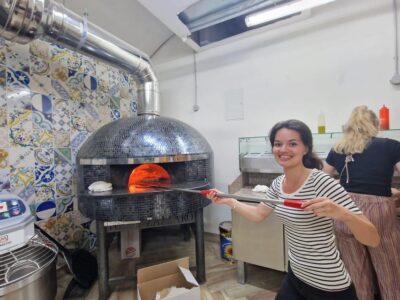
After shaping and topping, the pizzas go into a traditional wood-fired oven. The chef handles the oven work, since it requires speed, heat control, and experience. Your role is to watch the transformation and see how the thin dough changes quickly under high heat.
Then you eat the pizza you made. That direct connection between preparation and meal gives the class its value. You are not simply sampling a Margherita. You know how the dough was mixed, how it was stretched, and where the shape went slightly off course.
The pizza is served as part of a full meal, with a choice of one glass of local wine, water, or beer. Water is also included, and limoncello comes at the end. The result is closer to a relaxed meal with instruction than to a formal cooking-school lecture.
Portions are described as generous, so plan this as a substantial food stop. If you have a large dinner booked immediately afterward, you may find the class more filling than expected.
A few more Naples trips worth weighing up
- Naples: Pasta Making Class with Starter and Drink
★ 4.9 · 1,060 reviews - Naples Pasta Class: Fettuccine & Ravioli with Grandma’s Recipe
★ 5.0 · 506 reviews - Naples: Pasta Cooking Class with Tiramisù and a Drink
★ 4.6 · 415 reviews - Pizza and Tiramisù Making class
★ 5.0 · 305 reviews
Fried pizza dough and the sweet finish
The class adds a second preparation made from pizza dough. The dough is fried and filled with the world’s most famous chocolate spread, creating a crisp, sweet bite that shows another side of Neapolitan food.
This is a clever use of the same basic material. You see how dough that might otherwise seem limited to one baked dish can become street food or dessert. It also keeps the experience playful after the technical work of kneading and shaping.
The fried dough is a rich ending, especially after eating a full Margherita. One past participant felt a small dessert such as ice cream might have been lighter, while others especially enjoyed the fried pizza and even called it magnificent. Your reaction may depend on how much food you prefer at one sitting.
The local savory version of fried pizza can also appear in conversation or as an example of Naples food culture. It may be stuffed with ingredients such as ricotta, sausage, and cheese, but the listed class dessert is the sweet version filled with chocolate spread. Do not assume the savory preparation is included unless your booked option says so.
Limoncello closes the meal. It is a familiar Italian finish, but here it also gives the evening a social feel. You sit with the group, eat what you made, and raise a small glass before leaving.
The guides make the difference
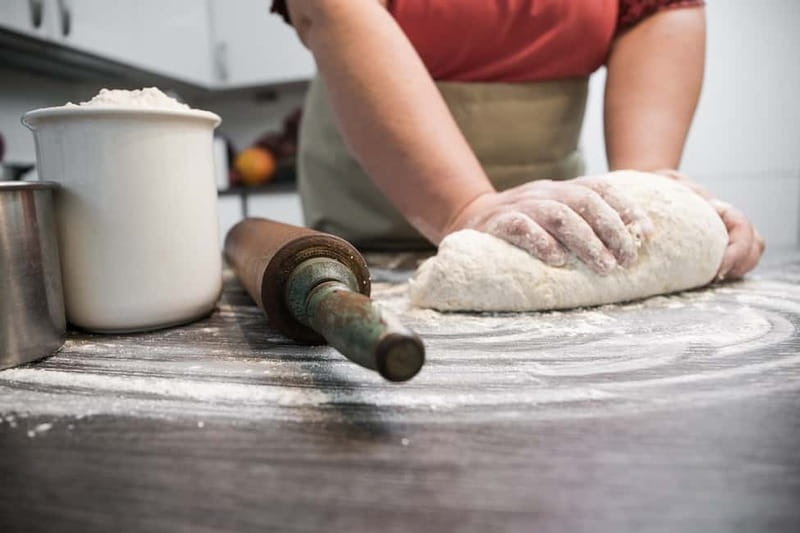
The chef teaches the physical craft, but the guide often shapes the tone of the class. Francesca has been praised for explaining pizza history, ingredient choices, and local attitudes while making sure people feel included. Lucia is known for patient, step-by-step explanations and for helping participants with food intolerances. Sabrina has been especially effective at translating between the chef and English-speaking participants.
You should still tell the provider about any dietary issue before the class. One participant with an intolerance received accommodation and was still included in the preparation. That is encouraging, but the available information does not spell out every possible substitution or guarantee that all dietary needs can be met.
The guides also help when the chef speaks mainly Italian. That arrangement can create a slightly less direct exchange, but it has an advantage: you hear the technique from a working pizzaiolo while receiving clear English explanations from someone focused on communication.
The teaching style sounds friendly rather than stiff. Questions are welcomed, and the guides may add small facts about Naples, pizza customs, recipes, and local food traditions. If you want a quiet, highly technical course with exact measurements and fermentation charts, this may feel informal. If you want to learn by doing in a welcoming room, it is a better match.
What the two-hour schedule really gives you
Two hours is a sensible length for a city break. It fits neatly into a morning or evening and gives you enough time to work with dough, eat a meal, and enjoy the social side without taking up half a day.
The tradeoff is pace. You will learn the process in a concentrated format, but dough does not magically become fully fermented during a short class. The lesson may therefore include bread made from the class dough or focus on showing you how to repeat the method at home with proper proving time.
Starting times vary, so check the available slot before planning the rest of your day. The meeting point can also vary by booking option, and the activity ends where it begins. Read the exact meeting instructions carefully rather than assuming every option uses the same entrance or location.
The class is available in English and Italian. Private and small-group options are offered. A small group is worth considering if you want more personal help with shaping, especially if you are bringing children, teenagers, or someone who has never made dough before.
Is $67.19 a fair price?
At $67.19 per person, this is not the cheapest way to eat pizza in Naples. You can order a Margherita for much less. The price makes sense only if you want the class as well as the meal.
Here, you receive a hands-on lesson in a World Champion pizzeria, individual workspace, your own pizza, a second dough preparation, a drink, water, limoncello, and a digital recipe. The value is strongest when you treat it as both dinner and a practical cultural activity.
I would not book it solely for the title attached to the pizzeria. Awards do not guarantee that a class will suit every person. The useful question is whether you want to understand why Neapolitan pizza works and then eat your own version while the process is still fresh in your mind.
For families and couples, the price can replace a separate meal and a cooking activity. For serious home bakers, it offers useful hand skills but not a full professional course. For someone who already makes Neapolitan pizza regularly, the introductory material may be familiar.
Free cancellation up to 24 hours before the activity and the option to reserve now and pay later make it easier to fit into a changing Naples schedule. Those policies are helpful, but the food and instruction should remain your main reasons for booking.
Who will enjoy this class most?
I would recommend it to you if you want an activity that combines food, conversation, and a bit of practical work. No cooking experience is required, and the instruction is designed to take you through each stage.
It suits:
- Families with children or teenagers who enjoy hands-on activities
- Couples looking for a relaxed meal with a local focus
- First-time pizza makers who want a recipe they can use at home
- Small groups who prefer personal attention
- People who want an introduction to Neapolitan ingredients and technique
It may be less suitable if you dislike working with flour, want a very quiet meal, or need a highly specialized dietary menu. The fried dough dessert also makes the meal fairly substantial, so consider your appetite and later plans.
The class can work well at the start of a Naples visit. You learn the local standards early, then spend the rest of your stay judging every pizza by its crust, tomato, and balance. Just do not become the person who lectures the entire dinner table about staglio.
Practical tips before you book
Check the meeting point for the exact option you choose. The starting location may vary, and the activity returns to that same meeting point.
Allow enough time to arrive. One participant who was a few minutes late received considerate help, but you should not count on a delayed arrival being easy for the kitchen to absorb.
Wear clothes you do not mind using around flour and food. The provided details do not specify an apron or dedicated changing space, so simple, comfortable clothing is the safest choice.
Tell the provider about dietary restrictions in advance. An intolerance was accommodated in one class, but the precise options depend on the ingredients and the pizzeria’s ability to adjust them.
Keep the digital recipe. The class gives you the method, but your home dough may need a longer proving period than the two-hour session allows. A standard home oven will also produce a different result from a wood-fired oven, though the basic mixing and shaping skills still transfer.
If you are choosing between a private class and a small group, think about your priorities. A private option may offer more control over the pace, while a small group keeps the price and social energy more moderate.
Should you book it?
Book this Naples pizza-making class if you want more than a good meal. The strongest parts are the personal workstation, direct help from a pizzaiolo, clear translation from guides such as Lucia or Francesca, and the chance to eat a pizza you shaped yourself.
The class is also a good choice for families and first-time cooks. It keeps the lesson approachable, adds a sweet fried-dough course, and gives you a recipe to try later.
Skip it if you are looking only for the lowest-cost pizza, or if you already have advanced dough skills and want a technical fermentation workshop. For most food-focused visitors, though, $67.19 buys a satisfying two-hour introduction to one of Naples’ most important traditions, with enough food to make it feel like a meal rather than a demonstration.
FAQ
How long does the pizza-making class last?
The activity lasts two hours. Starting times vary, so check availability for the date you want.
How much does the experience cost?
The listed price is $67.19 per person.
What ingredients do I use to make the dough?
You make the dough with water, flour, salt, and yeast.
Do I make my own pizza?
Yes. Each participant has an individual workstation and takes part in mixing, kneading, shaping, stretching, topping, and preparing the pizza for baking.
What kind of pizza do I make?
You make a traditional Neapolitan Margherita with San Marzano tomatoes, buffalo mozzarella, basil, and DOP extra virgin olive oil.
Is food and drink included?
Yes. The experience includes your savory pizza, a sweet fried-dough preparation filled with chocolate spread, and one glass of wine, water, or beer. Water and limoncello are also included.
Is the class available in English?
Yes. Instruction is available in English and Italian. An English-speaking guide may translate the pizzaiolo’s Italian demonstrations.
Can I cancel the booking?
You can cancel up to 24 hours in advance for a full refund. The activity also offers a reserve-now-and-pay-later option.
Just added around Naples
- Full-Day Tour of the Amalfi Coast and Pompeii from Naples★ 4.5 · 3 reviews
- The Ultimate Neapolitan Cooking Class with Local★ 5.0 · 3 reviews
- Visit in Pompeii – Naples Private Tour with Ada★ 5.0 · 3 reviews
- Transfer from Naples to Sorrento or viceversa★ 5.0 · 3 reviews
- Naples: Old City Center Street Food Tour with Spritz★ 4.7 · 3 reviews
- Naples: National Gallery of Capodimonte Tour★ 5.0 · 3 reviews
- Visit 2 wine producers with tasting and transportation included★ 5.0 · 3 reviews
- Naples: Mozzarella experience★ 5.0 · 3 reviews
Pizza Making Classes, compared.

Pizza-Making Workshop with Drink and Appetizer
Read our review →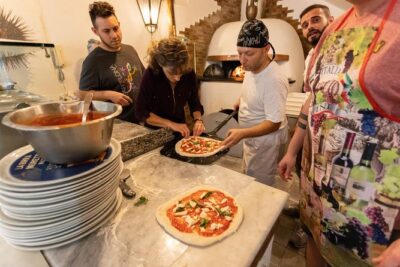
Authentic Pizza Making Class in Naples with Appetizers and Drink
Read our review →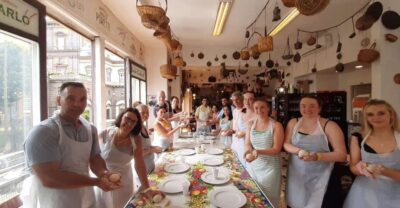
Semi-Private Pizza Making Experience in Naples with Drink
Read our review →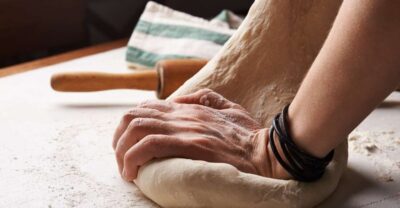
Naples Pizza Class: Learn, Bake & Eat the Authentic Pizza Taste
Read our review →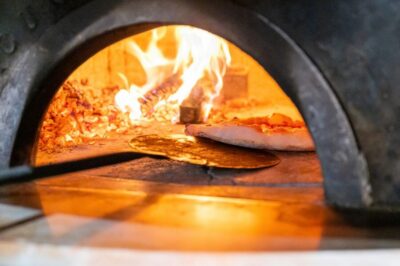
Browse the lists this tour appears in