
Reviewed · PHLEGRAEAN FIELDS TOURS
Phlegraean Fields: Cuma Baia and Pozzuoli private excursion
The most surprising part of this day is how close Naples sits to an ancient volcanic world. In eight hours, you move from the columns of Roman Puteoli to the Greek ruins of Cumae, then on to steaming volcanic country, drowned Roman buildings, and a huge underground-style cistern. The Phlegraean Fields feel very different from the better-known ruins of Pompeii.
I like the private vehicle and guide, since this scattered area is awkward to cover on your own. I also like the mix of famous sites and less familiar ones, especially Piscina Mirabilis and Lake Averno. The main drawback is that the tour costs $558.97 per person and packs many stops into one day. Several sites also close on different days, so you must check the schedule before booking.
In This Review
- Key points at a glance
- Why the Phlegraean Fields make a strong day trip
- Pozzuoli and the shifting Macellum
- Cumae, Greece in Italy
- Baiae, temples, and a city beneath the water
- Piscina Mirabilis and Roman water power
- Averno, Fusaro, and Miseno lakes
- What the private transport changes
- Is $558.97 per person a fair price?
- Who should book this day?
- My recommendation for the Phlegraean Fields
- FAQ
- How long does the Phlegraean Fields excursion last?
- Where can pickup and drop-off take place?
- Is this a private tour?
- What type of transportation is provided?
- Which languages are available for the live guide?
- Is admission included?
- Which sites are visited?
- When is the Macellum of Pozzuoli open?
- Is the tour suitable for wheelchair users?
Key points at a glance
- See several sides of Campania: Roman ruins, Greek archaeology, volcanic lakes, and an old seaside resort all fit into one day.
- Visit the Macellum of Pozzuoli: Look for mollusc holes on the surviving columns, evidence of the area’s slow rise and fall.
- Enter the world of Cumae: The Acropolis and Sybil cave connect the site to the earliest Greek settlement in the region.
- Explore Baiae and Piscina Mirabilis: One shows Roman luxury, the other shows the practical engineering that supported the empire.
- Ride in a private Mercedes vehicle: Pickup is available in Naples, Sorrento, or Salerno, with a private group and driver.
- Plan around closures: The Macellum opens only Thursday, Saturday, and Sunday; Cumae closes Tuesday; Baiae closes Monday.
Why the Phlegraean Fields make a strong day trip
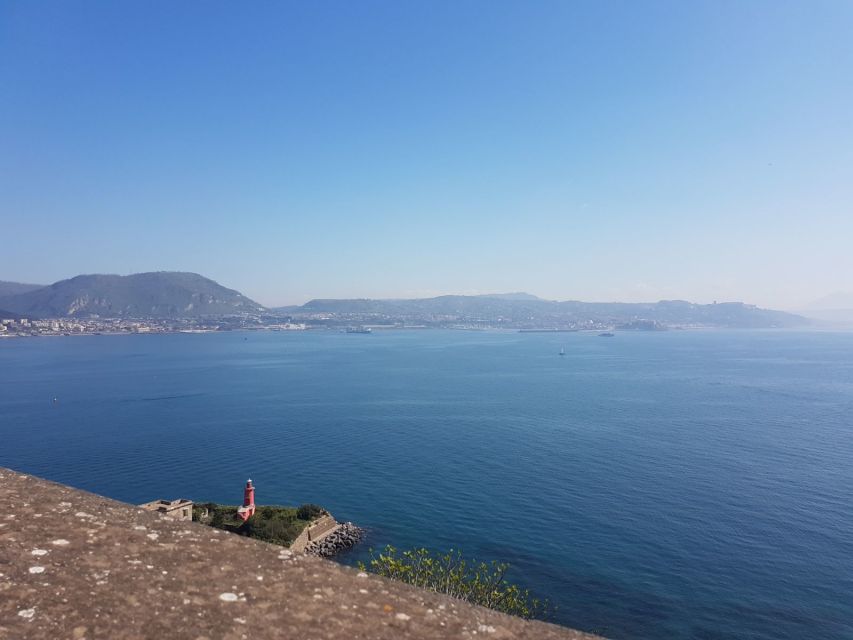
The Campi Flegrei, or Phlegraean Fields, spread across the volcanic country west of Naples. This is not one neat archaeological park. It is a broad area of craters, lakes, ancient ports, ruined temples, cisterns, and settlements shaped by volcanic activity.
That scattered layout is exactly why a private tour helps. You are not spending the day trying to piece together bus routes and opening hours. Instead, a Mercedes S-Class sedan, van, or minivan carries you between sites while an English-speaking driver and guide handle the route.
The tour lasts eight hours, with pickup from your chosen address in Naples, Sorrento, or Salerno. A pickup from Sorrento or Salerno means a longer transfer to the Phlegraean Fields, so the day can feel full. From Naples, the area is easier to reach, leaving more of the day for the archaeological stops.
The private format gives you a quieter experience than a large coach excursion. It also makes this a good choice for a family group or a small party with different interests. You can focus on Roman engineering, ancient religion, volcanoes, or the old resort culture of Baiae instead of following a fixed group pace.
More Campi Flegrei and Pozzuoli trips:
- Snorkeling among the Submerged Archaeological Finds of Baia da Napoli
★ 5.0 · 72 reviews - Try Scuba Diving and Underwater Roman Ruins in Baia from Naples
★ 4.5 · 66 reviews - Private car tour among the treasures of the Phlegraean Fields of Naples.
★ 5.0 · 47 reviews
Pozzuoli and the shifting Macellum
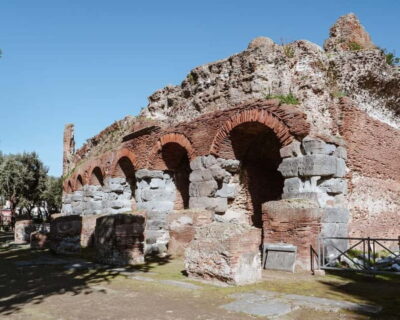
Pozzuoli was the Roman town of Puteoli, one of the most important ports in the Bay of Naples. Your visit includes the Macellum, often called the Temple of Serapis because of the statue found there during excavation.
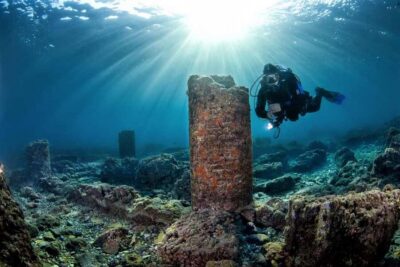
The surviving columns are the real lesson here. Their lower sections contain holes made by molluscs, showing that the columns spent time below water. This is a clear sign of bradyseism, the slow upward and downward movement of the ground caused by volcanic activity beneath the area.
The site makes geology visible. At Pompeii, you see the result of one dramatic eruption. At Pozzuoli, you see a place altered over centuries by gradual movement. The guide can help connect the ruins to the wider volcanic setting, which gives the stop more meaning than a quick look at old columns.
There is an important scheduling issue. The Macellum is closed Monday, Tuesday, Wednesday, and Friday. It opens Thursday, Saturday, and Sunday, so confirm your date before paying for the excursion. If this site is a priority, the day of the week matters.
Cumae, Greece in Italy
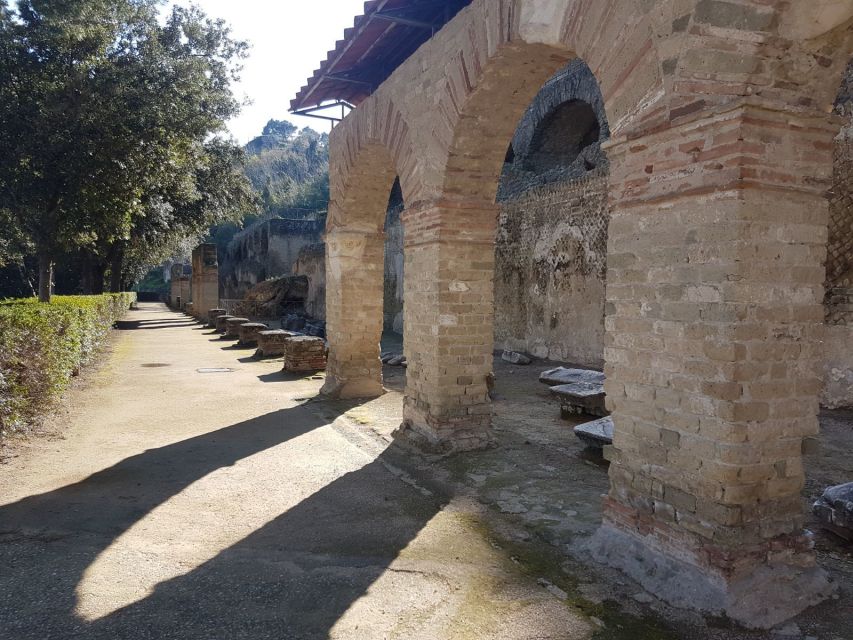
Cumae was founded by Euboean Greeks and is described as the oldest Greek settlement in the area. The ruins sit near the Tyrrhenian Sea, with the Acropolis forming the main focus of the visit.
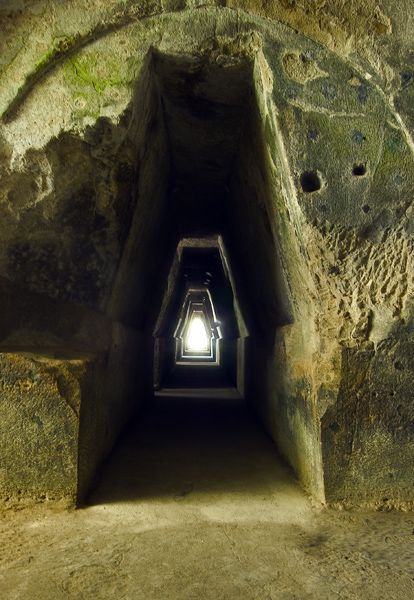
The best-known feature is the cave sanctuary linked with the Cumaean Sibyl. Ancient writers connected the Sibyl with prophecy, and the cave gives Cumae a strong sense of place even if you are not especially interested in mythology. The site also shows how Greek settlement, Roman rule, religion, and military power overlapped in Campania.
Cumae tends to feel less polished and less instantly recognizable than Pompeii. That is part of its appeal, but it also means you should expect a ruin site that rewards explanation from the guide. Without context, walls and foundations can blur together. With a good guide, the Acropolis and sanctuary become part of a much larger story about the western edge of the ancient Mediterranean.
Cumae closes Tuesday. Pair that fact with the Macellum schedule when choosing your date. A private tour is valuable here because the guide can explain what you are looking at rather than simply pointing out the most obvious remains.
Baiae, temples, and a city beneath the water
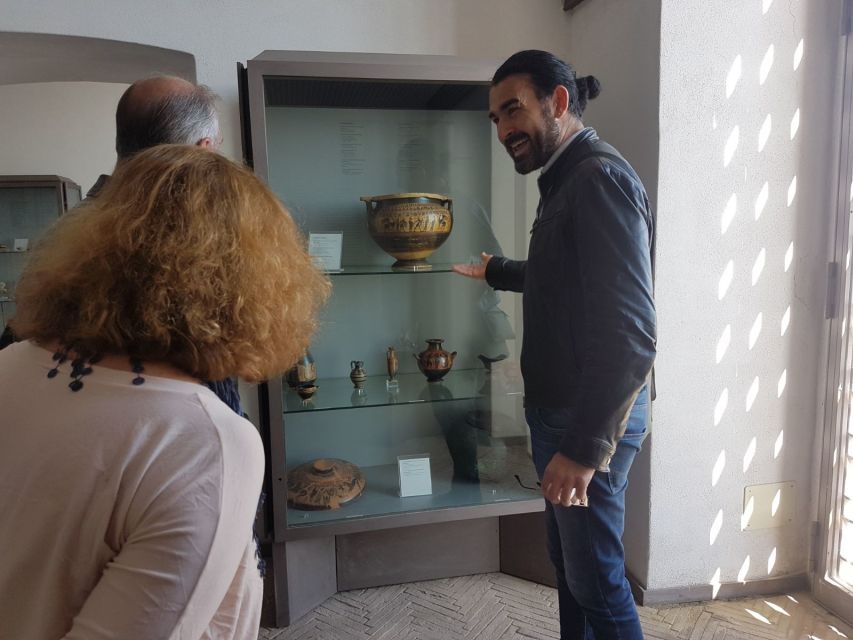
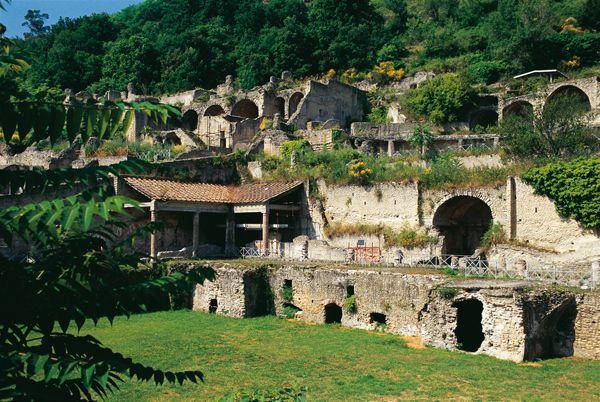
Baiae was a Roman seaside resort known for leisure and grand villas. Today, parts of the ancient town are underwater, while the visible ruins include remains associated with temples to Venus, Diana, and Mercury.
The above-ground visit takes place around the Archaeological Park of Baia and the Museum of the Phlegrean Fields, housed in a former Aragonese fortress. That combination gives you two different views of the area. The ruins show Roman building and luxury, while the museum and fortress provide a setting for understanding what has been recovered.
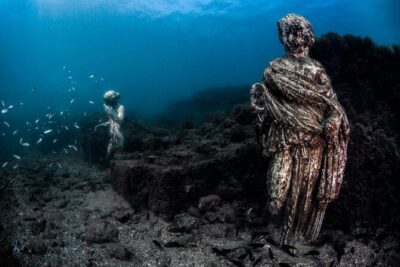
Baiae is one of the most unusual stops because the ancient town did not simply disappear. Volcanic movement gradually changed the shoreline, leaving some of the Roman resort below the water. You will not see the entire settlement during a normal land visit, but the submerged remains explain why the site feels incomplete.
The Baiae Thermal Baths and Museum close Monday. Check the operating day carefully, particularly if you are planning the tour around a Monday stay in Naples or the surrounding towns.
A few more Naples trips worth weighing up
- Exclusive Naples Private Food Tour: 6 or 10 Tastings
★ 5.0 · 596 reviews - Private Day Tour: Sorrento, Positano, Amalfi, Ravello from Naples
★ 4.5 · 546 reviews - Private Day tour of Positano, Amalfi and Ravello from Naples
★ 5.0 · 522 reviews - Private Amalfi Coast Tour – Enjoy it with our local english speaking driver
★ 5.0 · 475 reviews
Piscina Mirabilis and Roman water power
At Bacoli, the tour reaches Piscina Mirabilis, an enormous Roman cistern at ancient Misenum. The nearby settlement once served as the home base of the largest Roman navy.
This is a fine counterpoint to Baiae. Baiae shows comfort and display. Piscina Mirabilis shows the hard infrastructure that made Roman power possible. A naval base needed a dependable water supply, and this vast reservoir reflects the scale of that demand.
The cistern is also a good reason to choose this excursion over a standard ruins tour. You are not only seeing temples and streets. You are seeing the systems behind Roman life, including the storage of water for a major military center.
The stop is in Bacoli, along with the wider visit to the former Misenum area. Since the tour includes several outdoor archaeological sites, wear practical walking shoes and expect the day to involve repeated movement between a vehicle and ruins. The tour is not suitable for wheelchair users.
Averno, Fusaro, and Miseno lakes
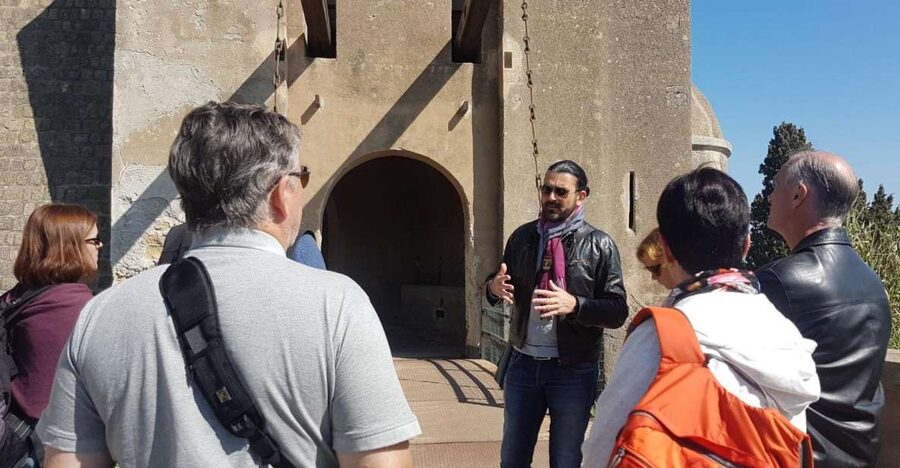
The day also includes views of the volcanic lakes of Averno, Fusaro, and Miseno. These are not filler stops. They help you read the physical setting behind the ruins.
Lake Averno is a volcanic lake with strong links to ancient belief. Its name was associated with the underworld, and the surrounding volcanic country helped give the area an eerie reputation. Seeing the lake after visiting Cumae adds useful context to the stories connected with the Sibyl and the underworld.
Lake Fusaro and Lake Miseno add more variety to the route. The lakes show that the Phlegraean Fields are not simply a collection of broken Roman buildings. Water, craters, coast, and ground movement all shaped where people lived and how they used the area.
The tour description does not promise long hikes or a dedicated nature walk, so think of these as scenic and geological elements woven into an archaeology-focused day. If you want a serious volcano trek, this is not that kind of outing. If you like seeing how nature and ancient settlement fit together, the lakes make the route more complete.
What the private transport changes
Transportation is provided by Mercedes S-Class sedan, van, or minivan, depending on the group. Pickup and drop-off are available in Naples, Sorrento, and Salerno, and you need to provide exact pickup details when arranging the tour.
A private vehicle matters here because the stops are spread across Pozzuoli, Cuma, Baia, Bacoli, and the surrounding lakes. Public transportation could get you to parts of the area, but covering this full sequence in one day would be difficult.
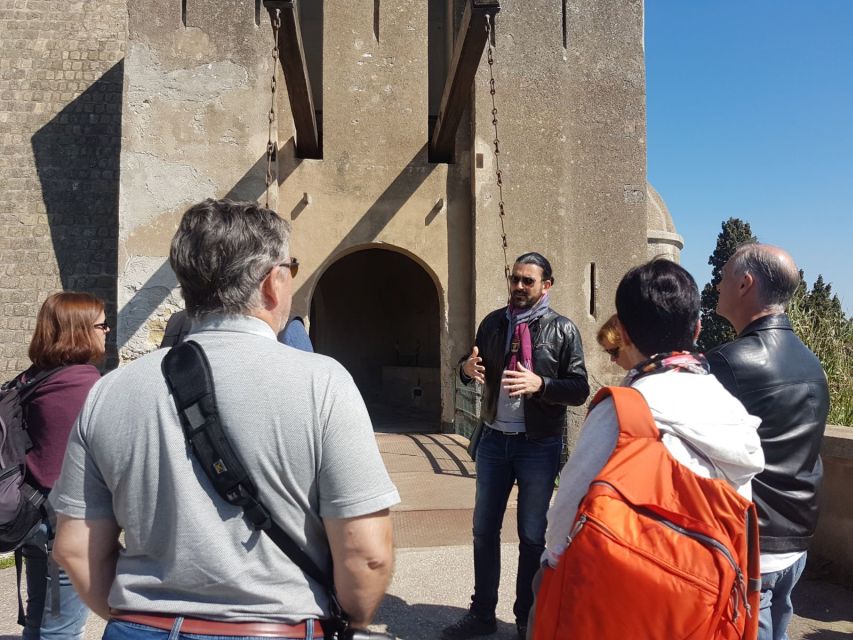
You also have an English-speaking driver, with live guiding available in Spanish, English, Italian, French, and German. One booking featured Massimo as guide and Giovanni as driver. Massimo shared detailed archaeological information, while Giovanni was praised for careful driving and close attention in complicated traffic. If you are assigned them, you can expect a guide-driver team with clearly different roles.
The private setup does not guarantee unlimited time at every stop. Eight hours is still a fixed day, and there are many places on the route. Tell the operator which sites matter most to you so you can use your time wisely.
Is $558.97 per person a fair price?
At $558.97 per person, this is a costly excursion. The value depends heavily on your group size and your alternative plans.
You are paying for a private group, transportation, an English-speaking driver, a guide, and skip-the-line admission fees. You also avoid arranging several separate tickets and transfers across a wide area. For a small group that wants a private car and a guide for the full day, the cost can make sense.
The price is harder to justify for a solo visitor or a couple mainly interested in one or two sites. In that case, a simpler local outing may cost less, though it may not cover Cumae, Baiae, Piscina Mirabilis, Pozzuoli, and the lakes in one day.
The strongest value comes from the route itself. You are not paying for a single famous ruin. You are paying to connect several sites that are geographically scattered and historically different. If you appreciate ancient engineering and want more than the standard Naples and Pompeii circuit, that wider range is the main reason to consider it.
Who should book this day?
I would recommend this tour to you if you have already seen Naples’ central sights or Pompeii and want a less predictable day in Campania. It suits people who enjoy archaeology but also want volcanoes, water, military infrastructure, and coastal scenery.
It is especially useful for small private groups, families who want their own vehicle, and visitors staying in Naples, Sorrento, or Salerno. The multilingual guiding is helpful if your group needs Spanish, Italian, French, or German rather than English.
I would hesitate if you dislike long days with several separate stops. The route covers a lot, and not every location will receive the same amount of time. I would also reconsider it if mobility is a concern, since the experience is not suitable for wheelchair users.
Plan around the closures before booking. Macellum is closed four days a week, Cumae is closed Tuesday, and Baiae closes Monday. A date that works for one site may not work for all three.
My recommendation for the Phlegraean Fields
Book this private excursion if you want to understand the volcanic setting around Naples while visiting ruins that most short city tours skip. The best moments are likely to come from the contrasts: the moving ground at Pozzuoli, the Greek origins of Cumae, the submerged resort of Baiae, and the huge water system at Piscina Mirabilis.
The tour is not cheap, and eight hours can feel tightly scheduled. Still, the private vehicle, guide, admission fees, and broad route solve the main practical problems of visiting this scattered area. Choose your date carefully, give precise pickup information, and tell the guide which stops matter most to you. For an archaeology-minded visitor, this is one of the most distinctive full-day excursions around Naples.
FAQ
How long does the Phlegraean Fields excursion last?
The excursion lasts eight hours. Starting times depend on availability.
Where can pickup and drop-off take place?
Pickup and drop-off are available in Naples, Sorrento, and Salerno. You must provide exact pickup details.
Is this a private tour?
Yes. The experience is arranged for a private group.
What type of transportation is provided?
Transportation is provided by Mercedes S-Class sedan, van, or minivan.
Which languages are available for the live guide?
Live guiding is available in Spanish, English, Italian, French, and German.
Is admission included?
Yes. Skip-the-line admission fees are included.
Which sites are visited?
The route includes the Campi Flegrei, Pozzuoli, the Macellum of Pozzuoli, Cumae, the Archaeological Park of Baia, Bacoli, Piscina Mirabilis, and Lake Fusaro. The route also includes views of Lakes Averno and Miseno.
When is the Macellum of Pozzuoli open?
The Macellum is closed Monday, Tuesday, Wednesday, and Friday. It is open Thursday, Saturday, and Sunday.
Is the tour suitable for wheelchair users?
No. The experience is not suitable for wheelchair users.
Just added around Naples
- Full-Day Tour of the Amalfi Coast and Pompeii from Naples★ 4.5 · 3 reviews
- The Ultimate Neapolitan Cooking Class with Local★ 5.0 · 3 reviews
- Naples: Old City Center Street Food Tour with Spritz★ 4.7 · 3 reviews
- Visit in Pompeii – Naples Private Tour with Ada★ 5.0 · 3 reviews
- Transfer from Naples to Sorrento or viceversa★ 5.0 · 3 reviews
- Naples: National Gallery of Capodimonte Tour★ 5.0 · 3 reviews
- Visit 2 wine producers with tasting and transportation included★ 5.0 · 3 reviews
- Naples: Mozzarella experience★ 5.0 · 3 reviews
Phlegraean Fields Tours, compared.
Snorkeling among the Submerged Archaeological Finds of Baia da Napoli
Read our review →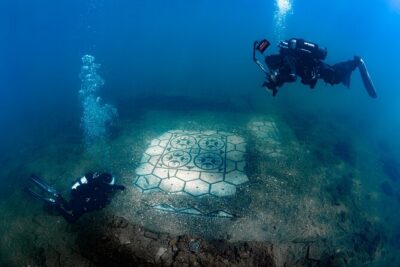
Try Scuba Diving and Underwater Roman Ruins in Baia from Naples
Read our review →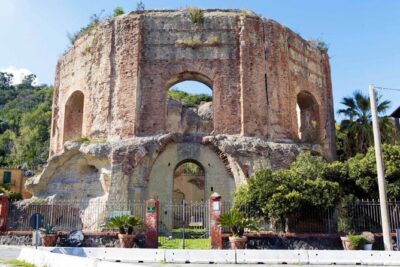
Private car tour among the treasures of the Phlegraean Fields of Naples.
Read our review →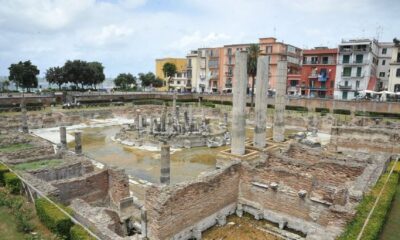
Private car tour among the treasures of the Campi Flegrei in Naples
Read our review →
Browse the lists this tour appears in