
Reviewed · MUSEUMS
Visit to the Lapis Water Museum in Spanish
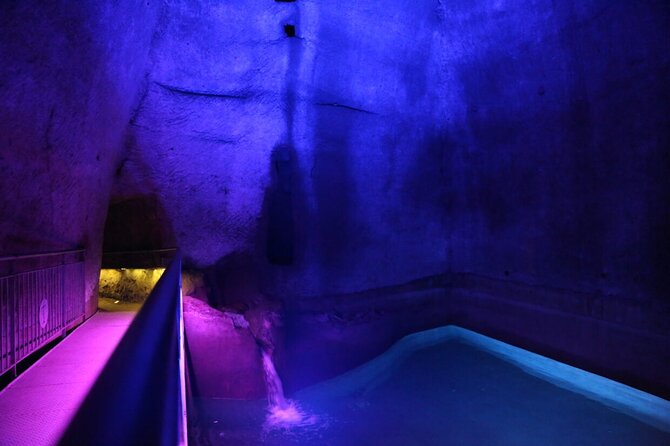
Naples has another city below its streets. At the Lapis Water Museum, you descend 35 meters beneath the historic center to see Greek and Roman aqueducts, old water cisterns, and a wartime shelter. It is a compact tour, but it reaches far below the usual Naples sightseeing route.
I like the way this experience links ancient engineering with modern Naples, rather than treating the underground as a dark curiosity. I also like the visit to the Pietrasanta complex, where the basilica and chapels connect the underground rooms with the city’s Greek origins. The main consideration is language: this is a Spanish-language tour, and the $46.34 price is high for 75 minutes unless you value a guided explanation.
- Thirty-five meters below Naples: Reach one of the city’s deepest public historical spaces.
- Waterworks from two ancient eras: See parts of the Greek and Roman aqueduct system and old cisterns.
- The Prince’s Pool: Visit the largest cistern in the Naples underground.
- A wartime shelter: Learn how these underground chambers protected Neapolitans during World War II.
- Spanish guidance: Meet in Piazza Dante and continue as a group to the museum.
- Small-group format: The maximum group size is 20 people, with admission included.
In This Review
- Why Naples has a city beneath the city
- Meeting in Piazza Dante and reaching Pietrasanta
- Pietrasanta, the church above the waterworks
- Descending 35 meters into the Lapis Museum
- The ancient cisterns and the Prince’s Pool
- A shelter shaped by World War II
- What the Spanish guide adds
- Is $46.34 good value for 75 minutes?
- Who should book the Lapis Water Museum?
- Should you book this Spanish Lapis tour?
- FAQ
- Where does the tour begin?
- Where does the tour end?
- How long does the experience last?
- What language is the tour offered in?
- How much does the tour cost?
- How far underground does the tour go?
- What will I see underground?
- How many people can join the group?
- Can I cancel for a full refund?
Why Naples has a city beneath the city
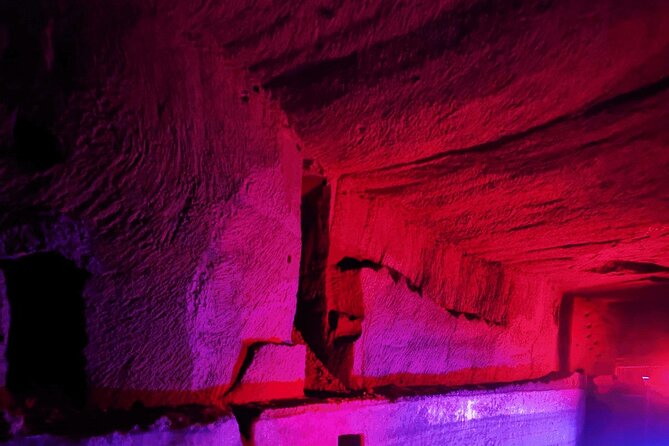
The Lapis Water Museum makes sense only when you picture Naples as a place built layer upon layer. The streets above belong to one period, the churches to another, and far below them are tunnels, cisterns, and water channels shaped by Greek and Roman settlement.
This is not a museum filled with ordinary display cases. The setting does much of the work. You walk into spaces that were cut, adapted, and reused over many centuries. The water system began as practical infrastructure, but later underground areas served another purpose when residents sought safety during bombing raids in World War II.
That combination gives the visit its emotional weight. You are not looking only at masonry from the ancient world. You are also entering places where Neapolitans endured a very hard period in living memory. The route connects distant history with personal stories of fear, shelter, illness, and survival.
The museum project began in 2021, in cooperation with a Neapolitan water company. Its purpose was to bring ancient cisterns back into use as a cultural site and recreate the feeling of streams and water storage areas as they once functioned. You should not expect a perfectly preserved ancient building. Instead, expect a restored and interpreted underground system where water, stone, and later human use all share the same space.
Meeting in Piazza Dante and reaching Pietrasanta
Your guide meets you at Piazza Dante, a useful starting point in central Naples. Once the group is assembled, you continue together to Piazzetta Pietrasanta 17, where the museum is located.
The meeting point and the museum are separate, so allow enough time to find Piazza Dante before the stated start time. The guided portion ends at the museum, not back at the square. That matters if you are arranging lunch, a church visit, or a train connection afterward.
The tour is capped at 20 people. That is not an intimate private visit, but it is manageable for an underground route. A group of this size also makes the walk from Piazza Dante straightforward, since you remain with the guide rather than trying to locate the museum on your own.
The Spanish language is central to the booking. If you understand Spanish well, the tour gives you a clear way to follow the explanations and the wartime accounts. If you speak another language, you should not assume that another guide or translation will be available. The experience is offered in Spanish.
More museums and sites in Naples:
- Naples: National Archaeological Museum Ticket & Audio App
★ 4.4 · 617 reviews - Naples: National Archaeological Museum of Naples Guided Tour
★ 4.8 · 498 reviews - Naples: National Archaeological Museum Tour & Digital Guide
★ 4.2 · 177 reviews
Pietrasanta, the church above the waterworks
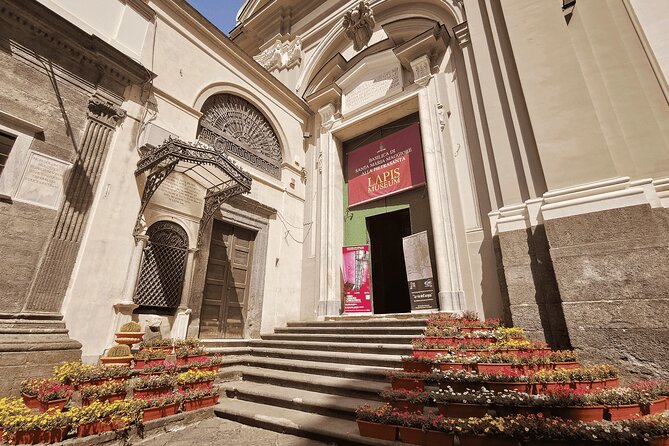
The first part of the visit takes place at the Basilica of Santa Maria della Pietrasanta, also described in the tour material as Santa Maria de la Pitra Sagrada. The church and surrounding architectural complex have Greek and Roman roots, so this stop provides a useful introduction before the descent underground.
The site is tied to the earliest story of Naples. The first settlers called the city Partenope, and the basilica now occupies the area associated with that early settlement. That detail helps explain why the tour begins here. Pietrasanta is not simply a doorway to the museum. It is part of the same long story of Naples being rebuilt over its own past.
I like this order. Starting above ground gives you a sense of the setting before the tour turns downward. You see how a religious complex occupies a place connected to the ancient city, then discover what lies below it.
The basilica portion is not the main event, and the total tour lasts only about 75 minutes. If you want a long, unhurried examination of every chapel and architectural feature, this visit may feel brief. Its purpose is to connect the church, the ancient settlement, and the underground water system in one short route.
Descending 35 meters into the Lapis Museum
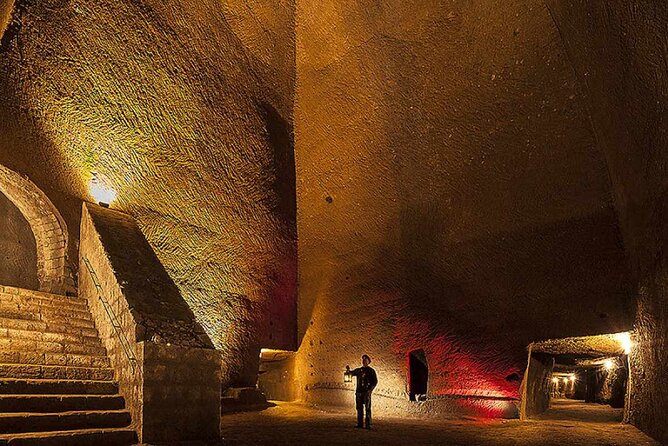
The dramatic moment comes when you go 35 meters below street level. Naples is famous for underground passages, but this depth gives the Lapis visit a different scale from an ordinary crypt or basement museum.
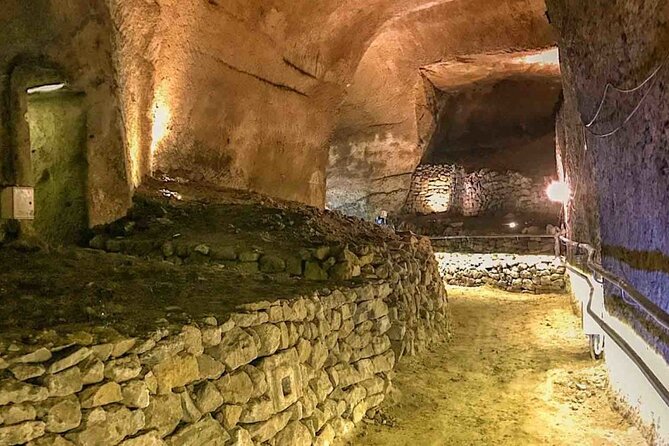
At the bottom, you see parts of the Greek and Roman aqueduct of ancient Neapolis. These channels were built to collect and move water, an essential task in a growing city. Their presence also shows how much planning was required beneath the streets, long before modern pipes and pumps.
The tour presents the underground as a working system rather than a collection of unrelated ruins. Cisterns stored water. Channels guided it. Open areas were adapted over time. The result is a place where the practical needs of an ancient city can be read in the shape of the stone.
You should expect uneven, enclosed underground surroundings rather than a polished gallery. The available information confirms that most people can participate, and one account describes the route as suitable even for people with disabilities. Still, the exact access conditions are not detailed, so anyone with specific mobility needs should confirm the route with the provider before booking.
The ancient cisterns and the Prince’s Pool
The water cisterns are the heart of the museum. The 2021 restoration project aimed to revive these old spaces and recreate streams and storage areas as they may have functioned in earlier times. This adds movement and atmosphere to the visit, rather than leaving you with only dry stone walls.
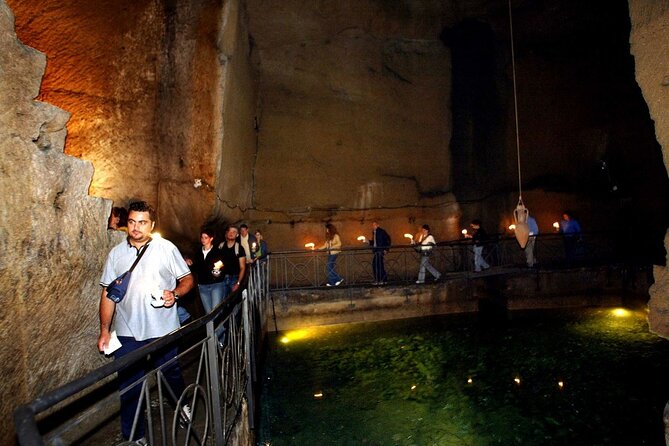
The largest cistern on the route is known as the Prince’s Pool. Its size gives you a sense of the scale of the underground water network and the demands of the old city above. A cistern was not decorative. It was part of the supply system that allowed people to live in a dense urban center.
This is where a guide adds real value. Without explanation, an underground chamber can look like a large hole in the ground. In Spanish, your guide can point out how the spaces relate to water collection, storage, and distribution, then connect them to the growth of Neapolis.
The recreated water features may appeal to families, but you should be cautious about assuming the tour is designed specifically for small children. The experience is often described as accessible to a broad audience, yet a booking involving very young children led to a poor outcome because expectations about the visit did not match the actual experience. Ask before booking if you need a route suited to toddlers or young children.
A completely different sort of day out of Naples:
- From Naples: Pompeii Ruins & Mount Vesuvius Day Tour
★ 4.3 · 11,459 reviews - From Naples: Sorrento, Positano and Amalfi Full-Day Tour
★ 4.6 · 10,988 reviews - From Naples: Sorrento, Positano & Amalfi Coast – Small Group Tour
★ 5.0 · 8,643 reviews - Naples: Catacombs of San Gennaro Entry Ticket & Guided Tour
★ 4.6 · 7,941 reviews
A shelter shaped by World War II
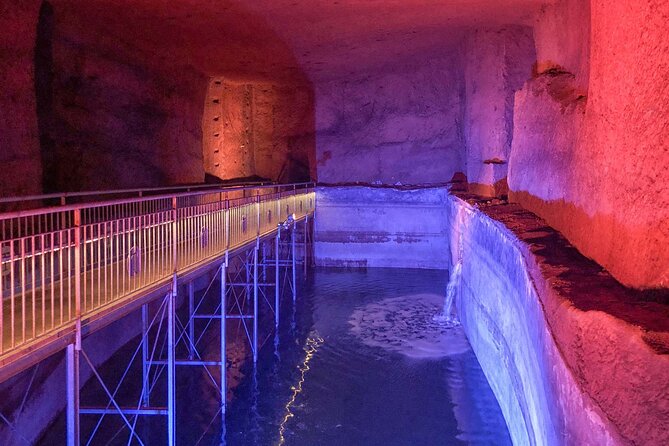
The museum’s most powerful section may be the area used as a shelter during World War II. During bombing raids, Neapolitans moved underground to protect themselves. These chambers therefore carry a modern human story alongside the ancient one.
The wartime section changes the mood of the tour. The aqueducts and cisterns explain how the city functioned centuries ago. The shelter shows how the same spaces were later used by people facing immediate danger. The underground was not frozen in the past. It remained part of city life.
Films help set the scene by showing how people were forced to live in these cellars during difficult moments. This visual material is especially useful because it gives scale to the experience. It helps you imagine the underground not as an empty archaeological site, but as a crowded refuge.
The subject deserves respect. Many Neapolitans took shelter below ground, and some died because of bombing or disease. The route does not treat the shelter as a thrilling backdrop. Its value comes from showing the human cost of war and the hard choices made by ordinary residents.
If you prefer lighthearted sightseeing, this section may feel heavy. I consider that a strength, but it is worth knowing before you arrive. The visit asks for attention and respect rather than a quick photo stop.
What the Spanish guide adds
A strong guide is important here because the spaces are not self-explanatory. The most useful commentary should explain how the Greek and Roman waterworks operated, why the cisterns were built, and how the underground later became a shelter.
The Spanish guide also gives the route a clear narrative. You begin with Partenope and Pietrasanta, move into the ancient aqueduct, pass through the cisterns, and finish with the World War II shelter. That sequence makes the underground feel like a timeline beneath your feet.
The guide’s preparation and willingness to explain have been singled out positively, and one guide identified as C received particular praise for a compelling account. The supplied details do not provide the guide’s full name, so you should not book expecting a particular person. Guides can change.
Because the tour runs for only 75 minutes, the guide must keep things moving. That is useful if you want a focused introduction to the site. It is less suitable if you prefer to linger quietly in each chamber or ask extended questions at every stop.
Is $46.34 good value for 75 minutes?
At $46.34 per person, this is not a budget museum admission. The price includes the guided tour and entrance, but the visit lasts about one hour and 15 minutes. You are paying for access to an unusual underground setting and a Spanish explanation, not for a full-day archaeological program.
I would judge the value by your interests. If you care about Naples beneath the streets, ancient water systems, and the city’s World War II experience, the price can be reasonable. The combination is hard to duplicate with a standard church visit or a general city walk.
If you are mainly looking for a large archaeological site with many rooms and objects, the short duration may make the cost feel steep. The museum has a narrow focus, and the route is carefully contained.
This tour is usually booked about 35 days ahead. That advance planning suggests you should reserve early if your Naples schedule is fixed, especially since the group can reach 20 people. The policy allows free cancellation up to 24 hours before the start time. Cancellations or changes made inside that window are not refunded or accepted, and the tour requires a minimum number of participants. If the minimum is not met, you are offered another date or experience, or a full refund.
Who should book the Lapis Water Museum?
I would recommend this visit to adults and older children who enjoy archaeology, urban history, engineering, and serious wartime stories. It is also a good choice if you have already seen Naples above ground and want to understand how much of the city exists below the modern streets.
Spanish-speaking visitors get the clearest benefit. The guide’s explanations are central to the experience, especially in the aqueduct and shelter sections. If you do not understand Spanish, this particular booking is not the right fit.
The tour may suit people who want a compact activity rather than a half-day commitment. You can begin at Piazza Dante and finish at the museum in about 75 minutes, leaving the rest of the day for the historic center. Since the final stop is in central Naples, it can fit neatly into a day of church visits and walking.
Families should make a careful choice. The published information says most people can take part, and the route has been described as suitable for people with disabilities. Yet the details do not explain every access feature, and the experience is not clearly presented as a young-child attraction. Confirm before booking if you need special arrangements or are bringing very young children.
Should you book this Spanish Lapis tour?
Book it if you want a focused, atmospheric look at Naples below street level and can follow Spanish comfortably. The strongest reasons are the 35-meter descent, the restored Greek and Roman waterworks, the Prince’s Pool, and the moving World War II shelter.
Skip it if you want a long archaeological visit, need a language other than Spanish, or are judging value only by minutes spent inside a museum. For the right audience, the unusual setting and clear historical arc justify the price. For everyone else, Naples offers plenty of above-ground sights that may be a better match.
FAQ
Where does the tour begin?
The tour begins at Piazza Dante in Naples, at P.za Dante, 80135 Napoli NA, Italy.
Where does the tour end?
The guided tour ends at the Lapis Museum, Museo dell’Acqua Napoli, at Piazzetta Pietrasanta, 80138 Naples.
How long does the experience last?
The tour lasts approximately one hour and 15 minutes.
What language is the tour offered in?
The guided tour is offered in Spanish.
How much does the tour cost?
The listed price is $46.34 per person.
How far underground does the tour go?
The route descends approximately 35 meters below the city.
What will I see underground?
You will see the Greek and Roman aqueduct of ancient Neapolis, ancient cisterns, the Prince’s Pool, and an area used as a shelter during World War II.
How many people can join the group?
The activity has a maximum of 20 participants.
Can I cancel for a full refund?
Yes. You can cancel at least 24 hours before the experience starts for a full refund. Cancellations or changes made less than 24 hours before the start time are not refunded or accepted.
Just added around Naples
- Full-Day Tour of the Amalfi Coast and Pompeii from Naples★ 4.5 · 3 reviews
- The Ultimate Neapolitan Cooking Class with Local★ 5.0 · 3 reviews
- Naples: Old City Center Street Food Tour with Spritz★ 4.7 · 3 reviews
- Visit in Pompeii – Naples Private Tour with Ada★ 5.0 · 3 reviews
- Transfer from Naples to Sorrento or viceversa★ 5.0 · 3 reviews
- Naples: National Gallery of Capodimonte Tour★ 5.0 · 3 reviews
- Visit 2 wine producers with tasting and transportation included★ 5.0 · 3 reviews
- Naples: Mozzarella experience★ 5.0 · 3 reviews
Museums, compared.

National Archaeological Museum Ticket & Audio App
Read our review →
National Archaeological Museum of Naples Guided Tour
Read our review →
National Archaeological Museum Tour & Digital Guide
Read our review →


Sant’Aspreno ai Crociferi: Church & Jago Museum Guided Tour
Read our review →
Skip the Line: National Archaeological Museum of Naples Entry Ticket
Read our review →
Browse the lists this tour appears in