
Reviewed · ARCHAEOLOGICAL MUSEUM TOURS
MANN – Archaeological Museum Private Tour with Archaeologist
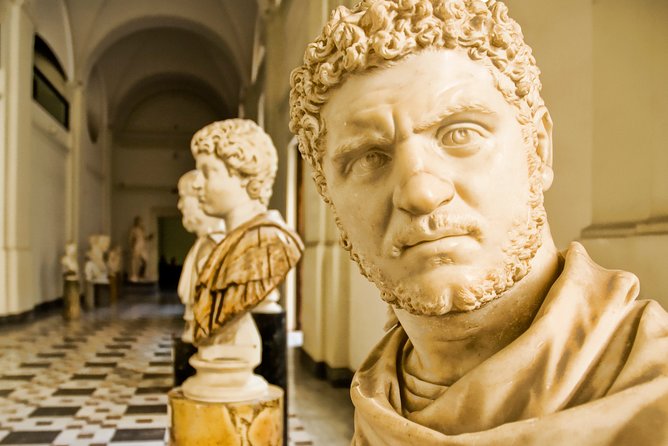
Naples’ National Archaeological Museum is packed with world-class ancient art, but it is not an easy place to understand on your own. This private tour puts an archaeologist beside you to explain the Farnese sculptures, Pompeii mosaics, and the museum’s more unusual erotic objects in the Gabinetto Segreto, or Secret Cabinet.
I like the private format, since you can ask questions without waiting for a large group to catch up. I also like the strong focus on Pompeii and Herculaneum, especially if you are visiting the archaeological sites and want help connecting their ruins with the objects now housed in Naples.
The main consideration is the price: $204.70 per person is a serious outlay for roughly two hours. Also, the supplied information is unclear about admission, listing tickets as included in one place and not included in another, so confirm that detail before paying.
In This Review
- Key points at a glance
- Why an archaeologist helps at MANN
- Arriving at the former university building
- The ground-floor antiquities from Pompeii and Herculaneum
- The Farnese Collection and its giant sculptures
- Pompeian mosaics, where small pieces create a picture
- The Gabinetto Segreto and ancient erotic art
- The Meridian Hall and Roman daily life
- Is $204.70 per person good value?
- Timing, pace, and practical details
- Who should book this private museum visit?
- Should you book it?
- FAQ
- Where does the tour start and end?
- How long does the tour last?
- Is the tour private?
- Is the tour offered in English?
- Is transportation included?
- Does the tour include museum admission?
- Is the Gabinetto Segreto included?
- Can I cancel for a full refund?
Key points at a glance
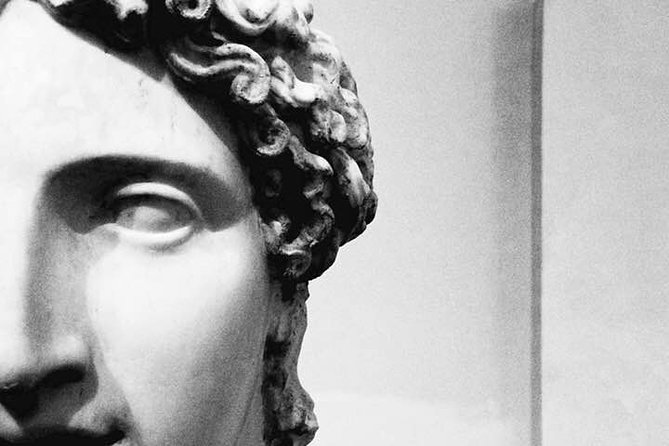
- Archaeologist-led visit: Your guide brings professional training to Greek and Roman sculpture, mosaics, frescoes, and everyday objects.
- Private attention: Only your group takes part, allowing a more flexible pace and time for questions.
- The Farnese Collection: See the famous Toro Farnese and Ercole Farnese, two of the museum’s major sculptures.
- Pompeii and Herculaneum connections: Objects from the buried cities help make their stories easier to understand.
- Gabinetto Segreto access: The Secret Cabinet presents erotic Roman artifacts, a distinctive part of the museum.
- Two-hour highlights tour: The route covers major collections without trying to show every room in the building.
Why an archaeologist helps at MANN
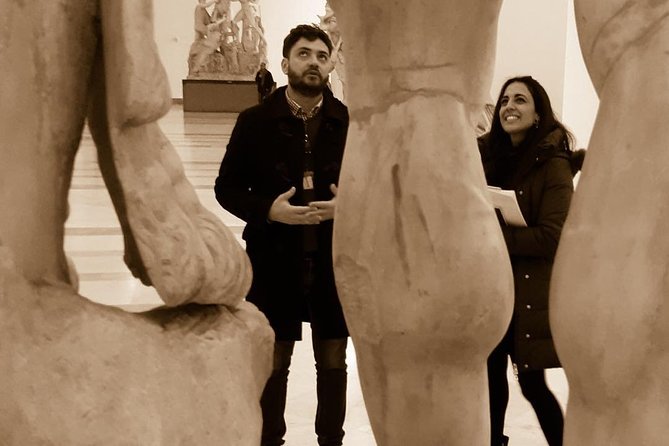
The Museo Archeologico Nazionale di Napoli is one of those museums where a guide can change the entire visit. Its collection is large, spread across several floors, and filled with objects that can look impressive but confusing when you do not know their original setting.
An archaeologist can explain what you are seeing, how it was used, and why it matters. That makes a difference with Roman sculpture, where many works are copies of Greek originals, and with artifacts from Pompeii and Herculaneum, where a household object may tell you as much about daily life as a grand statue tells you about imperial power.
The experience is offered as a private tour, so you are not sharing the guide with strangers. I value that arrangement in a museum because the best questions often come after you have looked at an object for a minute. You can pause, ask for more context, or move on when a display does not interest you.
The guides associated with this experience include Riccardo, Olivio, and Teresa. Riccardo is praised for explaining virtually everything in the museum with clarity. Olivio’s archaeological training is particularly useful for visitors who want more than dates and names. Teresa is noted for bringing Pompeii and Herculaneum to life through stories and for offering suggestions about lunch and other things to find in Naples.
Your guide is not guaranteed to be one of these three people, but their strengths give you a good sense of the style to expect: informed explanations, patience, and a personal approach rather than a hurried list of objects.
More Archaeological Museum visits:
- Naples: National Archaeological Museum Ticket & Audio App
★ 4.4 · 617 reviews - Naples: National Archaeological Museum of Naples Guided Tour
★ 4.8 · 498 reviews - Naples: National Archaeological Museum Tour & Digital Guide
★ 4.2 · 177 reviews
Arriving at the former university building
You meet at Piazza Museo, 19, outside the National Archaeological Museum of Naples. The building itself has an interesting past. It was first erected as a horse barracks, later served as the University of Naples from 1616 to 1777, and then became home to the museum collections assembled under Charles III of Spain in the mid-18th century.
That background is worth knowing before you enter. This is not a purpose-built modern gallery with a simple route from entrance to exit. The building’s earlier uses help explain its scale and some of its broad, formal spaces.
The museum holds Greek and Roman antiquities from Naples and nearby archaeological sites. The collection includes material from Pompeii, Herculaneum, and Santa Maria Capua Vetere, so this tour is especially useful if your trip includes the Bay of Naples archaeological sites.
You return to the same meeting point at the end. No private transportation is provided, and the museum is near public transportation, so you will need to make your own way there and onward after the visit.
The ground-floor antiquities from Pompeii and Herculaneum
The tour begins with ancient material from Herculaneum, Pompeii, Naples, and Santa Maria Capua Vetere on the ground floor. This is where the archaeological focus becomes especially valuable.
Pompeii and Herculaneum are often remembered for their streets, houses, and dramatic burial in volcanic material. In the museum, you see the portable objects and works of art that once belonged in those settings. A guide can help you imagine the original placement of a sculpture, mosaic, or household item rather than treating each piece as an isolated exhibit.
I would pay close attention to the distinction between public and private life. The museum contains major art, but it also presents objects connected to ordinary Roman routines. That contrast helps prevent the ancient world from becoming a parade of emperors and marble bodies.
This part of the museum can also prepare you for a later visit to Pompeii. After seeing the artifacts indoors, details in the ruined houses may make more sense. You begin to recognize how decoration, furniture, religious objects, and personal items fitted into Roman homes.
The drawback is time. Two hours is enough for selected highlights, not every room. If you already know you want an exhaustive study of Pompeii’s domestic objects, you will need a longer independent visit or a separate museum stop.
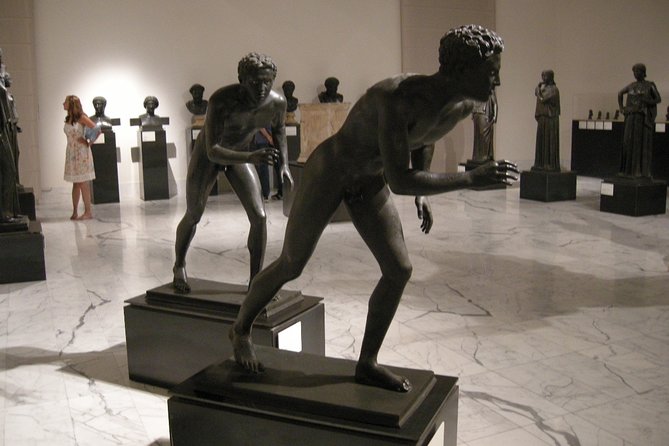
The Farnese Collection and its giant sculptures
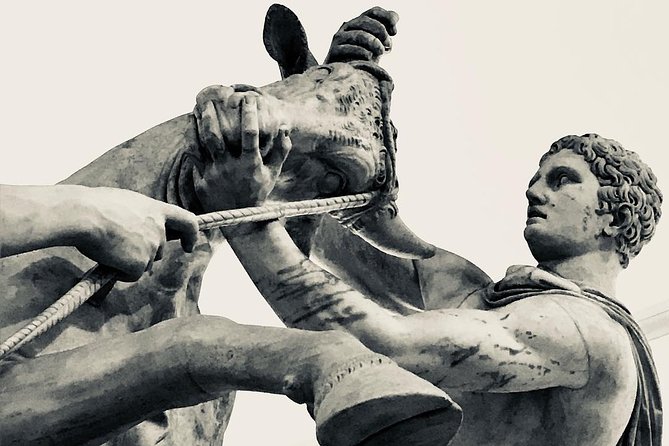
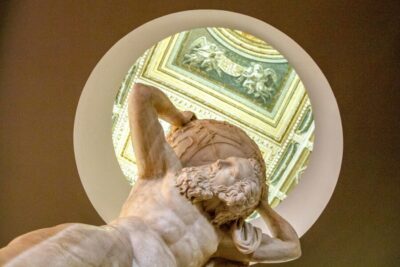
The Farnese Collection is one of the museum’s major attractions. The route includes the Toro Farnese, or Farnese Bull, and the Ercole Farnese, or Farnese Hercules.
These large sculptures reward an explanation of scale, subject, and survival. A guide can point out the visual details that are easy to miss from a distance and explain how the works fit into the museum’s wider Greek and Roman collection.
The Farnese sculptures also offer a useful lesson in how ancient art reached the modern world. The museum is not simply a storage place for objects dug from one nearby ruin. Its collections were gathered through different channels and reflect the collecting interests of powerful European families and rulers.
I like this section for visitors who think archaeology is only about broken pottery and excavation trenches. The Farnese works show another side of the ancient world: grand sculpture designed to impress, copied, repaired, collected, and eventually displayed in a modern museum.
Because the sculptures are large and visually commanding, they can take up much of your attention. Your guide helps balance them with smaller pieces and historical context, so the visit does not become only a greatest-hits stop for monumental marble.
More museums and sites in Naples:
- Naples: National Archaeological Museum audio guide
★ 4.0 · 155 reviews - Capodimonte Museum in Naples
★ 4.0 · 115 reviews - Sant’Aspreno ai Crociferi: Church & Jago Museum Guided Tour
★ 4.9 · 86 reviews - Skip the Line: National Archaeological Museum of Naples Entry Ticket
★ 3.5 · 82 reviews
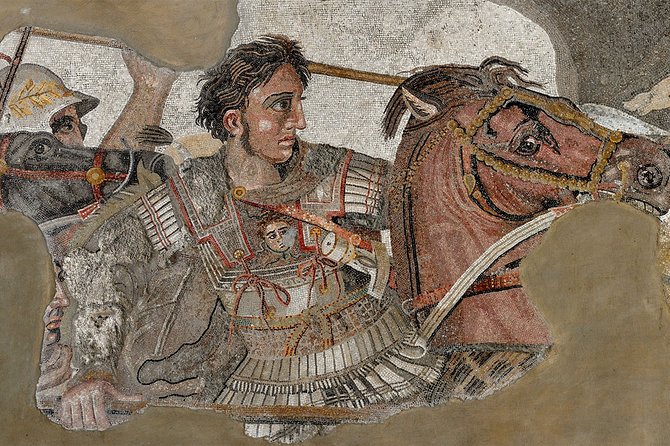
Pompeian mosaics, where small pieces create a picture
The museum’s Pompeian mosaics are among the best places to connect art with the homes where it was found. A mosaic can be more than a decorative floor. Its subject, size, and position often tell you something about the room and the people who used it.
With an archaeologist beside you, you can look at how tiny pieces of stone or glass create patterns, figures, and scenes. The guide can also explain why a mosaic mattered within a Roman house and how it related to the building’s social spaces.
This is a good point in the tour to ask questions. If you have visited Pompeii, you may want to know where a particular work was found. If you have not yet visited, the mosaics offer clues about the level of decoration you will encounter in wealthy Roman homes.
Do not expect a quiet, slow study of every mosaic during a two-hour highlights tour. The private setup lets you request more time for works that catch your eye, but the guide must still cover the main parts of the route.
The Gabinetto Segreto and ancient erotic art
The Gabinetto Segreto, or Secret Cabinet, is one of the museum’s most distinctive stops. It holds erotic Roman artifacts that illustrate a less formal side of ancient life.
The collection can be useful because it challenges the tidy version of antiquity often presented through temples, heroic statues, and military objects. Roman attitudes toward sex, fertility, humor, household protection, and display were not identical to modern ideas, and the objects need context to avoid easy misunderstandings.
This is where an archaeologist’s explanation is particularly helpful. You can learn how the objects fit into Roman culture instead of treating the room as a novelty stop. The tone is educational, but the subject matter may not suit every child or every visitor.
The information provided says access to the Secret Cabinet is part of the experience. Since the museum’s displays and access arrangements can change, it is sensible to confirm that this room is open on your date.
The Meridian Hall and Roman daily life
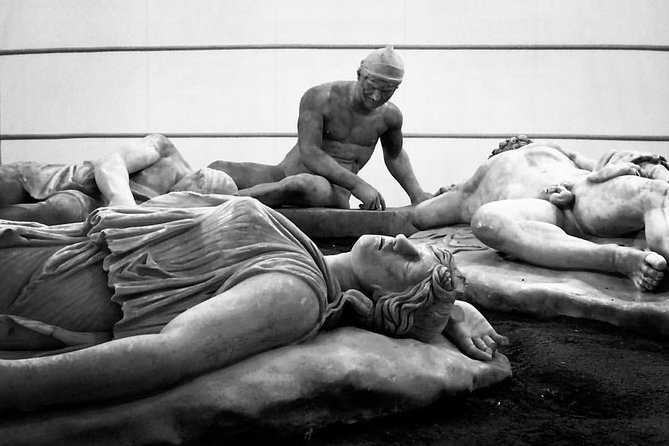
The final floor includes the Meridian Hall, Pompeian frescoes, and objects connected with everyday life in ancient Rome. This gives the tour a useful finish because it moves beyond famous sculpture and dramatic archaeology.
The frescoes show how Roman interiors were decorated with color and visual scenes. In a museum setting, you can see the painting closely and consider how it would have shaped the feel of a Roman room.
The everyday objects are just as important. They help you picture cooking, grooming, religious practice, storage, and household routines. I often find these pieces more revealing than monumental art because they show what people handled and used repeatedly.
Teresa, one of the guides associated with this experience, is praised for making Pompeii and Herculaneum feel alive through storytelling. A guide with that approach can bring the final rooms together, linking the objects to the people who lived with them.
You may also receive suggestions for lunch or for special things to look for elsewhere in Naples. That practical local advice is a pleasant extra, though it should be treated as a bonus rather than a formal part of the tour.
Is $204.70 per person good value?
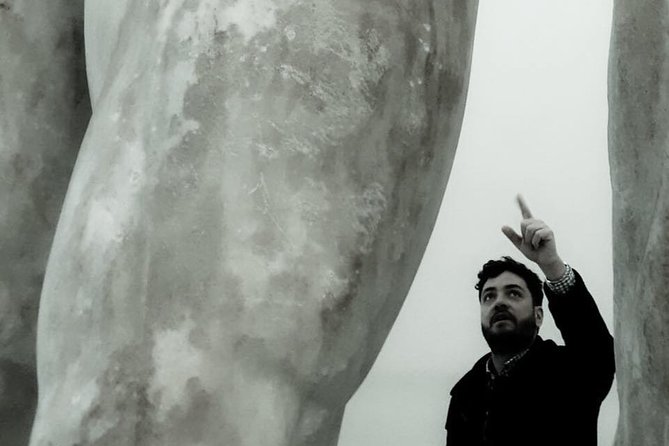
At $204.70 per person, this is not a budget museum visit. The value depends on how much you want from the experience and how many people are in your private group.
For one person or a couple, the cost is high for two hours. For a larger private group, group discounts may improve the price per person. The private format also means you are paying for dedicated guide time rather than a standard group walk-through.
I think the price makes more sense for three kinds of visitors:
- You have limited time in Naples and want the major works explained efficiently.
- You are visiting Pompeii or Herculaneum and want the museum collection put into context.
- You care more about expert interpretation and private attention than the lowest possible admission cost.
If you prefer to wander alone, read labels, and spend half an hour with one sculpture, this may feel too structured and too expensive. The museum can also be visited without a private archaeologist, so compare the cost with your own priorities.
There is an important admission detail to settle before booking. The supplied information says both that admission tickets and skip-the-line tickets are included and that the admission ticket is not included. Those statements conflict. Ask the provider, Grand Tour Experience, to confirm exactly what your $204.70 covers, including museum entry and any timed access.
Timing, pace, and practical details
The tour lasts about two hours. That is a sensible length for a focused introduction, especially in a large museum, but it will not cover every collection in detail.
A private tour gives you more control than a standard group visit. You can ask questions, request a little more time at the Farnese sculptures, or tell the guide that Pompeian domestic life matters more to you than a broad survey.
Confirmation is provided when you book. The activity is offered in English, and most people can take part. Service animals are allowed, and the museum is near public transportation.
The experience begins and ends at the museum. Since transportation is not included, plan your route to Piazza Museo and allow enough time to find the meeting point. The activity is in Naples local time, which also matters if you are arranging it around a train, ferry, or archaeological site visit.
Under-18 visitors have free entrance according to the supplied information. Because the admission details conflict elsewhere, confirm whether that free entrance applies only to the museum ticket or affects the tour price as well.
Free cancellation is available if you cancel at least 24 hours before the start time. Changes or cancellations inside that 24-hour window are not accepted for a refund.
Who should book this private museum visit?
I would recommend it most strongly to first-time visitors who feel unsure about ancient art. MANN can be overwhelming, and two focused hours with an archaeologist can give you a framework for the rest of your Naples sightseeing.
It also suits anyone planning Pompeii or Herculaneum. Seeing the objects in the museum before or after the ruins creates a stronger connection between the preserved artwork and the buildings where it was found.
Families with older children may appreciate the private format, particularly because a guide can adjust explanations and move at a sensible pace. The Secret Cabinet requires parental judgment, since its subject is adult in nature.
Art specialists may want more than this tour provides. Two hours is a highlights route, not a full scholarly examination of every collection. Still, the private setting lets you signal your interests in advance and ask for extra attention to particular sections.
Should you book it?
Book this tour if you want MANN to make sense quickly, value an archaeologist’s interpretation, and can accept the high price. The strongest reasons are the private format, the Pompeii and Herculaneum material, the Farnese sculptures, and access to the Secret Cabinet.
Skip it if you are content to explore independently or if $204.70 per person feels out of proportion to a two-hour visit. Before committing, confirm the admission-ticket issue and ask about the guide assigned to your date. If the cost fits your plans, this is a focused way to turn one of Naples’ most demanding museums into a clear, memorable visit.
FAQ
Where does the tour start and end?
It starts at Museo Archeologico Nazionale di Napoli, Piazza Museo, 19, 80135 Napoli NA, Italy. The activity ends back at the meeting point.
How long does the tour last?
The tour lasts approximately two hours.
Is the tour private?
Yes. Only your group participates in the private activity.
Is the tour offered in English?
Yes. The experience is offered in English.
Is transportation included?
No. Private transportation is not included. The museum is near public transportation.
Does the tour include museum admission?
The supplied information gives conflicting details. One section says admission tickets and skip-the-line tickets are included, while another says admission is not included. Confirm this directly with Grand Tour Experience before booking.
Is the Gabinetto Segreto included?
The experience includes access to the Gabinetto Segreto, also called the Secret Cabinet, which contains erotic Roman artifacts. Confirm access for your date in case museum arrangements change.
Can I cancel for a full refund?
Yes, if you cancel at least 24 hours before the experience start time. Cancellations or changes made less than 24 hours before the start time are not refunded or accepted.
Just added around Naples
- Full-Day Tour of the Amalfi Coast and Pompeii from Naples★ 4.5 · 3 reviews
- The Ultimate Neapolitan Cooking Class with Local★ 5.0 · 3 reviews
- Naples: Old City Center Street Food Tour with Spritz★ 4.7 · 3 reviews
- Visit in Pompeii – Naples Private Tour with Ada★ 5.0 · 3 reviews
- Transfer from Naples to Sorrento or viceversa★ 5.0 · 3 reviews
- Naples: National Gallery of Capodimonte Tour★ 5.0 · 3 reviews
- Visit 2 wine producers with tasting and transportation included★ 5.0 · 3 reviews
- Naples: Mozzarella experience★ 5.0 · 3 reviews
Archaeological Museum Tours, compared.
National Archaeological Museum Ticket & Audio App
Read our review →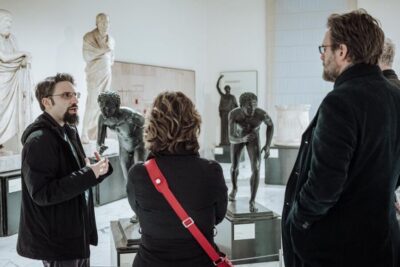
National Archaeological Museum of Naples Guided Tour
Read our review →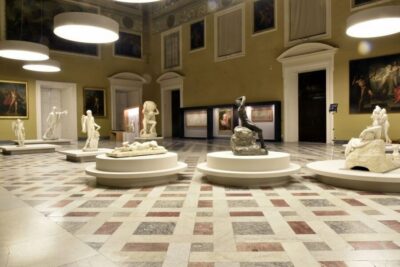
National Archaeological Museum Tour & Digital Guide
Read our review →

Skip the Line: National Archaeological Museum of Naples Entry Ticket
Read our review →

Naples Archaeological Museum 2-Hour Guided Private Tour
Read our review →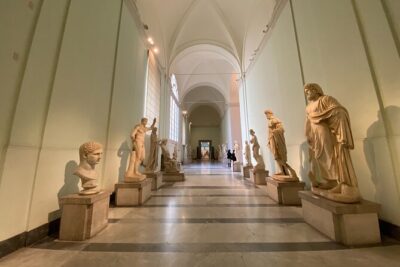
Private Tour of the National Archaeological Museum of Naples
Read our review →Browse the lists this tour appears in