
Reviewed · ARCHAEOLOGICAL MUSEUM TOURS
NAPLES: MANN, National Archeological Museum of Naples
The most surprising thing about Naples’ National Archaeological Museum is how much of the ancient world sits under one roof. You can move from Alexander the Great in battle, shown in dazzling mosaics, to colossal Roman sculpture, Pompeian household objects, jewelry, pottery, and the famously discreet Secret Cabinet.
I like the small group, capped at nine, because a guide can speak clearly without shouting across a crowd. I also like the focus on the museum’s essential works, especially the Farnese Bull and the mosaics linked to Pompeii and Herculaneum. The main drawback is the price, $202.84 per person for about two hours. It makes the most sense if you want expert interpretation rather than a quick walk through the galleries.
In This Review
- Key points at a glance
- Why the MANN deserves two focused hours
- Alexander mosaics and the drama of Pompeii
- The Farnese Bull and the museum’s grand scale
- Beyond mosaics: pottery, jewelry, and daily life
- The Secret Cabinet and ancient erotic art
- What Anna adds to the museum experience
- Meeting at Piazza Museo at 9:00 am
- Is $202.84 per person a fair price?
- Who should book this MANN visit?
- Practical details before you book
- Should you book the MANN tour?
- FAQ
- How long does the MANN tour last?
- Where does the experience begin?
- What time does the tour start?
- Is museum admission included?
- How large is the group?
- Is hotel pickup included?
Key points at a glance
- Alexander mosaics: See battle scenes that connect museum art with the world of Pompeii and ancient Rome.
- Farnese Collection highlights: Go directly to major sculpture, including the enormous Farnese Bull.
- The Secret Cabinet: Learn about the museum’s collection of ancient erotic art in its historical setting.
- Anna’s Neapolitan perspective: The guide brings local knowledge and a strong connection to the city’s ancient sites.
- Small group of up to nine: You should hear the explanation clearly and have a better chance to ask questions.
- Central meeting point: Start at Piazza Museo at 9:00 am, with admission included and no hotel transport.
Why the MANN deserves two focused hours
The Museo Archeologico Nazionale di Napoli, usually called MANN, is not a quick stop for one famous statue. Its collections cover art and daily objects from Pompeii, Herculaneum, and Imperial Rome, along with major Greek and Roman sculpture.
That range is what makes the museum so useful before or after a visit to Pompeii. At the ruins, you see streets, villas, walls, and spaces left in place. At MANN, you see many of the objects and artworks that help explain how those places looked and functioned. The museum gives context to the ancient cities, while Pompeii and Herculaneum give that context a physical setting.
With only two hours, you will not see every room. That is not a flaw in the experience. It is a sensible limit for a museum this large. A good guide helps you avoid spending half your visit on pieces that happen to be near the entrance, then rushing through the works that matter most.
The visit is designed around some of the museum’s strongest highlights. You can expect the guide to connect the mosaics, sculpture, ceramics, pottery, and jewelry to ancient life rather than treat them as unrelated objects. That approach is especially helpful if your knowledge of Greek and Roman art is limited.
More Archaeological Museum visits:
- Naples: National Archaeological Museum Ticket & Audio App
★ 4.4 · 617 reviews - Naples: National Archaeological Museum of Naples Guided Tour
★ 4.8 · 498 reviews - Naples: National Archaeological Museum Tour & Digital Guide
★ 4.2 · 177 reviews
Alexander mosaics and the drama of Pompeii
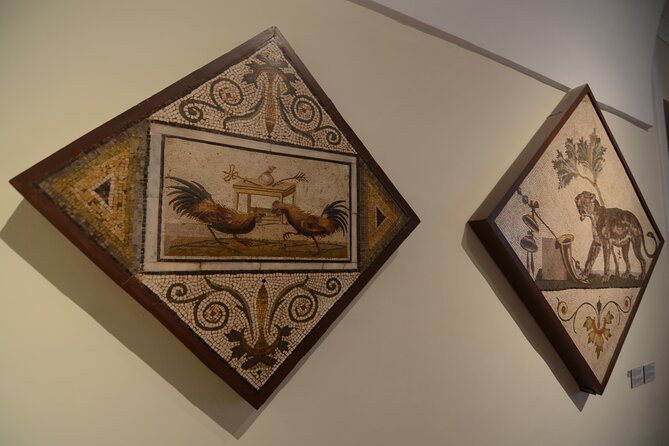
The mosaics are one of the clearest reasons to choose a guided visit. Scenes of Alexander the Great in battle are not just decorative floor pictures. They are crowded with movement, weapons, horses, faces, and moments of tension. A guide can point out what you are seeing and explain why these scenes mattered to the people who commissioned them.
The connection to Pompeii is important. You are not looking at distant art with no link to the city outside Naples. These works help show the taste, wealth, and cultural interests of the people who lived in Roman Campania.
I would pay close attention here, even if mosaics are not normally your first choice in a museum. They reward a few minutes of careful looking. Tiny pieces of stone and glass create effects that can be hard to appreciate when you rush past them with a map in hand.
The guide’s storytelling also matters. Anna, identified as a lifelong Neapolitan, is especially well placed to connect the objects with Pompeii and Herculaneum. Her role is not simply to name the material and date. The aim is to make the ancient sites feel more like lived places.
The Farnese Bull and the museum’s grand scale
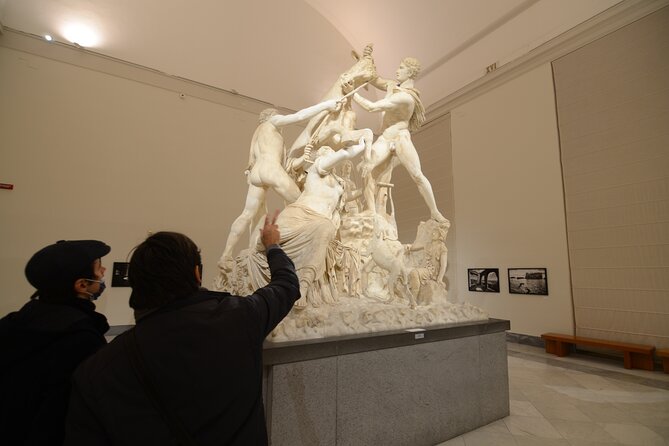
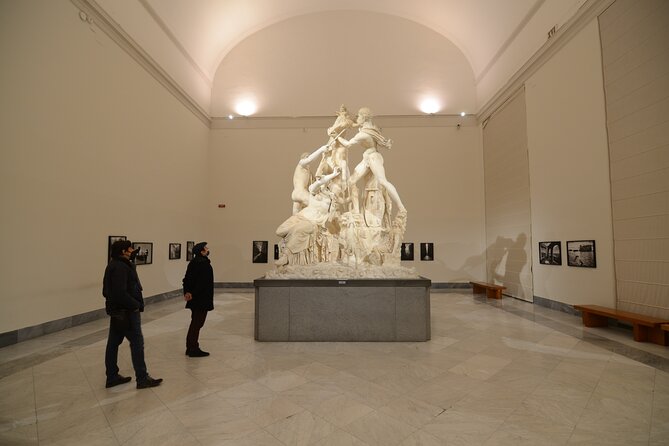
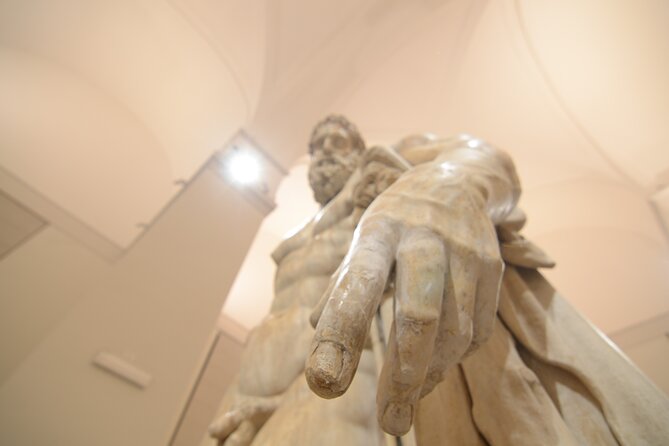
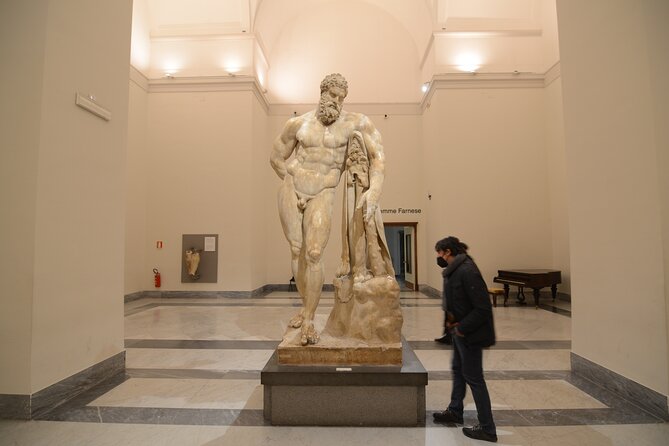
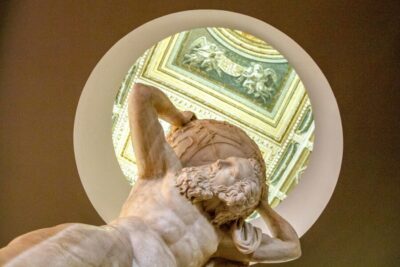
The Farnese Collection gives the visit a different mood. Here, the scale is often overwhelming. The Farnese Bull is the headline work, a huge sculpture that rewards a moment spent taking in its size, figures, and complicated composition.
You do not need to be an art expert to appreciate why this piece matters. Its physical presence is part of the experience. A guide can help you look beyond the first reaction of that is enormous and notice how the figures are arranged and how the story unfolds through the sculpture.
The Farnese displays also make an important point about the museum. MANN is not only a place for delicate mosaics and small objects from Pompeii. It also houses powerful Roman sculpture and works intended to impress through scale and drama.
The route’s focus on major Farnese works is valuable if you have limited time in Naples. You get a clear sense of the collection without needing to plan a long list of room numbers yourself. The tradeoff is that a two-hour visit cannot give equal attention to every section.
Beyond mosaics: pottery, jewelry, and daily life

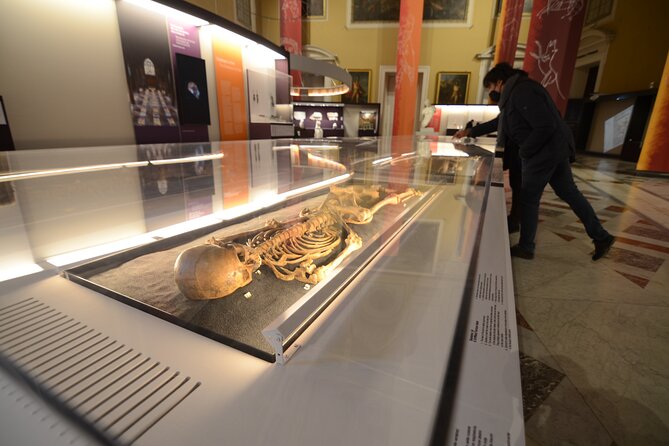
One of the best features of this museum visit is the change of scale from monumental sculpture to personal objects. Ancient jewelry, ceramics, and pottery can tell you things that a giant statue cannot. They offer clues about decoration, craft, eating, storage, and personal style.
These pieces also help you imagine the people behind the famous buildings. Pompeii is often presented through disasters and ruins, but the museum’s smaller objects bring attention back to ordinary routines and celebrations. That gives the visit a more human balance.
You should expect the guide to point out more than the advertised headline works. The museum contains plenty beyond the mosaics, and the value of a good explanation is often greatest with objects you might otherwise pass without noticing.
This is where the tour can be particularly useful for first-time museum visitors. You do not need to arrive with a firm plan or a long list of artists. The guide provides a path through the collection and explains why a less famous item deserves your attention.
More museums and sites in Naples:
- Naples: National Archaeological Museum audio guide
★ 4.0 · 155 reviews - Capodimonte Museum in Naples
★ 4.0 · 115 reviews - Sant’Aspreno ai Crociferi: Church & Jago Museum Guided Tour
★ 4.9 · 86 reviews - Skip the Line: National Archaeological Museum of Naples Entry Ticket
★ 3.5 · 82 reviews
The Secret Cabinet and ancient erotic art
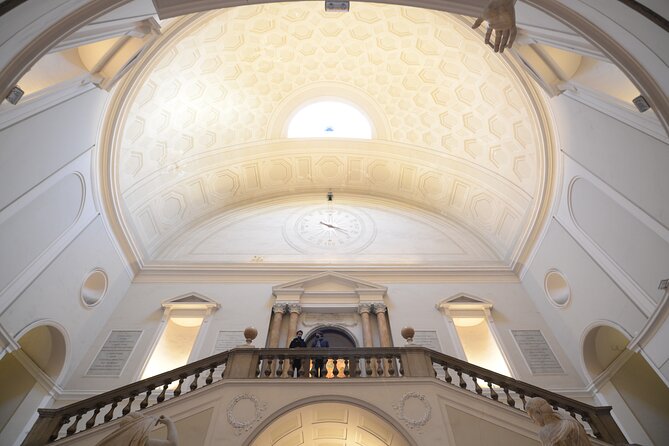
The Secret Cabinet is one of the museum’s most talked-about sections. It contains ancient erotic art, and the guide gives you the background needed to understand why these objects were treated differently from other parts of the collection.
This is not simply a novelty stop. The collection raises useful questions about Roman attitudes toward sex, humor, private decoration, and public morality. The name itself reflects the complicated way such material was classified and displayed over time.
The subject may not suit every visitor, particularly families looking for a strictly conventional art tour. Still, if you are interested in how ancient people celebrated life and handled private subjects, this section adds a memorable layer to the visit.
The guided setting is helpful here because context matters. Without explanation, some objects can seem strange, comic, or merely provocative. With a guide, you can place them within the larger story of ancient culture and the museum’s collecting practices.
What Anna adds to the museum experience
Anna is named as the guide for this experience, and her connection to Naples is a real advantage. A lifelong Neapolitan can place the museum within the city rather than treating it as an isolated building full of old objects.
Her approach is described as blending historical knowledge with the artifacts themselves. That is exactly what you want at MANN. The best museum commentary moves back and forth between the object in front of you and the ancient city it came from.
A guide also keeps the visit moving. Two hours sounds generous until you enter a major archaeological museum. There are large sculptures, small cases, mosaics, ceramics, and entire collections competing for your attention. A focused route prevents the visit from turning into a tiring march through galleries.
The group size helps. With no more than nine participants, you should be able to hear the guide clearly and ask a question without stopping a large crowd. The activity is described as private, so only your group participates, though the stated maximum is nine people. That arrangement works well for families or friends who want a shared visit, while the small limit keeps the discussion manageable.
Meeting at Piazza Museo at 9:00 am
You meet at Museo Archeologico Nazionale di Napoli, Piazza Museo, 19, at 9:00 am. The activity ends back at the same meeting point, so you do not need to arrange a separate pickup or find the guide at another part of Naples.
The central location is practical if you are staying near public transportation. It is less convenient if you are arriving from a cruise ship. The museum can be too far to walk comfortably from the port for a morning meeting, so plan transportation rather than assuming you can simply stroll there.
After the visit, walking back toward the port is more manageable because the route is downhill, but that does not solve the problem of reaching the museum on time. This is an important planning detail for cruise passengers. Allow enough time for transport and finding the entrance.
Hotel pickup and drop-off are not included. Food and drinks are also your responsibility. A new cafe at the museum provides an option for a quick bite after the visit, but you should not count on refreshments being part of the guided experience.
Is $202.84 per person a fair price?
At $202.84 per person, this is an expensive two-hour museum visit. Admission is included, as is a professional guide, but food, drinks, and transportation are not. The price is easiest to justify when you place a high value on interpretation and time saved.
If you are comfortable reading museum labels, planning your own route, and spending longer in the galleries, a self-guided visit may offer better value. MANN is a substantial museum, and independent visitors can take their time rather than follow a two-hour route.
I see the price differently for a visitor with limited time in Naples. You get a small group, a clear focus on important collections, and a guide who can connect the museum to Pompeii and Herculaneum. That can prevent the common problem of leaving a major museum unsure about what you actually saw.
The value also improves if you are traveling with a private group that wants the guide’s full attention. The activity is limited to your party, up to nine people, rather than placing you in a large crowd. For solo visitors or couples, the cost is harder to defend unless guided museum time is a top priority.
The strong rating of 4.7 from 19 ratings supports the idea that the guide quality is central to the experience, but it is still a modest number of ratings. I would treat the tour as a premium introduction, not as an all-day museum solution.
Who should book this MANN visit?
I would recommend it to you if you want a structured introduction to ancient art and plan to visit Pompeii or Herculaneum. The guide’s links between the objects and those sites can make the rest of your archaeological sightseeing easier to understand.
It is also a good fit if you find large museums tiring or confusing. The focused route gives you a manageable two hours and places the key works in a sensible story. Families with older children may appreciate the mix of battle scenes, giant sculpture, daily objects, and the Secret Cabinet, though the erotic material should be considered before booking.
Art enthusiasts will get the most from the experience, especially those interested in Greek and Roman sculpture, mosaics, ceramics, jewelry, and ancient customs. You do not need specialist knowledge, but you should want explanation rather than a fast photo stop.
I would be less inclined to book it if you have several hours to explore alone, prefer a quiet self-guided visit, or are mainly interested in one narrow collection. The tour is built to show the museum’s major themes, not to provide a detailed study of every gallery.
Practical details before you book
Confirmation arrives at booking, and free cancellation is available if you cancel at least 24 hours before the local start time. Changes or cancellations made within that final 24-hour period are not accepted for a refund.
The tour is offered in English. Mobile tickets are available, service animals are allowed, and the museum is near public transportation. The provided information says most people can participate, but it does not give detailed room-by-room accessibility information, so contact the provider if you need specific assistance.
Plan to arrive ready for a 9:00 am start at Piazza Museo. Since there is no hotel pickup, build your own transport time into the morning, especially if you are coming from the cruise port.
Should you book the MANN tour?
Book this experience if you want the museum’s greatest hits explained by a local guide, especially Anna, and you like the idea of moving from Alexander mosaics to the Farnese Bull, then on to ancient jewelry, pottery, and the Secret Cabinet.
Skip it if you are counting every euro, have plenty of time for an independent visit, or want to explore every collection at your own pace. For a premium two-hour introduction, the strongest reasons to book are the nine-person limit, the museum’s huge range, and the connection to Pompeii and Herculaneum. Those are the details that turn a famous museum into a more understandable visit.
FAQ
How long does the MANN tour last?
The guided visit lasts approximately two hours.
Where does the experience begin?
It begins at the Museo Archeologico Nazionale di Napoli, Piazza Museo, 19, 80135 Napoli NA, Italy.
What time does the tour start?
The start time is 9:00 am.
Is museum admission included?
Yes. The entrance ticket is included in the experience.
How large is the group?
The group is limited to a maximum of nine participants, and the activity is private to your group.
Is hotel pickup included?
No. Hotel pickup and drop-off are not included. Food and drinks are also not included.
Just added around Naples
- Full-Day Tour of the Amalfi Coast and Pompeii from Naples★ 4.5 · 3 reviews
- The Ultimate Neapolitan Cooking Class with Local★ 5.0 · 3 reviews
- Naples: Old City Center Street Food Tour with Spritz★ 4.7 · 3 reviews
- Visit in Pompeii – Naples Private Tour with Ada★ 5.0 · 3 reviews
- Transfer from Naples to Sorrento or viceversa★ 5.0 · 3 reviews
- Naples: National Gallery of Capodimonte Tour★ 5.0 · 3 reviews
- Visit 2 wine producers with tasting and transportation included★ 5.0 · 3 reviews
- Pompeii Vesuvius Sorrento from Naples★ 5.0 · 3 reviews
Archaeological Museum Tours, compared.
National Archaeological Museum Ticket & Audio App
Read our review →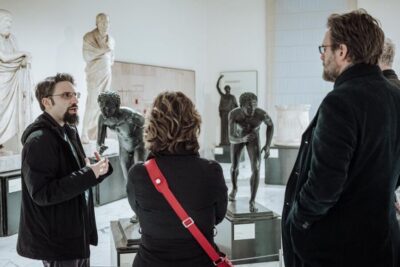
National Archaeological Museum of Naples Guided Tour
Read our review →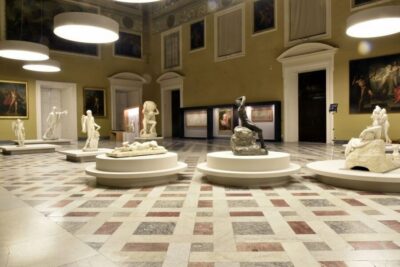
National Archaeological Museum Tour & Digital Guide
Read our review →

Skip the Line: National Archaeological Museum of Naples Entry Ticket
Read our review →

Naples Archaeological Museum 2-Hour Guided Private Tour
Read our review →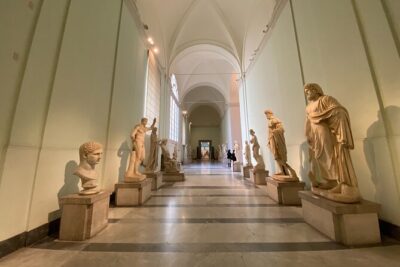
Private Tour of the National Archaeological Museum of Naples
Read our review →Browse the lists this tour appears in