
Reviewed · POMPEII TOURS
Pompeii: Skip-the-Line Entry Ticket with Audio Guide or Tour
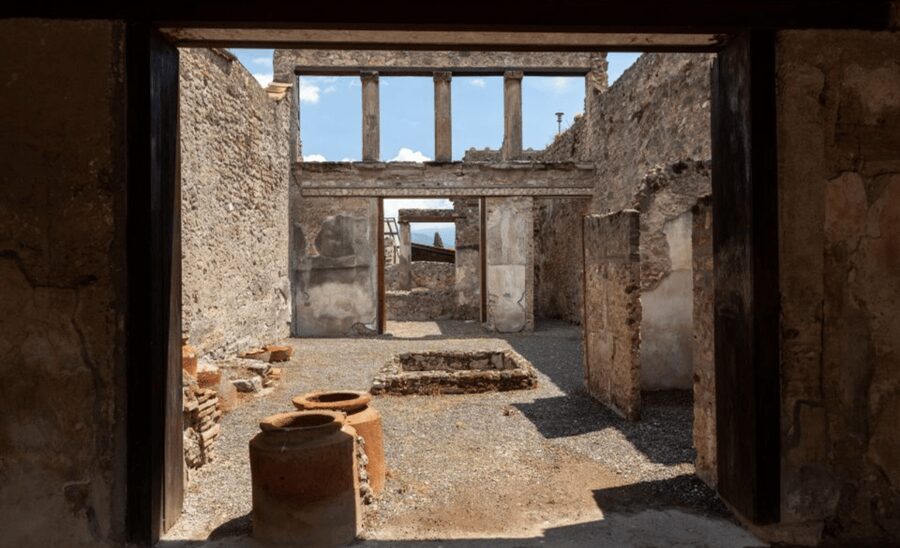
Pompeii is most powerful when you walk its actual streets and suddenly recognize a bakery, bathhouse, theater, or private home preserved by the eruption of Mount Vesuvius in 79 C.E. This skip-the-line ticket gets you past the ticket queue, leaving more energy for the enormous archaeological site.
I like two things here: the ticket pickup point is close to the entrance, and you can remain inside after a two-hour guided visit to see more on your own. The phone-based audio guide also lets you set your own pace, which works well when you want to pause at a mosaic or linger over the view of Vesuvius.
The main drawback is the audio app. It can be useful and clear, but automatic playback and GPS locating have not always worked well. If you want a smooth story and help finding the best route, the live art historian tour is the safer choice.
In This Review
- Key points to know before you book
- Arriving at Piazza Esedra and collecting your ticket
- Choosing between the audio guide and live tour
- Walking Pompeii’s streets and Forum
- Houses, mosaics, and the texture of daily life
- Theaters, markets, and the city’s public life
- Plaster casts and the eruption of 79 C.E.
- How long to stay and what the two-hour plan really means
- Is the $37 price good value?
- Who should choose this Pompeii visit?
- Should you book it?
- FAQ
- Where do I collect the Pompeii entry tickets?
- Does the ticket let me skip the ticket line?
- What languages are available for the live guided tour?
- What languages are available for the audio guide?
- Do I need my own phone and headphones?
- How long does the experience last?
- Are Pompeii’s suburban villas included?
- Can I cancel the booking?
- Can I reserve now and pay later?
Key points to know before you book
- Fast entry from Piazza Esedra: Exchange your voucher at the Vox City information point in front of Hotel Vittoria, close to the archaeological entrance.
- Two ways to explore: Choose the self-guided audio option or a live tour in English, Spanish, or Italian.
- Pompeii is much larger than it first appears: Plan for at least two hours, though you can spend four hours or more inside.
- The audio guide uses your phone: Bring a charged smartphone, headphones, and enough battery for a long walk.
- The live guides add useful direction: Guides such as Grace, Mario, and Maria have led visits, with clear explanations and help moving through busy areas.
- Suburban villas are not included: Villa of the Mysteries, Villa of Diomedes, and Villa Regina require separate access.
Arriving at Piazza Esedra and collecting your ticket
Your first task is not entering Pompeii. It is finding the Vox City information point at Piazza Esedra, in front of Hotel Vittoria. The stand is close to the excavations entrance, so this is a much easier meeting arrangement than one that sends you searching through a nearby town.
Show your voucher at the desk and exchange it for the official entry ticket. The process is usually quick, and staff can point you toward the correct gate. Still, allow a little extra time. A few minutes spent finding the stand is better than rushing to a fixed tour departure.
The fast-track benefit applies to the ticket queue. It does not mean you can ignore the meeting instructions or walk straight through with only the voucher on your phone. Keep the voucher ready, and arrive about five minutes before the booked time if you have selected the guided option.
This arrangement is especially useful on a busy day, when the ticket line can eat into your limited time. In quieter winter conditions, you might find the regular line manageable, but the pre-booked ticket still removes uncertainty from your morning.
More ways to see Pompeii:
- From Naples: Pompeii Ruins & Mount Vesuvius Day Tour
★ 4.3 · 11,459 reviews - Naples or Sorrento: Full-Day Pompeii and Mount Vesuvius Tour
★ 4.6 · 4,235 reviews - Pompeii & Mt.Vesuvius Day Tour from Naples with Pizza Lunch
★ 4.0 · 2,901 reviews
Choosing between the audio guide and live tour
The self-guided option gives you the most freedom. The audio commentary is available in English, French, Spanish, German, and Italian, and the digital map lets you select points of interest as you walk.
The guide is not a strict route. Think of it as a collection of short explanations attached to buildings and locations. You can walk toward the Forum, tap a house on the map, listen to a description of a bath complex, then stop the commentary while you take photographs.
That freedom is a real advantage for families and independent-minded visitors. You are not required to keep up with a group, and you can spend extra time at places such as the House of the Faun. Short sections may also suit younger visitors better than a long lecture.
The weak spot is navigation. Some audio sections do not match the names or numbers used at the archaeological site, and the app can require manual selection. Automatic playback has worked for some people but not for everyone, so do not rely on the audio starting by itself as you enter a new area.
Download the guide before you arrive by scanning the QR code on your voucher. Bring headphones and a fully charged phone. The site is large, and repeated map use, GPS functions, and audio playback can drain a battery quickly. A portable battery is a sensible extra, although it is not listed as an included item.
The live tour is the better choice if Pompeii feels confusing or if you want a clear two-hour route. The guide can explain why a building matters, point out details you might walk past, and adjust the pace when crowds form.
The tour languages are English, Spanish, and Italian. Guides have included Grace, Mario, and Maria, and the experience has also included radio headsets that made it easier to hear in crowded areas. One especially experienced guide had spent 45 years at Pompeii, a reminder that the quality of a live visit can depend greatly on the person leading it.
You can still remain inside after the guided portion ends. That makes the live option more useful than a simple two-hour cutoff. Take the organized introduction, then continue alone toward areas the group did not reach.
Walking Pompeii’s streets and Forum
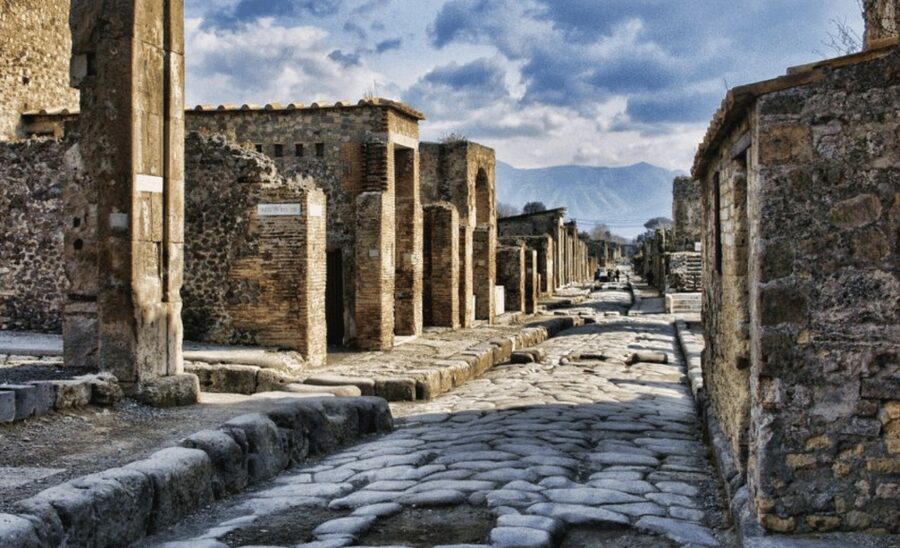
Once inside, Pompeii rewards slow walking. The streets are uneven, broad in some places and tight in others, with large blocks of homes, public buildings, shops, and religious sites spread across roughly 44 to 50 hectares.
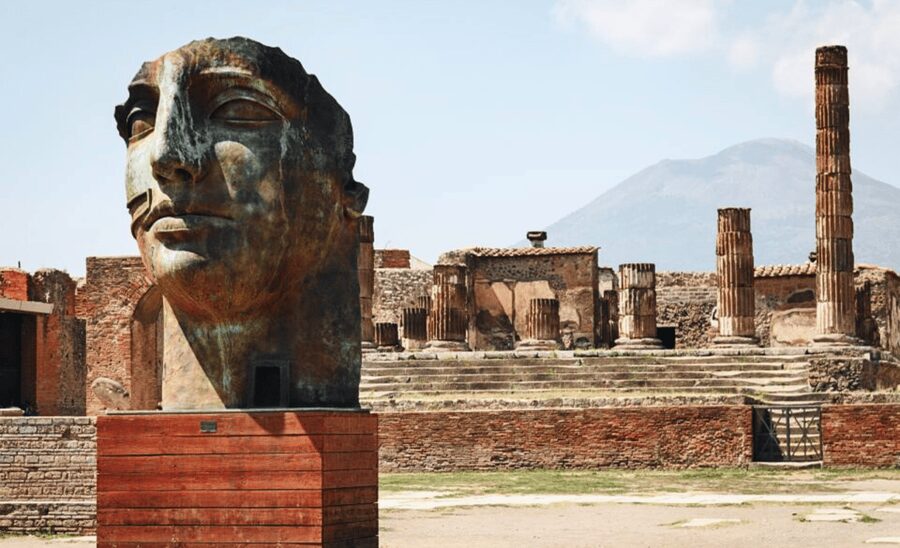
The Forum is the natural anchor. This open public space gives you a sense of Pompeii as a functioning Roman city rather than a collection of disconnected ruins. With Mount Vesuvius visible behind it, the setting connects the everyday life of the city with the disaster that ended it.
The temples of Venus, Apollo, and Jupiter help you read the religious center of Pompeii. Their remains are not simply photo stops. They show how public life, ceremony, politics, and architecture came together in the heart of the city.
You will also pass aqueduct remains and fountains. These modest details are easy to overlook, but they help explain how water moved through the city. Pompeii becomes more understandable when you notice these practical systems alongside the grand temples.
The site map matters here. The audio app may list more than 100 points of interest, which sounds helpful until you realize that you cannot see everything during a short visit. Without a map or a planned list of priorities, you might loop back through the same streets or miss the buildings you most wanted to see.
Houses, mosaics, and the texture of daily life
The private homes are among Pompeii’s greatest rewards. The House of the Faun is a major highlight, with its impressive scale and connection to the wealthier side of Roman life.
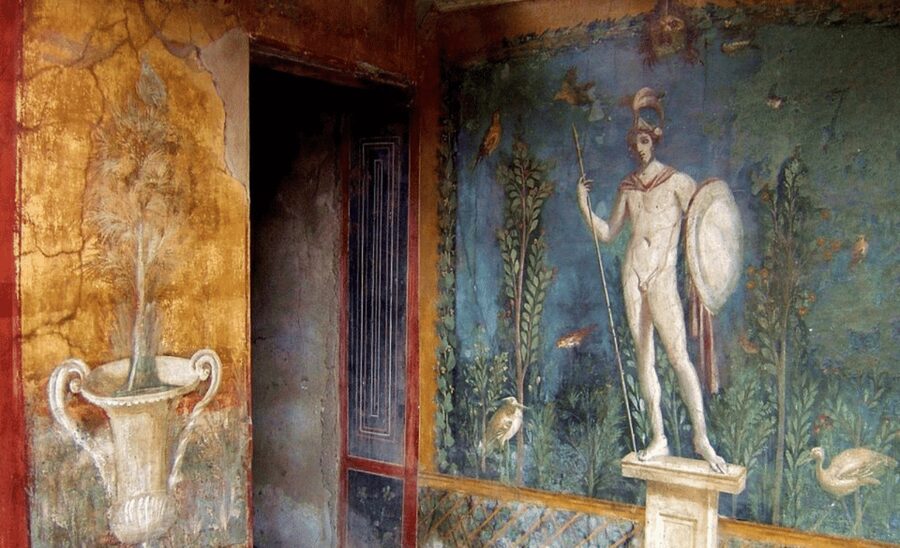
Other residences reveal something less grand but just as important: how people lived. You might see courtyards, painted walls, household spaces, wine jars, and floors decorated with mosaics. These details make Pompeii feel inhabited rather than empty.
At the public baths, look closely at the surviving mosaics and the layout of the rooms. A short audio explanation can help you understand the difference between decorative areas and the practical spaces that supported Roman bathing culture.
Sirico’s house offers a memorable small detail. Inscriptions there include Salve lucru, meaning welcome, profit. Wine jars marked Vesuvinum play on the names Vesuvius and vinum, or wine. These touches show the humor and commercial spirit of the people who lived in the city.
This is where a live guide can add value. An app can tell you what a building is, but a person can direct your attention to the detail that best explains the place. If you choose the audio version, make your own list of major houses and public buildings before walking deep into the site.
A few more Naples trips worth weighing up
- Herculaneum: Skip-the-Line Guided Tour with Archaeologist
★ 4.8 · 3,439 reviews - Mount Vesuvius: Skip-the-Line Ticket and Smart Digital Guide
★ 4.2 · 2,780 reviews - From Naples: Pompeii Skip-the-Line Entry Ticket and Tour
★ 4.4 · 2,753 reviews - From Naples: Pompeii Guided Tour with Skip-the-Line Tickets
★ 4.8 · 1,171 reviews
Theaters, markets, and the city’s public life
Pompeii’s theaters give you another way to understand the scale of the city. The grand theater area offers a useful break from the long streets and creates a strong sense of public entertainment in Roman life.
Markets and commercial spaces add another layer. The city was not only a place of villas and temples. It had shops, wine containers, work areas, public fountains, and streets designed for movement and trade.
The experience description also points to marketplaces that once served local residents. Some areas may be closed or partially restricted on a particular day, so focus on the overall urban plan rather than expecting every room to be open.
The two-hour duration is enough for a strong first look, especially with a guide who keeps you moving. It is not enough to inspect every house, theater, bath, and street. Several people have spent four to six hours inside on this ticket, and the ability to stay after a guided visit makes that possible.
If you have only two hours, concentrate on the Forum, a major villa such as the House of the Faun, the baths, a theater, and the plaster casts. If you have more time, add the smaller streets and residential blocks, where the ordinary shape of the city becomes clearer.
Plaster casts and the eruption of 79 C.E.
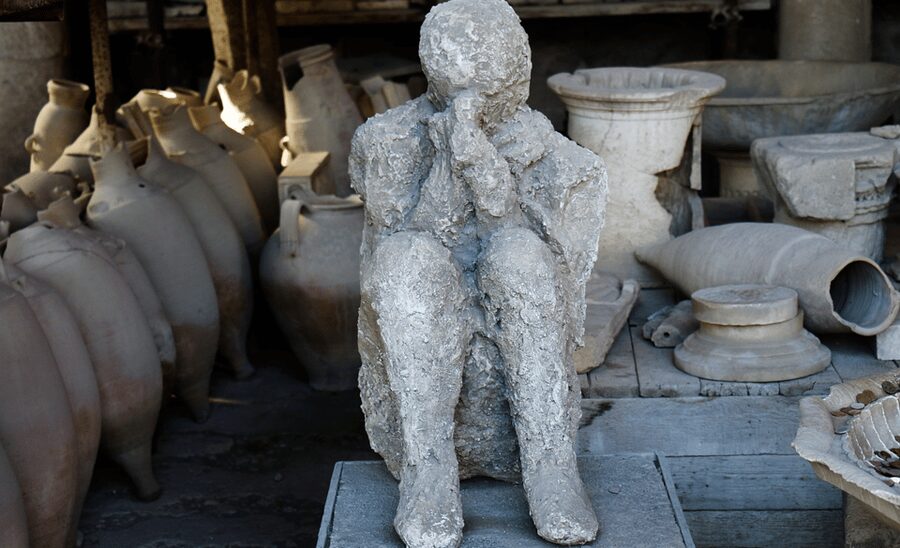
The plaster casts are among Pompeii’s most difficult sights. They preserve the positions of people caught during the eruption, giving the disaster a human presence that the buildings alone cannot provide.
Take your time here. The casts are not a quick curiosity, and the emotional effect can be strong. A live guide can provide context without turning the moment into a dramatic performance, while an audio guide lets you listen privately and move on when you are ready.
The eruption is also the reason so much survives. Ash and volcanic material covered streets, walls, household objects, and bodies. Pompeii was destroyed, but that same burial created an unusually direct record of Roman daily life.
From the Forum and other open areas, you will often have views toward Mount Vesuvius. The mountain is not just a scenic backdrop. It is part of the story you are walking through, and seeing it from inside the ancient city makes the eruption feel less abstract.
How long to stay and what the two-hour plan really means
The advertised duration is two hours, but that describes the planned activity rather than a limit on your time inside. Most people need two to four hours for a useful visit, and you can stay longer if you still have the energy.
A live tour normally uses the booked time slot, so arrive early and be ready to begin. Afterward, continue independently if you want more houses, streets, or viewpoints.
The site can be physically demanding. You may walk over uneven ancient paving and spend much of the visit outdoors. Summer heat can slow you down, while rain can make the day uncomfortable. Bring water, check the forecast, and wear shoes suited to a long walk.
A quiet winter visit can feel wonderfully open, with fewer people around the ruins. On a crowded day, the live guide becomes more valuable because you do not have to spend your time deciding where to go next or waiting for a clear view.
Is the $37 price good value?
At $37 per person, this option costs more than a basic entry ticket. One price reference places Pompeii’s standard ticket at about 19 euros, so part of the extra cost pays for the fast-track arrangement, voucher exchange, and audio or live guiding.
The value depends on what you need. If you only want admission and are visiting during a quiet period, buying directly at Pompeii may cost less and give you enough flexibility. If you are visiting during a busy period, the time saved at the entrance can justify the premium.
The audio guide is a mixed value. It offers short information at many locations and lets you explore without a group, but it is not always easy to operate. If the app fails to download, GPS locating is unreliable, or autoplay does not function, you are paying for a tool you may barely use.
The live option is easier to justify if you want context. A good guide can help you cover the important areas in two hours, explain the buildings in plain language, and prevent the site from becoming a maze of similar-looking walls.
You also receive flexibility from the cancellation terms. You can cancel up to 24 hours before the activity for a full refund, and the reserve-now, pay-later option lets you hold a place without paying immediately. Those policies matter when your Campania plans depend on weather, trains, or a changing Naples schedule.
Who should choose this Pompeii visit?
I would choose the audio option if you want to walk alone, stop often, take photographs, or explore with children who may not last through a long group explanation. It also works for people who already know the basics of Pompeii and mainly want labels and short explanations.
Choose the live tour if this is your first visit, you have only two hours, or you want help understanding what you are seeing. It is also the better choice for anyone who finds map apps frustrating.
This experience suits visitors staying in Naples or nearby Campania who want a straightforward Pompeii entry plan. It is less suitable if your main goal is the suburban villas, since Villa of the Mysteries, Villa of Diomedes, and Villa Regina are not included.
Remember that major finds from Pompeii can also be seen at the Archaeological Museum of Naples. Pompeii gives you the streets and buildings in place. The museum provides another setting for objects removed from the excavation, so the two visits complement each other.
Should you book it?
Book this if skipping the ticket queue matters, you want a nearby pickup point, and you value a choice between a phone guide and a live tour. The live option offers the strongest value for a first visit, while the audio option is worthwhile only if you prepare your phone and are comfortable navigating manually.
I would not pay the $37 price solely for the audio guide during a quiet low-season visit. But on a crowded day, or when your schedule is tight, fast entry and a well-led tour can turn Pompeii from an overwhelming sprawl into a memorable, readable city.
FAQ
Where do I collect the Pompeii entry tickets?
Exchange your voucher at the Vox City information point in Piazza Esedra, in front of Hotel Vittoria. The point is close to the archaeological entrance.
Does the ticket let me skip the ticket line?
Yes. The ticket provides skip-the-line access to the ticket queue. You still need to exchange the voucher for the official entry ticket before entering.
What languages are available for the live guided tour?
The live tour is available in English, Spanish, or Italian. You select the language when booking.
What languages are available for the audio guide?
The audio commentary is available in English, French, Spanish, German, and Italian.
Do I need my own phone and headphones?
Yes. Bring a charged smartphone and headphones. The audio guide is downloaded to your phone by scanning the QR code on your voucher.
How long does the experience last?
The booked activity lasts two hours. Visitors typically spend two to four hours inside Pompeii, and you can remain in the ruins after a guided tour to continue exploring.
Are Pompeii’s suburban villas included?
No. The ticket does not include the Villa of the Mysteries, Villa of Diomedes, or Villa Regina.
Can I cancel the booking?
Yes. You can cancel up to 24 hours in advance for a full refund.
Can I reserve now and pay later?
Yes. The reserve-now, pay-later option allows you to book a place without paying at the time of booking.
More Audio Tours in Naples
- Naples: Royal Palace Entry Ticket with Digital Audio Guide
★ 4.1 · 146 reviews - Vesuvius National Park Skip-The-Line Ticket and Audio Guide
★ 3.4 · 141 reviews - Interactive audio guide for the historic center of Naples
★ 5.0 · 43 reviews - Mount Vesuvius Skip the Line Ticket + Multilingual Audio Guide
★ 4.0 · 32 reviews
More Self-Guided Tours in Naples
- Herculaneum: Skip-the-Line Entry Ticket with Audio Guide
★ 4.3 · 870 reviews - Naples: National Archaeological Museum Ticket & Audio App
★ 4.4 · 617 reviews - Naples: Pompeii Self Guided Audio Tour
★ 3.9 · 211 reviews - Naples: National Archaeological Museum audio guide
★ 4.0 · 155 reviews
Just added around Naples
- Full-Day Tour of the Amalfi Coast and Pompeii from Naples★ 4.5 · 3 reviews
- The Ultimate Neapolitan Cooking Class with Local★ 5.0 · 3 reviews
- Naples: Old City Center Street Food Tour with Spritz★ 4.7 · 3 reviews
- Visit in Pompeii – Naples Private Tour with Ada★ 5.0 · 3 reviews
- Transfer from Naples to Sorrento or viceversa★ 5.0 · 3 reviews
- Naples: National Gallery of Capodimonte Tour★ 5.0 · 3 reviews
- Visit 2 wine producers with tasting and transportation included★ 5.0 · 3 reviews
- Naples: Mozzarella experience★ 5.0 · 3 reviews
Pompeii Tours, compared.

Pompeii & Mt.Vesuvius Day Tour from Naples with Pizza Lunch
Read our review →

Pompeii & Mt Vesuvius All-Inclusive Small Group w/ Lunch
Read our review →


Pompeii & Amalfi Coast Full-Day Trip with Lunch
Read our review →Browse the lists this tour appears in