
Reviewed · HERCULANEUM TOURS
Herculaneum: Skip-the-Line Entry Ticket with Audio Guide
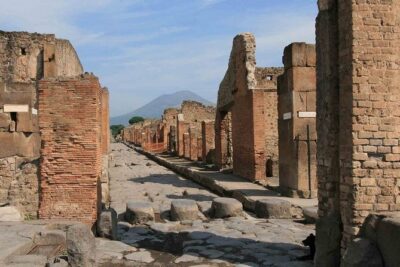
Herculaneum is smaller than Pompeii, but its preserved wooden doors, furniture, mosaics, and painted walls can make the ancient city feel startlingly close. You walk through houses where daily Roman life is easier to picture, then reach the waterfront boathouses, where the final moments of hundreds of people become painfully real.
I like the freedom to set your own pace, and I like the useful mix of a map and recorded commentary. You can spend three hours following the main sights or linger over a single villa without waiting for a group. The $15 price is good value when entry is included, but read the booking choice closely: one option provides only the audio guide, while the ticket must be bought separately.
The audio system takes a little getting used to. Site numbers and audio numbers do not always match, some commentary can jump to another building, and the skip-the-line process has not always been clear. Go early, ask exactly where to collect both the ticket and device, and keep your ID handy.
In This Review
- Key points to know before you go
- Why Herculaneum feels different from Pompeii
- Collecting the ticket and audio device
- Starting with the map and number system
- Houses, frescoes, and the Roman home
- Markets, fountains, temples, and public life
- The waterfront boathouses and the human cost
- How long should you allow?
- Is the audio guide worth using?
- Getting there and choosing your time
- Value, cancellation, and who should book
- Should you book this Herculaneum experience?
- FAQ
- Is entry to Herculaneum included?
- How long does the experience last?
- Is there a live guide?
- Which languages are available for the audio guide?
- Where do I collect the ticket?
- Do I need identification?
- What should I wear?
- Can I explore Herculaneum in any order?
- Can I cancel the booking?
Key points to know before you go
- Herculaneum is compact but exceptionally intact: Allow two to four hours for a relaxed visit, with more time if you want to see every house and the museum.
- The audio guide is self-directed: Choose sights in any order, but expect occasional confusion with building numbers and directions.
- The waterfront boathouses are the most moving stop: The skeletons and boat give the eruption a human scale.
- The $15 price depends on the option selected: Confirm that your package includes both the archaeological park ticket and the audio guide.
- Early arrival pays off: The site is often calmer at opening time, while crowds can build later.
- Wear proper shoes: Cobblestones, uneven ground, and steep steps make sandals and flimsy footwear a poor choice.
Why Herculaneum feels different from Pompeii
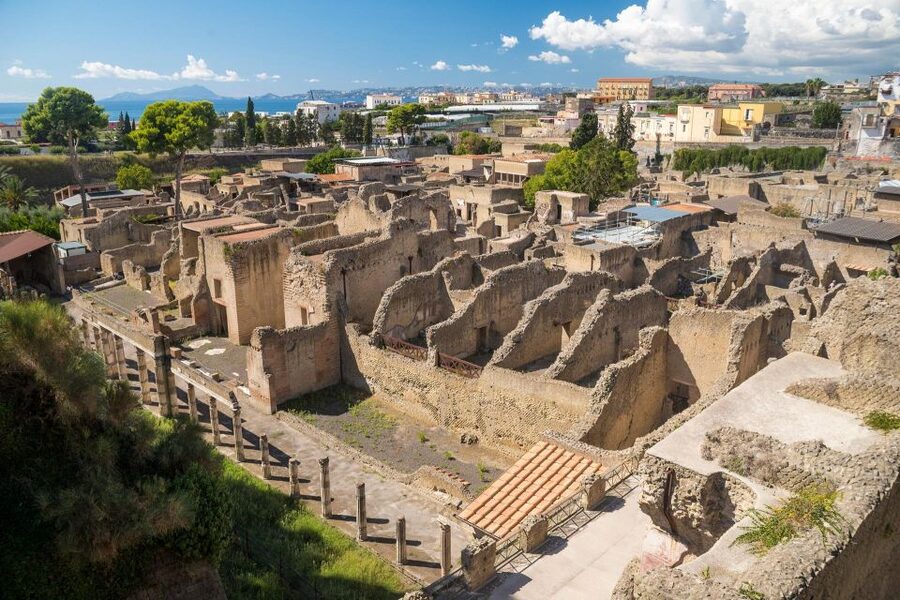
The eruption of Mount Vesuvius in AD 79 destroyed both Pompeii and Herculaneum, but the two sites offer different experiences. Pompeii is enormous and can feel like a full-day or even multi-day project. Herculaneum is more contained, so you can see its main areas in a few hours without feeling that you have missed an entire city.
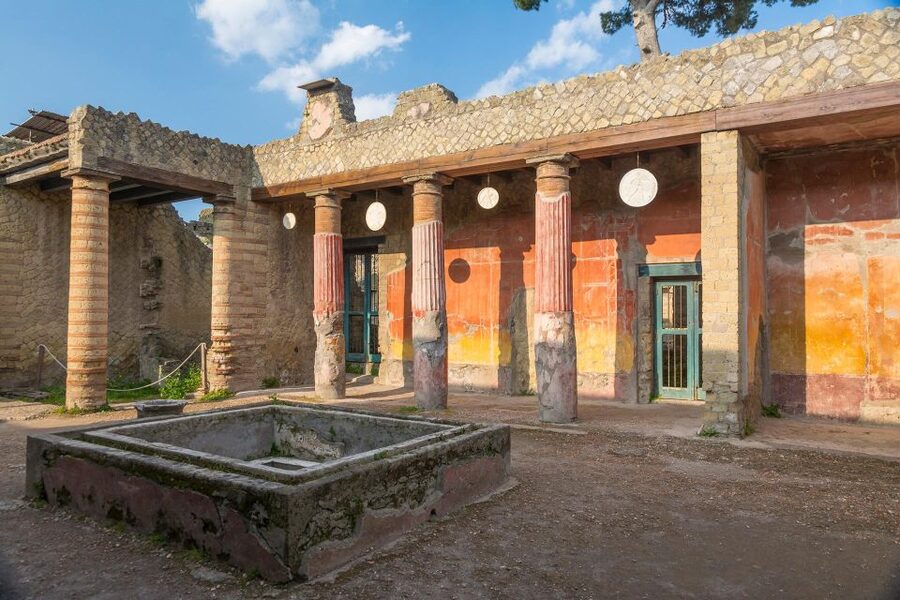
The smaller scale is not the main reason to come. Herculaneum was covered by hot volcanic material that helped preserve details often lost elsewhere. Here you might see wooden doors, beams, painted decoration, mosaics, and household features that make the ruins feel less like bare walls and more like real homes.
I find the houses especially rewarding. You can compare modest rooms associated with enslaved people with grander spaces used by wealthy Roman families. The contrast is not abstract. It appears in the size of the rooms, the decoration, and the care given to floors and walls.
That said, Herculaneum is not a perfectly restored time capsule. Some buildings and exhibits may be closed, and the site does not always make every feature easy to identify. The audio guide helps, but you still need to look carefully and accept that a little guesswork is part of the visit.
More Herculaneum visits from Naples:
- Herculaneum: Skip-the-Line Guided Tour with Archaeologist
★ 4.8 · 3,439 reviews - Herculaneum Small Group Tour and Ticket With an Archaeologist
★ 5.0 · 994 reviews - From Naples: Pompeii & Herculaneum with Archaeologist Guide
★ 4.8 · 665 reviews
Collecting the ticket and audio device
The stated meeting point is the Herculaneum ticket office. In practice, you should look for the appropriate office and ask staff where to handle each part of your booking. The process can involve more than one desk, especially if you need to collect the audio device and confirm your entry ticket.
This is where the phrase skip the line needs a little caution. Some people have entered quickly with no queue at all. At other times, the route was unclear, with visitors sent between the ticket office, an audio-guide desk, and a bookshop before being directed back toward entry.
The problem is not always the length of the queue. In quieter periods, there may be only a few people ahead of you, so the time saved is limited. In a busy season, however, clear instructions matter much more. Show your voucher at the ticket office, ask where the audio guide is issued, and confirm that you have the correct ticket before walking away.
You may need to leave a form of identification as security for the audio device. A passport, identity card, and, according to one practical report, an insurance card may be accepted. Bring an official ID and ask what the desk requires that day.
If your confirmation says Herculaneum: Audio Guide no ticket, you have not bought admission. You will need to purchase the archaeological park ticket separately. This is the single most important booking detail, since the advertised $15 value applies differently depending on the option you select.
Starting with the map and number system
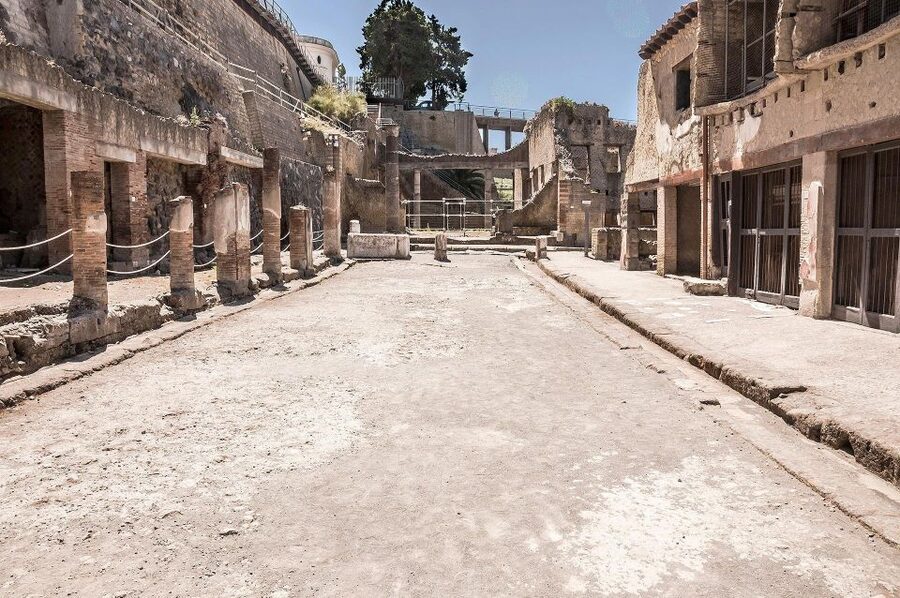
Once inside, take a few minutes to study the map before pressing play. The map is meant to help you locate the market, fountains, theatre, temples, villas, and other marked buildings, but the audio numbers are not always perfectly aligned with the physical signs.
The device or app lets you select points of interest rather than forcing you along one fixed route. That is a real advantage. You can follow the main path, skip a crowded building, or return later to a house that caught your eye.
The trade-off is that the system demands attention. A number shown on the guide may not match the number you see on the site, and some commentary can begin halfway through a description or appear to refer to another building. The guide is best treated as a helpful companion rather than a precise GPS navigator.
The audio is available in English, French, German, Italian, and Spanish. Some people found the sound too quiet, while others found the handheld unit easy to use. One version can work with headphones or earbuds, but Bluetooth support may not be available on every device. Ask at collection if you plan to use your own earphones.
Houses, frescoes, and the Roman home
The villas are the heart of the visit. Herculaneum gives you a strong sense of how Roman homes were arranged, decorated, and divided by status. The best-preserved spaces still show floor patterns, wall paintings, doors, and architectural details that would be easy to miss without commentary.
The audio guide adds useful context about how Romans lived. You hear about the purpose of rooms, the decoration of domestic spaces, and the social differences between people who shared the same town. This is where a self-guided format works well: you can pause beside a painted wall and let the information sink in instead of keeping pace with a guide.
Look closely at the wood. Original wooden doors and beams are among Herculaneum’s most remarkable survivals, and they change your sense of time. A stone wall can feel distant. A door still showing its original material feels like something made for a person who lived there yesterday, not nearly 2,000 years ago.
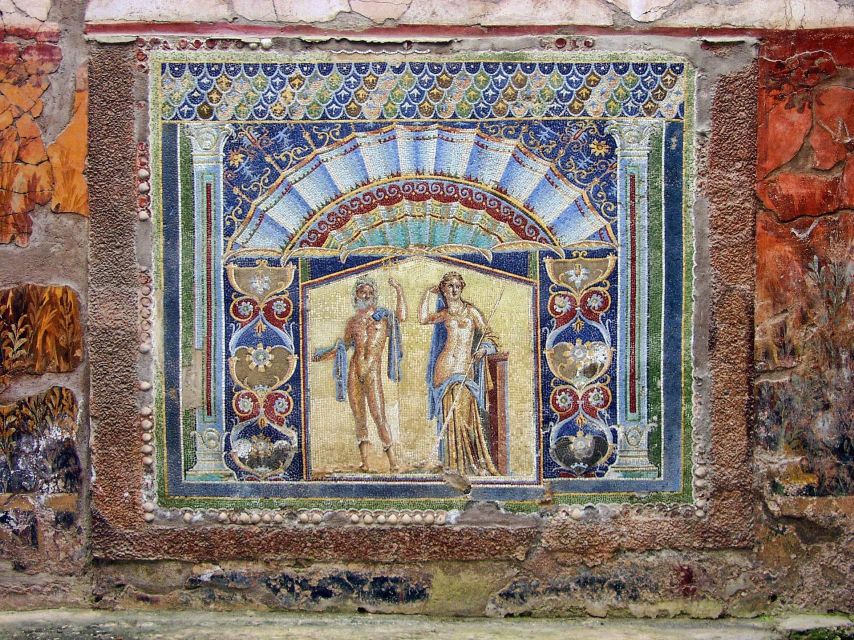
The painted decoration is another major draw. Depictions of ancient gods appear in temple and domestic settings, while mosaics and floor designs show the care given to interiors. The colors may not look exactly as they did before the eruption, but enough survives to show how far Roman homes were from the plain stone rooms often pictured in schoolbooks.
Because some locations lack clear internal signage, listen to the commentary while checking the room in front of you. If the description seems out of place, do not assume you have missed everything. Move on and return after you have become familiar with the site layout.
A few more Naples trips worth weighing up
- Mount Vesuvius: Skip-the-Line Ticket and Smart Digital Guide
★ 4.2 · 2,780 reviews - From Naples: Pompeii Skip-the-Line Entry Ticket and Tour
★ 4.4 · 2,753 reviews - Pompeii: Skip-the-Line Entry Ticket with Audio Guide or Tour
★ 4.1 · 1,364 reviews - From Naples: Pompeii Guided Tour with Skip-the-Line Tickets
★ 4.8 · 1,171 reviews
Markets, fountains, temples, and public life
Herculaneum was not only a collection of private houses. The route also takes you through public and commercial spaces that reveal the town as a working community.
An ancient market helps you picture shopping and food supply in Roman times. Public fountains show how residents obtained water and used shared spaces. Temples and images of ancient gods give the town a religious side, while the theatre points to entertainment and civic life.
These stops matter because the villas alone can make Roman society seem like a story about wealthy homeowners. The market and public buildings widen the picture. You begin to see the town as a place where domestic life, work, worship, and leisure all fitted together.
The map is useful here, especially if you want to avoid simply wandering from house to house. It lets you choose a route that includes both major residences and public areas. Still, do not expect every marked building to be open. Closures have affected the experience, and you may find that a building shown on the plan cannot be entered on the day of your visit.
The waterfront boathouses and the human cost
Save enough energy for the lower section near the ancient shoreline. The waterfront boathouses are among the most powerful places at Herculaneum, not because they are grand, but because they bring the eruption into focus.
This is where about 300 people died while waiting for rescue from the sea. The skeletons are a difficult sight, and the boat displayed nearby makes the scene easier to understand. The disaster stops being a distant date in a textbook. You see people who had gathered in hope, only to be caught by the eruption.
Some visitors prefer to reach this area at the end, after first seeing the streets and homes. That order creates a quiet emotional shift from ordinary life to catastrophe. Others find it better to visit early, before the site becomes busier. The audio guide gives background, but you should allow yourself time without commentary here.
There is also an antiquarium or museum area near the entrance and exit, with artifacts and furniture connected to the town. It provides useful context after you have seen the buildings themselves. If you are short on time, do not rush past it. The objects help explain what the rooms once contained.
How long should you allow?
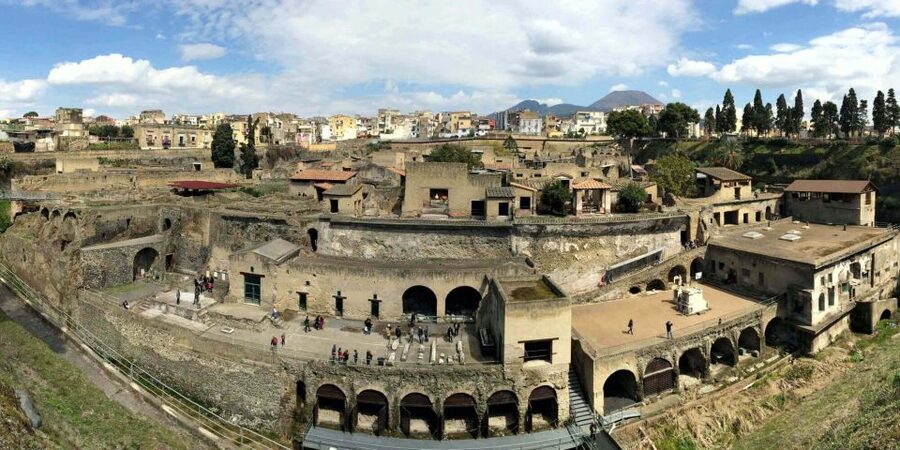
The listed duration is one day, which gives you flexibility rather than requiring a full day inside the ruins. Most people can cover the main sights in two to three hours. If you move slowly, listen to the full commentary, study the frescoes, and visit the museum, four hours is reasonable.
I would plan at least three hours if Herculaneum is your main stop. Two hours can work for a focused visit, but it may feel hurried once you account for the entry procedure, audio-guide collection, and time spent finding the right buildings.
The site offers places to sit, and there are spots suitable for a packed lunch. A café and snack facilities are also available. Toilets have received poor marks, so use facilities when convenient rather than waiting until the last minute.
Comfortable shoes are essential. The ground includes cobblestones, uneven surfaces, and steep steps. You can pause along the way, but this is not a smooth museum floor. Bring water, particularly in hot weather, and use shaded places for longer listening stops when possible.
Is the audio guide worth using?
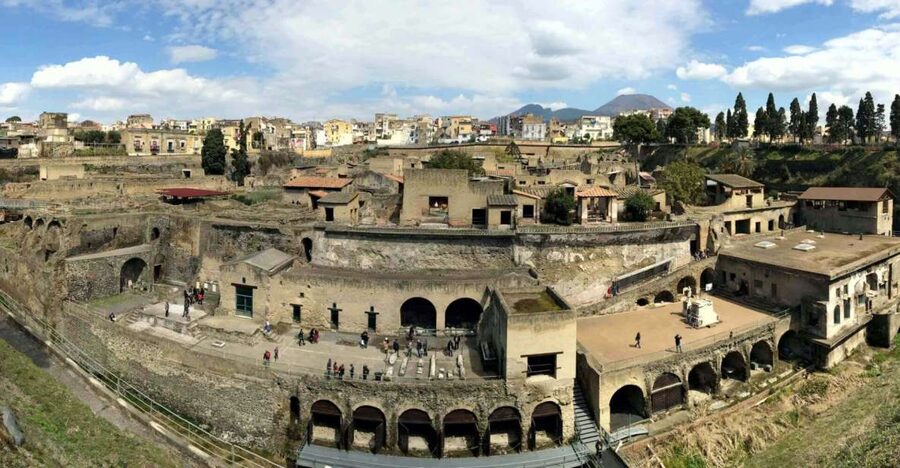
For $15 when admission is included, the audio guide is a sensible choice for independent visitors. It gives you structure without taking away your freedom. The explanations cover Roman domestic life, the eruption, the buildings, and the objects you are seeing.
Its weaknesses are practical rather than intellectual. Numbering can be inconsistent, some directions are hard to follow, and a few recordings may need updating. The sound may also be quiet, so check the volume before setting off.
A live guide can be better if you want a clear route and someone to answer questions. Optional upgrades have sometimes been offered, with guides including Tony, Fabio, and Amara receiving particularly strong praise for their explanations and pacing. Tony was especially careful on a hot day, stopping for longer talks in the shade. Fabio was praised for explaining the site at a steady pace.
Do not book this audio option assuming a live guide is included. The standard experience is self-guided. If an upgrade is offered, decide based on your priorities: the audio guide gives you independence, while a live guide removes much of the confusion over numbers and closed areas.
Getting there and choosing your time
The site is in Campania and is easy to combine with a Naples-area itinerary. Herculaneum can be reached by EAV train from Naples, with the walk from the station taking about 12 minutes according to the supplied practical information. It can also fit neatly into a day based in Pompeii or a nearby hotel.
Opening-time visits are the safest choice if you want quieter paths and cooler conditions. Crowds can build as the morning continues, though the site often feels calmer than Pompeii. An early start also gives you more freedom to stop at popular houses without blocking other people.
If you have a flight or train later in the day, allow extra time for getting back to the station. The site itself may take only a couple of hours, but the entry desk, audio device, and walk to transport can add time.
The attraction is open for a full day based on availability, but the exact starting time depends on the date you select. Check the schedule before booking, especially if you are coordinating Herculaneum with Pompeii or another Campania sight.
Value, cancellation, and who should book
At about $15 per person, this is strong value if the ticket and audio guide are both included. You are paying for access to one of Italy’s most detailed Roman archaeological sites, plus a way to understand what you are seeing without hiring a private guide.
The value drops if you accidentally choose the audio-only option and then have to buy admission at the entrance. Read the wording carefully, and check the final booking details before payment.
You can cancel up to 24 hours in advance for a full refund, and the reserve-now, pay-later choice keeps your plans flexible. Those terms are useful in Campania, where transport and weather can disrupt a busy itinerary.
This experience suits you best if you like to wander independently, want more explanation than a printed map provides, and can manage uneven ground. It is also a strong choice after Pompeii, since the smaller site offers a different scale and a closer look at preserved interiors.
Should you book this Herculaneum experience?
Book it if you want an affordable, flexible visit and are comfortable solving a few small audio-guide puzzles. Herculaneum rewards patience with unusually intact homes, striking mosaics, painted walls, wooden features, and a moving waterfront display.
Choose a live guide instead if you want a fixed route, immediate answers, or help making sense of every building. If you choose this package, arrive early, confirm that admission is included, collect the map, bring ID, and allow at least three hours. Those simple steps turn a slightly untidy ticket process into a rewarding visit.
FAQ
Is entry to Herculaneum included?
It depends on the option you select. The Herculaneum entry ticket must be selected as an extra when booking the audio-guide-only option, so check your confirmation carefully.
How long does the experience last?
The duration is listed as one day, but you can choose how long to spend inside the park. Allow two to four hours for the archaeological site, depending on your pace and interest in the museum.
Is there a live guide?
No live guide is included in the standard activity. The package provides an audio guide and map, though an upgrade to a guided tour may sometimes be offered.
Which languages are available for the audio guide?
The audio guide is available in English, French, German, Italian, and Spanish.
Where do I collect the ticket?
Show your ticket at the Herculaneum Archaeological Park ticket office. Ask staff where to collect the audio device and confirm the entry procedure before joining a queue.
Do I need identification?
Bring a passport or identity card. A form of identification may be required as security when you collect the audio device.
What should I wear?
Wear comfortable shoes. The site has cobblestones, uneven ground, and some steep steps.
Can I explore Herculaneum in any order?
Yes. The audio guide lets you choose points of interest in the order you prefer. The numbering system can be confusing, so use the map and allow extra time to match the commentary with each building.
Can I cancel the booking?
You can cancel up to 24 hours in advance for a full refund. A reserve-now, pay-later option is also available.
More Audio Tours in Naples
- Vesuvius National Park Skip-The-Line Ticket and Audio Guide
★ 3.4 · 141 reviews - Interactive audio guide for the historic center of Naples
★ 5.0 · 43 reviews - Mount Vesuvius Skip the Line Ticket + Multilingual Audio Guide
★ 4.0 · 32 reviews - Skip the Line Ticket to Herculaneum with Audio Guide
★ 4.0 · 20 reviews
More Self-Guided Tours in Naples
- Naples: National Archaeological Museum Ticket & Audio App
★ 4.4 · 617 reviews - Naples: Pompeii Self Guided Audio Tour
★ 3.9 · 211 reviews - Naples: National Archaeological Museum audio guide
★ 4.0 · 155 reviews - Naples: Royal Palace Entry Ticket with Digital Audio Guide
★ 4.1 · 146 reviews
Just added around Naples
- Full-Day Tour of the Amalfi Coast and Pompeii from Naples★ 4.5 · 3 reviews
- The Ultimate Neapolitan Cooking Class with Local★ 5.0 · 3 reviews
- Transfer from Naples to Sorrento or viceversa★ 5.0 · 3 reviews
- Naples: Old City Center Street Food Tour with Spritz★ 4.7 · 3 reviews
- Visit in Pompeii – Naples Private Tour with Ada★ 5.0 · 3 reviews
- Naples: National Gallery of Capodimonte Tour★ 5.0 · 3 reviews
- Visit 2 wine producers with tasting and transportation included★ 5.0 · 3 reviews
- Naples: Mozzarella experience★ 5.0 · 3 reviews
Herculaneum Tours, compared.
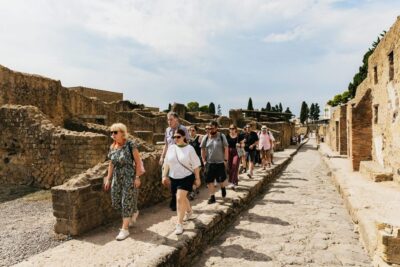
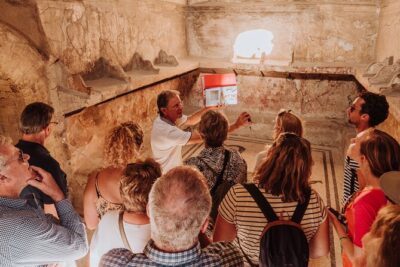
Herculaneum Small Group Tour and Ticket With an Archaeologist
Read our review →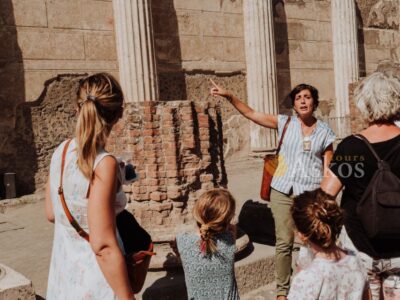
Pompeii & Herculaneum with Archaeologist Guide
Read our review →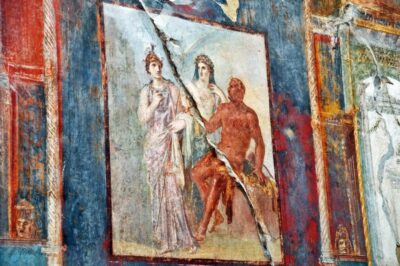
Pompeii, Herculaneum, & Vesuvius Full-Day Tour
Read our review →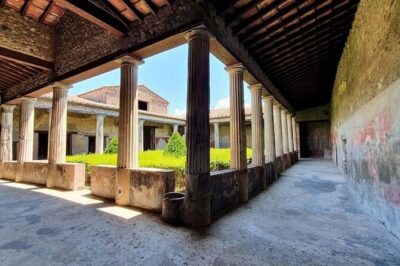
Day Trip of Pompeii, Herculaneum and Vesuvius from Naples
Read our review →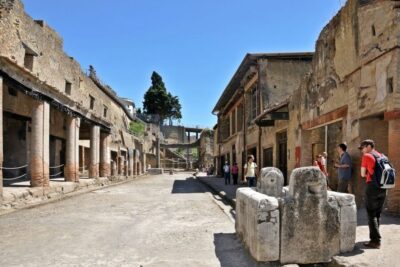
Pompeii & Herculaneum Day Trip from Naples with Lunch
Read our review →
Browse the lists this tour appears in