
Reviewed · POMPEII TOURS
Pompeii: Small-Group Guided Tour with Skip-the-Line Ticket
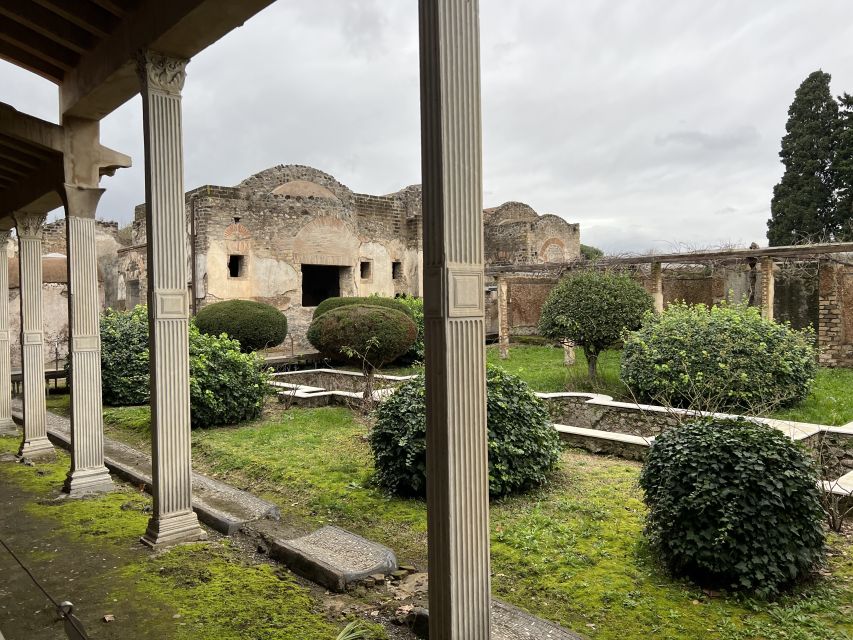
Pompeii is not just a field of broken columns. It is an ancient town you can walk through street by street, past homes, shops, baths, temples, and a forum still marked by the routines of daily life. The eruption of Vesuvius in 79 AD buried the city in volcanic ash, preserving details that make the past feel unusually close. A guide helps turn those details into a story instead of a jumble of ruins.
I like the private-group format, which gives you room to ask questions and lets the guide adjust the pace. I also like the skip-the-line entrance, especially at a site where every minute saved means more time inside the vast archaeological park. Guides including Glauco, Vito, Alessia, Caterina, and Vincenzo have been praised for clear English, humor, and strong command of Pompeii.
The main consideration is time. Two hours is enough for a well-planned introduction, but Pompeii is huge. You will see major highlights, then may want to continue alone. Expect plenty of walking, strong sun, uneven ancient paving, and no hotel pickup.
In This Review
- Key points at a glance
- Why a guide changes Pompeii
- Meeting the guide at Piazza Immacolata
- Entering through the Pompeii Archaeological Park
- The amphitheater and the city’s public life
- The House of the Faun and ancient decoration
- The Temple of Apollo and Pompeii’s religious center
- Vetutius Placidus House and Thermopolium
- The Garden of the Fugitives and the human cost
- Finishing at the Forum
- How much can you really see in two hours?
- Choosing the best start time
- Is the $282.08 price good value?
- What the strongest guide experiences have in common
- Who should book this Pompeii tour?
- Practical details before you go
- Should you book it?
- FAQ
- Where does the Pompeii tour start?
- How long does the guided tour last?
- What is included in the price?
- Is hotel pickup included?
- What language is the tour offered in?
- Can I continue exploring Pompeii afterward?
- What should I bring to the tour?
Key points at a glance
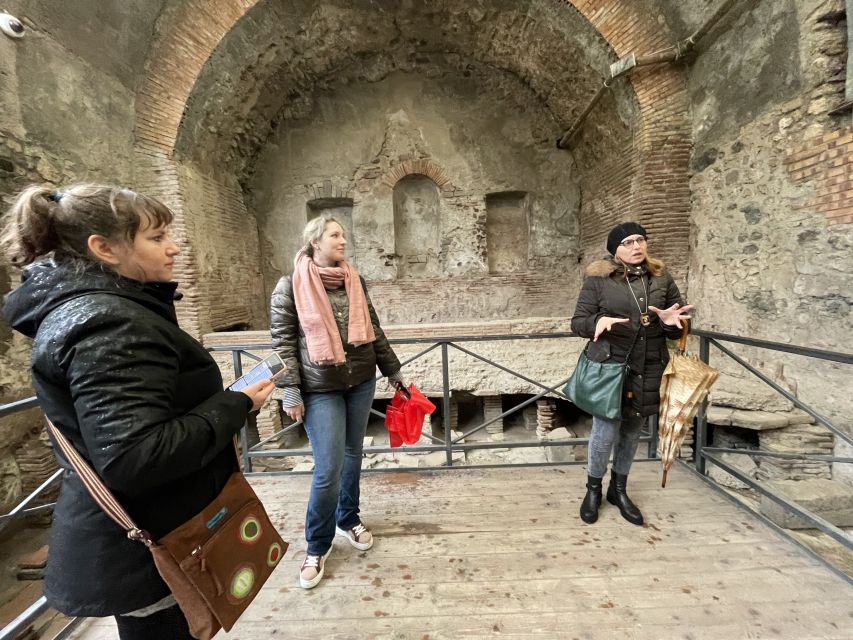
- A private tour for up to two people: The advertised price is $282.08 per group of two, which works out to about $141 per person when shared.
- A fast start at Piazza Immacolata: Meet by the statue of the Virgin Mary, opposite the Piazza Anfiteatro entrance, with the guide holding a Walks In Europe sign.
- Major sights in two focused hours: The route includes the amphitheater, House of the Faun, Temple of Apollo, thermopolium, Garden of the Fugitives, and forum.
- Plaster casts and ordinary Roman life: You see both the tragedy of the eruption and the kitchens, shops, baths, mosaics, and homes of a working town.
- Guides who adapt to the group: Glauco, Vito, Alessia, Alyssia, Laura, Giovanni, and others are praised for answering questions and changing the route to avoid crowds.
- Useful timing advice: Early tours can beat the heat and crowds, while a 4 p.m. start may offer cooler conditions and fewer people.
Why a guide changes Pompeii
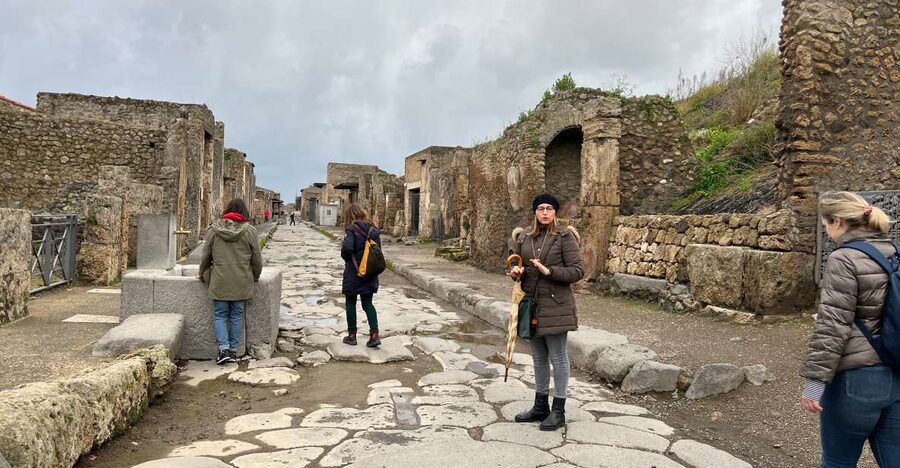
Pompeii can look easy at first. Follow the stone streets, peek into a courtyard, admire a mosaic, and keep walking. But without context, the site can become a long parade of walls with no clear sense of what happened in each building.
A good guide gives those walls a purpose. You learn how homes were arranged, where people shopped, how public baths worked, and why the forum mattered. You also get help spotting small details that are easy to miss, such as ancient decoration, household layouts, and clues to commercial life.
That is the real value here. You are not simply paying for admission. You are paying for a route through a vast site and for someone to explain what you are looking at while it is in front of you.
The guides are English-speaking, and the strongest experiences appear to come from their ability to make the subject lively without losing the archaeological detail. Glauco is repeatedly singled out for his clear explanations, humor, and ability to avoid crowded areas. Alessia is praised for discussing current discoveries and work still taking place at the site. Vito is noted for suggesting an extra viewing area after the formal route.
Because this is a private group, you can ask questions without worrying about holding up a large crowd. If your group includes teenagers, the guide can make the stories more approachable. If you already know Roman history, you can ask for greater detail.
More ways to see Pompeii:
- From Naples: Pompeii Ruins & Mount Vesuvius Day Tour
★ 4.3 · 11,459 reviews - Naples or Sorrento: Full-Day Pompeii and Mount Vesuvius Tour
★ 4.6 · 4,235 reviews - Pompeii & Mt.Vesuvius Day Tour from Naples with Pizza Lunch
★ 4.0 · 2,901 reviews
Meeting the guide at Piazza Immacolata
Your starting point is Piazza Immacolata, in the piazza opposite the entrance gate of Piazza Anfiteatro. Look for the guide beside the statue of the Virgin Mary, holding a Walks In Europe sign.
This is a precise meeting instruction, but you should still arrive 5 to 10 minutes early. The tour cannot wait for late arrivals once it has begun, so allow enough time to find the statue and get settled before the scheduled start.
There is no hotel pickup or drop-off. You make your own way to Pompeii and meet the guide at the site. That keeps the tour focused and avoids spending your two-hour booking in a vehicle, but it also means you need to plan your arrival carefully.
Bring water and a hat. Pompeii has limited shade, and the combination of open ground, stone paving, and summer heat can make a short tour feel demanding. Comfortable walking shoes are a sensible choice, even though they are not specifically listed among the required items.
Entering through the Pompeii Archaeological Park
The tour includes a Pompeii entry ticket and pre-reserved skip-the-line access through a separate entrance. That is a practical advantage, particularly when queues form at the main gates.
Skip-the-line access does not make Pompeii a quick visit. It simply gets you past the ticket wait so your time can be spent inside the ruins. Once through the entrance, the guide leads you through the park on foot.
The first part includes a brief guided walk through the archaeological park before reaching the main sights. Think of this as your orientation. Pompeii covers a large area, and a planned route prevents you from wasting energy trying to work out where to go next.
You will walk on uneven ancient streets. Some paving stones are raised, and surfaces can be rough. The activity is not suitable for wheelchair users, so anyone with mobility concerns should consider the site conditions before booking.
The amphitheater and the city’s public life
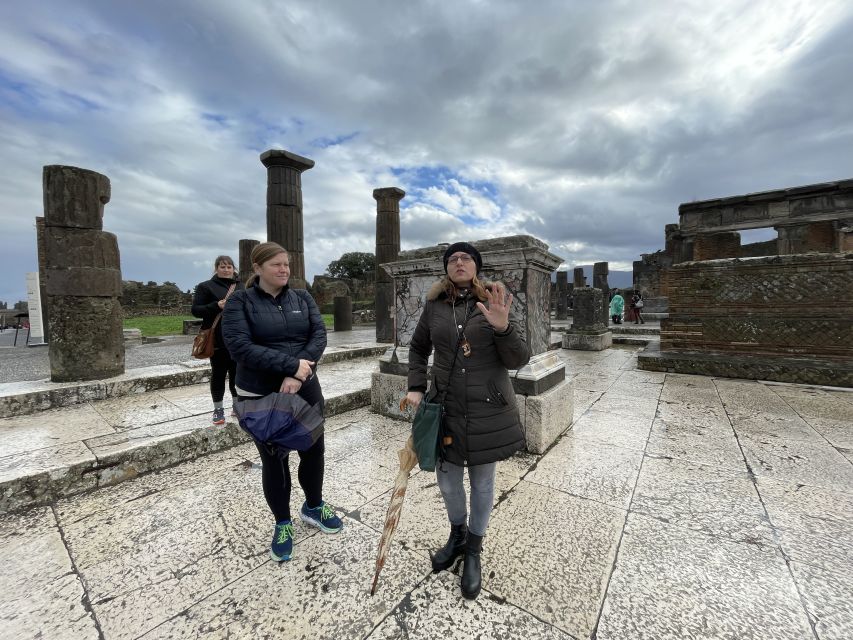
The Amphitheater of Pompeii is one of the clearest reminders that this was a functioning Roman town, not just a collection of private houses. The venue hosted gladiatorial contests and could hold large crowds.
The guide gives the building a social setting. You learn how public spectacles fit into Roman life and how the city’s residents gathered for entertainment. This stop takes about 20 minutes, enough to understand its purpose without using a large share of the tour on one structure.
The amphitheater may also help you picture the scale of Pompeii. After seeing houses and narrow streets, a public venue of this size shows that the city had a strong civic life and a population used to shared events.
A few more Naples trips worth weighing up
- Herculaneum: Skip-the-Line Guided Tour with Archaeologist
★ 4.8 · 3,439 reviews - Mount Vesuvius: Skip-the-Line Ticket and Smart Digital Guide
★ 4.2 · 2,780 reviews - From Naples: Pompeii Skip-the-Line Entry Ticket and Tour
★ 4.4 · 2,753 reviews - Pompeii: Skip-the-Line Entry Ticket with Audio Guide or Tour
★ 4.1 · 1,364 reviews
The House of the Faun and ancient decoration
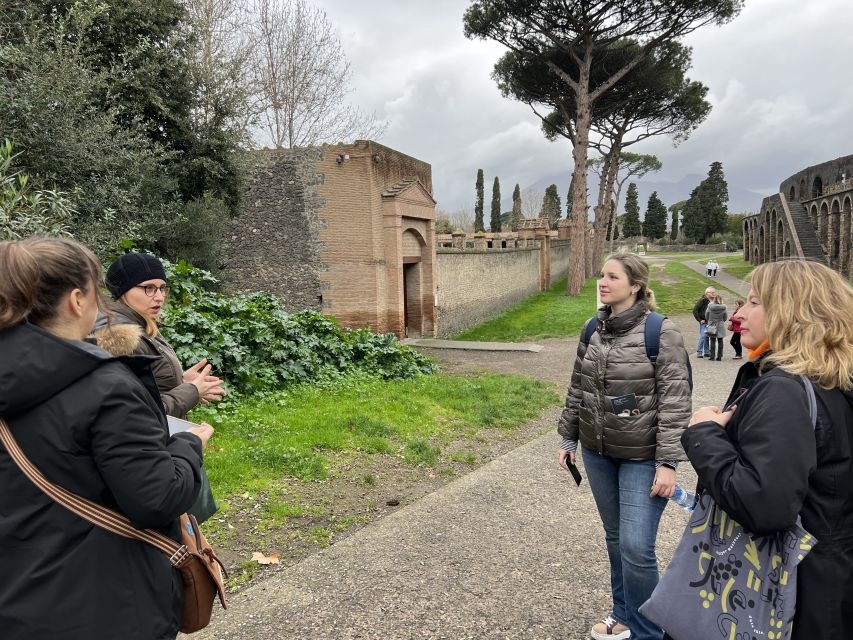
The House of the Faun is one of Pompeii’s famous residences. Its name comes from a statue of a dancing faun, and the house is linked with some of the city’s best-known mosaics.
This is where the tour’s attention to art and domestic life becomes especially useful. You can see that Roman homes were not simply plain stone boxes. Decorative floors, courtyards, and carefully arranged rooms told visitors something about the owner’s status and taste.
A guide also helps you understand how a large Roman house functioned. Instead of seeing a mosaic as an isolated work of art, you can place it within the home and ask how residents and visitors moved through the space.
The stop is scheduled for about 20 minutes. That is enough for the key points, but not for every room or every nearby house. If mosaics and domestic architecture interest you most, plan to ask the guide what to revisit after the tour.
The Temple of Apollo and Pompeii’s religious center
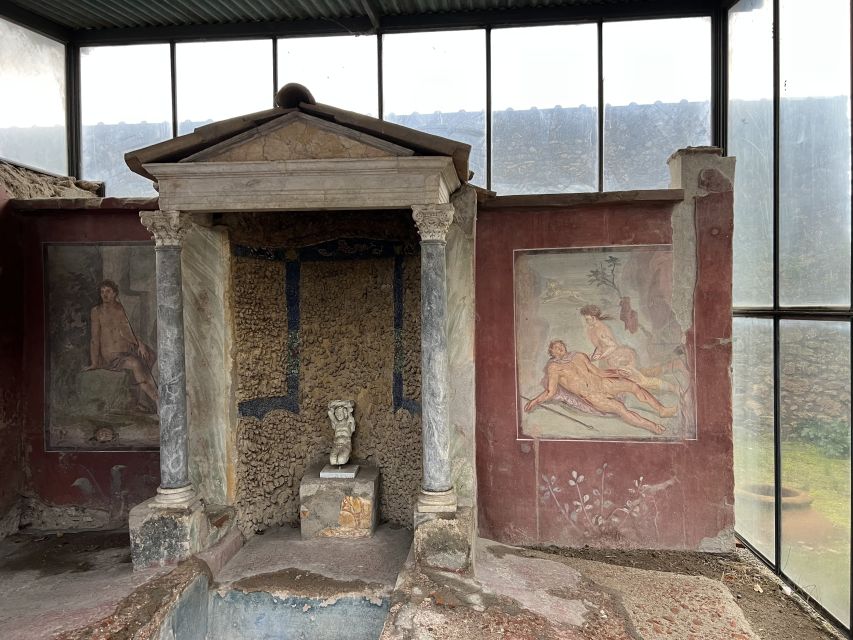
The Temple of Apollo takes you to one of Pompeii’s oldest and most important religious areas. It sits near the forum, making it part of the civic and spiritual core of the town.
The guide explains how religion fitted into public life. In Pompeii, temples were not isolated monuments placed for modern sightseeing. They formed part of a working city where worship, politics, trade, and public gatherings met in the same central area.
This stop lasts around 20 minutes. It is a useful bridge between the private world of the House of the Faun and the public spaces that follow.
Vetutius Placidus House and Thermopolium
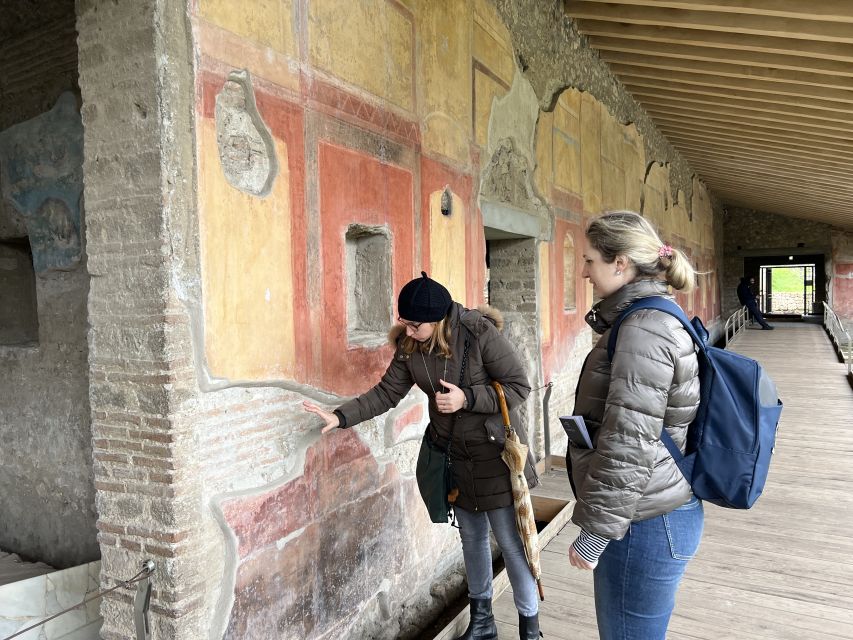
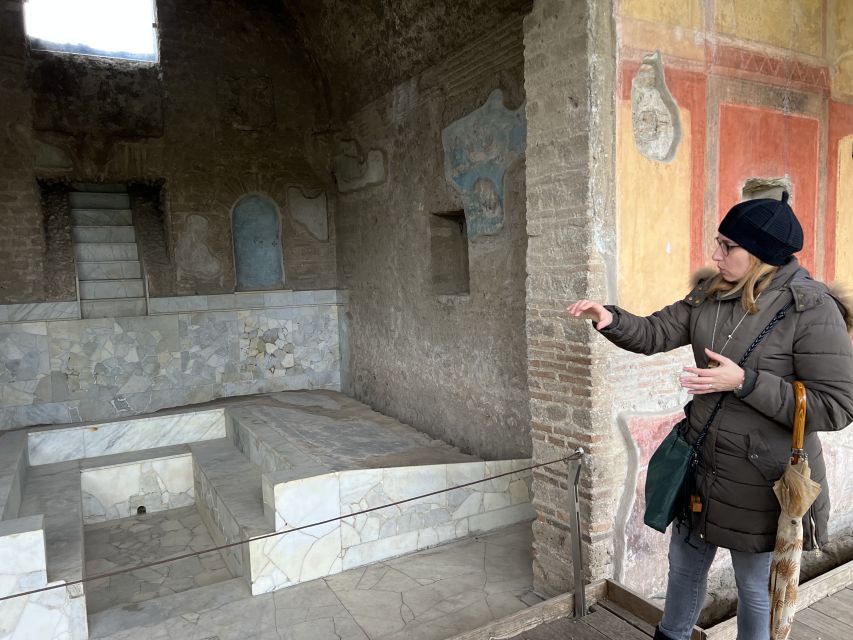
The Vetutius Placidus House and Thermopolium offers one of the most relatable glimpses of everyday Pompeii. A thermopolium was a Roman food and drink counter, a place where people could buy prepared refreshments rather than cook every meal at home.
The remains help you think about Pompeii as a lived-in town. Not everyone was spending the day in a grand villa. People worked, shopped, ate, socialized, and moved through commercial streets much as residents do in cities today.
This is a shorter stop, about 10 minutes, but it can be one of the most memorable because it connects the ruins to ordinary habits. Look closely at the counter and the layout, then ask the guide how the shop may have served its customers.
The Garden of the Fugitives and the human cost
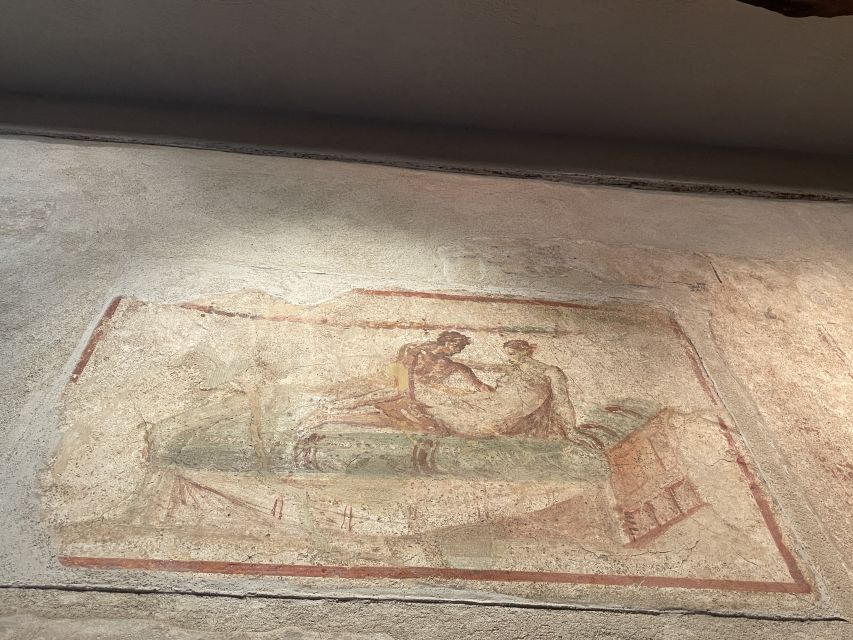
The Garden of the Fugitives is the most emotionally difficult part of the route. Here you see plaster-cast remains of people who died during the eruption.
The casts were made from cavities left in the hardened ash. They preserve the positions and outlines of victims, making the disaster painfully personal. This is not a spectacle to rush through. The guide provides the archaeological background, while you decide how much time you need to take in what you are seeing.
The stop is planned for about 20 minutes. That gives the guide time to explain the casts and the eruption, but the subject may affect younger children or anyone who prefers to avoid difficult historical scenes.
This part of Pompeii also corrects a common misunderstanding. The city is not preserved because life simply stopped in a tidy moment. The eruption was violent and deadly. The remarkable preservation comes with a human cost that should be treated with care.
Finishing at the Forum
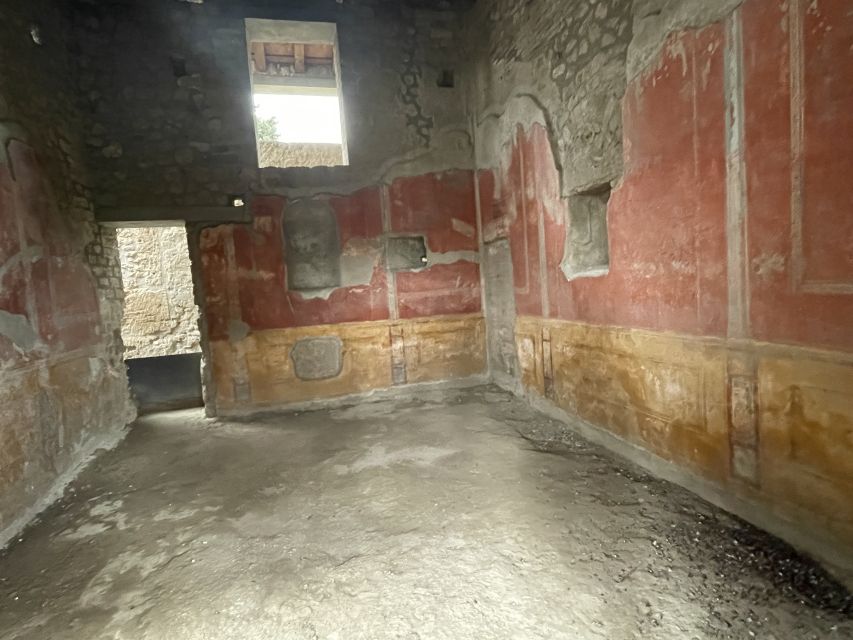
The Civil Forum, or Foro Civile di Pompei, is the grand finish. This was the heart of Pompeii’s public life, surrounded by temples, civic buildings, and spaces linked with business and government.
Ending here works well because the forum brings the earlier stops together. You have seen a public entertainment venue, an elite home, a temple, a food counter, and the remains of residents. At the forum, those pieces form a picture of one connected city.
The forum is also a strong place to pause and understand Pompeii’s scale. A guide can point out how the central space related to the streets and buildings around it, helping you read the ruins as an urban center rather than a set of unrelated monuments.
The scheduled guided visit lasts about 20 minutes. Afterward, the tour returns to the meeting point, but you are free to continue exploring on your own. Ask the guide for suggestions before leaving. One guide recommended walking on a platform where archaeologists were working, and that kind of timely advice can add something special to the rest of your visit.
How much can you really see in two hours?
Two hours is a good length for a first look, but it is not enough to cover all of Pompeii. The route moves at a purposeful pace and focuses on major sights.
The benefit is clarity. You get an organized introduction without committing half a day to a guide. The downside is that you may leave with a list of places you still want to see.
A useful plan is to treat the guided portion as your foundation. Pay attention to the route, note the buildings that interest you, and stay afterward if your ticket and opening conditions allow. You can then return to selected areas at your own speed.
The tour includes guided visits of roughly 10 or 20 minutes at each listed stop. Those timings are estimates within the two-hour experience, not separate appointments. The exact pace may change with crowds, weather, questions, and the group’s interests.
Choosing the best start time
The activity runs at different start times, so you need to check availability when booking. The timing matters more at Pompeii than it might at a small museum.
A 9 a.m. tour can be a smart choice. One morning group found that the first hour was relatively quiet, with larger crowds arriving later. Starting early also helps you handle the heat before the strongest sun.
A 4 p.m. tour has its own appeal. It can be cooler, and one group found the site less crowded at that hour. You should still confirm the available start time and allow enough time for the full two-hour route.
The best choice depends on your day and the weather. If you dislike heat, choose the earliest practical start. If you prefer a later outing and the schedule works, late afternoon may be more comfortable.
Is the $282.08 price good value?
The listed price is $282.08 for a private group of up to two people. For two people sharing the booking, that is about $141 each.
That is a serious price for a two-hour activity, but the comparison is not simply two hours versus an entrance ticket. The cost includes the Pompeii admission, reserved entry, and a private English-speaking guide. You are also paying for route planning through a very large site and the chance to ask questions throughout.
The value improves if you have limited time in Campania, care about understanding what you see, or prefer not to navigate the ruins alone. It is less compelling if you are happy with a self-guided visit and plan to spend many hours reading signs and finding your own route.
For a couple, the private format is the main reason to consider it. There may be times when only one booking appears, and some groups have ended up with an almost one-to-one experience. That can make the cost easier to justify, especially if you want the guide to shape the visit around your interests.
What the strongest guide experiences have in common
The best guides on this tour do more than recite dates. Glauco is praised for clear English, humor, and the ability to avoid large crowds. Alessia is noted for answering questions, allowing photo stops, and discussing recent discoveries and ongoing work.
Vito’s practical recommendation about an archaeological work platform shows another useful quality: knowing what is happening at Pompeii now, not only what happened in 79 AD. Alyssia is praised for keeping adults and teenagers involved, while Caterina is described as friendly and ready to answer questions.
You may be assigned a different guide, so specific names cannot be promised. The important point is the guide’s role. Ask questions, mention what interests you, and tell the guide if heat or walking pace is becoming a problem. Guides have adjusted routes, avoided crowded areas, found shade where possible, and slowed down during hot weather.
Who should book this Pompeii tour?
I would choose this tour if you are visiting Pompeii for the first time and want the main story without trying to master the site map. It is also a good fit for couples who value a private experience and for families who need a guide able to keep younger visitors involved.
It suits you if you want to see the big highlights, understand the difference between a home, temple, shop, bath, and forum, and still have the option to continue alone afterward.
I would think twice if you need a wheelchair-accessible route, dislike walking on uneven ground, or want a full-day exploration. Two hours gives you a strong introduction, not an exhaustive visit.
The activity is in English only, so it is best for visitors comfortable following a live English-speaking guide. Everyone entering the archaeological site, including children, must provide valid identification.
Practical details before you go
The tour includes skip-the-line entry, the Pompeii ticket, and the guided visit. Hotel transportation is not included.
Arrive 5 to 10 minutes early at the statue of the Virgin Mary in Piazza Immacolata. Bring water, wear a hat, and plan for sun and uneven paving. Late arrivals cannot join after the tour has started.
You can cancel up to 24 hours before the scheduled activity for a full refund, and the reserve-now, pay-later option lets you hold a place without paying immediately. Check the available start times before booking, since morning and late-afternoon conditions can feel quite different.
Should you book it?
Book this Pompeii tour if you want a focused, private introduction with a real person to explain the ruins. The skip-the-line entry saves time, while the small group makes it easier to ask questions and adjust the pace.
I would especially consider it for a first visit, a short stay in Campania, or a couple willing to pay more for personal attention. Pick an early start for cooler conditions and thinner crowds, or consider the 4 p.m. option if the schedule suits you.
Skip it if your priority is the lowest possible cost or a full day inside the site. In that case, an independent visit may give you more hours for less money. For most first-time visitors who want Pompeii to make sense, this tour offers a clear route, strong historical context, and a practical way to begin.
FAQ
Where does the Pompeii tour start?
Meet at Piazza Immacolata, in the piazza opposite the entrance gate of Piazza Anfiteatro. The guide will be beside the statue of the Virgin Mary holding a Walks In Europe sign.
How long does the guided tour last?
The tour lasts two hours. The route includes guided walks at Pompeii’s major sights, followed by a return to the original meeting point.
What is included in the price?
The price includes pre-reserved attraction tickets, skip-the-line access, the Pompeii entry ticket, and an English-speaking guided tour.
Is hotel pickup included?
No. Hotel pickup and drop-off are not included, so you must make your own way to the meeting point.
What language is the tour offered in?
The live tour guide speaks English.
Can I continue exploring Pompeii afterward?
Yes. After the guided tour ends, you are free to continue exploring on your own or ask the guide for a recommendation about where to go next.
What should I bring to the tour?
Bring a hat and water. Arrive 5 to 10 minutes before the scheduled start, and bring valid identification for every person entering the archaeological site, including children.
Just added around Naples
- Full-Day Tour of the Amalfi Coast and Pompeii from Naples★ 4.5 · 3 reviews
- The Ultimate Neapolitan Cooking Class with Local★ 5.0 · 3 reviews
- Transfer from Naples to Sorrento or viceversa★ 5.0 · 3 reviews
- Naples: Old City Center Street Food Tour with Spritz★ 4.7 · 3 reviews
- Visit in Pompeii – Naples Private Tour with Ada★ 5.0 · 3 reviews
- Naples: National Gallery of Capodimonte Tour★ 5.0 · 3 reviews
- Visit 2 wine producers with tasting and transportation included★ 5.0 · 3 reviews
- Naples: Mozzarella experience★ 5.0 · 3 reviews
Pompeii Tours, compared.
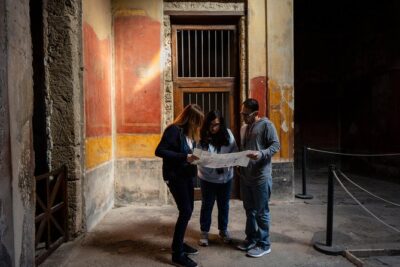
Pompeii & Mt.Vesuvius Day Tour from Naples with Pizza Lunch
Read our review →
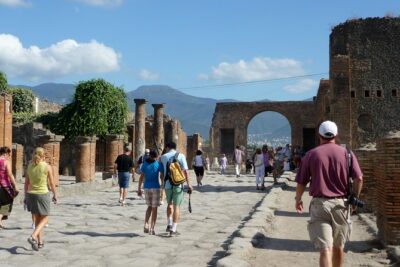
Pompeii & Mt Vesuvius All-Inclusive Small Group w/ Lunch
Read our review →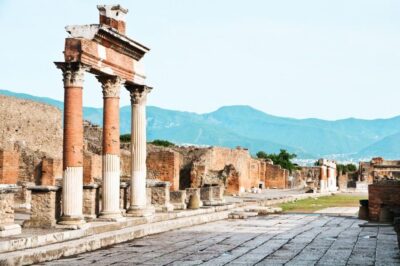
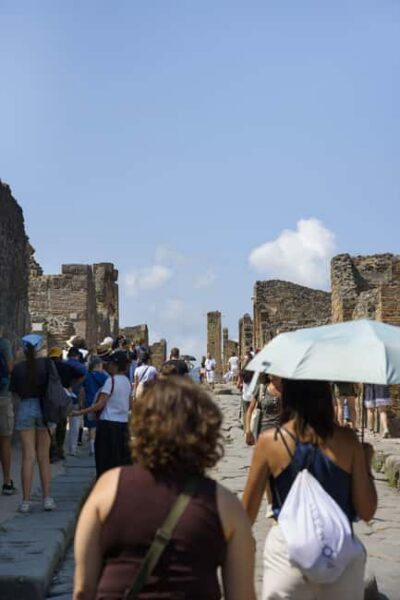

Pompeii & Amalfi Coast Full-Day Trip with Lunch
Read our review →Browse the lists this tour appears in