
Reviewed · POMPEII TOURS
From Naples: Pompeii & Herculaneum with Archaeologist Guide
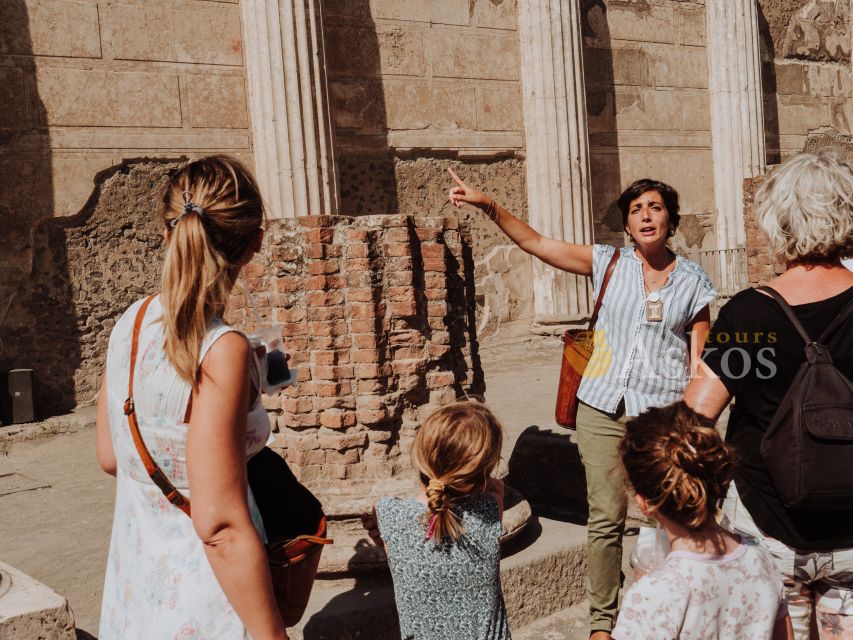
Herculaneum and Pompeii tell two very different stories of the same volcanic disaster. On this seven-hour small-group tour, an archaeologist leads you through both sites, pointing out details that are easy to miss when you visit alone, from carbonized wooden objects in Herculaneum to the plaster casts at Pompeii.
I like the skip-the-line tickets, which matter when queues are long, and the practical minibus transfer from Naples. I also like the pairing of the two ruins: Herculaneum is smaller and better preserved, while Pompeii gives you a broader picture of an entire Roman town. The drawback is the pace. Two hours at each site covers the main sights, but you will not see every street, house, and fresco.
In This Review
- Key points at a glance
- Why seeing Herculaneum and Pompeii together works
- Meeting at Starhotels Terminus in Naples
- Herculaneum’s preserved houses and seafront
- The transfer and short lunch break
- Pompeii’s streets, shops, and public buildings
- What the archaeologist adds
- Walking conditions and weather
- Is $168.79 a fair price?
- Who should book this day trip?
- FAQ
- Where does the tour begin?
- Where does the tour end?
- How long does the experience last?
- Is the tour conducted in English?
- How large is the group?
- Are entrance tickets included?
- Is transportation included?
- Is lunch included?
- Can I bring luggage?
- Is the tour suitable for people with limited mobility?
- What should I bring?
- Should you book Pompeii and Herculaneum with an archaeologist?
Key points at a glance
- Two Roman towns in one day: Compare Herculaneum’s preserved interiors with Pompeii’s larger streets and public buildings.
- An archaeologist leads the walks: Guides including Raphael, Roberta, Gennaro, Michele, and Vito have been praised for clear explanations, humor, and careful answers to questions.
- Skip the ticket queues: Entry to both archaeological sites is arranged in advance, saving useful time on a busy day.
- A small group of up to 20: This is more personal than a large coach tour, though it still has a fixed route and schedule.
- A convenient Naples meeting point: Meet in front of Starhotels Terminus, opposite Naples Central Station, then return there after the tour.
- Expect serious walking: Uneven ground, slopes, and stairways make this a poor choice for wheelchair users or anyone with limited mobility.
Why seeing Herculaneum and Pompeii together works
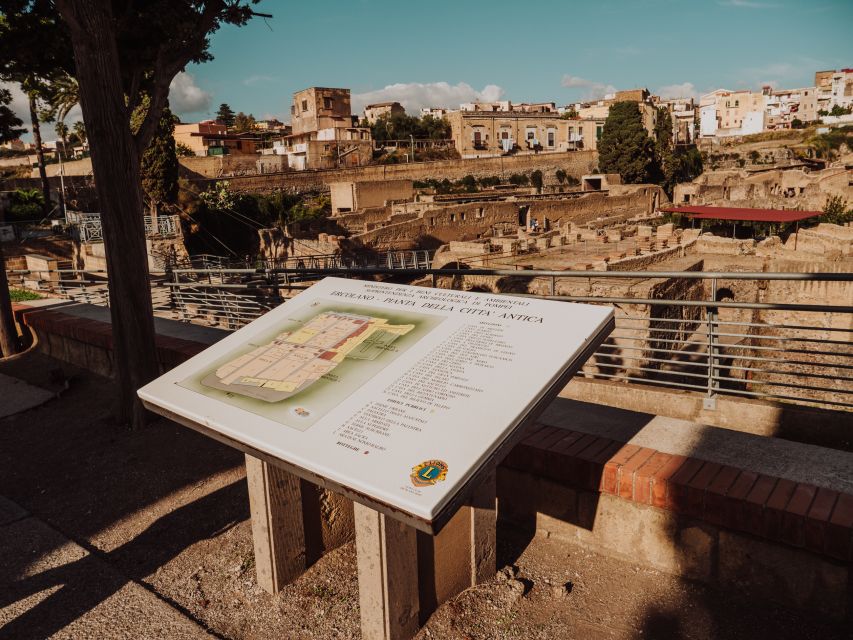
If you have only one day for Roman archaeology near Naples, this combination makes good sense. The two towns were both buried when Mount Vesuvius erupted in 79 AD, but the volcanic material affected them in different ways.
Pompeii was covered by volcanic ash and lapilli. Its streets, houses, shops, and public buildings were buried over time, creating the vast archaeological site you see today. Herculaneum was hit by a much hotter flow and then buried under a deep layer of mud, described on the tour as roughly 20 meters thick. That mud helped preserve details that rarely survive in ancient ruins.
At Herculaneum, you can see carbonized wood, strong colors in wall paintings, and mosaics that remain remarkably complete. Pompeii is less about one perfectly preserved room and more about the scale of daily life across a whole city.
I find that contrast useful. Herculaneum shows you the quality of Roman homes and household objects. Pompeii shows you how those homes fit into a working town with bakeries, bathhouses, markets, temples, public squares, and businesses.
More ways to see Pompeii:
- From Naples: Pompeii Ruins & Mount Vesuvius Day Tour
★ 4.3 · 11,459 reviews - Naples or Sorrento: Full-Day Pompeii and Mount Vesuvius Tour
★ 4.6 · 4,235 reviews - Pompeii & Mt.Vesuvius Day Tour from Naples with Pizza Lunch
★ 4.0 · 2,901 reviews
Meeting at Starhotels Terminus in Naples
The tour begins in front of the entrance to Starhotels Terminus, opposite Naples Central Station. Look for the guide holding an Askos Tours sign. This is a practical meeting point if you arrive by train or are staying near the station, but do not assume you will meet inside the station itself.
The shared minibus is modern and air-conditioned, with a professional English-speaking driver. The group can include up to 20 people, so you get the ease of organized transport without joining a full-size coach. The drive to Herculaneum takes about 45 minutes, followed by another 30-minute transfer to Pompeii and roughly 45 minutes back to Naples.
Those road sections are not wasted time. They spare you the work of figuring out separate regional trains, finding both entrances, and keeping track of timed visits. Parking and tolls are included, which also removes some of the usual hassle around these busy sites.
The driver waits for late arrivals for up to five minutes. That is not much of a grace period, so arrive early. Bring your passport or identity card, as it is required information for the activity. Large bags and luggage are not allowed, so this is not a good plan immediately after arriving with full suitcases unless you have somewhere else to store them.
Herculaneum’s preserved houses and seafront

Herculaneum is the first archaeological stop, with about two hours for the guided visit. The site is smaller than Pompeii, which makes it easier to understand in a short visit, but do not mistake smaller for less important.
The guide takes you through major points such as the Temple of the Augustali, the Thermal Baths, the Forum, the Samnite House, the Gymnasium, and the House of the Deer. These names may blur together if you visit without context, so the archaeologist’s job is to explain what each building reveals about Roman society and home life.
The surviving materials are the real surprise. You might see carbonized wooden objects, intact mosaics, and painted interiors that give the ruins a more immediate feel than bare walls and foundations. The volcanic mud sealed parts of the town, protecting materials that would normally rot, fade, or disappear.
One especially sobering stop is the beach area, where more than 300 skeletons were found. It changes the mood of the visit. Herculaneum is not simply a collection of beautiful rooms. It also shows the human cost of the eruption and the desperate attempts to escape it.
The guide is valuable here because the site rewards close attention. A specialist such as Michele, who has worked at Herculaneum, can explain the importance of features that look ordinary at first glance. Other guides named in the feedback, including Raphael, Roberta, and Vito, have been praised for making the explanations clear and approachable.
The main limitation is time. Herculaneum has enough detail for a full morning or more, but the tour gives you a focused route. You will see key buildings rather than wander through every accessible corner.
The transfer and short lunch break

After Herculaneum, the minibus takes you to Pompeii. There is a lunch break of about 40 to 45 minutes before the guided walk.
Food is not included. The break is useful, but it is not long enough for a leisurely meal, especially if the group is large or a nearby restaurant is busy. One practical point is worth noting: a meal at the stop can become expensive, with one visitor reporting a cost of about €30 per person. If you want to keep costs down, bring your own food if permitted by the day’s arrangements, or ask the operator where you can buy something simple.
Do not treat this as a full dining experience. Think of it as a scheduled pause so you can eat, use the facilities, and prepare for another two hours of walking.
More Herculaneum visits from Naples:
- Herculaneum: Skip-the-Line Guided Tour with Archaeologist
★ 4.8 · 3,439 reviews - Herculaneum Small Group Tour and Ticket With an Archaeologist
★ 5.0 · 994 reviews - Herculaneum: Skip-the-Line Entry Ticket with Audio Guide
★ 4.3 · 870 reviews - From Naples: Pompeii, Herculaneum, & Vesuvius Full-Day Tour
★ 3.9 · 602 reviews
Pompeii’s streets, shops, and public buildings
The Pompeii visit lasts about two hours. Skip-the-line entry means you can move past the public ticket queue and begin the walk without using valuable sightseeing time waiting outside.
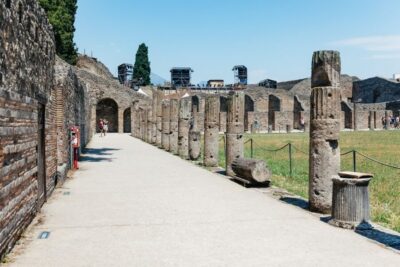
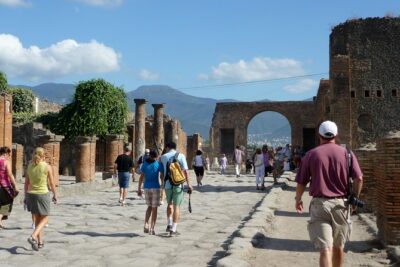
The route includes the Marina Gate, Basilica, Forum, Forum Baths, Lupanar, Bakery, House of the Faun, Thermopolium Capuano, House of the Tragic Poet, and the plaster casts. Together, these stops give you a useful cross-section of the city.
The Marina Gate helps establish how people entered Pompeii. The Basilica and Forum show the public and civic heart of the town. The baths reveal the social side of Roman life, where bathing was not just about washing but also about meeting and spending time with others.
The bakery and Thermopolium Capuano bring the visit down to street level. These places help you picture food preparation and quick meals in an ancient town. The Lupanar is one of Pompeii’s most famous stops, but the guide can give it context rather than leaving you with a shallow story about ancient sex work.
Private houses such as the House of the Faun and House of the Tragic Poet show how wealth, decoration, and household space worked. Mosaics, wall paintings, courtyards, and room layouts become easier to read once someone explains their purpose.
Finally, the plaster casts provide one of the strongest links to the people caught in the eruption. They can be difficult to see, but they are an important part of understanding Pompeii as a human disaster, not just an archaeological site.
Two hours is enough for the major highlights, but not enough to explore Pompeii at a relaxed pace. The site is enormous, and a visitor intent on seeing every excavated house would need several days. This tour is best if you want a guided introduction and a well-chosen selection rather than complete coverage.
What the archaeologist adds
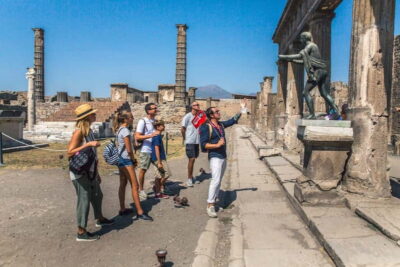
You can enter both sites on your own, but the value of this tour lies in interpretation. Ancient ruins rarely explain themselves. A forum can look like a rectangle of stone; a house can look like a sequence of empty rooms. The guide supplies the missing links.
The strongest guides on this route have included Raphael, Roberta, Gennaro, Michele, Vito, and Gennaro’s fellow guides. Names and assignments can change, so you cannot choose a particular person when booking, but the experience depends heavily on who leads your departure.
The best guides do more than recite dates. They explain how Romans lived, where commerce happened, how homes were arranged, and why a small object or painted detail matters. Several guides have also been praised for humor and for answering questions patiently, which helps during a long day of ruins.
A small group of up to 20 supports that style of visit. You are not guaranteed a private conversation, but you have a better chance of hearing the explanation and asking a question than you would on a large coach excursion. The pace is generally steady rather than hurried, although some people will still wish for more time to stop and study the details.
Walking conditions and weather
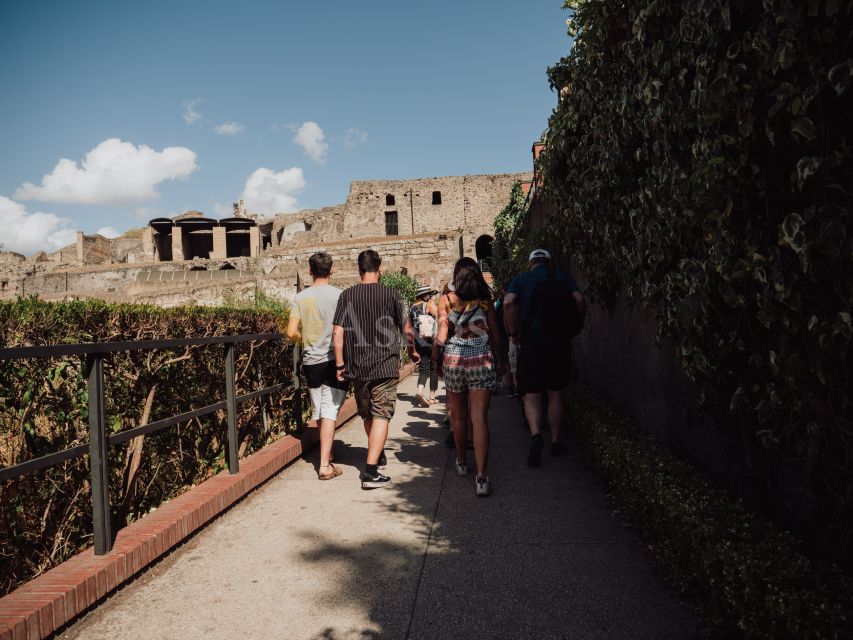
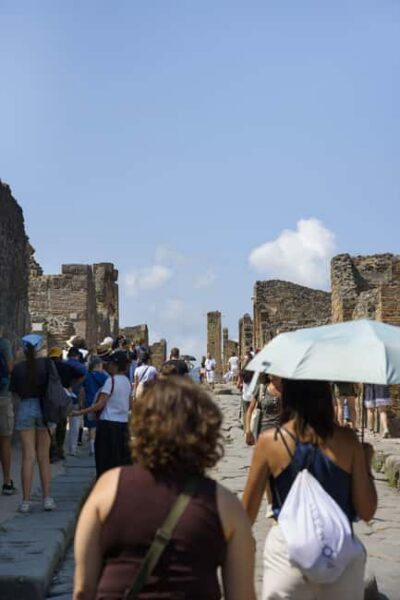
Wear comfortable walking shoes. This is not a gentle stroll through a museum. Expect uneven ancient paving, slopes, stairways, and changes in elevation at both sites. The route can be tiring even for people who normally walk a great deal.
The activity is not suitable for wheelchair users or people with significant mobility impairments. If stairs, rough surfaces, or long periods on your feet are difficult, a shorter or more accessible plan would be wiser.
The tour runs rain or shine. Bring a raincoat if the forecast is uncertain, and remember that many parts of the archaeological sites are exposed. Summer sun can also make the stone surfaces feel hot, so water and sun protection are sensible choices, even though they are not listed as included items.
Because large bags are not allowed, travel light. A small day bag is more practical than a suitcase or oversized backpack.
Is $168.79 a fair price?
At $168.79 per person, this is not the cheapest way to visit Pompeii and Herculaneum. The price includes shared minibus transportation, the Pompei Express entrance ticket, the €16 Herculaneum ticket, the archaeologist guide, tolls, and parking.
The value improves if you care about time and structure. You get transport from central Naples, entry to two major archaeological sites, and a specialist-led route in one day. You also avoid spending part of the morning working out train connections and ticket queues.
The price is less attractive if you want to explore independently, stay for many hours at one site, or control every pause. Pompeii alone can absorb a full day, and this tour gives it only about two hours. The lunch stop is also extra, so include that in your day’s budget.
For a shore excursion or a short Naples visit, I think the price is defensible. The transport and expert commentary solve several practical problems at once. For a longer stay, you might prefer separate visits that allow more time at each site.
Who should book this day trip?
I would choose this tour if you want to see both ruins in one organized day, especially if you are arriving in Naples by train or have limited time in Campania. It suits first-time visitors who want the major sights explained rather than simply photographed.
It is also a good fit for anyone curious about ordinary Roman life. The route includes public monuments, homes, shops, baths, food businesses, and evidence of the eruption, so you get more than a parade of famous buildings.
I would hesitate if you dislike fixed schedules or guided groups. The group may reach 20 people, the lunch break is short, and you cannot linger wherever you like. I would also avoid it if you have mobility problems or are carrying luggage.
Free cancellation is available up to 24 hours before the tour, and you can reserve now and pay later. Those terms help if your Naples plans are still changing, but the key decision is still physical: you need to be ready for a long, uneven walking day.
FAQ
Where does the tour begin?
Meet in front of the entrance to Starhotels Terminus, opposite Naples Central Station. Look for the guide holding an Askos Tours sign.
Where does the tour end?
The activity returns to the Starhotels Terminus meeting point.
How long does the experience last?
The full tour lasts about seven hours, including transportation, the two site visits, and the lunch break.
Is the tour conducted in English?
Yes. The tour includes a live English-speaking guide.
How large is the group?
The small-group tour is limited to 20 participants.
Are entrance tickets included?
Yes. The Pompei Express entrance ticket and the Herculaneum entrance ticket, listed as €16 each, are included.
Is transportation included?
Yes. Shared transportation is provided in a modern minibus, with tolls and parking also included.
Is lunch included?
No. Meals are not included. The schedule allows a break of about 40 to 45 minutes before the Pompeii visit.
Can I bring luggage?
No. Luggage and large bags are not allowed.
Is the tour suitable for people with limited mobility?
No. The tour is not recommended for people with limited mobility and is not suitable for wheelchair users. Both sites involve uneven surfaces, slopes, and stairways.
What should I bring?
Bring your passport or identity card. Since the tour operates in all weather, a raincoat is useful if rain is possible.
Should you book Pompeii and Herculaneum with an archaeologist?
Book it if you want an efficient first look at both sites and value clear explanations, reserved entry, and door-to-door transport from central Naples. The combination is especially useful for a shore day or a short visit, when missed trains and ticket lines can ruin your schedule.
Skip it if you want to spend a full day at Pompeii, eat at your own pace, or explore without a guide. For most active visitors, though, the two-site route is a strong use of one day. Herculaneum supplies the preserved rooms and objects, Pompeii supplies the scale, and a good archaeologist helps you understand both.
Just added around Naples
- Full-Day Tour of the Amalfi Coast and Pompeii from Naples★ 4.5 · 3 reviews
- The Ultimate Neapolitan Cooking Class with Local★ 5.0 · 3 reviews
- Visit in Pompeii – Naples Private Tour with Ada★ 5.0 · 3 reviews
- Transfer from Naples to Sorrento or viceversa★ 5.0 · 3 reviews
- Naples: Old City Center Street Food Tour with Spritz★ 4.7 · 3 reviews
- Naples: National Gallery of Capodimonte Tour★ 5.0 · 3 reviews
- Visit 2 wine producers with tasting and transportation included★ 5.0 · 3 reviews
- Naples: Mozzarella experience★ 5.0 · 3 reviews
Pompeii Tours, compared.
Pompeii & Mt.Vesuvius Day Tour from Naples with Pizza Lunch
Read our review →
Pompeii & Mt Vesuvius All-Inclusive Small Group w/ Lunch
Read our review →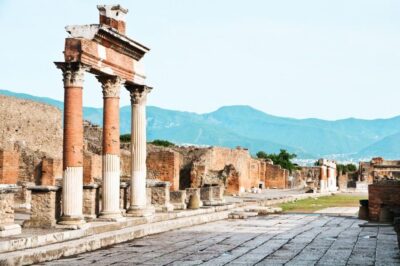

Pompeii & Amalfi Coast Full-Day Trip with Lunch
Read our review →Browse the lists this tour appears in