
Reviewed · HERCULANEUM TOURS
Herculaneum Small Group Tour and Ticket With an Archaeologist
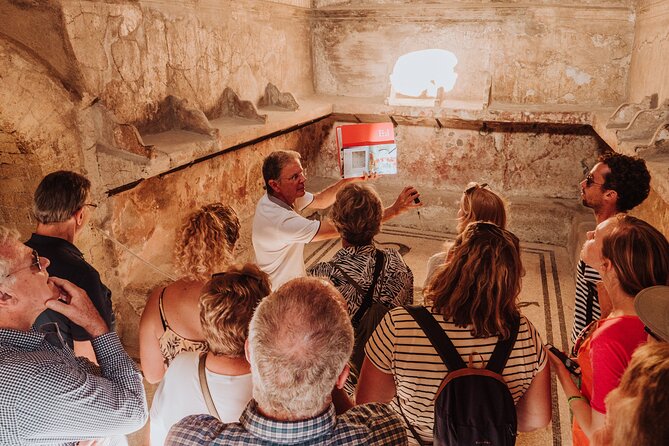
Herculaneum is a compact Roman town where everyday details survive with startling clarity: a wooden partition, carbonized doorposts, painted rooms, tiled floors, and even the layout of ancient bathhouses. This two-hour walking tour with an archaeologist gives those remains a human story instead of leaving you to decode a map and a pile of stone.
I like the skip-the-line entry and the headsets, which matter when the guide is explaining things in a busy ruin. I also like the focus on houses and daily life, not just famous monuments. The main drawback is pace: you cover eleven sights in about two hours, and one guide reportedly ran overtime, leaving less time for independent exploration and the museum.
In This Review
- Key points at a glance
- Why Herculaneum rewards a guided visit
- Meeting at the ruins in Ercolano
- The first houses: Deer, Balbus, and Augustales
- Balbus’s possible home and the wooden partition
- Skeleton House and the Central Baths
- Luxurious rooms and carbonized doorways
- The Grand Portal and the final overview
- What the archaeologist adds
- Is $53.81 a fair price?
- Weather, dogs, and practical comfort
- Who should book this Herculaneum tour?
- Should you book it?
- FAQ
- Where does the Herculaneum tour begin?
- Where does the tour end?
- How long does the experience last?
- How many people can join the group?
- Is the Herculaneum entrance ticket included?
- Is a guide with an archaeological background included?
- Are headsets provided?
- How can I reach the meeting point by train?
- Can I cancel for a full refund?
Key points at a glance
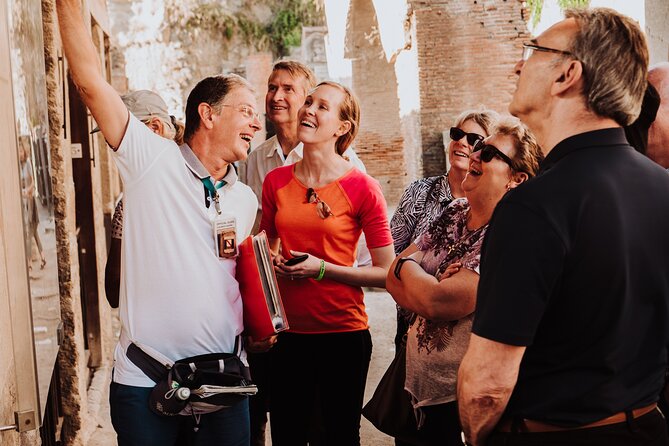
- Archaeologist-led interpretation: Guides such as Luciano Leone, Paulo, Julia, Antonella, and Sergio bring professional background and personal enthusiasm to the ruins.
- Eleven focused stops: The route includes luxurious homes, public baths, religious buildings, and details of ancient construction.
- Maximum group of 20: Groups may be smaller, sometimes just six or twelve, but 20 is the stated limit.
- Headsets included: You can hear explanations while standing among the buildings instead of crowding around the guide.
- Convenient Ercolano meeting point: Meet at the Herculaneum ticket office on Corso Resina, near the Circumvesuviana station.
- Good value for a short visit: At $53.81, the price includes the guide, archaeological entry ticket, headsets, and assistance.
Why Herculaneum rewards a guided visit
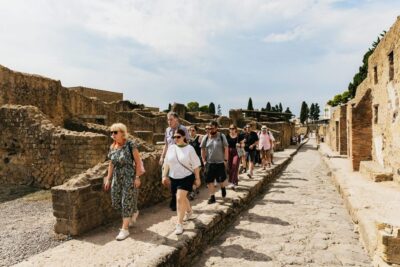
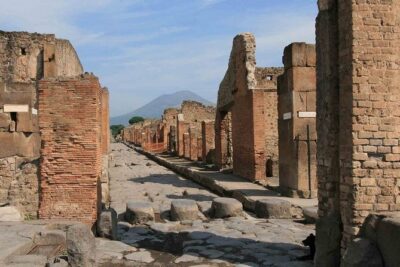
Pompeii gets more attention, but Herculaneum offers a different kind of ancient-city experience. The site is smaller, and that makes it easier to grasp. You can see how homes connected to streets, how rooms were arranged around courtyards, and how public buildings fitted into the town.
The eruption of Mount Vesuvius in AD 79 buried Herculaneum under hot volcanic material. That helped preserve materials that usually disappear from Roman sites. Wood, food containers, doors, furniture fragments, frescoes, and mosaics survived in ways that make the town feel unusually close to ordinary life.
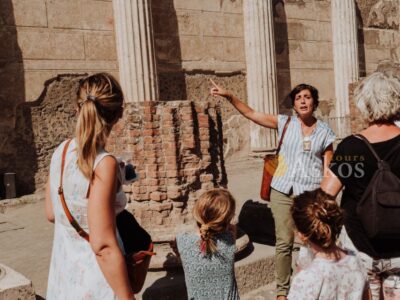
I would not treat this as a simple stroll through picturesque ruins. There is a lot to look at, and the remains can be hard to read without context. An archaeologist can point out why a house is unusual, explain how a bathhouse worked, and separate firm evidence from educated guesses about Roman life.
The guides appear to be the strongest part of the experience. Luciano Leone is especially associated with visual reconstructions and a lively presentation. He has used his own illustrations to show how buildings may have looked before the eruption. Other praised guides include Paulo, Julia, Antonella, Sergio, Gennaro, Marie, Diego, Michele, and Luciano.
That list matters because the exact personality and pacing of your guide can shape the tour. The strongest accounts describe clear explanations, humor, passion, and close attention to whether everyone can hear. One guide regularly checked that a guest with hearing aids was following along. Another moved quickly to fit in as much as possible.
More Herculaneum visits from Naples:
- Herculaneum: Skip-the-Line Guided Tour with Archaeologist
★ 4.8 · 3,439 reviews - Herculaneum: Skip-the-Line Entry Ticket with Audio Guide
★ 4.3 · 870 reviews - From Naples: Pompeii & Herculaneum with Archaeologist Guide
★ 4.8 · 665 reviews
Meeting at the ruins in Ercolano
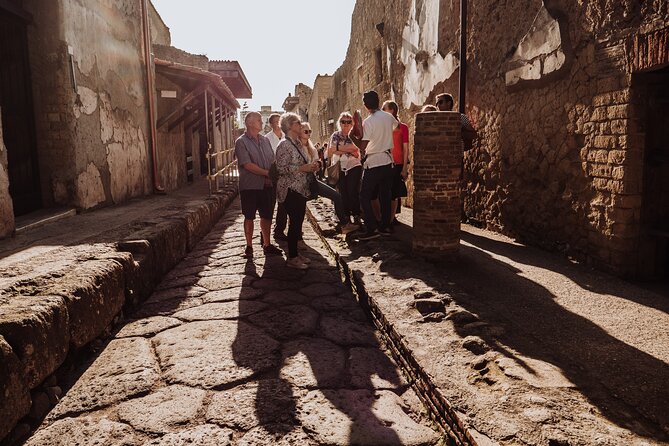
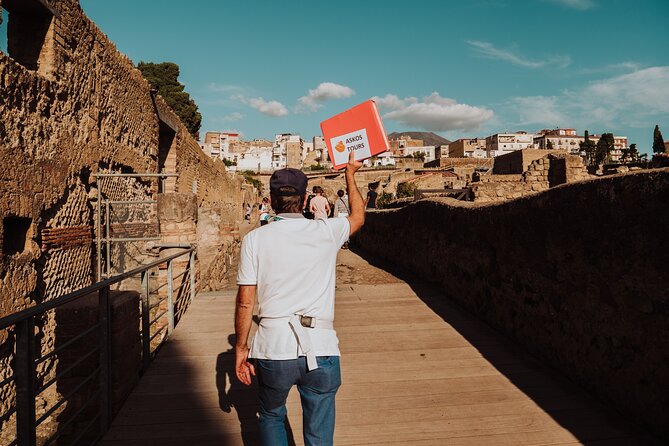
The meeting point is the Herculaneum ticket office at Corso Resina 187, also identified as the ticket office of the ruins. The tour finishes inside the archaeological area, so you do not need to return to the starting point after the walk.
By train, use the Circumvesuviana station at Corso Resina 1. It is about a 10-minute walk from the meeting place. By car, use Via Pignalver, where there is an unguarded parking area very close to the meeting point. Since the parking is not guarded, do not leave valuables in the car.
The practical risk here is arriving late. One guest was five minutes behind and received help from Askos Tours so the group could be located. Another missed a scheduled train and was able to rebook through the company chat. Those examples do not turn lateness into a good plan, but they do suggest you should contact the operator immediately if transport goes wrong.
Look for the tour coordinator at the ticket office and allow time to find the group. The ruins are not a place where you want to sprint in from the station, especially if the guide is handling tickets and headsets.
The first houses: Deer, Balbus, and Augustales
The route begins at the House of the Deer, named for marble statues of stags found in its peristyle. A peristyle is a columned courtyard, often the visual and social center of an upscale Roman home. The deer sculptures help you picture the role of art in a private garden setting.
Next comes the Terrace of M. Nonius Balbus. Balbus was a major benefactor of Herculaneum, funding and restoring public buildings. After his death, the city honored him as a patron, with an inscription on his funeral altar recording the honors given to him.
This is a useful early stop because it widens the story beyond private houses. You see how wealth, civic generosity, and public status worked together in Roman towns. The guide can also explain why a local benefactor mattered so much to the city.
The College of the Augustales follows. It is thought to have been connected with the worship of Emperor Augustus and may also have served as the local curia. The uncertainty is worth hearing. Archaeology does not always produce one final answer, and a good guide can explain the evidence without pretending that every interpretation is settled.
These three stops establish the main themes of the tour: private comfort, public duty, civic status, and the religious life of the town.
Balbus’s possible home and the wooden partition
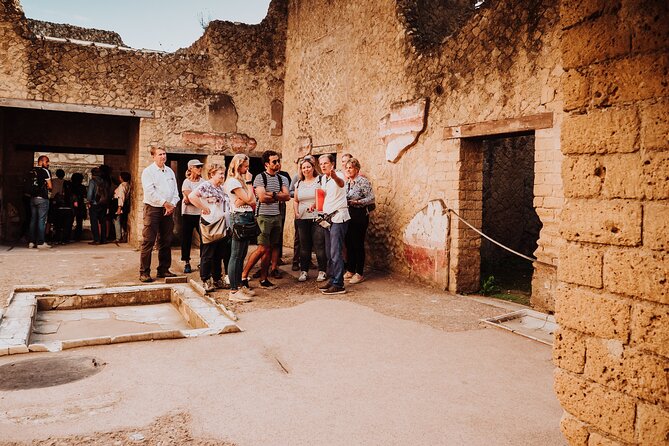
Casa del Rilievo di Telefo, or the House of the Relief of Telephus, may have belonged to Marcus Nonius Balbus. Its unusual feature is a private connection to the Suburban Baths next door. That detail gives you a glimpse of elite convenience. A wealthy resident may have had direct access to a major bathing complex rather than using the street like everyone else.
The route then reaches the House of the Wooden Partition. Its value lies in the elegant carbonized wooden screen that survived the eruption. Wood is normally one of the first materials to vanish at an archaeological site, so a preserved partition helps you understand how Roman interiors could be divided and furnished.
These details are easy to miss when walking alone. A broad view of a courtyard may catch your eye, but a guide can direct you toward a surviving hinge, beam, doorframe, or partition. The most effective part of this tour is often not the grandest room. It is the small object that makes the building feel usable.
A few more Naples trips worth weighing up
- Naples: Catacombs of San Gennaro Entry Ticket & Guided Tour
★ 4.6 · 7,941 reviews - Naples: Downtown Tour with Veiled Christ & St Clare Tickets
★ 4.9 · 6,462 reviews - Naples: Hop-on Hop-off Bus Tour 24-Hour Ticket
★ 4.3 · 5,157 reviews - Mount Vesuvius: Skip-the-Line Ticket and Smart Digital Guide
★ 4.2 · 2,780 reviews
Skeleton House and the Central Baths
The House of the Skeleton probably formed from three smaller buildings joined together. It takes its name from human remains discovered in an upper room in 1831. The stop brings the eruption back into human terms, but the guide’s tone matters here. This is not a theatrical ghost story. It is a chance to consider how archaeologists interpret a building that changed over time and how the remains were found.
The Central Baths date from around the beginning of the first century AD. As was common in Roman towns, the bathing complex had separate men’s and women’s sections, each with its own entrance. Bathhouses were not merely places to wash. They were important public spaces, and their layout reveals the town’s investment in engineering, comfort, and social routine.
Expect to stand for much of this section. The tour involves walking over archaeological surfaces, with few chances to sit. If you or someone in your group finds extended standing difficult, keep that in mind before booking. The route is not presented as physically extreme, but two hours on your feet can feel long in sun or rain.
Luxurious rooms and carbonized doorways
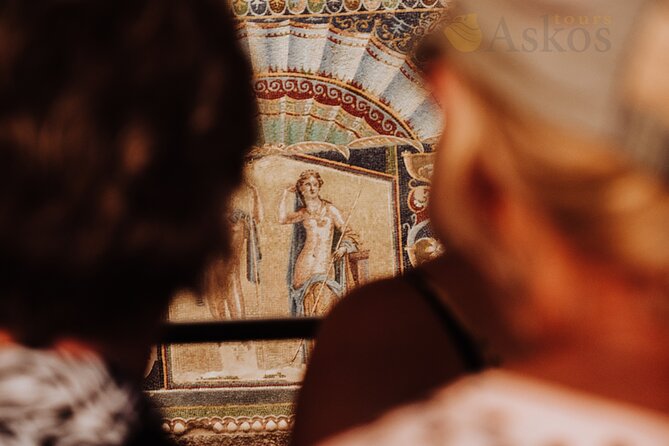
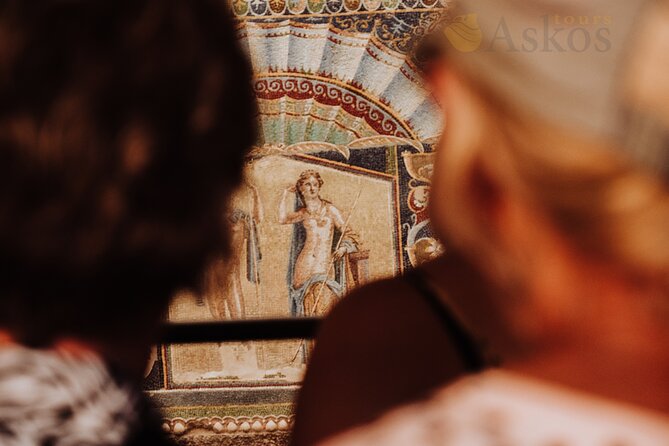
The House of the Black Salon, also called the House of the Black Hall, is one of Herculaneum’s more luxurious residences. Its monumental entrance still preserves carbonized doorposts and a lintel. These dark wooden remains are among the site’s most memorable details because they show that the house once had a working entrance, not simply a decorative facade.
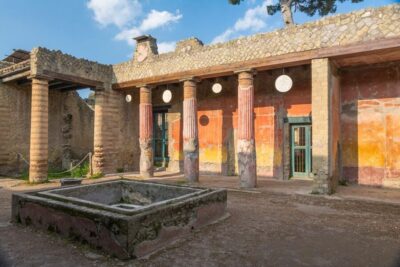
The Samnite House offers a different style of domestic design. Its splendid atrium is surrounded by a gallery with Ionic columns, and the rooms retain fresco decoration. The name refers to an arrangement associated with the Samnites, an ancient people who occupied parts of central Italy.
Here, your guide can help you compare houses instead of treating each one as an isolated stop. Look at how courtyards, columns, wall paintings, and entrances create status. You may also notice that the word luxurious does not mean every room was equally grand. Roman houses mixed formal reception areas with practical service spaces.
The tour then reaches Casa del Bel Cortile, the House of the Fine Courtyard. It is unusual because it has a courtyard with a staircase and stone balcony instead of the more familiar atrium. That difference is a reminder that Roman homes followed patterns, but owners adapted them to their needs and plots.
The Grand Portal and the final overview
The final listed stop is the House of the Grand Portal, a large domus in the center of the archaeological area. It includes columns, frescoes, and carbonized wooden components. By this point, you have seen enough houses to read the basic vocabulary of Herculaneum: entrance, courtyard, decorated reception room, service area, and upper-level construction.
Ending with a substantial central house works well for a short tour. You finish with a broad sense of how the town was built rather than with one single monument. The guide may also use this moment to connect the preserved materials to the eruption and to explain what you can continue seeing after the formal tour ends.
The route allocates about 10 minutes to each stop. That is enough for a focused explanation, but not enough for a slow look at every room. You should expect an overview with selected details, not a complete examination of every open building.
What the archaeologist adds
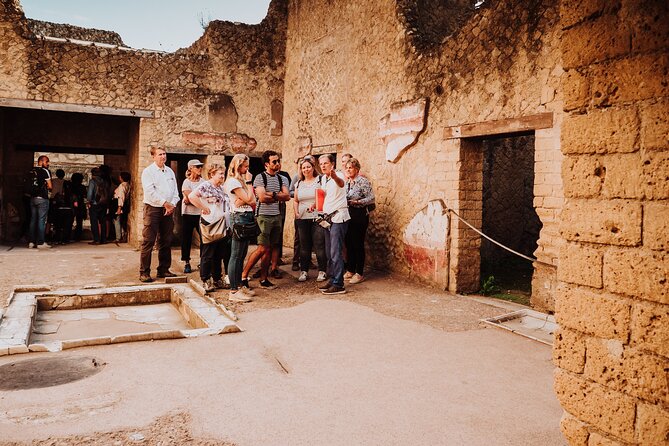
An audio guide can tell you dates and labels. A live archaeologist can react to what you are looking at. That difference is most useful when a building has a strange layout or when the evidence allows more than one interpretation.
The best guides on this experience combine facts with stories about people and practical life. Luciano Leone has been praised for showing reconstruction images. Paulo is described as clear and passionate. Julia is noted for strong English and authority on the site. Luciano, Antonella, and others are praised for making ancient life feel understandable without turning the tour into a lecture.
The headsets are important in a group. With up to 20 people, you may not always be close enough to hear a normal speaking voice. They let you look at the walls and floors while staying with the explanation. In smaller groups of six or twelve, the experience should feel easier, but the maximum group size is still worth noting.
Pacing can vary. One guide was criticized for running overtime and causing a guest to miss part of the onsite museum. Another moved fast so the group could see more. If you want a long, unhurried look at every room, a private tour or self-guided visit may suit you better. If you want someone to select the essential stops and explain them clearly, this format makes sense.
Is $53.81 a fair price?
The price is $53.81 per person. Adult admission to Herculaneum is listed at 16 euros, while EU citizens aged 18 to 25 pay 2 euros. The tour price includes the Herculaneum entry ticket, licensed archaeological guide, headsets, guidance, and assistance.
For a full-price adult, the ticket alone accounts for a meaningful part of the cost. You are paying the remainder for a two-hour guided route and the convenience of organized entry. I consider that fair if you value interpretation and have limited time in the Naples area.
The value is less clear for an eligible EU visitor paying the reduced 2-euro admission. In that case, the guided portion makes up most of the price. You should book it because you want the specialist explanation, not because you expect the cheapest possible entrance.
The tour is also useful if Herculaneum is competing with Pompeii in your schedule. One participant preferred spending time at Herculaneum rather than visiting Pompeii, especially for the preserved frescoes, tiled floors, artifacts, and household details. You do not need to choose based on reputation alone. Herculaneum offers a shorter, more concentrated visit, while the tour helps you make sense of the compact site.
Weather, dogs, and practical comfort
The tour operates in all weather. Wear clothing suited to the forecast and shoes you can walk in comfortably. Rain did not stop one tour, but wet conditions can make an archaeological site less pleasant, and the guide may need to keep moving.
Most people can participate, and the site is near public transportation. Service animals are allowed. Dogs are also allowed in the Herculaneum Archaeological Park without breed or size restrictions, but they must be leashed or muzzled, and you must carry bags for waste.
There are limits inside the Antiquarium, Boat Pavilion, and houses with mosaic floors. In those areas, dogs may enter only if carried or placed in a suitable carrier. If you are bringing a dog, plan around those rules rather than assuming every indoor area will be open to you.
Who should book this Herculaneum tour?
I would choose this tour if you have about two hours, want the main highlights, and prefer explanations from a trained archaeologist. It suits first-time visitors, families with older children, and anyone who finds Roman domestic architecture hard to read without help.
It is also a good choice for visitors who want to compare Herculaneum with Pompeii. The tour focuses on houses, baths, civic buildings, and preserved household materials, giving you a strong introduction to the town’s daily life.
I would hesitate if you dislike group pacing, need frequent rest stops, or want to spend a long time inside the museum. The guide may move quickly, and the route includes plenty of standing. A self-guided visit gives you more control, though you will give up the archaeologist’s explanations and the convenience of a planned route.
The experience has a listed rating of 4.9 out of 5 from 994 ratings, with 96 percent of participants recommending it. Those figures fit the main pattern: the guide quality is usually the reason to book, while pace is the main thing to watch.
Should you book it?
Book this Herculaneum tour if you want the site to make sense, not just look old. The preserved wood, frescoes, courtyards, baths, and human stories reward careful explanation, and the archaeologist guide adds value that a basic audio guide cannot always provide.
At $53.81, it is not the cheapest way in, especially for reduced-fare EU visitors. But for a full-price adult with limited time, skip-the-line entry, headsets, admission, and two hours with a specialist make it a sensible purchase. Arrive early, expect to stand, and keep extra time afterward if you want to explore the museum or revisit favorite houses.
FAQ
Where does the Herculaneum tour begin?
It begins at the ticket office of the Herculaneum ruins, at Corso Resina 187, 80056 Ercolano.
Where does the tour end?
The tour ends inside the Herculaneum Ruins archaeological area.
How long does the experience last?
The guided tour lasts approximately two hours.
How many people can join the group?
The group can include a maximum of 20 travelers per guide. Some departures may be smaller.
Is the Herculaneum entrance ticket included?
Yes. The Herculaneum entry ticket is included in the tour price.
Is a guide with an archaeological background included?
Yes. The experience includes a licensed guide with an archaeological background.
Are headsets provided?
Yes. Headsets are included so you can follow the guide during the walking tour.
How can I reach the meeting point by train?
The Circumvesuviana station is at Corso Resina 1, about a 10-minute walk from the meeting point.
Can I cancel for a full refund?
Yes, if you cancel at least 24 hours before the experience start time. Cancellations made less than 24 hours in advance are not refunded, and the tour may be canceled if its minimum number of participants is not reached.
Just added around Naples
- Full-Day Tour of the Amalfi Coast and Pompeii from Naples★ 4.5 · 3 reviews
- The Ultimate Neapolitan Cooking Class with Local★ 5.0 · 3 reviews
- Naples: Old City Center Street Food Tour with Spritz★ 4.7 · 3 reviews
- Visit in Pompeii – Naples Private Tour with Ada★ 5.0 · 3 reviews
- Transfer from Naples to Sorrento or viceversa★ 5.0 · 3 reviews
- Naples: National Gallery of Capodimonte Tour★ 5.0 · 3 reviews
- Visit 2 wine producers with tasting and transportation included★ 5.0 · 3 reviews
- Naples: Mozzarella experience★ 5.0 · 3 reviews
Herculaneum Tours, compared.
Pompeii & Herculaneum with Archaeologist Guide
Read our review →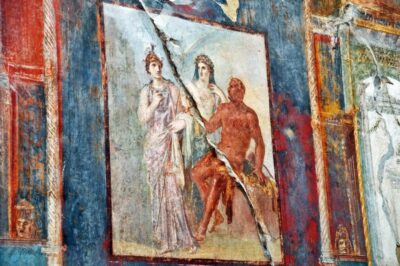
Pompeii, Herculaneum, & Vesuvius Full-Day Tour
Read our review →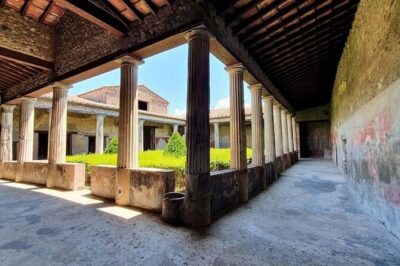
Day Trip of Pompeii, Herculaneum and Vesuvius from Naples
Read our review →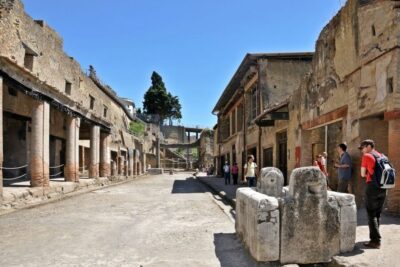
Pompeii & Herculaneum Day Trip from Naples with Lunch
Read our review →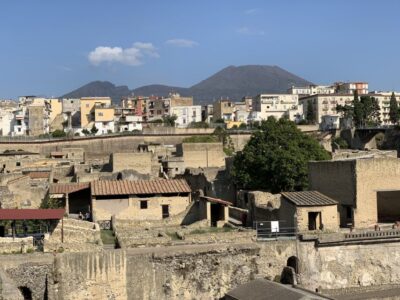
Browse the lists this tour appears in