
Reviewed · MUSEUMS
Naples Skip-the-Line San Martino National Museum and Charterhouse Ticket
The best reason to visit San Martino is the combination of serious art and sweeping views. This former Carthusian monastery sits high on Vomero hill, where its cloisters, church, and terraces give you both a close look at Naples’ artistic past and a wide view toward the Bay of Naples and Mount Vesuvius.
I especially like the Great Cloister, with its unusual cemetery and skulls set along the balustrades, and the museum’s famous Cuciniello nativity scene, a huge Neapolitan crib filled with figures and detail. The main caution is the ticket arrangement: some purchasers have had trouble redeeming electronic vouchers or finding a genuine priority line, so read the confirmation instructions closely before you go.
In This Review
- Key points to know
- Why San Martino belongs on your Naples plan
- Reaching the hilltop and using the ticket
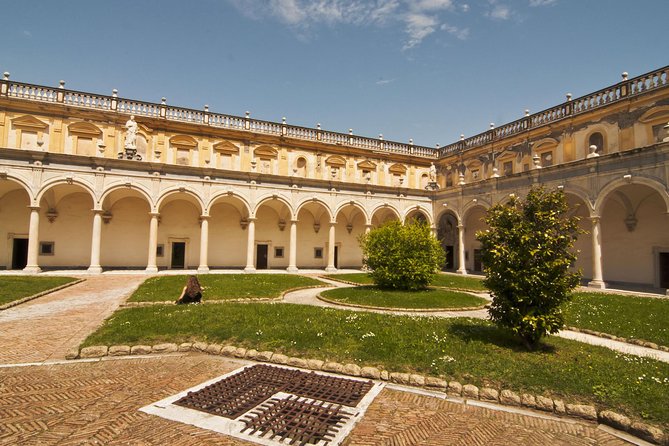
- The Procurators’ Cloister and first look inside
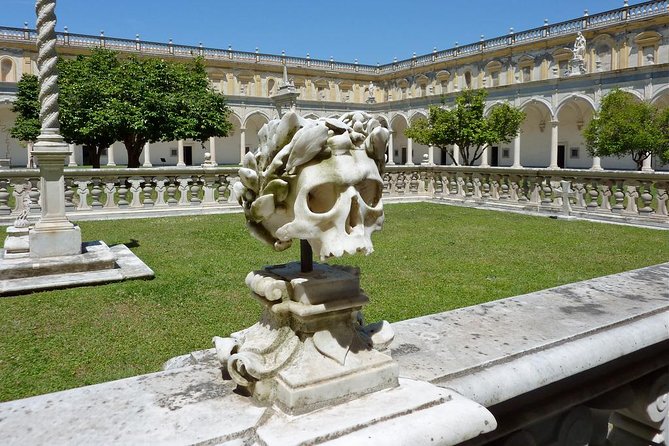
- The Great Cloister and its marble skulls
- The church, Lanfranco, and Luca Giordano
- The San Martino Museum and Naples in objects
- Cuciniello’s Crib and the Neapolitan nativity tradition
- The terraced gardens and Vesuvius view
- How long to allow and who will enjoy it
- The ticket’s value and the practical risk
- Health rules and entry conditions
- Should you book San Martino?
- FAQ
- Where is the San Martino National Museum and Charterhouse?
- How long does the visit take?
- Is transportation included?
- Is this a guided tour?
- What does the skip-the-line ticket include?
- What document do I need to bring?
- Can I select any exact admission time?
- Are reduced-price or free tickets available?
- Can I cancel or change the booking?
Key points to know
- The Great Cloister includes a monks’ cemetery: Marble skulls on the balustrade create one of Naples’ most memorable, slightly macabre sights.
- Lanfranco’s church ceiling is a major highlight: Look up for the large frescoes, then continue to Luca Giordano’s Triumph of Judith in the Chapel of the New Treasury.
- Cuciniello’s Crib is far more than a small nativity display: This grand Neapolitan scene is one of the museum’s most distinctive objects.
- The hilltop setting adds real value: Terraced gardens offer open views over Naples and toward Vesuvius.
- This is an independent visit: You receive admission rather than a guided tour, so plan to read, pause, and explore at your own speed.
- Allow two to three hours: The monastery, museum, chapels, and gardens deserve more than a quick stop.
Why San Martino belongs on your Naples plan

Naples can feel crowded and noisy at street level. San Martino gives you a different view of the city, both literally and culturally. The charterhouse occupies one of the highest points in Naples, sharing the hilltop area with Castel Sant’Elmo, and its terraces open across the city and bay.
The complex was consecrated in 1368 as a Gothic Carthusian monastery. In the 1600s, much of it changed into the Baroque style you see today. Later additions included the Maddalena Chapel, the Refectory, and the cloister. In 1866, Giuseppe Fiorelli established the museum to preserve objects connected with Naples and the former southern kingdom.
That history matters because you are not walking through a single-purpose museum. You move from a working religious complex to Baroque art rooms, then into collections that explain local customs, craft, transport, and devotion. It feels like several Naples museums joined together inside one remarkable building.
The admission price of about $12.80 is reasonable if you use the full visit. You are paying for a large monastery complex, multiple art-filled rooms, historic religious spaces, the nativity collection, and the gardens. It is less attractive if you only want a quick viewpoint or if your visit is rushed.
More museums and sites in Naples:
- Naples: National Archaeological Museum Ticket & Audio App
★ 4.4 · 617 reviews - Naples: National Archaeological Museum of Naples Guided Tour
★ 4.8 · 498 reviews - Naples: National Archaeological Museum Tour & Digital Guide
★ 4.2 · 177 reviews
Reaching the hilltop and using the ticket
You travel independently to the Certosa e Museo di San Martino. Hotel pickup, transport, food, and a meeting point are not included, so you need to arrange your own way to Vomero hill.
The booking process offers several admission times. Your selected time is a preference, not an absolute guarantee. If that slot is unavailable, the museum or ticket provider may confirm the closest available time during opening hours on your chosen date. Check the final confirmation rather than relying only on the time you first requested.
The ticket is intended to save you from buying a standard admission at the museum. Still, the priority-entry promise deserves a practical warning. At least one purchase resulted in a wait with regular ticket buyers, and another person had to buy replacement tickets after the supplied material was not accepted. These problems may be linked to using the wrong document or to ticket-desk procedures, but they can affect your day either way.
Bring the printed Weekend in Italy confirmation voucher as instructed. The admission rules specify that the official museum ticket sent after booking is required, and an electronic confirmation alone may not be enough. If your documents have not arrived within the stated confirmation period, contact the provider before setting out.
This is a non-refundable booking that cannot be changed after purchase. Pick your date carefully, and do not assume you can shift the visit if your Naples plans change.
The Procurators’ Cloister and first look inside
Once inside, begin with the monastery spaces before rushing to the museum rooms. The Procurators’ Cloister is a graceful introduction, with orderly lines, pale stone, and the quiet mood you would expect from a former religious house.
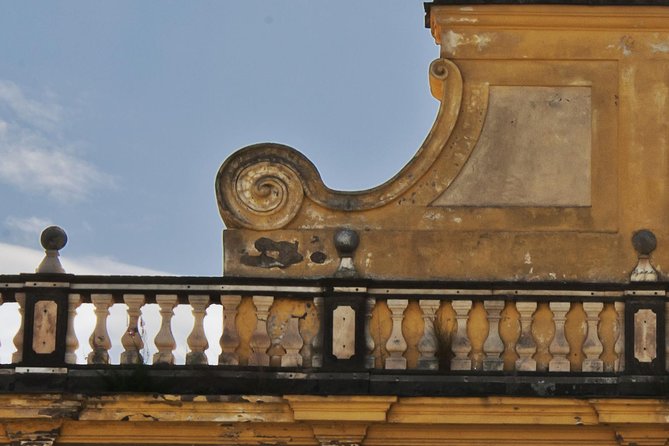
The architecture tells the story of the complex’s change from Gothic beginnings to a more elaborate Baroque appearance. You can see how later decoration added visual drama without erasing the monastery’s original purpose.
This first section also helps you understand the layout. San Martino is not arranged like a simple gallery with one straight route. You will pass through cloisters, chapels, the church, choir spaces, sacristy, and museum rooms. Give yourself time to notice doorways and signs so you do not hurry past smaller rooms that hold some of the best art.
The Great Cloister and its marble skulls
The Great Cloister is one of the strongest reasons to visit. It is often described as one of Italy’s finest cloisters, and its design combines calm proportions with a striking reminder of mortality.
The monks’ cemetery occupies part of the cloister. Human skulls appear on the balustrades, turning the passage into a place for reflection rather than a mere architectural ornament. The effect is unusual, memorable, and very Neapolitan in its directness.
I would not rush through this area. Look at the relationship between the cemetery, the columns, and the open sky. The space is beautiful, but its beauty is not soft or decorative only. The skulls make the religious purpose of the monastery impossible to forget.
A few more Naples trips worth weighing up
- Herculaneum: Skip-the-Line Guided Tour with Archaeologist
★ 4.8 · 3,439 reviews - Mount Vesuvius: Skip-the-Line Ticket and Smart Digital Guide
★ 4.2 · 2,780 reviews - From Naples: Pompeii Skip-the-Line Entry Ticket and Tour
★ 4.4 · 2,753 reviews - Pompeii: Skip-the-Line Entry Ticket with Audio Guide or Tour
★ 4.1 · 1,364 reviews
The church, Lanfranco, and Luca Giordano

The church is the artistic center of the charterhouse. The vault retains its original 14th-century frame, while later painters covered the interior with large and carefully arranged works.
The ceiling frescoes by Giovanni Lanfranco deserve your full attention. Stand where you can take in the broad composition, then look more closely at the figures and details. A visit here rewards patience, since the scale can be difficult to absorb in one glance.
The Chapel of the New Treasury brings another major name into view. Its 18th-century mural of the Triumph of Judith was painted by Luca Giordano, one of Naples’ important Baroque artists. The chapel adds a more enclosed, concentrated experience after the open sweep of the church.
Continue to the Maddalena Chapel, Conversi Choir, and sacristy. These rooms preserve paintings and decoration by artists including Caracciolo, Finoglia, Guido Reni, Jusepe de Ribera, and Stanzione. The supplied itinerary also identifies work by Vaccaro and De Mura in the complex, showing how many artists contributed to its later appearance.
Because entry is independent, you will not have a guide pointing out each name or explaining every scene. That is a drawback if you want a formal art-history lesson. It is also an advantage if you prefer to set your own pace and spend ten minutes with one painting without holding up a group.
The San Martino Museum and Naples in objects
The museum collection broadens the visit beyond church art. Here you can trace parts of Naples and southern Italy through paintings, objects, maritime displays, and historical material.
The value of these rooms is their local focus. Instead of seeing only famous religious works, you encounter objects connected with the city’s customs and public life. The collection helps you understand Naples as a former capital with its own traditions, symbols, and visual language.
The maritime exhibits add another angle. Naples has always been shaped by its position beside the sea, and these displays connect the city’s identity with boats, travel, and the Bay of Naples.
Do not treat the museum as a short corridor on the way to the view. The collection is spread through rooms of the former charterhouse, so your pace will affect how much you get from it. If you are interested in painting and architecture, two hours may be enough. If you want to inspect the artifacts and nativity scenes properly, plan closer to three.
Cuciniello’s Crib and the Neapolitan nativity tradition

The Cuciniello Crib, or Presepe Cuciniello, is the museum’s most distinctive display. It is a large historic nativity scene, not a small church ornament. Its many figures and carefully built setting show the importance of nativity art in Naples.
You should make time for this even if you are not especially interested in religious displays. The scene offers a glimpse into Neapolitan craft, storytelling, and everyday character. The human figures, clothing, buildings, and arrangement create something closer to a miniature world than a simple Christmas tableau.
The museum also holds other historic crib scenes. Taken together, they show how nativity making became a major local tradition. A visit in Naples is richer when you look beyond the grand churches and notice how devotion appears in domestic and handmade forms too.
Several high ratings for this visit center on the hilltop view and the beauty of the crib. That pairing makes sense. One gives you Naples at a distance, spread around the bay, while the other brings you into a detailed local tradition at close range.
The terraced gardens and Vesuvius view
Save the terraced garden for the end if the weather is clear. After the enclosed church and galleries, the open air feels like a natural finish.
From the garden, you can look over Naples and toward Mount Vesuvius. The view is one of the strongest practical reasons to make the trip up Vomero hill, especially if your schedule does not include another high viewpoint.
This is not just a quick photo stop. Use the view to orient yourself. The bay, the city, and the volcano help you understand Naples’ setting in a way that street-level sightseeing cannot. The garden also gives you a quiet pause after the visual weight of the church and museum.
Weather will affect this part of the experience. The museum and monastery remain worthwhile if the sky is hazy, but clear conditions make the garden far more rewarding.
How long to allow and who will enjoy it
The stated visit takes about two to three hours, and that is a sensible range. One hour is enough for a brisk look at the main monastery areas, but it will leave little time for the full museum and garden.
I would choose this visit if you enjoy:
- Architecture with a strong religious and historical setting
- Baroque painting and large ceiling frescoes
- Unusual details such as the skulls in the monks’ cemetery
- Local folk art and historic nativity scenes
- City views and quiet garden spaces
- Exploring independently rather than following a guide
Families can participate, and most people can take part. The site includes art, architecture, and visual details that can appeal to different ages, though younger children may not stay interested through every gallery.
This ticket is less suitable if you want a guided explanation, a tightly organized tour, or transport from your hotel. Nothing here is led by a named guide, and the experience ends when you leave the complex.
The ticket’s value and the practical risk
At $12.80 per person, the price is modest for the amount of material inside. If you spend the full two or three hours, the cost compares well with many major Naples attractions. You get a monastery, church, cloisters, museum, nativity collection, and viewpoint in one admission.
The value depends on the ticket working smoothly. The low rating of 3.2 from 11 ratings is pulled down by serious admission problems, including claims that priority entry was not available and that tickets had to be purchased again. At the same time, the positive responses focus on the experience itself, especially the views and Cuciniello’s Crib.
That split is useful. The site is clearly worth seeing, but the booking method requires care. Confirm that you have received the official ticket, print the required voucher, and allow some flexibility around your chosen entry time. If losing money on a non-refundable booking would cause trouble, buying directly from the museum may feel safer, though the supplied details do not provide the museum’s current direct price or availability.
Reduced-price and free tickets are handled directly at the museum. The reduced rate applies to European Union citizens aged 18 to 24 and European Union state teachers. Free entry is available for European and non-European people under 18, according to the supplied conditions. If you qualify, compare the direct museum option before paying for this voucher.
Health rules and entry conditions
The supplied information includes mask use for visitors and museum staff during the entire time inside. It also describes limited entrances and exits, one-meter distancing signs, hand-sanitizer dispensers, regular cleaning, and possible temperature checks.
These rules can change, so check the current instructions close to your visit. The important point is to expect controlled entry and to follow posted directions inside the complex.
Should you book San Martino?
I would book this experience if you want a self-guided visit that mixes major art, unusual monastery architecture, a famous Neapolitan crib, and one of Naples’ best high views. The Great Cloister, Lanfranco’s ceiling, Giordano’s chapel, and the garden give you several strong reasons to go, even if one part of the museum does not hold your attention.
I would be careful about booking if your schedule is rigid or if you need guaranteed trouble-free electronic entry. Print the voucher, wait for the official ticket, and verify the confirmed admission time before you leave. If you qualify for free or reduced admission, check the direct museum route first.
For the right visitor, this is one of Naples’ most rewarding independent museum stops. You get far more than a painting collection: you get a former monastery, a vivid local nativity tradition, a cemetery lined with skulls, and the city spread below you.
FAQ
Where is the San Martino National Museum and Charterhouse?
It is on Vomero hill above Naples, near the city’s highest point and close to Sant’Elmo.
How long does the visit take?
Plan on approximately two to three hours. A quicker visit can cover the main highlights, but more time lets you see the church, cloisters, museum, crib scenes, and garden without rushing.
Is transportation included?
No. You travel independently to the charterhouse, and transportation to and from the attraction is not included.
Is this a guided tour?
No. The ticket provides admission, and you explore the complex independently at your own pace.
What does the skip-the-line ticket include?
It includes priority admission to the San Martino monastery-museum and access to its cloisters, church, chapels, museum rooms, historic crib scenes, and gardens.
What document do I need to bring?
You must print and present the Weekend in Italy confirmation voucher. The official museum ticket sent after booking is required for entry, and other documents may not be accepted.
Can I select any exact admission time?
The time you request is a preferred time. The museum or provider confirms the closest available time during opening hours on your selected date if the requested slot is unavailable.
Are reduced-price or free tickets available?
Reduced-price tickets are available directly at the museum for European Union citizens aged 18 to 24 and European Union state teachers. Free tickets are available for people under 18 from European and non-European countries.
Can I cancel or change the booking?
No. The experience is non-refundable and cannot be changed for any reason, so choose your date carefully before booking.
Just added around Naples
- Full-Day Tour of the Amalfi Coast and Pompeii from Naples★ 4.5 · 3 reviews
- The Ultimate Neapolitan Cooking Class with Local★ 5.0 · 3 reviews
- Naples: Old City Center Street Food Tour with Spritz★ 4.7 · 3 reviews
- Visit in Pompeii – Naples Private Tour with Ada★ 5.0 · 3 reviews
- Transfer from Naples to Sorrento or viceversa★ 5.0 · 3 reviews
- Naples: National Gallery of Capodimonte Tour★ 5.0 · 3 reviews
- Visit 2 wine producers with tasting and transportation included★ 5.0 · 3 reviews
- Naples: Mozzarella experience★ 5.0 · 3 reviews
Museums, compared.
National Archaeological Museum Ticket & Audio App
Read our review →
National Archaeological Museum of Naples Guided Tour
Read our review →
National Archaeological Museum Tour & Digital Guide
Read our review →
Sant’Aspreno ai Crociferi: Church & Jago Museum Guided Tour
Read our review →
Skip the Line: National Archaeological Museum of Naples Entry Ticket
Read our review →
Browse the lists this tour appears in