

Reviewed · POMPEII TOURS
From Naples: Herculaneum and Pompeii Day Trip with Tickets
Vesuvius buried two Roman cities in the same eruption, but it preserved them in very different ways. Herculaneum feels intimate, with houses, mosaics, frescoes, and carbonized wood close at hand. Pompeii is the larger stage, where long streets, public buildings, villas, and the amphitheater show how a whole city worked.
I like the clear split between the two sites: 2.5 hours at Herculaneum gives you a focused first look, then four hours at Pompeii lets you wander without a rushed checklist. I also like the practical bus connection from Naples and the skip-the-line tickets, especially since you do not need to arrange two separate trips by train or local bus.
The main drawback is that this is not a guided tour. The driver speaks English, but there is no live guide walking through the ruins with you. You receive a Pompeii audio guide, while Herculaneum is self-guided, so bring some curiosity and be ready to read the site on your own.
In This Review
- Key points at a glance
- Why visiting both sites makes sense
- Meeting the bus in Naples
- Herculaneum: small site, close-up details
- The short transfer to Pompeii
- Pompeii: four hours to understand a whole city
- What the free-time format feels like
- Tickets, comfort, and what to bring
- Is $123.48 a fair price?
- Who should book this day trip?
- Final verdict: efficient, flexible, and self-guided
- FAQ
- Where does the tour begin and end?
- How long is the experience?
- Is hotel pickup included?
- Are entrance tickets included?
- Is there a live guide?
- What languages are available for the Pompeii audio guide?
- Do I need identification for the audio guide?
- What should I bring, and are large bags allowed?
Key points at a glance
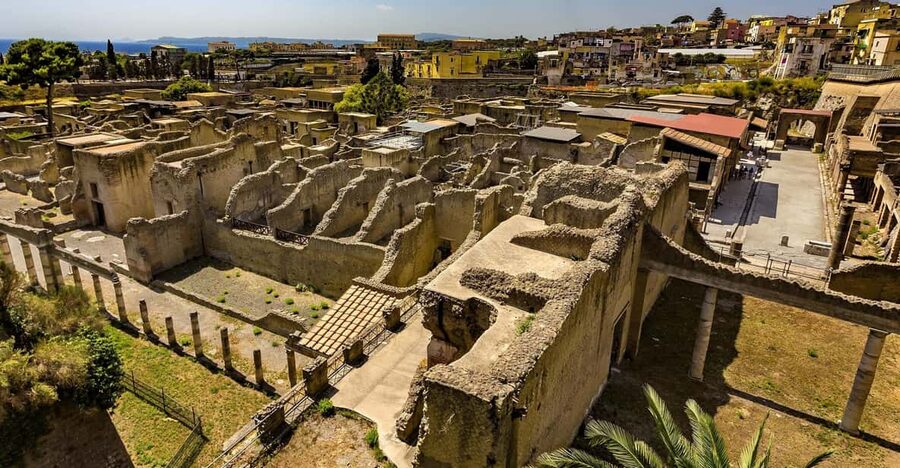
- Two Roman cities in one day: See Herculaneum and Pompeii, which were covered by the eruption of Vesuvius in 79 AD but offer very different experiences.
- 2.5 hours at Herculaneum: Use this time for the compact ruins, preserved homes, frescoes, mosaics, and carbonized wooden features.
- Four hours at Pompeii: The longer visit suits Pompeii’s wide streets, public buildings, villas, amphitheater, and volcanic victim casts.
- Skip-the-line entry: Tickets are arranged for both archaeological sites, saving you from joining the standard ticket queue.
- Pompeii audio guide included: Select from several languages, including English, Italian, French, German, Spanish, Portuguese, Chinese, Dutch, Hebrew, and Russian.
- Central Naples meeting point: Meet at Via Galileo Ferraris 40 and look for the bus with the Around Vesuvio logo.
Why visiting both sites makes sense
If you have only one day for the Roman ruins near Naples, visiting both sites gives you a much fuller picture than choosing just one. They were destroyed by the same eruption, yet the volcanic material affected them differently.
At Pompeii, ash and pumice covered streets, homes, shops, and public spaces. The city feels broad and urban. You can trace its roads, look into houses, and picture daily routines across a large area.
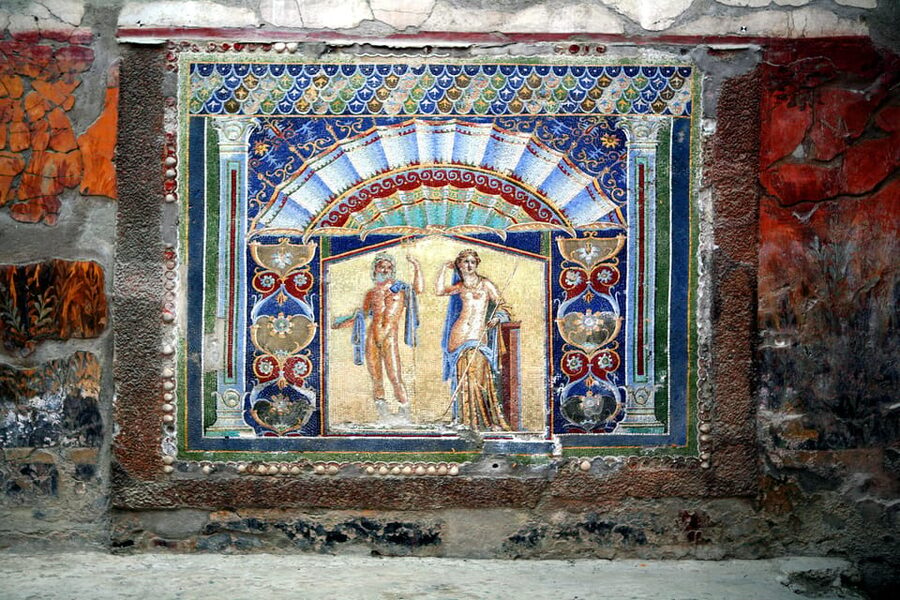
Herculaneum was covered by hotter volcanic material and remained smaller in scale. Many buildings retain upper sections, interior decoration, and wooden details that help you understand how Roman homes were built and used. The experience is less about covering a huge city and more about looking closely.
I recommend treating Herculaneum as the detail-rich first chapter and Pompeii as the grand second chapter. The order also works well physically: you begin with 2.5 hours in Herculaneum, then have four hours to handle Pompeii’s much larger site.
More ways to see Pompeii:
- From Naples: Pompeii Ruins & Mount Vesuvius Day Tour
★ 4.3 · 11,459 reviews - Naples or Sorrento: Full-Day Pompeii and Mount Vesuvius Tour
★ 4.6 · 4,235 reviews - Pompeii & Mt.Vesuvius Day Tour from Naples with Pizza Lunch
★ 4.0 · 2,901 reviews
Meeting the bus in Naples
The trip begins at Via Galileo Ferraris 40, a central meeting point in Naples. If you use Google Maps, the supplied coordinates are 40.8505189, 14.2747942. Look for the bus marked with the Around Vesuvio logo.
This is a meeting-point service, not a hotel pickup. You need to make your own way to the departure location, so allow enough time to find the bus and check the logo before departure. The activity ends at the same place, which makes it easier to plan an evening in Naples afterward.
The first bus ride takes about 40 minutes. It is a useful part of the day because you avoid piecing together separate public transport connections between Naples, Herculaneum, and Pompeii. The transfer also gives you a break before walking through the ruins.
The driver speaks English, but the service does not include a live archaeological guide. That distinction matters. You get transport, admission, and independent sightseeing rather than a narrated group tour from start to finish.
Herculaneum: small site, close-up details
You have 2.5 hours of free time at Ercolano, the modern town beside ancient Herculaneum. The skip-the-line ticket gets you past the normal ticket queue, then you can explore independently.
Herculaneum is especially good for visitors who enjoy seeing details inside buildings. Walk along ancient streets and enter Roman homes where frescoes and mosaics remain visible. The preserved decoration can make the ruins feel more immediate than a site made up mainly of foundations and broken walls.
Look for the carbonized wooden structures and preserved artifacts. These objects help connect the grand story of the eruption to ordinary life. A decorative floor is impressive, but a surviving wooden feature or household item can tell you just as much about how people lived.
The site is smaller than Pompeii, which is one reason the 2.5-hour visit works. You can take your time in key buildings instead of spending the whole visit trying to cross a vast area. Still, you should keep an eye on your watch. If you stop for every fresco and mosaic, your time can disappear quickly.
Herculaneum does not come with the included audio guide described for Pompeii. You will need to read the available information at the site and make your own connections. If you prefer a highly structured explanation, this portion may feel less satisfying than the Pompeii visit.
That said, the quiet, self-directed format suits people who like to pause and look. You can spend longer on a mosaic that catches your eye, or move on quickly from a building that interests you less. There is no live guide setting the pace.
The short transfer to Pompeii
After Herculaneum, you return to the bus for a transfer of about 30 minutes to Pompeii. This break is useful after walking through the first site, but it also marks a change in scale.
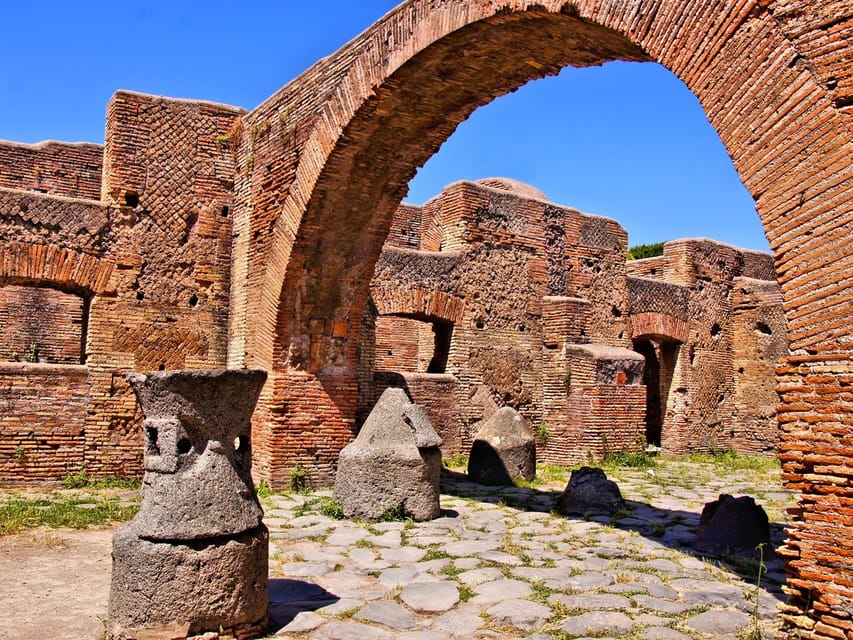
Pompeii is not a compact collection of ruins. Four hours gives you a substantial amount of time, but you cannot expect to see every street and building in detail. The best approach is to accept that you are choosing highlights, not completing a museum inventory.
Your admission ticket is included, and the Pompeii entrance ticket is listed at €20. The value of the excursion comes from more than admission alone. You are also paying for the roundtrip connection from Naples, the Herculaneum ticket, the Pompeii audio guide, and the convenience of handling both sites in one day.
At $123.48 per person, this is not the cheapest possible way to visit the ruins. You may spend less by arranging public transport and buying admissions yourself. The practical question is how much you value having the route organized, the two transfers included, and the ticket queues removed.
More Herculaneum visits from Naples:
- Herculaneum: Skip-the-Line Guided Tour with Archaeologist
★ 4.8 · 3,439 reviews - Herculaneum Small Group Tour and Ticket With an Archaeologist
★ 5.0 · 994 reviews - Herculaneum: Skip-the-Line Entry Ticket with Audio Guide
★ 4.3 · 870 reviews - From Naples: Pompeii & Herculaneum with Archaeologist Guide
★ 4.8 · 665 reviews
Pompeii: four hours to understand a whole city
Pompeii gives you the longer visit because its size demands it. With four hours, you can get beyond a quick look at the main entrance and spend time understanding the city’s layout.
Use the audio guide to give shape to what you see. Pompeii can be confusing at first, since streets, houses, public buildings, and open spaces spread in several directions. A good audio explanation helps you connect individual ruins to the wider Roman city.
The guide is available in Chinese, Dutch, English, French, German, Hebrew, Italian, Portuguese, Russian, and Spanish. You need to provide valid identification to rent the audio guide, so bring your passport or ID card. This is also listed among the items to bring for the activity.
The grand amphitheater is one of the major sights included in the visit. Its scale helps you understand that Pompeii was not simply a collection of private homes. It was a functioning city with public entertainment, commerce, religious spaces, and civic life.
The plaster casts of volcanic victims are harder to view. They bring a human weight to the eruption, and you may find them haunting rather than simply interesting. Give yourself time to reflect, but remember that the casts are only one part of a much larger archaeological site.
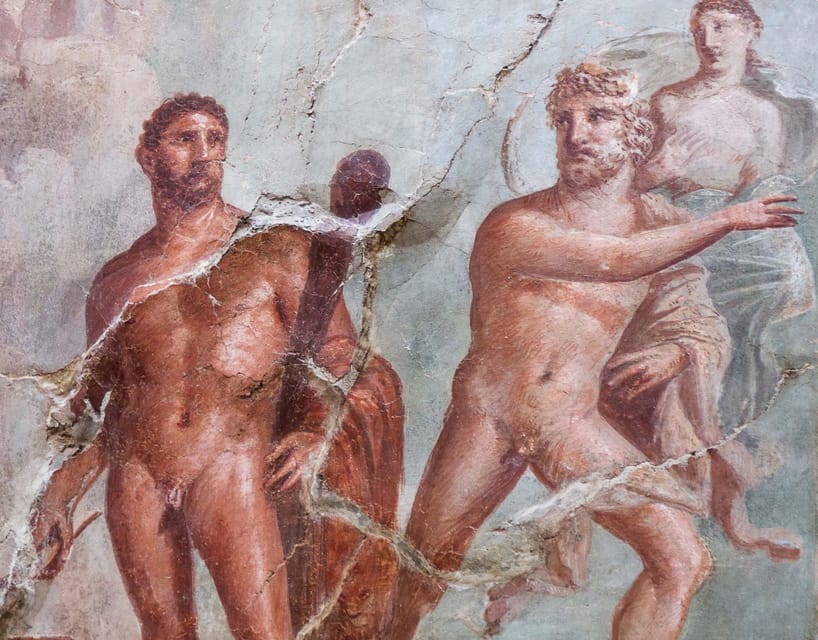
Pompeii’s decorated villas provide another strong reason to spend the full four hours. Frescoes and mosaics show the taste and wealth of homeowners, while the streets and public buildings give you the everyday setting around them. Moving between these spaces is what makes Pompeii useful: you see both private life and the public city.
The audio guide lets you choose how much explanation you want. You can listen closely at a villa, then move faster through a less important section. This freedom is helpful, but it also means you must manage your own route and time.
What the free-time format feels like
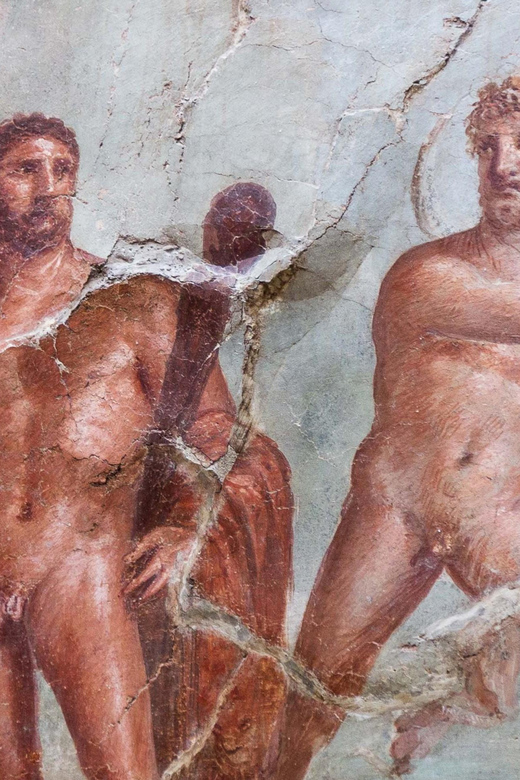
The schedule gives you long blocks of independent time rather than a tightly managed guided walk. I see this as the tour’s biggest strength for some people and its clearest weakness for others.
You can stop for photos, read at your own pace, and decide which ruins deserve extra attention. You do not have to stay beside a guide or wait for a large group to finish at every stop. The format is a good fit if you already know a little about Roman history or enjoy building your own understanding from an audio guide and site information.
If you want every major building explained by an expert, this will feel limited. There is no live guide included, and Herculaneum does not come with the Pompeii audio guide. You should choose this trip for efficient transport and flexible exploration, not for constant commentary.
The two time limits also require discipline. Herculaneum’s 2.5 hours can feel generous until you start examining the interiors. Pompeii’s four hours sound long, but the site is large and walking between highlights takes time. Keep the return meeting plan in mind and do not wander so far that you have to hurry back.
Tickets, comfort, and what to bring

Skip-the-line entry is useful at both archaeological sites, particularly during busy periods. It does not turn the ruins into a private experience, but it cuts out the standard ticket queue and puts your sightseeing time to better use.
Wear comfortable shoes and clothes. You will be walking through archaeological areas for most of the day, and the surfaces may not feel as easy as a modern pavement. A hat is also sensible, as is a camera if you want to record the frescoes, mosaics, streets, and wider views.
Food and drinks are not included. Plan for that gap in the eight-hour schedule, but do not bring large bags or luggage because these are not allowed. A small, practical day bag is the safer choice, provided it meets the site rules.
Bring a passport or ID card. It is needed for the audio guide rental, and having valid identification with you avoids a preventable problem at Pompeii.
The total duration is eight hours, including the bus rides and visits. The listed transfers take about 40 minutes from Naples to the Herculaneum area, 30 minutes to Pompeii, and 30 minutes back to Naples. Starting times vary, so check the available departure options before booking.
Is $123.48 a fair price?
The price makes the most sense if you value time and simplicity. You get roundtrip transport from a Naples meeting point, entry to both sites, skip-the-line access, 2.5 hours at Herculaneum, four hours at Pompeii, and a Pompeii audio guide.
The included Pompeii admission is listed as €20, but the full cost is not just the ticket. Organizing two archaeological visits independently means checking transport, buying two admissions, finding the correct entrances, and keeping an eye on connections back to Naples. This tour takes those tasks off your plate.
The price is less compelling if you are comfortable navigating on your own and want a live guide. Since no hotel pickup, meals, or live guide are included, you are paying for the organized route and transfers rather than a full-service guided experience.
I would compare the cost with your own transport plan before booking. If your independent plan is only a little cheaper, the bus connection and reserved entry may be worth it. If you are traveling on a tight budget and already plan to use public transport, the premium may not suit you.
The tour offers free cancellation up to 24 hours before departure and allows you to reserve now and pay later. Those terms can help if your Naples schedule is still shifting.
Who should book this day trip?
I would recommend it to a first-time visitor who wants to see both archaeological sites without renting a car or arranging several connections. It also suits couples, families with older children, and independent visitors who prefer free time to a fixed guided walk.
The audio guide makes Pompeii easier to approach, especially if you want context while moving through the streets. The many language choices are useful for international visitors, and English is used for the driver service.
I would hesitate if your top priority is expert commentary at every stage. A specialist guide could explain architecture, eruption conditions, and daily Roman life in more detail than this independent format. You should also think twice if long hours of walking through ruins sound tiring.
Families should note that large bags are not allowed and that the day lasts eight hours. The schedule is straightforward, but it is still a full day with two major sites and several bus transfers.
Final verdict: efficient, flexible, and self-guided
Book this experience if you want the easiest practical way to combine Herculaneum and Pompeii from Naples. The strongest parts are the two-site plan, generous Pompeii visit, skip-the-line tickets, and included bus transfers.
Do not book it expecting a personal historian. You receive an audio guide at Pompeii, but Herculaneum is self-guided and no live guide is included. At $123.48, the value rests on convenience and saved planning time.
For many visitors, that is a sensible trade. Herculaneum gives you close-up Roman homes and preserved decoration, while Pompeii supplies the larger city picture. With comfortable shoes, a hat, valid ID, and realistic expectations about independent sightseeing, this is a well-organized way to see two of Campania’s most important ancient sites in one long day.
FAQ
Where does the tour begin and end?
The tour begins and ends at Via Galileo Ferraris 40 in Naples. The suggested Google Maps coordinates are 40.8505189, 14.2747942. Look for the bus with the Around Vesuvio logo.
How long is the experience?
The full activity lasts eight hours. The schedule includes about 40 minutes to reach Herculaneum, 2.5 hours at Herculaneum, 30 minutes to Pompeii, four hours at Pompeii, and about 30 minutes back to Naples.
Is hotel pickup included?
No. Pickup and drop-off take place at the Naples meeting point. Hotel pickup and drop-off are not included.
Are entrance tickets included?
Yes. Entry tickets to both Herculaneum and Pompeii are included. The Pompeii entrance ticket is listed at €20.
Is there a live guide?
No. A live guide is not included. The driver speaks English, and an audio guide is provided for Pompeii.
What languages are available for the Pompeii audio guide?
The audio guide is available in Chinese, Dutch, English, French, German, Hebrew, Italian, Portuguese, Russian, and Spanish.
Do I need identification for the audio guide?
Yes. You must provide valid identification to rent the audio guide. Bring a passport or ID card.
What should I bring, and are large bags allowed?
Bring comfortable shoes, a hat, comfortable clothing, a camera, and your passport or ID card. Luggage and large bags are not allowed.
More 1-Day Tours in Naples
- From Naples: Amalfi Coast Full-Day Trip
★ 4.5 · 4,354 reviews - From Naples: Pompeii and Vesuvius Guided Day Trip with Lunch
★ 4.8 · 2,237 reviews - From Naples: Pompeii & Amalfi Coast Full-Day Trip with Lunch
★ 4.5 · 2,155 reviews - From Naples or Sorrento: Amalfi Coast Full-Day Trip
★ 4.7 · 2,043 reviews
Just added around Naples
- Full-Day Tour of the Amalfi Coast and Pompeii from Naples★ 4.5 · 3 reviews
- The Ultimate Neapolitan Cooking Class with Local★ 5.0 · 3 reviews
- Naples: Old City Center Street Food Tour with Spritz★ 4.7 · 3 reviews
- Visit in Pompeii – Naples Private Tour with Ada★ 5.0 · 3 reviews
- Transfer from Naples to Sorrento or viceversa★ 5.0 · 3 reviews
- Naples: National Gallery of Capodimonte Tour★ 5.0 · 3 reviews
- Visit 2 wine producers with tasting and transportation included★ 5.0 · 3 reviews
- Pompeii Vesuvius Sorrento from Naples★ 5.0 · 3 reviews
Pompeii Tours, compared.
Pompeii & Mt.Vesuvius Day Tour from Naples with Pizza Lunch
Read our review →

Pompeii & Mt Vesuvius All-Inclusive Small Group w/ Lunch
Read our review →


Pompeii & Amalfi Coast Full-Day Trip with Lunch
Read our review →Browse the lists this tour appears in