
Reviewed · HERCULANEUM TOURS
Herculaneum: Tickets & Tour with a Local Archaeologist
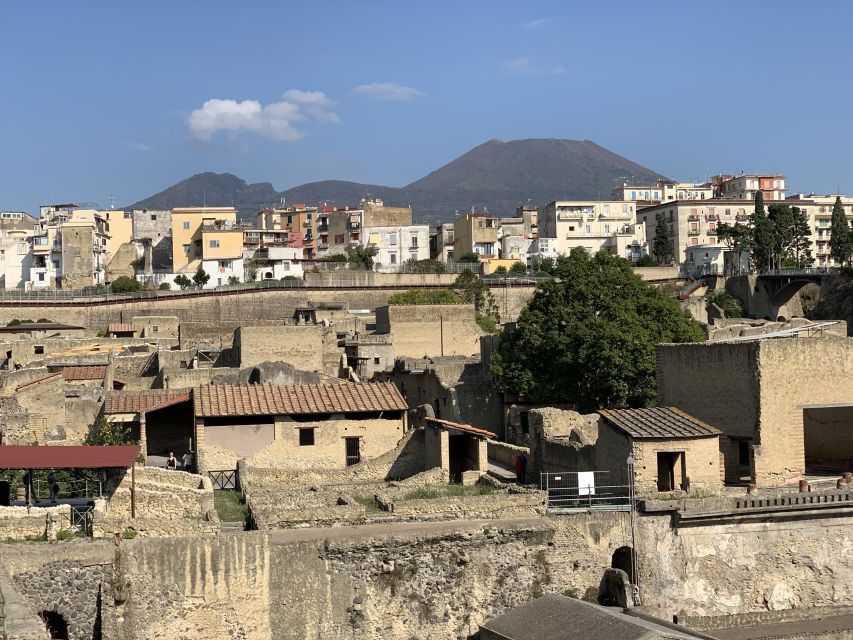
Herculaneum feels less like a field of ruins and more like a Roman town interrupted mid-sentence. Volcanic material sealed its wooden doors, furniture, food and upper floors, so you can read daily life in a way that is often harder to do at Pompeii.
I like the small-group feel, which lets guides such as Raffaele, Riccardo, Enrica and Carlo adjust the pace and answer questions. I also like the clear two-hour route through the best-preserved houses, baths and boat sheds. The main drawback is time: two hours gives you a strong introduction, but not a slow look at every corner, and some visitors have found that noise or a guide’s strong accent can make parts harder to follow.
In This Review
- Key points at a glance
- Why Herculaneum feels different from Pompeii
- Meeting at Biglietteria Ercolano
- Casa dei Cervi and the view of Roman comfort
- Casa di Nettuno ed Anfitrite and Roman decoration
- The Augustales and the public side of town
- The House of Skeletons and the human cost
- Casa dell’Albergo and the scale of the homes
- Original streets, baths, shops and water systems
- What an archaeologist adds for $58
- Pace, sound and family appeal
- Timing your visit
- Who should book this Herculaneum tour
- Should you book it?
- FAQ
- Where does the Herculaneum tour begin?
- How long does the tour last?
- What is included in the price?
- Is hotel pickup included?
- Which languages are available?
- Is a private group available?
- What should I bring?
- Is the tour suitable for wheelchair users?
- Can I cancel for a refund?
- Can I reserve now and pay later?
Key points at a glance
- Wood still survives: See carbonized doors, furniture and other remains rarely preserved at ancient sites.
- The skeletons are at the Boat Houses: This is the most solemn stop, and it deserves a respectful pause rather than a quick photograph.
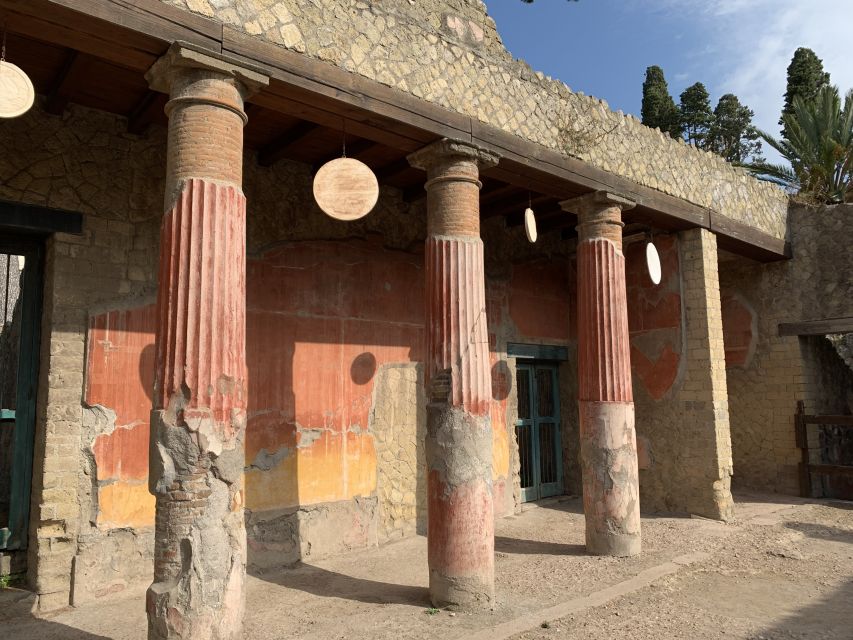
- The houses are unusually complete: Upper floors, painted rooms, mosaics and domestic details help you picture Herculaneum as a lived-in town.
- An archaeologist changes what you see: Guides explain plumbing, Roman words, household customs and the clues hidden in plain sight.
- Two hours is efficient: You cover major highlights without the fatigue of a full-day archaeological visit.
- The tour is not wheelchair accessible: Uneven paths and stairs make this unsuitable for wheelchair users and electric wheelchairs.
Why Herculaneum feels different from Pompeii
Pompeii is the larger name, but Herculaneum often makes the sharper first impression. The town is smaller, and its buildings were buried under a different kind of volcanic material. That helped preserve wooden features, furniture, carbonized food and parts of upper stories.
I find this matters because ruins can become a guessing game. At Herculaneum, a doorway still looks like a doorway. A painted wall still gives you a sense of the room. A shop counter, bathhouse and home can be read as parts of a real neighborhood, not just scattered stones.
The eruption of Mount Vesuvius in 79 AD ended life here with terrible speed. At the Boat Houses, the remains of people who sought refuge give the site its most difficult moment. Your guide can provide context, but you should expect this section to feel somber.
Herculaneum also works well after Pompeii. Several visitors who saw both found Herculaneum more intimate and better preserved, while one person felt Pompeii offered stronger examples of some frescoes. That is a fair comparison. Pompeii gives you scale and variety. Herculaneum gives you closeness and detail.
More Herculaneum visits from Naples:
- Herculaneum: Skip-the-Line Guided Tour with Archaeologist
★ 4.8 · 3,439 reviews - Herculaneum Small Group Tour and Ticket With an Archaeologist
★ 5.0 · 994 reviews - Herculaneum: Skip-the-Line Entry Ticket with Audio Guide
★ 4.3 · 870 reviews
Meeting at Biglietteria Ercolano
The tour begins at the Herculaneum ticket office, known locally as Biglietteria Ercolano. Arrive 10 minutes before the start time. The meeting point is practical, but do not treat this as a hotel pickup excursion. You arrange your own way to the site, and transport, food and drinks are not included.
Skip-the-line entry is useful here. You avoid spending part of a short visit dealing with the ticket queue, then enter with your guide and begin the walk through the archaeological area.
Bring water and your passport or ID card. The site involves paths and stairs, so sensible shoes are a good idea even though they are not specifically listed as required. Wheelchair users cannot take this tour, and electric wheelchairs are not allowed.
Casa dei Cervi and the view of Roman comfort
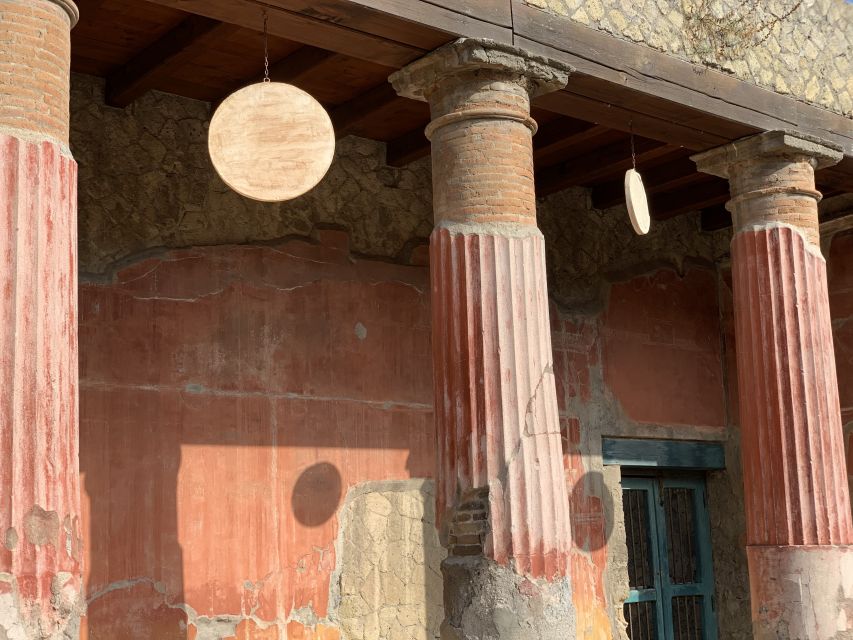
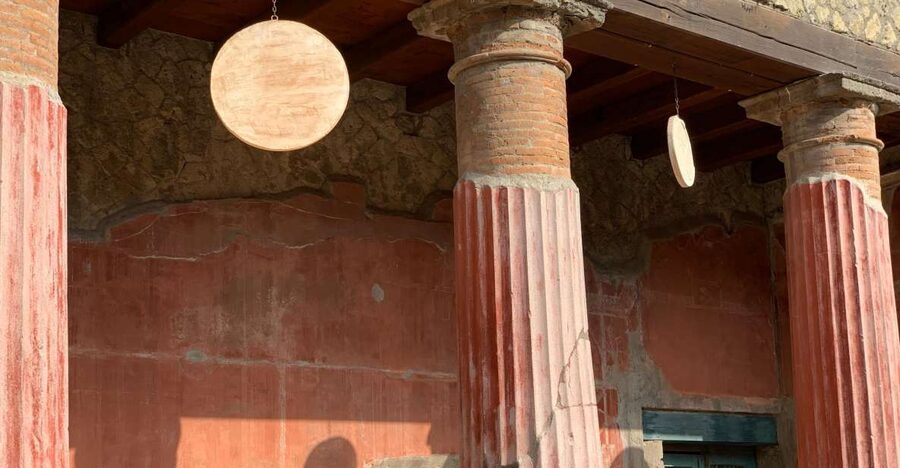
The House of the Deer, or Casa dei Cervi, is one of the tour’s grand domestic stops. Its name comes from a famous group of deer sculptures, and the house helps show how wealthy residents used space, decoration and open areas.
Your guide can point out the difference between a room that served daily needs and one meant to impress. This is where an archaeologist earns the admission price. A bare wall may reveal a change in building use, a decorative choice or a clue about the owner’s status.
Do not expect the tour to provide unlimited time in every room. The guide has several major stops to cover, and the two-hour schedule favors a clear story over a detailed study of every painted surface. If one room catches your eye, ask about it. The small-group format often makes that possible.
Casa di Nettuno ed Anfitrite and Roman decoration
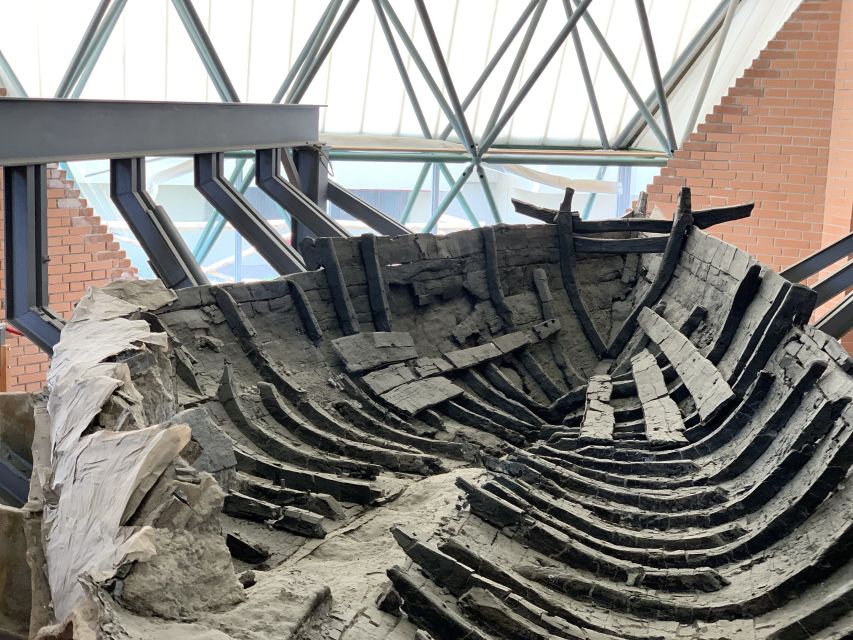
The House of Neptune and Amphitrite is among Herculaneum’s most memorable houses. Its name comes from a wall mosaic showing Neptune and Amphitrite, and the building gives you a close look at the color and craft used in Roman homes.
You will see mosaics and frescoes in rooms where the decoration has survived with unusual force. The appeal is not only artistic. The layout shows how Romans used decorated walls, household shrines and water features to shape the feel of a home.
This is a good place to listen for the guide’s explanation of materials and construction. Without help, you may see an attractive mosaic and move on. With a trained archaeologist, you can understand how it fits the room, the house and the social world of the people who lived there.
One caution: the quality of the artwork varies across the site. If you visit Pompeii first, some Herculaneum frescoes may seem less impressive. Herculaneum’s great strength is the survival of complete structures and domestic objects, not that every painted wall is the finest Roman art you will see in Campania.
A few more Naples trips worth weighing up
- Naples: Catacombs of San Gennaro Entry Ticket & Guided Tour
★ 4.6 · 7,941 reviews - Naples: Downtown Tour with Veiled Christ & St Clare Tickets
★ 4.9 · 6,462 reviews - Naples: Hop-on Hop-off Bus Tour 24-Hour Ticket
★ 4.3 · 5,157 reviews - Mount Vesuvius: Skip-the-Line Ticket and Smart Digital Guide
★ 4.2 · 2,780 reviews
The Augustales and the public side of town
The Sacellum of the Augustales introduces a more public and ceremonial part of Herculaneum. This small shrine was connected with the Augustales, a group involved in the imperial cult and civic life.
Here, I like the way the stop broadens the story. The tour is not only about wealthy villas. You also get a sense of how public religion, local identity and Roman authority shaped the town.
An archaeologist can explain the carved and painted details without burying you under a list of dates. Several guides, including Riccardo, have been praised for linking Roman words and customs to language and life today. That approach makes the information easier to remember than a string of names and rulers.
The House of Skeletons and the human cost
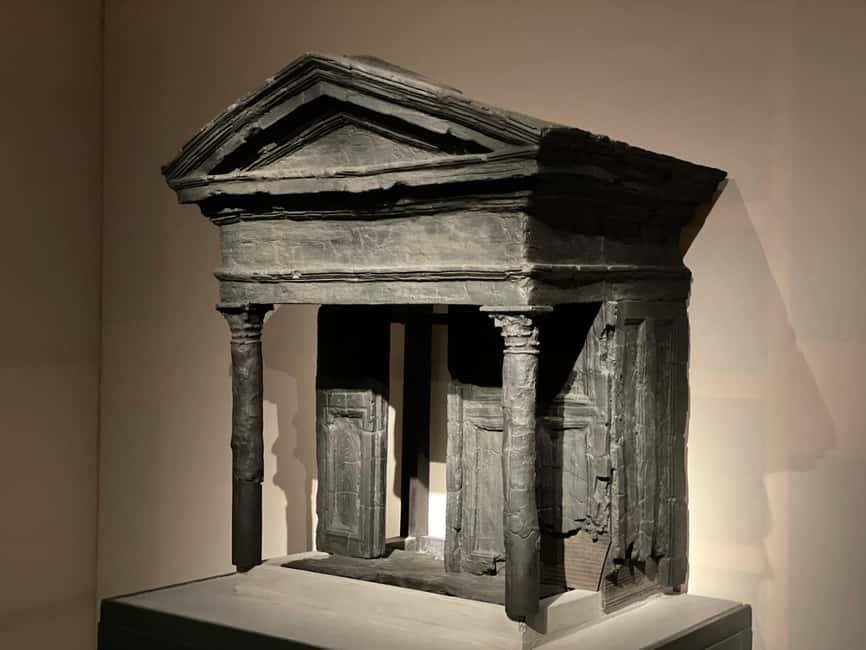
The House of Skeletons is a more unsettling stop. Its name comes from human remains found during excavation, and it brings the eruption out of the realm of architecture.
At the Boat Houses near the ancient shoreline, you encounter the remains of people who tried to find shelter. This is not a cheerful photo stop, and a good guide knows when to slow down and let the subject speak for itself. Raffaello, one of the archaeologist guides, has been praised for treating this part with a sense of solemnity and for explaining the human side of the disaster.
You may notice a sharp contrast with Pompeii, where plaster casts often attract crowds and cameras. Herculaneum’s remains can feel less staged and more private. I would not rush this section. Listen, look carefully, and give other people space.
Casa dell’Albergo and the scale of the homes
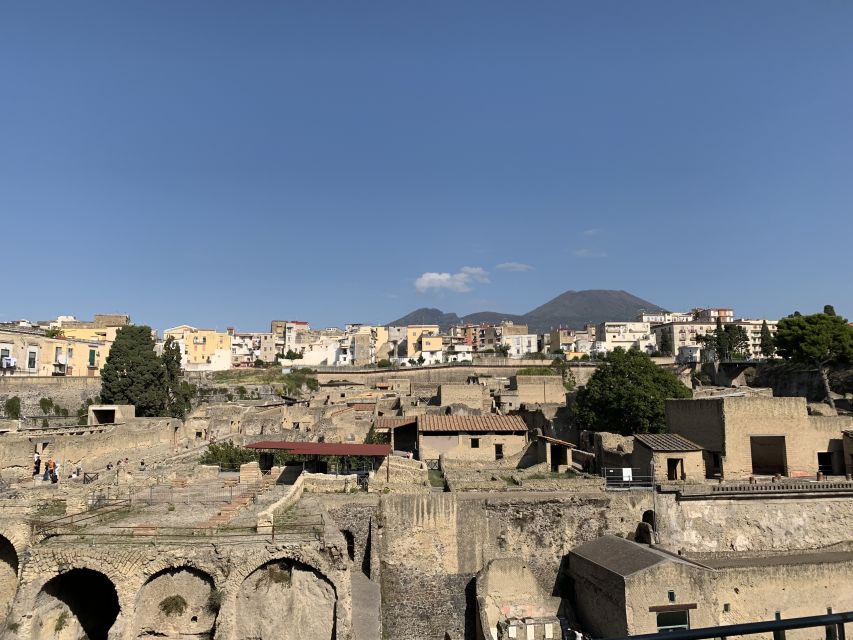
Casa dell’Albergo, or the House of the Inn, adds another layer to the residential story. Despite its name, the label reflects archaeological interpretation rather than a modern hotel. The building helps you compare house plans, room arrangements and the different levels of comfort found within the town.
This is also a useful point for understanding Herculaneum’s compact size. You are not marching across a huge urban area. You move between substantial houses, public buildings and commercial spaces at a pace that makes the town easier to grasp in a short visit.
The guide’s explanation is especially useful when a building’s modern name does not tell the whole story. You can ask how archaeologists identify a room’s use and which conclusions remain uncertain. That kind of honest explanation is more helpful than pretending every ruin comes with a perfect answer.
Original streets, baths, shops and water systems
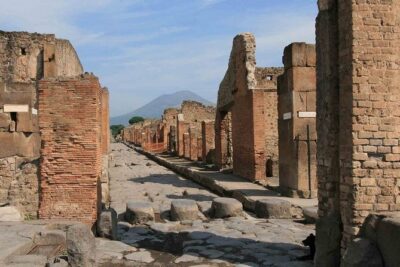
Between the named houses, the route takes you along original Roman streets. Look at the paving, thresholds and raised sidewalks. These details show how people moved through town and how builders dealt with water and drainage.
The public baths are another highlight. Roman baths were not simply places to wash. They were social spaces, and their rooms reveal the engineering behind heated water, changing temperatures and organized public life.
Your guide should help you see the practical systems that a casual visit misses. Ancient water pipes, fountains and household plumbing may look like fragments until someone explains how water reached the town and how homes used it.
The shops and taverns bring a welcome change from formal houses. Counters and work spaces connect the site to ordinary routines: buying food, selling goods, meeting people and stopping for a drink. These places make Herculaneum feel inhabited rather than ceremonial.
The route also includes a photo stop within the wider archaeological site. You will want pictures, but the site rewards looking first. Walls, mosaics and narrow streets are easier to appreciate when you are not viewing everything through a phone screen.
What an archaeologist adds for $58
The listed price is $58 per person. That includes skip-the-line admission and a licensed guide, which makes the value depend mainly on how much context you want and how well the group works together.
For a first visit, I think the price is reasonable. Herculaneum has many details, but its signs cannot explain every room, building choice or survival pattern. An expert can connect the eruption, Roman domestic life, art, water systems and excavation history into one readable story.
The difference is clear in the way the strongest guides work. Raffaele Romano, described as having doctoral training in archaeology, has been praised for making complex material easy to follow. Riccardo has been noted for adapting the route to a group’s interests and linking ancient language to modern speech. Enrica has been singled out for her energy and storytelling, while Carlo has been praised for being both entertaining and well informed.
The guide names and assignments can change, so do not book on the assumption that one particular person will lead your tour. What you can count on is a licensed guide, with tours offered in English, Italian, Spanish or French.
A private group is available if you want more control over questions and pace. A standard group is likely the better value for many people, especially since the format has often been small enough for direct conversation. Headsets are provided if the group exceeds 11 people.
Pace, sound and family appeal
Two hours is a smart length for families, first-time visitors and anyone combining Herculaneum with another site. It is long enough to cover the key houses, baths, public buildings and Boat Houses without turning the visit into a history marathon.
The tradeoff is depth. One guide may spend more time on stories and interpretation, while another may move faster and cover more ground. One visitor felt the group could have seen more in two hours, while many others appreciated the chance to stop and understand what they were seeing.
Sound can also affect the experience. At busy points, nearby groups may make it difficult to hear every word. Headsets are supplied for groups over 11, but smaller groups may not use them. If you miss something, ask the guide to repeat it. One guide was specifically praised for doing this when noise got in the way.
Families can do well here. Children may find a compact ancient town easier to understand than Pompeii’s broad spread, and the houses retain enough recognizable features to hold attention. The skeletons are serious subject matter, so parents should decide how much detail suits their children.
Timing your visit
The tour lasts two hours, and the available starting times depend on the date you choose. An afternoon start can be especially appealing. One visitor who took the tour at 4 pm found the site quiet enough to hear the guide clearly.
That does not guarantee the same conditions every day, but it points to a useful strategy: consider a later time if your schedule allows. Less crowd noise can make a major difference, especially if you are visiting with children or anyone who struggles to follow a strong accent.
You can cancel up to 24 hours before the tour for a full refund, and the reserve-now, pay-later option keeps your plans flexible. These terms matter in Campania, where weather, train schedules and changes to a busy sightseeing day can affect your plans.
Who should book this Herculaneum tour
I would choose this experience if you want the site explained rather than simply photographed. It suits first-time visitors, families, couples, older adults who are comfortable with stairs, and anyone who wants to compare Herculaneum with Pompeii.
It is also a strong choice for people with limited time. The route covers the site’s major themes in two hours, and skip-the-line admission protects that short window.
You may prefer a longer independent visit if you want to study every house, read every sign or linger over individual mosaics. The tour’s structure means you follow a planned route, and the guide’s priorities shape what you see.
I would not book it if you need step-free access. The paths and stairs make the tour unsuitable for wheelchair users, and electric wheelchairs are not permitted.
Should you book it?
Book this tour if you want Herculaneum to make sense. The preserved wood, mosaics, baths, homes and skeletons are remarkable on their own, but the archaeologist’s explanations turn separate objects into a town with routines, status, beliefs and tragedy.
At $58, the cost is easiest to justify on a first visit, when you would otherwise miss the small clues that make the site special. Choose a private group if you want maximum flexibility. Choose a regular small group for better value, and consider a later start for a quieter visit.
If Pompeii is already on your schedule, do not treat Herculaneum as a smaller repeat. It offers a different experience, one built around preservation, intimacy and the details of Roman domestic life.
FAQ
Where does the Herculaneum tour begin?
The tour begins at Biglietteria Ercolano, the archaeological site’s ticket office. You should arrive 10 minutes before the scheduled start.
How long does the tour last?
The guided experience lasts two hours. Starting times vary, so you need to check availability for your chosen date.
What is included in the price?
The price includes skip-the-line entrance tickets and a guided tour with a licensed guide. Headsets are provided if the group exceeds 11 people.
Is hotel pickup included?
No. Hotel pickup and drop-off are not included, so you must make your own way to the meeting point.
Which languages are available?
The tour is available in English, Italian, Spanish and French.
Is a private group available?
Yes. A private group option is available for visitors who want a more personal format.
What should I bring?
Bring your passport or ID card and water.
Is the tour suitable for wheelchair users?
No. The experience is not suitable for wheelchair users, and electric wheelchairs are not allowed.
Can I cancel for a refund?
Yes. You can cancel up to 24 hours in advance for a full refund.
Can I reserve now and pay later?
Yes. The booking terms allow you to reserve your place and pay later, keeping your plans flexible.
Just added around Naples
- Full-Day Tour of the Amalfi Coast and Pompeii from Naples★ 4.5 · 3 reviews
- The Ultimate Neapolitan Cooking Class with Local★ 5.0 · 3 reviews
- Naples: Old City Center Street Food Tour with Spritz★ 4.7 · 3 reviews
- Visit in Pompeii – Naples Private Tour with Ada★ 5.0 · 3 reviews
- Transfer from Naples to Sorrento or viceversa★ 5.0 · 3 reviews
- Naples: National Gallery of Capodimonte Tour★ 5.0 · 3 reviews
- Visit 2 wine producers with tasting and transportation included★ 5.0 · 3 reviews
- Naples: Mozzarella experience★ 5.0 · 3 reviews
Herculaneum Tours, compared.
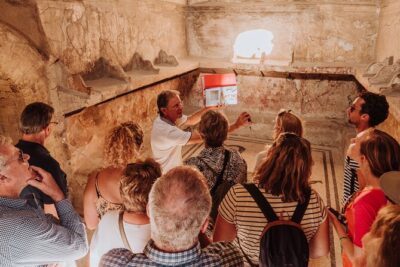
Herculaneum Small Group Tour and Ticket With an Archaeologist
Read our review →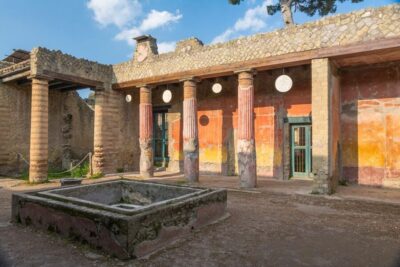
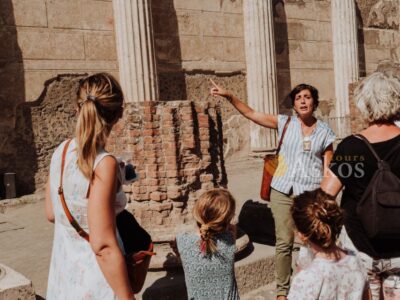
Pompeii & Herculaneum with Archaeologist Guide
Read our review →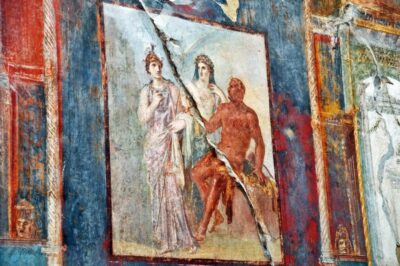
Pompeii, Herculaneum, & Vesuvius Full-Day Tour
Read our review →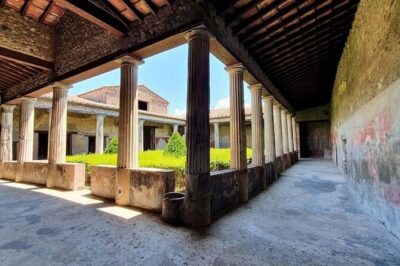
Day Trip of Pompeii, Herculaneum and Vesuvius from Naples
Read our review →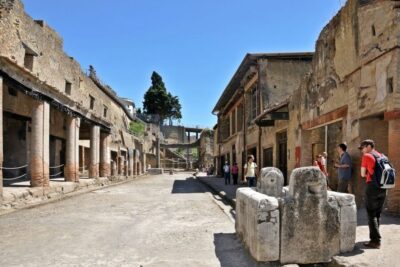
Pompeii & Herculaneum Day Trip from Naples with Lunch
Read our review →Browse the lists this tour appears in