
Reviewed · POMPEII TOURS
Naples: Pompeii and Herculaneum Private Walking Tour
Herculaneum and Pompeii make a powerful pair because they show two very different results of the same volcanic disaster. Herculaneum is smaller, quieter, and astonishingly well preserved, while Pompeii spreads across a much larger site with homes, shops, and public buildings. I like the two-hour guided visit at each site, and I like having a private guide who can adjust explanations and answer your questions.
The main drawback is logistics. Transportation is not included, and you must get from Herculaneum to Pompeii yourself by train. The ruins are also hot, uneven, and tiring, and the listed price of $331.36 per person is a serious outlay, especially for a solo visitor.
In This Review
- Key points to know before booking
- Why these two ruined cities belong together
- Starting at the Herculaneum ticket office
- Herculaneum, the smaller site with bigger detail
- The train transfer between the sites
- Pompeii’s western quarter in two hours
- What a private guide adds
- Tickets, timing, and the real value
- Who will get the most from this tour
- What to bring and what to leave behind
- Should you book the Pompeii and Herculaneum tour?
- FAQ
- How long does the tour last?
- Where does the tour begin?
- Where does the tour end?
- Is transportation included?
- Are entrance tickets included?
- Is the tour private?
- Which languages are available?
- What should I bring?
- Are backpacks and umbrellas allowed?
- Can I cancel for a refund?
Key points to know before booking
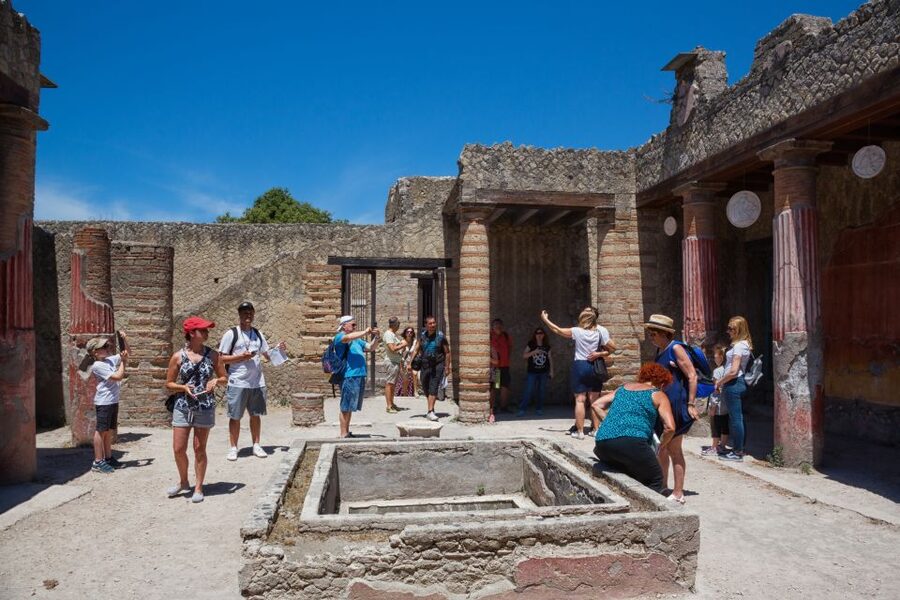
- Herculaneum comes first: See upper floors, carbonized wood, paintings, and mosaics that survived under a thick mud flow.
- Pompeii gives the wider picture: The two-hour walk focuses on the western part of the city, including major public buildings, houses, and shops.
- A private guide makes the difference: Michele, Giulia, Jasmine, Maria Laura, Alexander, and Paulo are among the guides praised for clear explanations, patience, and strong English.
- You arrange the transfer: Entrance tickets and guiding are included, but transportation, food, and drinks are not.
- Pack light: Comfortable shoes, water, a sun hat, and identification are advised. Backpacks and umbrellas are not allowed.
- Plan for heat and walking: The sites are not suitable for wheelchair users, and the full experience lasts about 5.5 hours.
Why these two ruined cities belong together
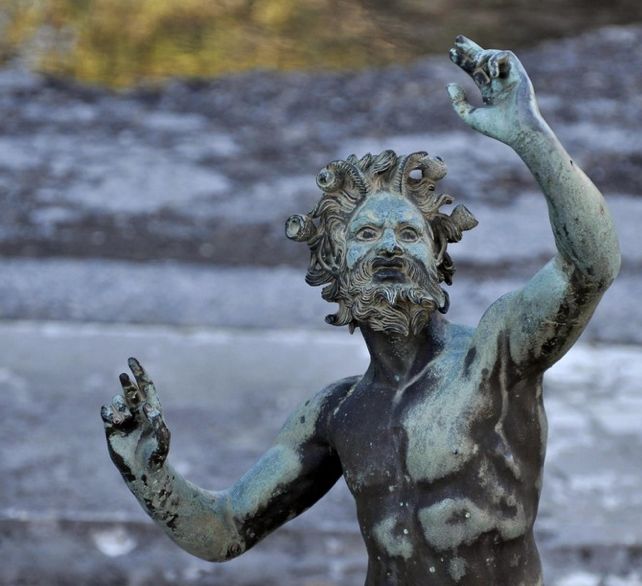
Pompeii and Herculaneum were both buried after Mount Vesuvius erupted in 79 AD, but the volcanic material reached them in very different ways. Pompeii was covered by roughly four to five meters of ash. Herculaneum was buried under an avalanche of mud about 20 meters thick.
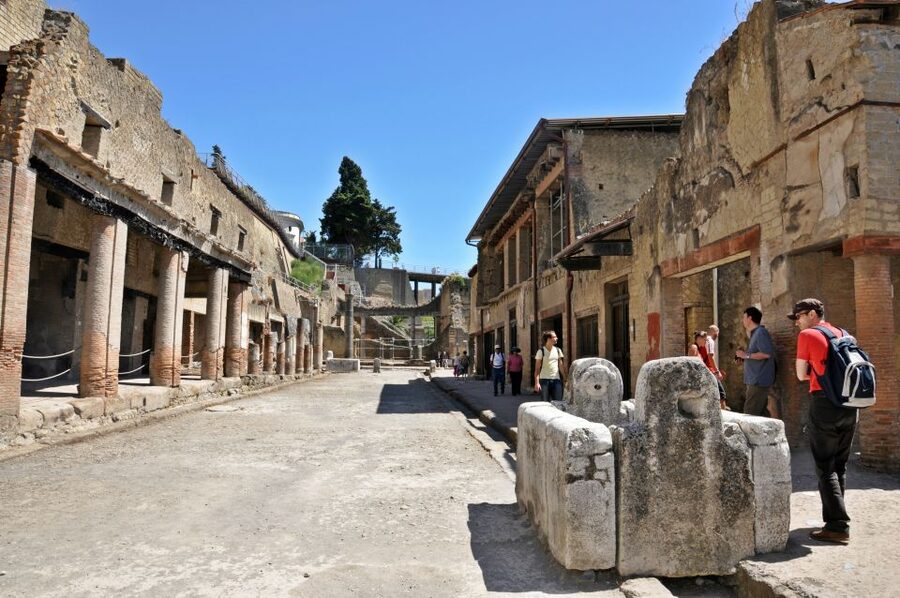
That difference shapes everything you see. At Pompeii, the broad streets and large city plan help you understand how a Roman town worked. At Herculaneum, the deeper burial preserved details that usually vanish over time, including second storeys, wooden objects turned black by heat, wall paintings, and mosaics.
I find the contrast more useful than seeing either site alone. Pompeii gives you scale and a sense of daily city life. Herculaneum gives you sharper physical details. Together, they help you picture Roman homes, public spaces, shops, and streets with far less guesswork.
A guide matters here because the ruins can look like a maze of walls without context. A good explanation turns a room into a home, a storefront into a working business, and a paved street into part of a larger urban system. The strongest feedback about this tour centers on that human explanation, with guides praised for answering questions and making the sites easier to imagine.
More ways to see Pompeii:
- From Naples: Pompeii Ruins & Mount Vesuvius Day Tour
★ 4.3 · 11,459 reviews - Naples or Sorrento: Full-Day Pompeii and Mount Vesuvius Tour
★ 4.6 · 4,235 reviews - Pompeii & Mt.Vesuvius Day Tour from Naples with Pizza Lunch
★ 4.0 · 2,901 reviews
Starting at the Herculaneum ticket office
Your meeting point is the ticket office at the Herculaneum ruins on Via dei Papiri Ercolanesi. The guide meets you at the entrance gate with a sign showing your name, so you should have a fairly simple start once you reach the site.
The tour begins with a two-hour guided walk through Herculaneum. That is enough time for a meaningful introduction without treating the smaller site as a rushed add-on. Your guide can explain how the eruption affected this town and why its remains look so different from Pompeii.
The starting arrangement is worth checking carefully before you leave your hotel or ship. The tour does not include transportation, and the meeting point is not in central Naples. You need to reach Herculaneum on your own, so leave room for local transport, finding the entrance, and any unexpected delay.
The exact starting time depends on availability. That flexibility can help if you are fitting the visit around a train, cruise schedule, or another Naples plan, but you should confirm the time before booking your day around it.
Herculaneum, the smaller site with bigger detail
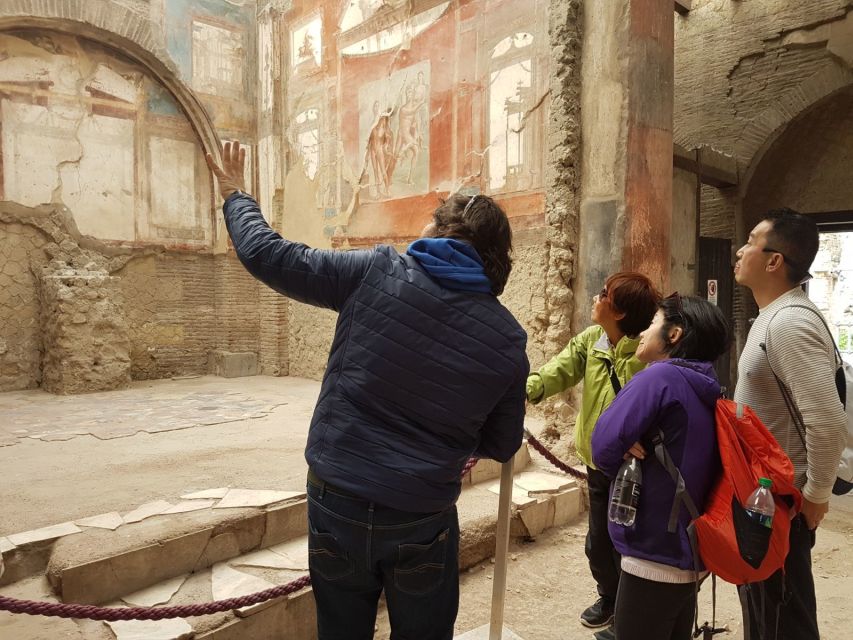
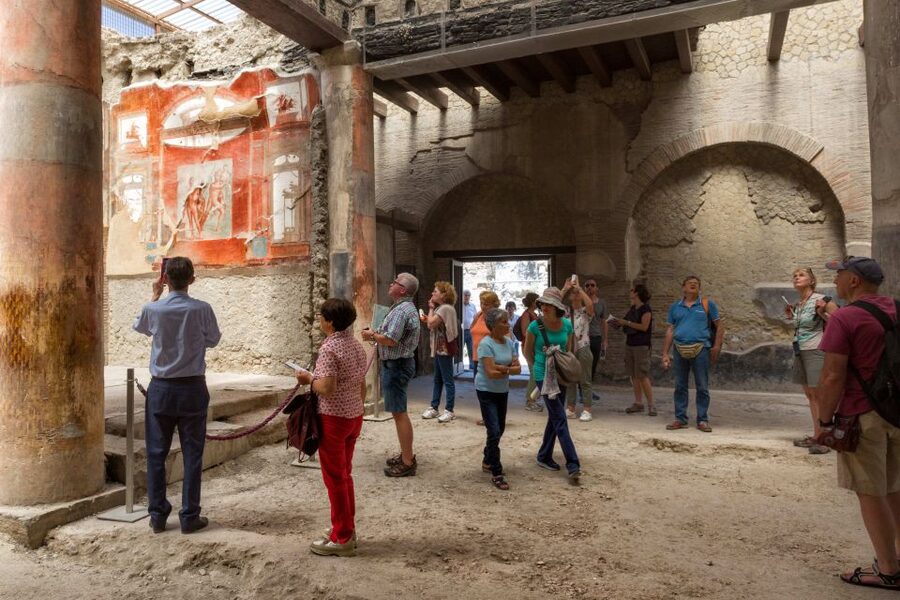
Herculaneum is the emotional high point for many people on this route. Its smaller size makes it easier to follow, but the preservation can feel almost startling. The mud that buried the town sealed parts of it away from weather and later damage.
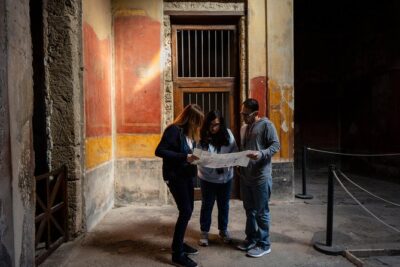
You might see upper levels of buildings still in place, carbonized wooden objects, intact decorative paintings, and mosaics with far more detail than you expect from a ruin. These are not just pretty fragments. They show how much of Roman domestic life can survive when a site is sealed quickly and deeply.
Your guide’s job here is to connect the physical remains to the people who used them. The supplied guide roster includes several languages, including English, Spanish, Italian, French, German, Russian, Chinese, Japanese, and Portuguese. You should select your preferred language when checking availability, rather than assuming every start time offers every language.
Herculaneum is also the more manageable part of the day physically, simply because the site is smaller. That does not make it effortless. You will still be walking across old surfaces and exposed ground, so shoes with firm support are a smart choice.
One practical warning: the site does not allow backpacks or umbrellas. Bring water and a sun hat instead. Since umbrellas are prohibited, sun protection matters even more on bright days.
The train transfer between the sites
After Herculaneum, you continue to Pompeii by train. The tour price does not include transportation, so train costs and the details of getting to the next entrance are yours to handle.
The supplied schedule shows a train stop with a duration written as 20 hours, which is clearly inconsistent with the total tour length of 5.5 hours. Treat that figure as an error and confirm the actual transfer plan with Askos Tours before the day of the visit.
This is the one part of the outing that requires more independence. Your guide may help with timing and direction, but the published information does not promise included train tickets or private vehicle service. If you are traveling with children, carrying luggage, or working under a tight cruise departure time, ask for precise transfer instructions in advance.
The tour’s flexibility can be useful here. One visitor specifically valued the guide’s help with start time, logistics, and choosing what to see. Still, flexibility works best when you know what has been arranged and what you must pay for yourself.
More Herculaneum visits from Naples:
- Herculaneum: Skip-the-Line Guided Tour with Archaeologist
★ 4.8 · 3,439 reviews - Herculaneum Small Group Tour and Ticket With an Archaeologist
★ 5.0 · 994 reviews - Herculaneum: Skip-the-Line Entry Ticket with Audio Guide
★ 4.3 · 870 reviews - From Naples: Pompeii & Herculaneum with Archaeologist Guide
★ 4.8 · 665 reviews
Pompeii’s western quarter in two hours
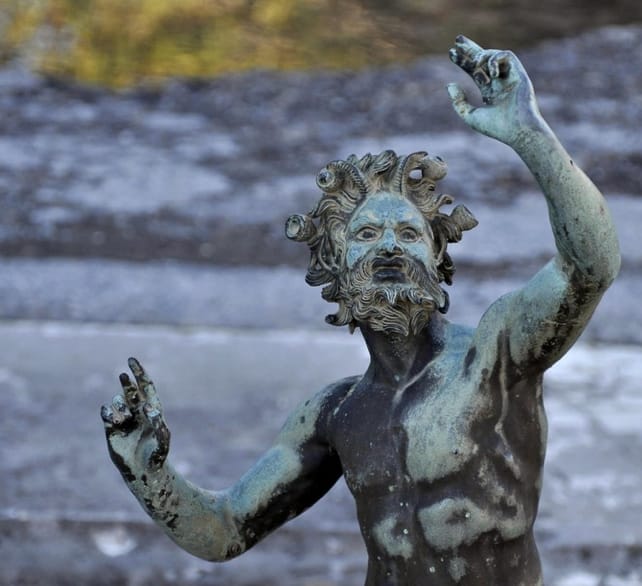
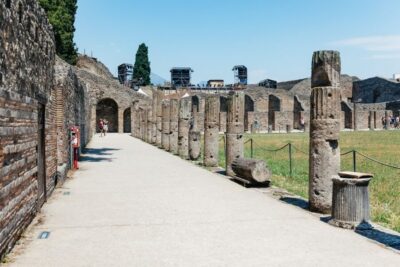
Pompeii is much larger than Herculaneum, so this tour does not attempt to cover every corner. The two-hour walk concentrates on the western part of the ancient city, where you see important public buildings along with private homes and shops.
That focus is sensible. A full visit to Pompeii can become a long march through repeated walls and streets if you do not have a plan. A guide can keep the route centered on the places that best explain Roman urban life.
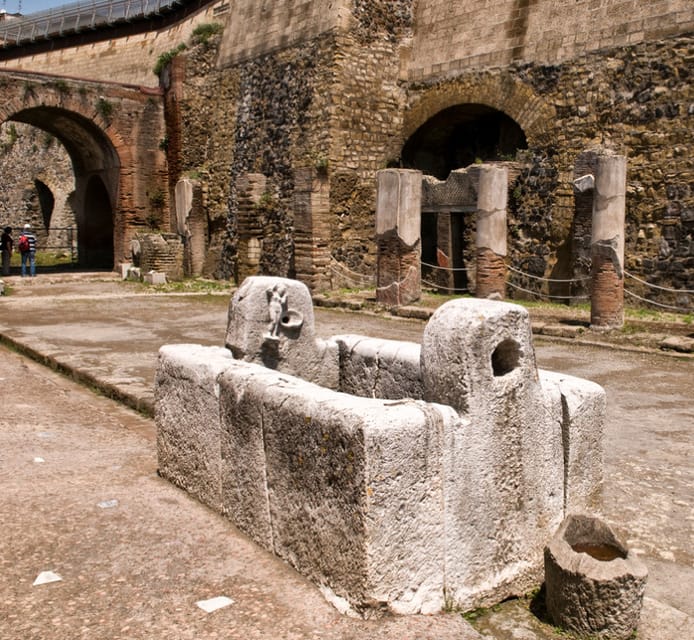
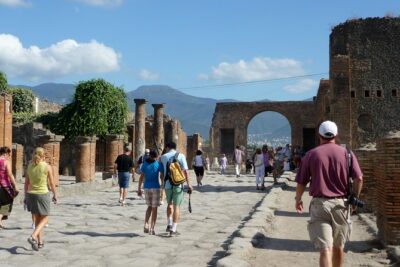
Expect a more open, expansive setting than at Herculaneum. Pompeii feels like a whole town laid out before you, with the scale of its streets and buildings doing much of the storytelling. The guide fills in the missing pieces, explaining how Romans lived and how public and private spaces fit together.
The contrast with Herculaneum should be fresh in your mind by this point. At Herculaneum, you notice the condition of individual objects and rooms. At Pompeii, you notice the size of the city and the relationship between homes, businesses, and public buildings.
Two hours is long enough for a strong overview, but not enough for every house or street. If you have a special interest in one section of Pompeii, tell your guide early. The private format gives you a better chance of shaping the emphasis, although the advertised route remains the western section and its main highlights.
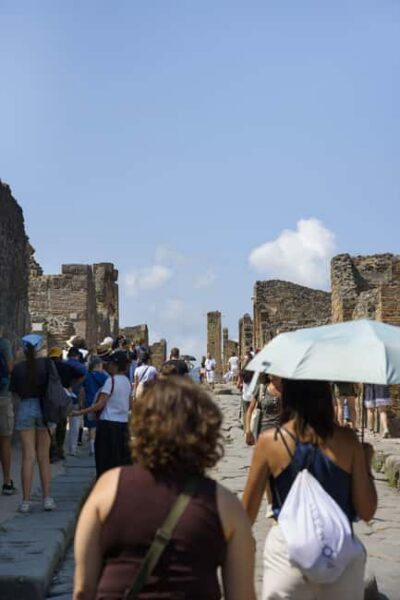
Be ready for heat. Alexander, one of the guides named in the feedback, led a highly praised visit, but even that outing came with a blunt warning that the site was very hot. Wear your hat, carry water, and avoid treating the 5.5-hour schedule as a light sightseeing stroll.
What a private guide adds
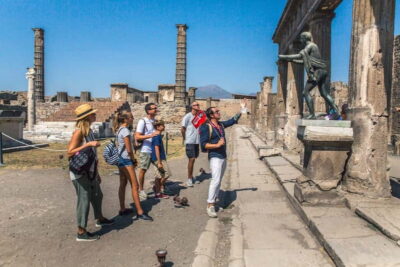
A private tour is most useful when you want to ask questions. The guide is not delivering a fixed speech to a large crowd, so you can stop when a detail catches your attention or ask for a clearer explanation.
The strongest guide comments are specific. Michele was praised for spending roughly five hours exploring both sites with thorough explanations. Giulia was described as engaging, well informed, and humorous. Jasmine received praise for detail and for answering many questions. Maria Laura was credited with explaining the sites carefully, while Paulo helped visitors understand Roman culture and daily life.
Those names do not guarantee who will lead your tour. They do show the level of guide interaction you should expect from this private format. Ask about architecture, domestic life, the eruption, or the difference between the two burial methods. The more you ask, the more value you get from the guide.
The private setup also helps families and mixed-interest groups. One person may care about art, another about Roman engineering, and another about the human story of the eruption. A guide can adjust the explanation instead of forcing everyone through a standard group script.
The tradeoff is cost. At $331.36 per person, this is not a budget way to enter Pompeii and Herculaneum. The price buys private guiding and the convenience of a planned two-site visit, but not transportation, food, or drinks. For two people, the total rises quickly. For a larger private group, the value may improve if the price remains per person but the group prefers personal attention over a large shared tour.
Tickets, timing, and the real value
The package includes a private guide, Herculaneum admission listed at 16 euros per person, and Pompeii Express entrance tickets. It also offers skip-the-ticket-line entry, which can save time at two heavily visited archaeological sites.
That does not mean you skip every possible delay. You still need to reach the correct entrance, meet your guide, and handle the transfer between sites. The ticket benefit is most useful when queues are long, especially if your day has a fixed end time.
The total duration is about 5.5 hours, with two hours at Herculaneum and two hours at Pompeii. The remaining time covers the meeting process and transfer. Because the published end information is not perfectly consistent, confirm the final point before booking. The itinerary identifies Pompei as the finish, while the meeting-point information says the activity ends back at the meeting point.
Free cancellation is available up to 24 hours before the start for a full refund. You can also reserve now and pay later, which helps if your Campania schedule is still changing. These policies reduce some booking risk, but they do not solve the practical need to plan your own transport.
The first Sunday of each month deserves special attention. Entrance is free then, but tickets cannot be reserved in advance, and entry is not guaranteed. If seeing both sites is central to your day, paying for reserved admission on another date may be the safer choice.
Who will get the most from this tour
I would choose this experience if you want a clear introduction to both sites and prefer not to study maps or guidebooks while walking. It suits first-time visitors, families who want explanations pitched to their own questions, and history fans who like comparing evidence from two locations.
It is also a good match for people with limited time in Campania. Instead of giving one site a full day and skipping the other, you get a focused visit to both. The cost is high, but the structure makes the most of a half-day.
You should think twice if you want to wander slowly, photograph every corner, or spend hours inside one particular house. Two hours per site creates a solid overview, not an exhaustive archaeological study.
I would also hesitate if you have limited mobility. The experience is explicitly not suitable for wheelchair users, and the ground is uneven. Anyone sensitive to heat should plan carefully, since much of the walking takes place outdoors and shade may be limited.
Solo visitors need to examine the price closely. The private format can feel luxurious for one person, but the cost per person is still $331.36. Couples, families, and small private groups may find the attention easier to justify.
What to bring and what to leave behind
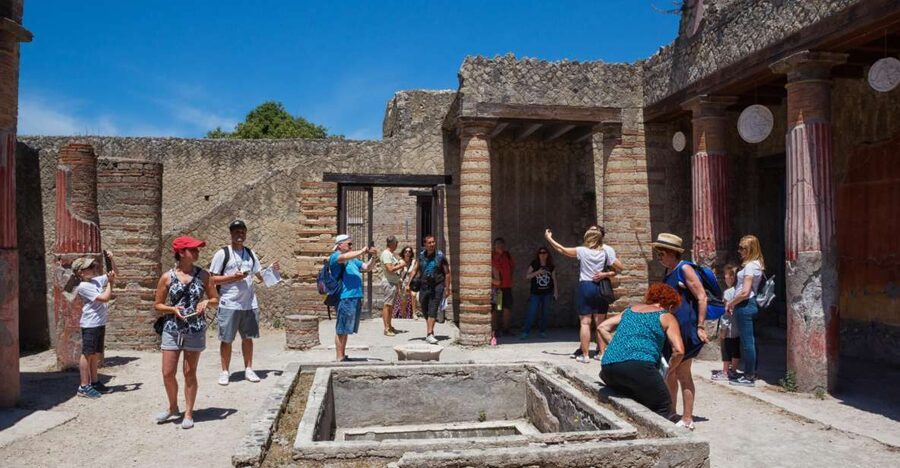
Wear comfortable shoes with good support. You will spend several hours walking across archaeological remains, and fashionable but flimsy footwear can make the day harder.
Bring:
- Passport or ID card
- Water
- Sun hat
- Comfortable shoes
Do not bring a backpack or umbrella, since both are listed as prohibited. Food and drinks are not included, so plan around your own needs, especially if you are prone to getting hungry during a long outdoor visit.
A small, compliant bag may be worth confirming directly with the provider, since the rules specifically prohibit backpacks. The safest approach is to travel light and bring only what you need.
Should you book the Pompeii and Herculaneum tour?
Book it if you want the strong contrast between two eruption sites and value a guide who can explain what you are seeing in real time. The two-hour format at each site is well judged for a first visit, and the private group gives you room to ask questions and adjust the emphasis.
Do not book it expecting an all-inclusive excursion. You pay $331.36 per person, then arrange transportation and cover your own food and drinks. Confirm the train transfer, start time, and ending point before committing.
For a history-minded couple, family, or small group, this is a practical way to get more meaning from Pompeii and Herculaneum than you likely would on your own. For a budget visitor or someone wanting a slow, independent day, the price and fixed timing may be harder to defend.
FAQ
How long does the tour last?
The experience lasts about 5.5 hours. It includes a two-hour guided tour at Herculaneum and a two-hour guided tour at Pompeii, with time for the transfer between them.
Where does the tour begin?
It begins at the ticket office of the Herculaneum ruins on Via dei Papiri Ercolanesi. The guide meets you at the entrance gate with a sign showing your name.
Where does the tour end?
The itinerary lists Pompei as the finishing location, while the meeting-point information says the activity ends back at the meeting point. Confirm the final arrangement with Askos Tours before booking transportation afterward.
Is transportation included?
No. Transportation is not included. The schedule includes a train transfer between Herculaneum and Pompeii, but you should confirm the exact arrangements and costs because the published transfer duration is inconsistent.
Are entrance tickets included?
Yes. The tour includes Herculaneum entrance tickets, listed at 16 euros per person, and Pompeii Express entrance tickets. Skip-the-ticket-line entry is also included.
Is the tour private?
Yes. This is a private-group experience with a private guide.
Which languages are available?
Guiding is available in Spanish, English, Italian, French, German, Russian, Chinese, Japanese, and Portuguese. Check availability for your preferred language and start time.
What should I bring?
Bring your passport or ID card, comfortable shoes, a sun hat, and water.
Are backpacks and umbrellas allowed?
No. Backpacks and umbrellas are listed as prohibited. The experience is also not suitable for wheelchair users.
Can I cancel for a refund?
Yes. You can cancel up to 24 hours in advance for a full refund. The reserve-now, pay-later option lets you book without paying immediately.
More Walking Tours in Naples
- Naples: Street Food Walking Tour with Local Guide
★ 4.8 · 4,256 reviews - Naples Spanish Quarters Walking Tour Street Art, Folklore & Sweet
★ 5.0 · 797 reviews - Naples: Old Town Guided Walking Tour
★ 4.8 · 553 reviews - Naples: Panoramic Walking Tour with Funicular
★ 4.8 · 543 reviews
Just added around Naples
- Full-Day Tour of the Amalfi Coast and Pompeii from Naples★ 4.5 · 3 reviews
- The Ultimate Neapolitan Cooking Class with Local★ 5.0 · 3 reviews
- Naples: Old City Center Street Food Tour with Spritz★ 4.7 · 3 reviews
- Visit in Pompeii – Naples Private Tour with Ada★ 5.0 · 3 reviews
- Transfer from Naples to Sorrento or viceversa★ 5.0 · 3 reviews
- Naples: National Gallery of Capodimonte Tour★ 5.0 · 3 reviews
- Visit 2 wine producers with tasting and transportation included★ 5.0 · 3 reviews
- Naples: Mozzarella experience★ 5.0 · 3 reviews
Pompeii Tours, compared.
Pompeii & Mt.Vesuvius Day Tour from Naples with Pizza Lunch
Read our review →
Pompeii & Mt Vesuvius All-Inclusive Small Group w/ Lunch
Read our review →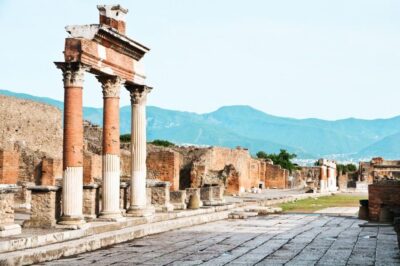

Pompeii & Amalfi Coast Full-Day Trip with Lunch
Read our review →Browse the lists this tour appears in