
Reviewed · POMPEII TOURS
Pompeii and Herculaneum: Private Tour with Transportation
Mount Vesuvius buried two Roman towns in one terrible afternoon, yet Pompeii and Herculaneum tell very different stories. Pompeii feels like a whole city, with streets, bakeries, baths, public buildings, and homes spread across a huge site. Herculaneum is smaller, but its mud burial preserved wood, mosaics, paintings, and buildings with startling detail.
I like the way this tour pairs both sites in one day and gives you a private guide instead of leaving you to puzzle over broken walls alone. I also like the private transportation from Naples, Sorrento, Salerno, Positano, or Amalfi, especially after a long walk in the heat. The main drawback is the price, $623.90 per person, and seven hours is enough for a strong overview, not every corner of Pompeii.
In This Review
- Key points to know before booking
- Two Roman cities, two very different encounters
- Pickup from Naples, Sorrento, or the Amalfi Coast
- Pompeii in two hours: a fast look at a large city
- Lunch between the ruins
- Herculaneum in two hours: smaller, sharper, better preserved
- What the private guide adds
- Is $623.90 per person good value?
- Who should book this day
- Should you book Pompeii and Herculaneum together?
- FAQ
- How long does the Pompeii and Herculaneum tour last?
- Where can pickup take place?
- Where can the tour finish?
- Are Pompeii and Herculaneum entrance tickets included?
- Is lunch included?
- Can I skip the ticket line?
- Is the tour private and customizable?
- Is the tour suitable for wheelchair users?
Key points to know before booking
- Pompeii gives you the broad Roman city picture: See the Marina Gate, Basilica, Forum, baths, bakery, brothel, private houses, and plaster casts.
- Herculaneum rewards close looking: Carbonized wood, detailed mosaics, painted walls, and the waterfront skeletons make this smaller site unusually powerful.
- Your guide shapes the day: Francesco, Gabriella, and Alfredo are named guides connected with highly praised tours, while Luca received special praise as a safe and pleasant driver.
- Private transport saves energy: Pickup and drop-off are available in Naples, Salerno, Sorrento, Positano, and Amalfi.
- Lunch is a stop, not an inclusion: Your guide can suggest a typical restaurant, winery, or pizzeria, but food and drinks cost extra.
- The route is flexible: The tour is fully customizable, though you should confirm the order and pickup details before departure.
Two Roman cities, two very different encounters
Pompeii and Herculaneum were both buried after Mount Vesuvius erupted in 79 A.D., but the volcanic material treated them differently. Pompeii disappeared beneath roughly four to five meters of ash. Herculaneum was covered by a mud and debris flow around 20 meters deep.
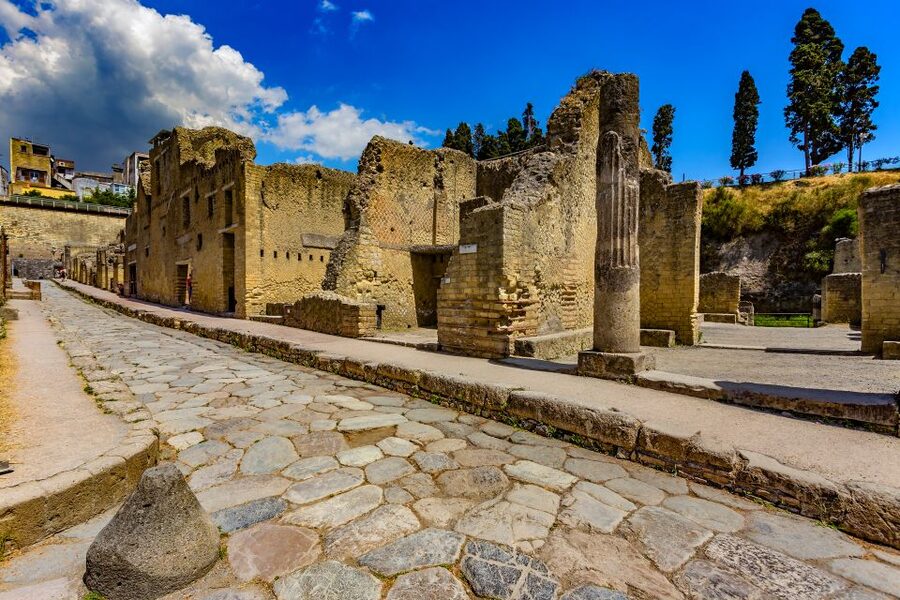
That difference matters when you visit. Pompeii offers scale. You walk through a city grid and see how public life, trade, religion, and domestic life fit together. Herculaneum offers preservation. Wooden objects, painted rooms, mosaics, and other details survived in ways that make the ancient world feel close at hand.
A private guide is especially useful here because the sites do not explain themselves at every turn. A street may look like a simple lane until someone points out its drainage, shopfronts, stepping stones, or relationship to a nearby public building.
The strongest guide names attached to this experience are Francesco, Gabriella, and Alfredo. Francesco is praised for explaining ancient culture in a way that connected with his group. Gabriella is remembered for her command of both sites and for keeping the day pleasant. Alfredo made sure important points were covered while also acknowledging that Pompeii is too large to see fully in a few hours.
More ways to see Pompeii:
- From Naples: Pompeii Ruins & Mount Vesuvius Day Tour
★ 4.3 · 11,459 reviews - Naples or Sorrento: Full-Day Pompeii and Mount Vesuvius Tour
★ 4.6 · 4,235 reviews - Pompeii & Mt.Vesuvius Day Tour from Naples with Pizza Lunch
★ 4.0 · 2,901 reviews
Pickup from Naples, Sorrento, or the Amalfi Coast
The day begins with pickup at your chosen location in Naples, Salerno, Amalfi, Positano, or Sorrento. You need to provide exact pickup details, which is important in towns where a hotel address and a practical vehicle meeting point may not be the same thing.
Private transportation changes the feel of this outing. You are not figuring out regional trains, changing connections, or searching for a taxi after a tiring archaeological visit. The driver takes care of the road between stops, and Luca received particular praise for safe, pleasant driving.
The stated itinerary includes three van periods of about 30 minutes each. Actual road time can vary, especially from the Amalfi Coast, so do not treat the seven-hour duration as a guarantee that every minute will be spent inside the ruins.
This setup suits you best if your base is outside Pompeii or Herculaneum, if you want a single efficient day, or if you prefer not to manage two major archaeological sites alone. It is less compelling for independent visitors who are already staying beside the ruins and want several days to explore slowly.
Pompeii in two hours: a fast look at a large city
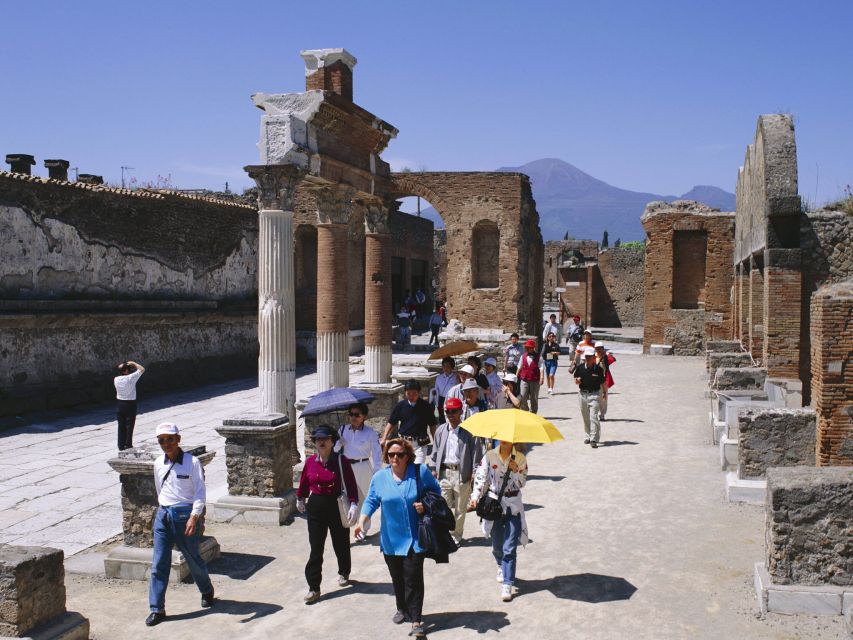
The Pompeii portion is a two-hour guided visit focused on the western part of the ancient town. That gives you a useful route through major public and private landmarks, but Pompeii is enormous by normal sightseeing standards.
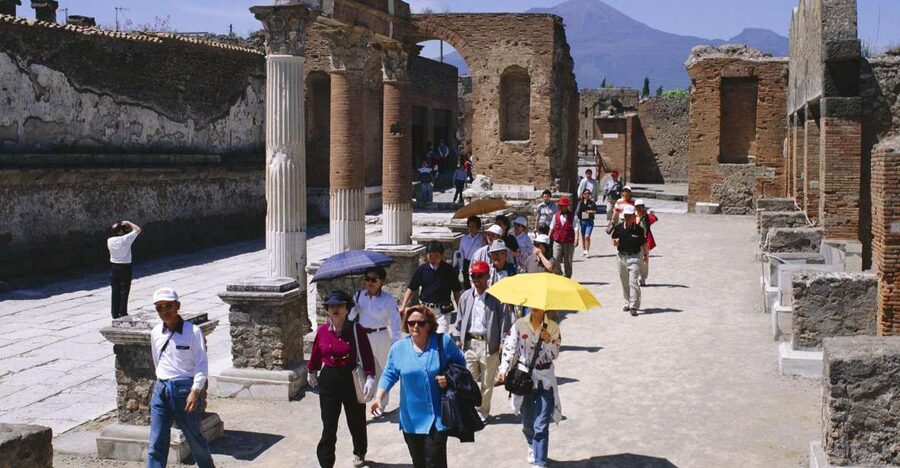
You can expect to see the Marina Gate, the Basilica, the Forum, the Forum baths, the Lupanar, a bakery, the House of the Faun, the Thermopolium Capuano, the House of the Tragic Poet, and the famous plaster casts. These stops create a good cross-section of Pompeian life.
The Marina Gate helps frame the city’s entrances and movement. The Basilica and Forum show where civic and commercial business took place. The baths reveal the social side of Roman life, while the bakery and thermopolium point to the practical business of feeding a city.
The Lupanar is one of Pompeii’s most discussed buildings, but it is best understood as one small part of a much larger urban system. The private houses are just as important. The House of the Faun and House of the Tragic Poet give you a sense of decoration, status, rooms, and household display.
The plaster casts can be difficult to see, but they are among the site’s most affecting remains. They preserve the shapes of people caught in the eruption, turning a distant disaster into something deeply personal.
Two hours is a sensible introduction, not a full examination. One guide made this practical point clearly: you cannot see all of Pompeii in three or four hours, let alone two, and skipping certain areas is unavoidable. I appreciate that honesty. A good route gives you the main framework without pretending the entire city can be checked off.
Wear shoes suited to uneven ancient streets, and bring water if needed. Large bags and luggage are not allowed, so leave suitcases behind rather than expecting the vehicle to solve the problem at the entrance.
Lunch between the ruins
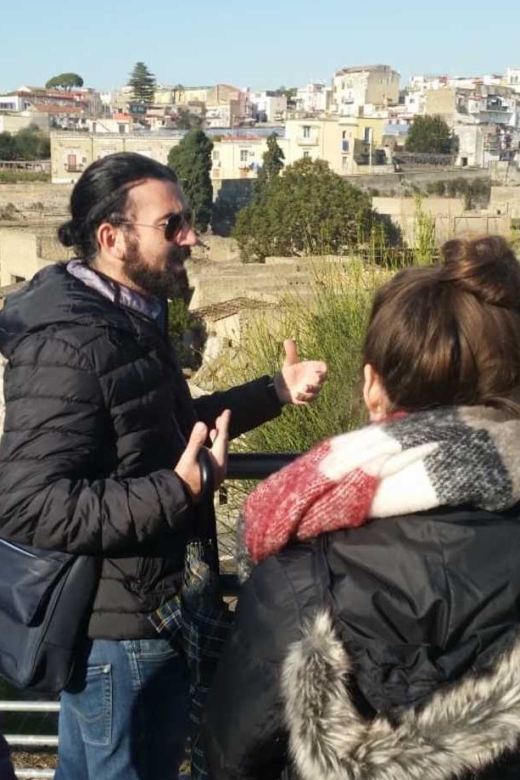
The schedule includes a 30-minute lunch break, with a possible stop at a typical restaurant, winery, or pizzeria. Food and drinks are not included, so plan for an additional expense.
This is not a long regional meal with several courses. It is a short pause in a packed day. That can be useful after the first archaeological visit, but you should tell your guide what sort of lunch you want and how much time you have.
The lunch stop also gives you a chance to adjust the afternoon. Since the tour is private and fully customizable, you can discuss pacing with your guide. Do not assume every change is automatic, but the private format makes a conversation possible in a way a large group tour usually does not.
More Herculaneum visits from Naples:
- Herculaneum: Skip-the-Line Guided Tour with Archaeologist
★ 4.8 · 3,439 reviews - Herculaneum Small Group Tour and Ticket With an Archaeologist
★ 5.0 · 994 reviews - Herculaneum: Skip-the-Line Entry Ticket with Audio Guide
★ 4.3 · 870 reviews - From Naples: Pompeii & Herculaneum with Archaeologist Guide
★ 4.8 · 665 reviews
Herculaneum in two hours: smaller, sharper, better preserved
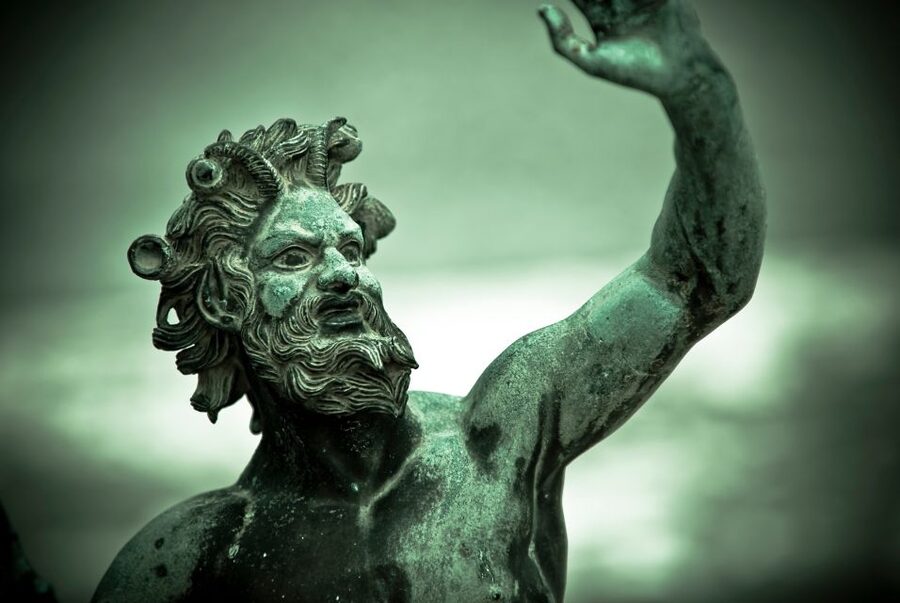
Herculaneum is physically smaller than Pompeii, yet it can leave an equally strong impression. The volcanic mud sealed much of the town under a deep layer, preserving objects and surfaces that normally disappear over time.
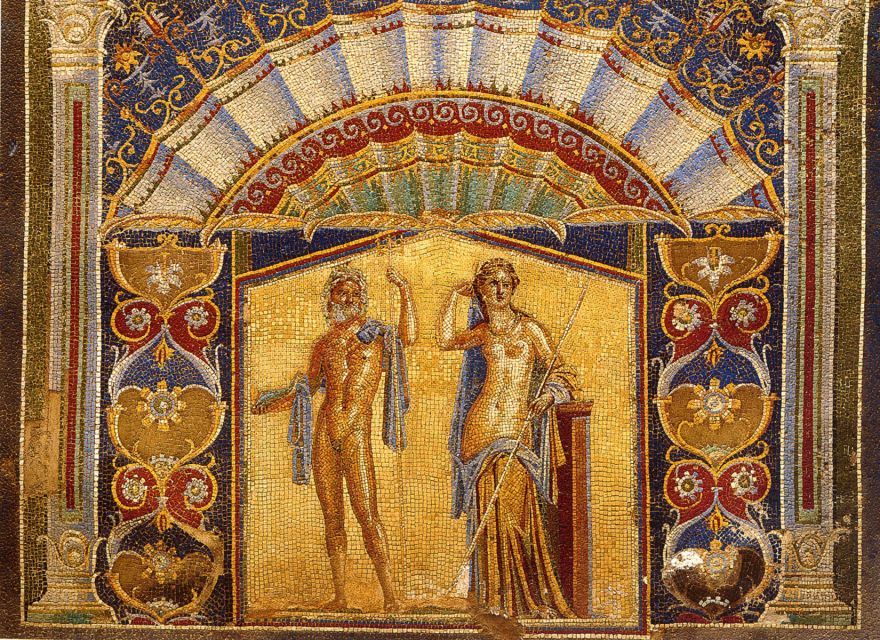
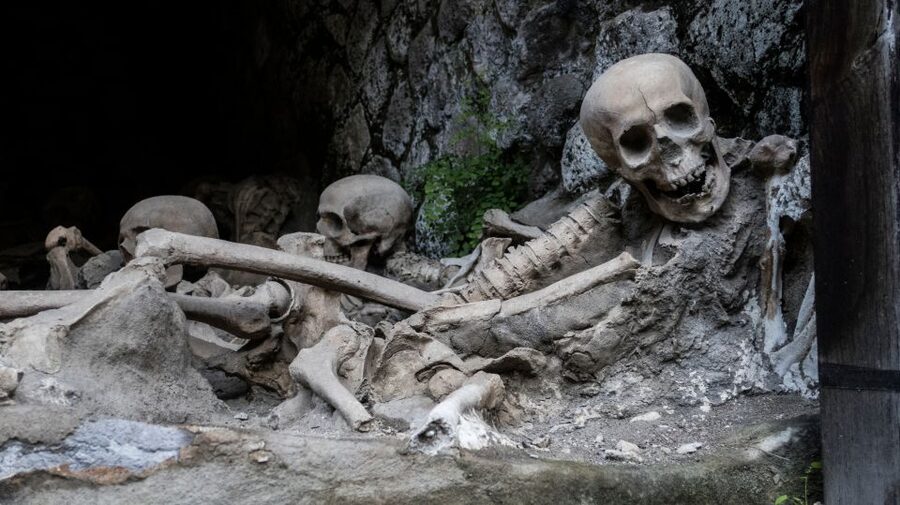
The route includes the Temple of the Augustali, the waterfront area where more than 300 skeletons were found, the thermal baths, the Forum, the House of Neptune and Amphitrite, the Samnite House, the gymnasium, and the House of the Deers.
The House of Neptune and Amphitrite is a key stop for its mosaics and domestic decoration. The thermal baths and gymnasium help you understand the public side of the town, while the Samnite House offers another look at private architecture.
The waterfront area is especially sobering. The skeletons found there show people trying to reach safety or shelter near the ancient shore. It is a difficult scene, but it gives the eruption a human scale that no general account can match.
Herculaneum also rewards attention to small details. Carbonized wood and intact painted surfaces may seem modest beside a grand public building, but they tell you how Roman rooms were finished and furnished. This is where a private guide can add real value, pointing out details you might otherwise pass without noticing.
Many people find Herculaneum less tiring than Pompeii because the site is smaller and the route is more contained. It works well as the second major visit, though four hours of ruins in one day still demands stamina.
What the private guide adds
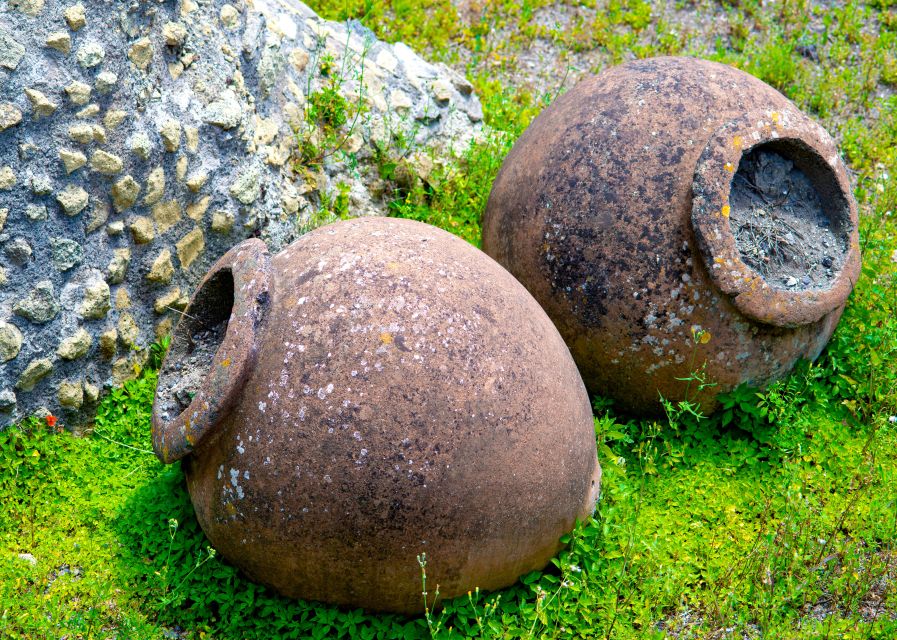
The value of the guide is not simply getting from one landmark to the next. At both sites, you need help connecting architecture to daily life.
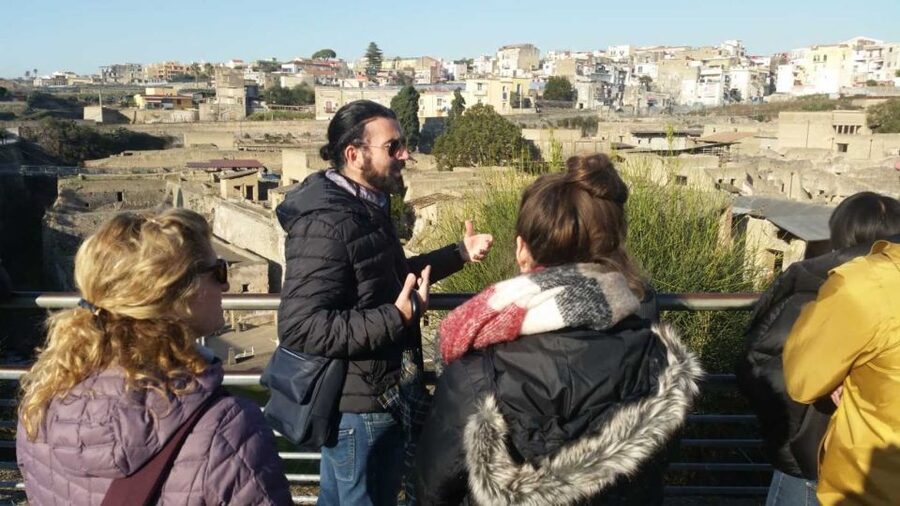
At Pompeii, a guide can explain how the Forum, baths, shops, bakeries, houses, and streets worked together. At Herculaneum, the guide can direct your attention to surviving wood, wall painting, mosaics, and building methods.
The named guides bring different strengths. Francesco is praised for making ancient culture easy to connect with. Gabriella is noted for her broad command of both archaeological areas and for making the day enjoyable. Alfredo is praised for covering many key points while keeping expectations realistic.
The private format also lets you ask questions without waiting for a group to catch up. You can spend more time on houses, public buildings, religious sites, or the eruption, depending on what interests you most.
The guide languages listed are English, Spanish, French, German, Italian, Chinese, Japanese, Portuguese, and Russian. Confirm your preferred language when booking.
Is $623.90 per person good value?
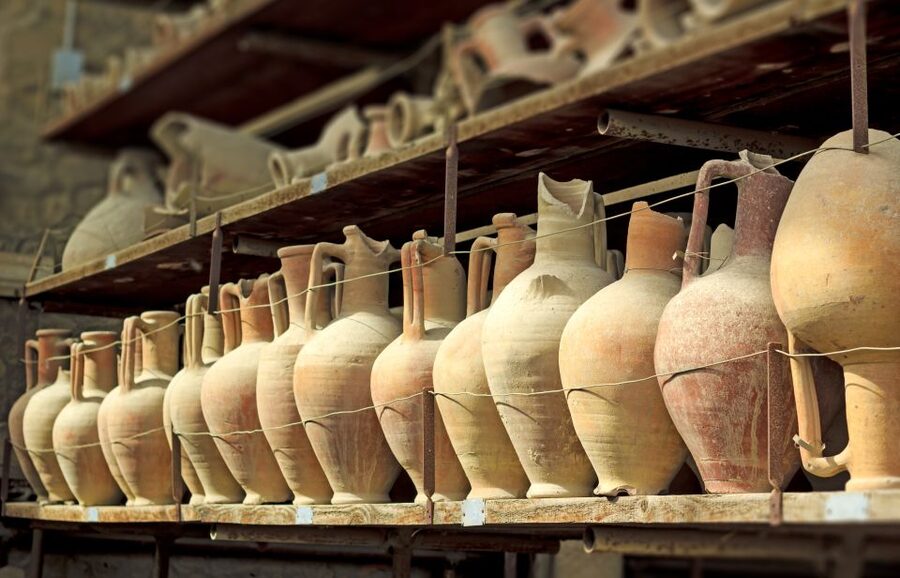
At $623.90 per person, this is an expensive day. The price makes more sense if several people share a private vehicle and guide, but the supplied price is stated per person, so check the final total for your group before paying.
What you are buying is convenience and concentration. Private transportation links distant pickup points with two major sites. A private guide provides context. Entry tickets are handled for Pompeii and Herculaneum, and the guide can buy them in roughly 10 minutes, allowing you to skip the ticket line.
The Pompeii Express ticket and Herculaneum entry ticket are included. Food and drinks are not. The Herculaneum ticket is listed at 16 euros each, which helps explain part of the cost but does not make the tour inexpensive.
I would call it good value for families, small private groups, first-time visitors, and people with only one day available. It is weaker value for budget travelers, archaeology enthusiasts who want long independent visits, or anyone already based beside the sites.
The perfect comparison is not simply tour versus no tour. Compare this price with arranging a private driver, buying two tickets, finding a guide, managing lunch, and handling the return trip yourself. If you would be comfortable doing all that, the premium may not suit you. If the logistics sound tiring, the private arrangement may earn its keep.
Who should book this day
I would recommend this tour to you if you want both Pompeii and Herculaneum without renting a car or navigating public transport. It is also a strong choice for families or friends who want their own pace and the ability to ask questions.
It suits people who value explanation over maximum time inside the ruins. The two-hour visits are long enough to see major highlights, but short enough to fit both sites into one day.
You should think twice if you use a wheelchair, since the experience is not suitable for wheelchair users. You should also reconsider it if a short visit to Pompeii would frustrate you. Pompeii needs days for a full study, and this tour intentionally gives you a selected route.
Free cancellation is available up to 24 hours before departure for a full refund, and you can reserve now and pay later. Those terms make it easier to hold a place while your Campania plans settle, but confirm the exact pickup location and starting time when you book.
Should you book Pompeii and Herculaneum together?
Book it if you want a polished, private day with transport, entry arrangements, and a guide who can turn walls and streets into a readable story. The strongest reasons are the combination of both sites, the personal attention, and the relief of not dealing with Campania roads yourself.
Skip it if the price feels too high or if you want to spend a full day at Pompeii alone. For most first visits, though, this pairing offers a smart contrast: Pompeii shows the scale of Roman urban life, while Herculaneum shows how much ordinary detail can survive.
FAQ
How long does the Pompeii and Herculaneum tour last?
The tour lasts seven hours. The schedule includes guided visits of about two hours at each archaeological site, a 30-minute lunch break, and several transportation periods.
Where can pickup take place?
Pickup is available from Naples, Salerno, Amalfi, Positano, and Sorrento. You need to provide your exact pickup details.
Where can the tour finish?
Drop-off is available in Salerno, Sorrento, Positano, Amalfi, and Naples.
Are Pompeii and Herculaneum entrance tickets included?
Yes. The Pompeii Express entry ticket and Herculaneum entry ticket are included in the tour.
Is lunch included?
No. Food and drinks are not included. Your guide can suggest a typical restaurant, winery, or pizzeria for the lunch stop.
Can I skip the ticket line?
Yes. The guide can buy the tickets in approximately 10 minutes, allowing you to skip the ticket line.
Is the tour private and customizable?
Yes. This is a private group experience and is described as fully customizable.
Is the tour suitable for wheelchair users?
No. The experience is listed as not suitable for wheelchair users.
Just added around Naples
- Full-Day Tour of the Amalfi Coast and Pompeii from Naples★ 4.5 · 3 reviews
- The Ultimate Neapolitan Cooking Class with Local★ 5.0 · 3 reviews
- Naples: Old City Center Street Food Tour with Spritz★ 4.7 · 3 reviews
- Visit in Pompeii – Naples Private Tour with Ada★ 5.0 · 3 reviews
- Transfer from Naples to Sorrento or viceversa★ 5.0 · 3 reviews
- Naples: National Gallery of Capodimonte Tour★ 5.0 · 3 reviews
- Visit 2 wine producers with tasting and transportation included★ 5.0 · 3 reviews
- Naples: Mozzarella experience★ 5.0 · 3 reviews
Pompeii Tours, compared.
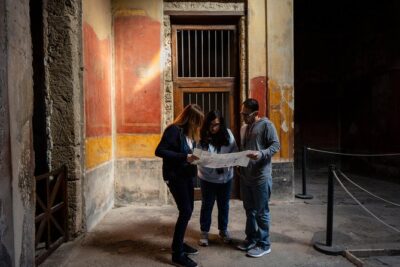
Pompeii & Mt.Vesuvius Day Tour from Naples with Pizza Lunch
Read our review →
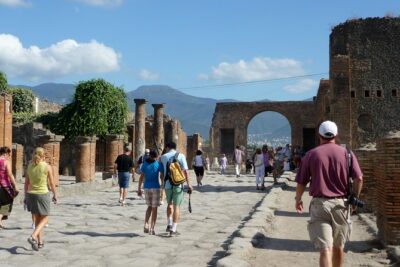
Pompeii & Mt Vesuvius All-Inclusive Small Group w/ Lunch
Read our review →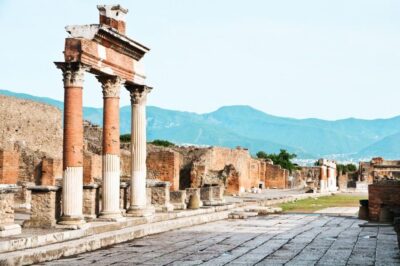
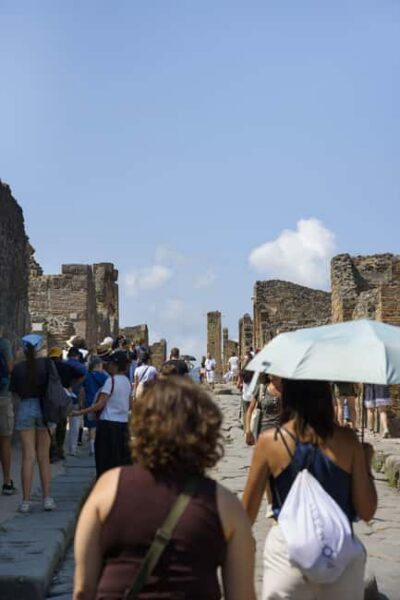

Pompeii & Amalfi Coast Full-Day Trip with Lunch
Read our review →Browse the lists this tour appears in