
Reviewed · POMPEII TOURS
Pompeii & Herculaneum Guided Tour – High Speed Train from Rome
The striking thing about this tour is how much ancient Roman life you can see in one long day. Pompeii gives you scale, with broad streets, theaters, baths, villas, and public buildings. Herculaneum is smaller but often feels more intimate, with better-preserved mosaics, frescoes, and wooden details.
I like the high-speed train from Rome, which removes the hassle of arranging a separate Naples trip, and I like having an archaeologist guide explain what you are seeing rather than leaving you to wander among the ruins. The drawback is the pace: two archaeological parks in one day means a lot of walking, limited free time, and an early return to Naples to protect your train connection.
In This Review
- Key points at a glance
- Why this Rome day trip works
- Catching the train at Rome Termini
- Meeting the guide across from Naples Central
- Pompeii through Porta Marina
- The Maximall Pompeii break
- The later Pompeii stops
- Why Herculaneum feels different
- The walking and physical demands
- Keeping the train connection stress-free
- What the guides add
- Who should book this tour
- Should you book the Pompeii and Herculaneum day trip?
- FAQ
- How long does the tour last?
- Where does the tour begin?
- Where do I meet the guide in Naples?
- Are the train tickets included?
- Are entrance tickets to Pompeii and Herculaneum included?
- Is a guide included at both sites?
- Is food included?
- Can I bring a suitcase?
- Can I cancel for a full refund?
Key points at a glance
- High-speed rail from Rome: Your round-trip train tickets take you between Rome Termini and Naples, with instructions sent the day before.
- Two different ancient cities: Pompeii offers size and variety, while Herculaneum gives you closer views of preserved homes and decoration.
- Archaeologist-led visits: Guides including Alfredo, Michele, Raphael, Roberta, and Gennaro have led tours praised for clear explanations and strong storytelling.
- Skip-the-line entry: Pompeii Express and Herculaneum admission are included, saving you from arranging the two entrance tickets yourself.
- A real walking day: Uneven ancient roads, little shade at Pompeii, and nearly 11.5 hours door to door require comfortable shoes and stamina.
- Maximum group of 20: This is not a private tour, but the group limit helps keep the visit manageable.
Why this Rome day trip works
At $204.38 per person, this is not the cheapest way to see Pompeii. You are paying for more than admission, though. The price includes round-trip high-speed rail from Rome, a minibus and driver in the Naples area, admission to both sites, an archaeologist guide, and headsets.
That package matters if you want to see both ruins without arranging regional trains, entrance tickets, and a local guide on your own. I also like the safety margin built into the day. The driver returns you to Naples Central Station, and the tour is planned around your evening train back to Rome.
The tradeoff is time. You will be away from Rome for about 11 hours and 30 minutes, with roughly two hours at Herculaneum and about two and a half hours at Pompeii, depending on the group and guide. Pompeii is vast enough to fill an entire day by itself, so this tour shows you selected areas rather than every street and building.
This is best viewed as an efficient first look at both sites, not a slow archaeological study. If you want to inspect every villa or spend hours taking photographs, you will likely find the schedule tight.
More ways to see Pompeii:
- From Naples: Pompeii Ruins & Mount Vesuvius Day Tour
★ 4.3 · 11,459 reviews - Naples or Sorrento: Full-Day Pompeii and Mount Vesuvius Tour
★ 4.6 · 4,235 reviews - Pompeii & Mt.Vesuvius Day Tour from Naples with Pizza Lunch
★ 4.0 · 2,901 reviews
Catching the train at Rome Termini

You begin on your own at Rome Termini Station. Askos Tours sends the high-speed train tickets one day before departure, so you do not meet the guide in Rome. You simply board the train, ride to Naples, and join the group there.
The rail portion takes about an hour according to the schedule provided. Read the train information carefully before leaving your hotel, and pay attention to the Naples stop. One useful warning from the tour experience is that there can be two Naples-related stops, so do not leave the train at the first one without checking your ticket and instructions.
This independent start is easy for anyone comfortable in a large railway station. It also means the tour does not include a Rome hotel pickup. Give yourself enough time to find the correct platform, and keep your passport or other valid identification with you.
Meeting the guide across from Naples Central
Once you arrive in Naples, walk across the street to Starhotels Terminus at Piazza Giuseppe Garibaldi. This is the meeting point for the local guide and Askos Tours driver. The location is practical because it sits directly beside Naples Central Station.
The transfer to the archaeological parks is by minibus. The driver handles the road connections while you settle into the day. Drivers named in tour feedback include Giuseppe, Massimo, and Salvatore, all noted for getting the group back to Naples in good time.
The group can include up to 20 people. That is small enough for a personal feel in many parts of the visit, but it is not a private tour. One less positive experience involved a group that was difficult to hear and manage, so your enjoyment will depend partly on the guide’s pace, microphone, and the behavior of the people with you.
Headsets are included. They are important in a busy archaeological park, since you can hear the guide while standing a short distance away. Still, keep the earpiece secure and tell the guide quickly if the sound cuts out. One complaint involved the signal dropping when the guide walked too far ahead.
Pompeii through Porta Marina
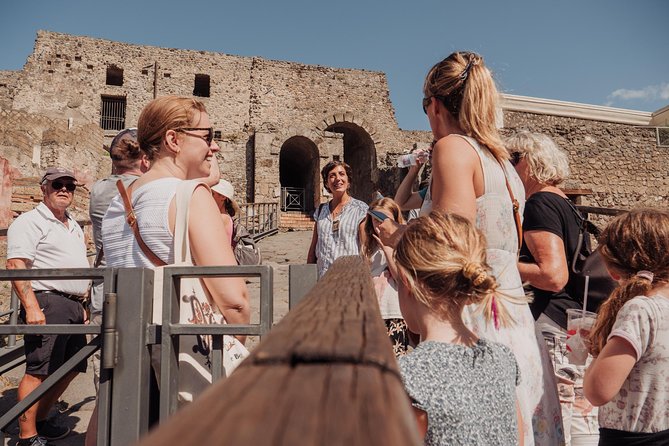
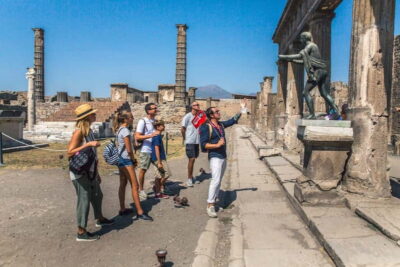
Pompeii begins at the Porta Marina entrance, one of the ancient city’s main gateways. From there, the archaeologist sets the scene: the city’s layout, its public spaces, its homes, and the eruption of Mount Vesuvius in AD 79.
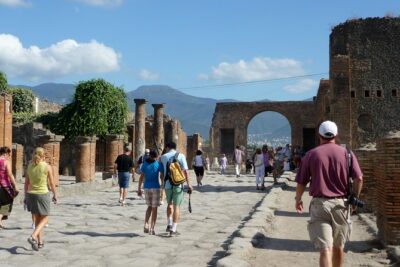
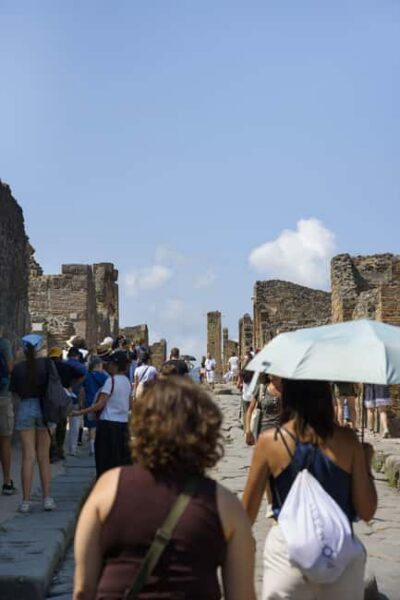
The first stretch follows Via dell’Abbondanza, Pompeii’s famous main street. It is a useful introduction to the city because you immediately see how the streets, shops, homes, and public buildings fit together. The ancient paving is uneven, and the walking surface can be tiring, especially after several hours.
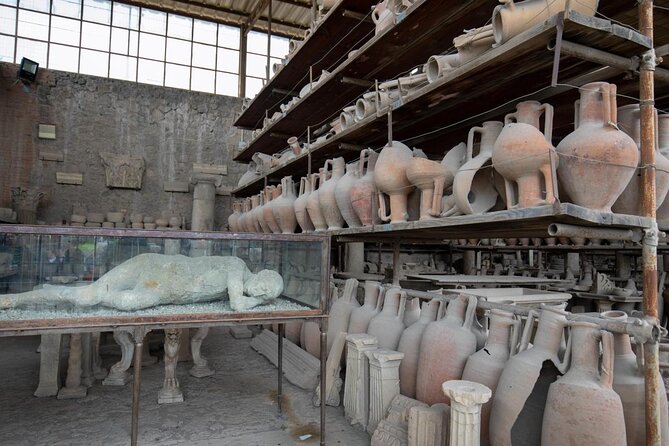
The House of Menander is one of the early residential stops. The tour then moves to the Forum granaries, where stored objects help explain how the site was excavated and presented. The Stabian Baths show the role of public bathing in Roman daily life, while the Lupanar, or brothel, offers a more direct and sometimes amusing look at ordinary urban life.
You will also visit the House of the Faun, one of Pompeii’s best-known grand houses, with its large scale and refined decoration. The Odeon, or small theater, and the Teatro Grande, the main theater, shift the focus from private life to public entertainment.
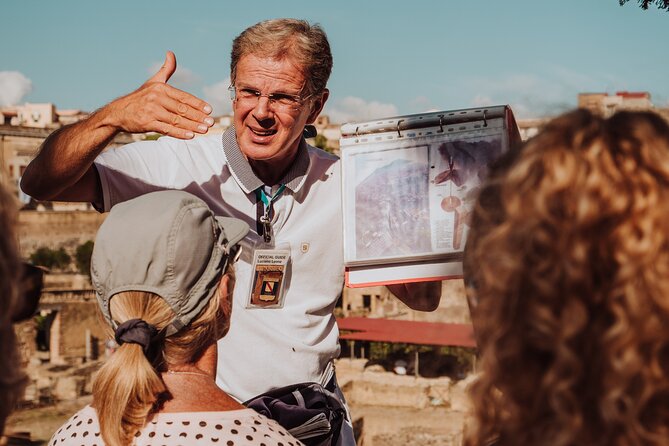
The strongest guides make these stops work together. Raphael was praised for explaining how people lived and for choosing a useful set of buildings. Michele was singled out for bringing the inhabitants to life rather than treating the ruins as a list of walls. That human focus is valuable here. Pompeii is easier to understand when you picture meals, baths, business, worship, and theater as parts of one working city.
More Herculaneum visits from Naples:
- Herculaneum: Skip-the-Line Guided Tour with Archaeologist
★ 4.8 · 3,439 reviews - Herculaneum Small Group Tour and Ticket With an Archaeologist
★ 5.0 · 994 reviews - Herculaneum: Skip-the-Line Entry Ticket with Audio Guide
★ 4.3 · 870 reviews - From Naples: Pompeii & Herculaneum with Archaeologist Guide
★ 4.8 · 665 reviews
The Maximall Pompeii break
The schedule includes a 50-minute stop at Maximall Pompeii, described as the largest shopping center in southern Italy. You receive an Askos welcome kit and discount card for stores there, and the mall gives you air conditioning, restrooms, food options, and a place to sit.
Some people may see a shopping-center stop as an odd addition to an ancient-site tour. I see it as a practical pause. Pompeii offers little shade, and the walking is hard on your feet. A quick meal and rest can make the second half of the day much more pleasant.
Do not expect this to be a leisurely lunch. The break is built into a tightly managed route, so keep an eye on the meeting time. Meals and drinks are not included, and personal spending at the mall is your responsibility.
The later Pompeii stops
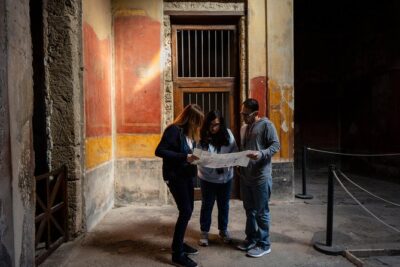
After the break, the route returns to Pompeii for more residential and civic sites. The House of the Deer offers another look at an affluent home, while the Terrace of Marcus Nonius Balbus adds a public monument and a sense of the city’s connection to the wider Roman world.
The College of the Augustales is another important stop. It helps show how religion, status, and civic identity were woven into public life. These later stops are not filler. They add variety after the major streets, theaters, and baths.
Still, you should understand the limits. Even two and a half hours cannot cover Pompeii in full. One person who had visited before felt this route skipped important areas and returned to Naples too early for a 6 p.m. train. That criticism is fair if your goal is a complete Pompeii visit.
The guide’s job is to choose a route that fits the group, the opening conditions, and the train schedule. Alfredo was praised for matching the highlights to the group’s pace and endurance, while another guide was appreciated for leaving enough time for photographs. The result may be satisfying for a first visit, but repeat visitors should check the route expectations before booking.
Why Herculaneum feels different
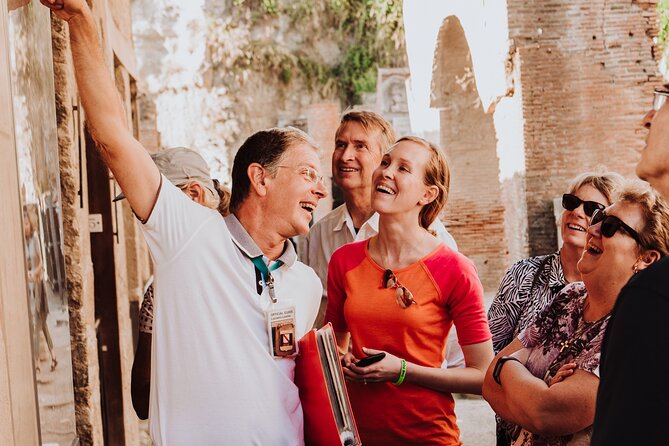
The Archaeological Park of Herculaneum receives about two hours of guided time. The town was smaller than Pompeii, and the visit feels more concentrated. It is easier to grasp the shape of individual homes and to examine surviving decoration without facing the same broad scale.
You will see the House of the Wooden Partition, the House of the Skeleton, and the Central Thermae. The House of the Relief of Telephus, the Samnitic House, and the House of the Fine Courtyard add more examples of domestic design. The House of the Grand Portal and the House of the Black Salon continue the focus on private architecture and decoration.
The great strength here is preservation. Herculaneum is especially rewarding for mosaics, frescoes, wooden fittings, and household details. Several guides use the site to explain daily life in a more close-up way, then use Pompeii to show a larger city with more public spaces.
That contrast is one of the smartest parts of the tour. The two towns suffered in the same eruption, but they do not feel like copies of one another. Herculaneum can make the smaller details memorable, while Pompeii gives you the broad civic picture.
Guides such as Alfredo, Michele, and Raphael received strong praise for explaining excavation, geology, conservation, and Roman life. Alfredo in particular was noted for making the two visits feel distinct rather than repeating the same lecture twice. That matters on a full day, when the wrong guide can make two sets of ruins blur together.
The walking and physical demands
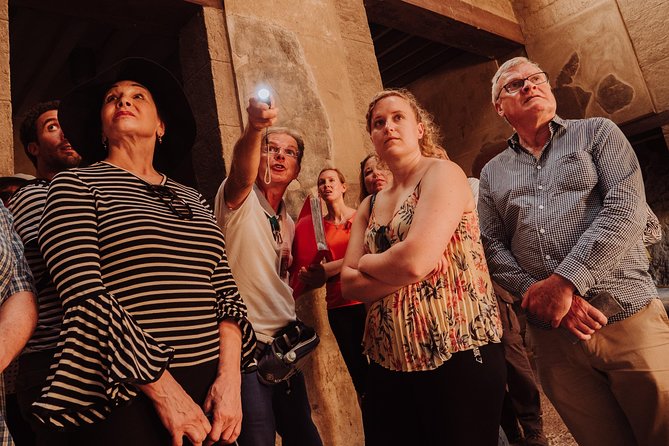
You need good shoes. Pompeii’s roads are made of ancient stone, and Herculaneum also requires steady walking through uneven archaeological areas. The route is strenuous enough that anyone with leg or knee problems should think carefully before choosing both sites in one day.
Pompeii has very little shade. Bring water, sun protection, and a hat if the weather calls for it. Since food and drinks are excluded, plan to buy refreshments during the Maximall break or carry what is allowed for the site visit.
The tour is not recommended for visually impaired participants unless they are accompanied by a dedicated personal assistant. The supplied information does not promise special accessibility arrangements, so contact the provider before booking if you need support beyond normal walking.
Suitcases are another practical concern. The minibus may not have a luggage compartment, and the operator recommends using a luggage deposit at the station or another facility. Travel light for this day.
Keeping the train connection stress-free
After Herculaneum, the driver returns you to the Starhotels Terminus area near Naples Central Station. You then find your platform and board the high-speed train back to Rome independently.
The schedule appears deliberately cautious. Some people would prefer more time inside Pompeii, but the early return helps protect the evening rail connection. This is a sensible choice for a day trip where a missed train could create a much larger problem.
The tour ends at Rome Termini. It is a long day, but the rail plan keeps you from dealing with a separate return transfer from the archaeological sites. You still need to manage your own train boarding, so stay aware of the time and platform information.
What the guides add
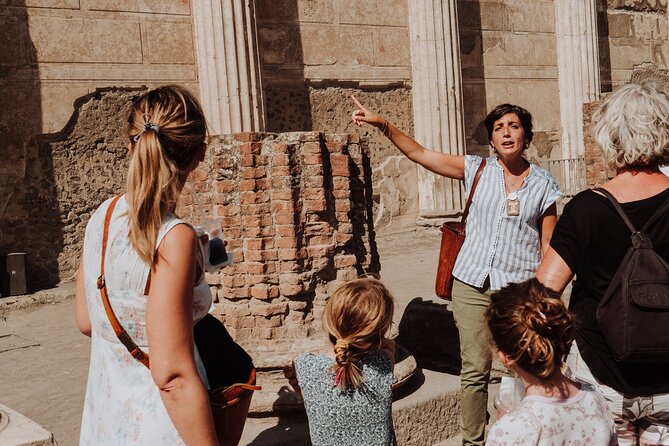
The archaeologist is the main reason to choose this tour instead of buying tickets and walking through alone. A good guide gives you a way to read the ruins. A bath complex becomes a social center, a villa becomes a record of taste and status, and a theater becomes part of the city’s weekly life.
The most praised guides include Alfredo, Michele, Raphael, Roberta, Gennaro, Bruno, Carmine, and Diego Michele. Their strengths vary, but the best pattern is clear: strong explanations, humor, patience with questions, and a sense of how to keep a group moving.
There is one important caveat. One lower-rated experience involved a guide who was hard to understand, moved too far ahead, and did not allow enough questions. Headsets reduce that risk but do not remove it. If you cannot hear, say so promptly rather than letting an hour of commentary disappear.
Who should book this tour
I would choose this tour if you are staying in Rome and want to see both Pompeii and Herculaneum without spending a night in Naples. It suits first-time visitors who want context, clear transport, and a planned route through two very large archaeological parks.
It is also a good fit for families who can handle a quick pace and a full day. The route includes a rest and food break, and the included transport reduces the number of changes you must manage.
I would hesitate if you have limited stamina, need a slow pace, or have already seen Pompeii and want to explore less visited areas. You may prefer a dedicated Pompeii day, or separate visits that allow more time for photographs and side streets.
Should you book the Pompeii and Herculaneum day trip?
Book it if your priority is efficient access from Rome, a strong archaeological introduction, and the chance to compare two ancient towns in one outing. The high-speed rail, local driver, included entrances, and guide make the $204.38 price reasonable for a carefully arranged day.
Skip it if you want a relaxed schedule or a complete survey of Pompeii. This tour gives you the essential buildings and useful explanations, but it cannot show every corner of a sprawling site. Pack light, wear sturdy shoes, bring water, and treat the mall stop as a welcome recovery period rather than wasted time.
The 4.8 rating from 103 ratings and 95 percent recommendation fit the tour’s main strengths: the rail connection is simple, the meeting point is easy, and the archaeologist guides often make the ruins far more understandable. Just remember that this is a demanding, tightly timed day, not a casual outing.
FAQ
How long does the tour last?
The experience lasts approximately 11 hours and 30 minutes, including the train journeys between Rome and Naples, local transfers, and visits to both archaeological parks.
Where does the tour begin?
You begin independently at Rome Termini Station. The guide does not meet you there. You board the included high-speed train on your own and meet the local guide in Naples.
Where do I meet the guide in Naples?
Meet at Starhotels Terminus, Piazza Giuseppe Garibaldi 91, directly across from Naples Central Station.
Are the train tickets included?
Yes. Round-trip high-speed train tickets between Roma Termini and Naples Central are included. The tickets are sent one day before the tour.
Are entrance tickets to Pompeii and Herculaneum included?
Yes. The package includes Pompeii Express entry and admission to the Herculaneum ruins.
Is a guide included at both sites?
Yes. An archaeologist provides guided visits at Pompeii and Herculaneum. Headsets are also included.
Is food included?
No. Meals and drinks are not included. The schedule provides a 50-minute break at Maximall Pompeii, where you can buy food and drinks and use the facilities.
Can I bring a suitcase?
Suitcases are not recommended because the minibus may not have a luggage compartment. The operator recommends using a luggage deposit at the station or another suitable facility.
Can I cancel for a full refund?
Yes. You can cancel at least 24 hours before the local start time for a full refund. Cancellations or changes made less than 24 hours before the start time are not accepted for a refund.
More Train Experiences in Naples
- From Naples: Guided tour of Pompeii skip-the-line and round-trip train
★ 4.5 · 811 reviews - From Naples: Caserta Palace Ticket and Train with Audioguide
★ 4.3 · 348 reviews - Private Transfer: Naples Hotel, Airport,Train Station to Sorrento
★ 4.5 · 39 reviews - Amalfi Coast by Train & Ferry with Smart Digital Guide
★ 4.3 · 37 reviews
Just added around Naples
- Full-Day Tour of the Amalfi Coast and Pompeii from Naples★ 4.5 · 3 reviews
- The Ultimate Neapolitan Cooking Class with Local★ 5.0 · 3 reviews
- Transfer from Naples to Sorrento or viceversa★ 5.0 · 3 reviews
- Naples: Old City Center Street Food Tour with Spritz★ 4.7 · 3 reviews
- Visit in Pompeii – Naples Private Tour with Ada★ 5.0 · 3 reviews
- Naples: National Gallery of Capodimonte Tour★ 5.0 · 3 reviews
- Visit 2 wine producers with tasting and transportation included★ 5.0 · 3 reviews
- Naples: Mozzarella experience★ 5.0 · 3 reviews
Pompeii Tours, compared.
Pompeii & Mt.Vesuvius Day Tour from Naples with Pizza Lunch
Read our review →
Pompeii & Mt Vesuvius All-Inclusive Small Group w/ Lunch
Read our review →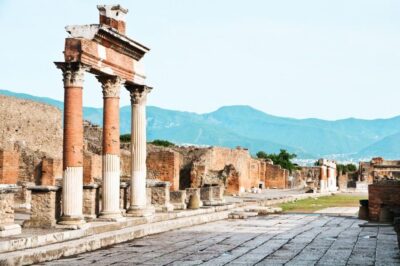

Pompeii & Amalfi Coast Full-Day Trip with Lunch
Read our review →Browse the lists this tour appears in