
Reviewed · HERCULANEUM TOURS
Private Herculaneum for Families: Kids Archaeology Adventure
Herculaneum is the kind of ancient site that can make Roman history click for children. Beneath modern Ercolano, you walk through a compact town where wooden doors, furniture, painted walls, shops, baths, and even food survived the eruption of Vesuvius in AD 79. The best part is how quickly kids can picture real people living here.
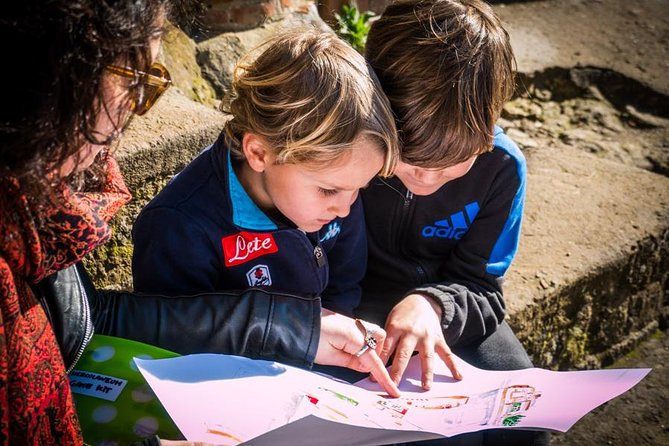
I like the private format, since your guide can adjust the pace and turn a four-year-old’s short attention span into part of the plan. I also like the practical family touches: games, a site map, and a Herculaneum4Kids package. Guides such as Antonella and Paola have made the visit engaging for children from age three upward.
The main consideration is walking. The site is compact, but two hours on ancient streets can tire younger children, especially in warm weather. Bring water, hats, and comfortable shoes, and remember that the listed price of $221.70 per person is a serious investment for a family.
In This Review
- Key points to know before you book
- Why Herculaneum works better than Pompeii for many families
- Starting in Ercolano with a family guide
- Antiquarium and Boat Pavilion: objects children can understand
- Elegant homes: Casa dei Cervi and Casa del Bicentenario
- Gymnasium, mosaics, and the Roman love of display
- Baths, wine signs, and ancient fast food
- Wooden screens and Roman religion
- The shoreline shelters and the human cost of AD 79
- Cost, walking, and who gets the best value
- Should you book this Herculaneum tour?
- FAQ
- Where does the tour begin?
- Where does the tour end?
- How long does the tour last?
- Is admission to Herculaneum included?
- Is this a private tour?
- Is the tour offered in English?
- Does the tour include activities for children?
- What should I wear and bring?
- Can I cancel for a full refund?
Key points to know before you book
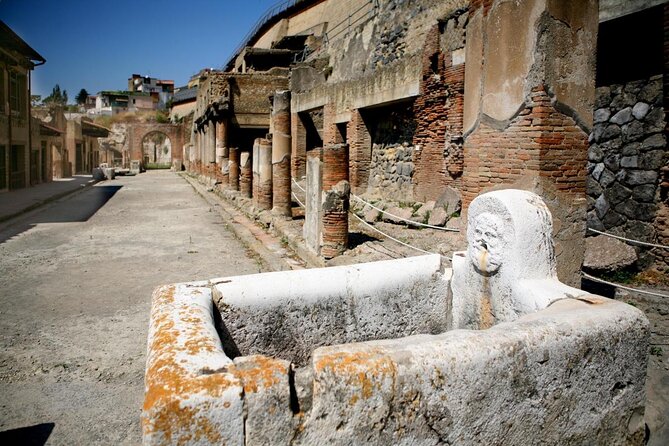
- A real Roman boat gives the site a seaside story: The Boat Pavilion preserves a wooden vessel and sailors’ equipment from nearly 2,000 years ago.
- Kids get more than a lecture: Games, questions, a keepsake map, and the Herculaneum4Kids package help children stay involved.
- The private guide changes the pace: Your group alone takes part, with an English-speaking Blue Badge-accredited guide.
- Herculaneum is compact but not effortless: Buildings sit close together, yet the walking can be tiring for small children.
- Preserved wood is a major surprise: Charred doors, furniture, screens, and writing tablets make ancient life feel unusually close.
- Pickup depends on the booking option: A meeting point is available in Ercolano, while pickup is included with the premium option.
Why Herculaneum works better than Pompeii for many families
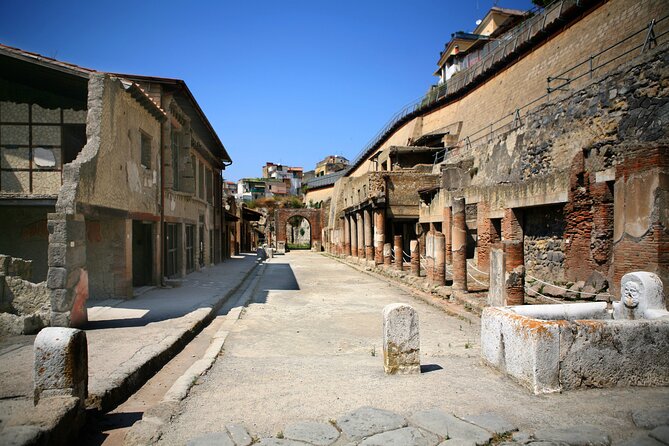
Pompeii is larger and more famous, but Herculaneum often gives families a clearer first look at Roman daily life. The streets are easier to cover, and the buildings stand close together. You do not spend as much time marching between distant ruins before reaching the next useful story.
The eruption also preserved Herculaneum in a different way. A deep blanket of volcanic material protected wooden doors, furniture, window frames, wall panels, and other organic material. Colorful frescoes and mosaics remain in many homes, and the town’s shops still reveal the practical side of Roman life.
That preservation is a gift for children. You can point to a carbonized wooden screen and say that it is not a modern reconstruction. It is the remains of something made and used by a Roman household nearly two thousand years ago.
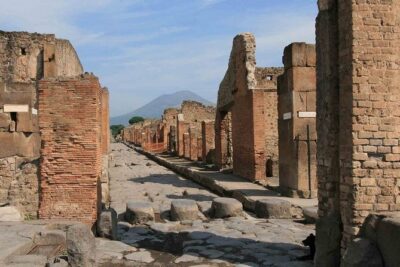
The volcano is part of the experience from the start. On the way to the site, you may see Vesuvius and the protected area around it. Inside Herculaneum, the mountain remains visible in the distance, tying the ruins to the force that buried them.
More Herculaneum visits from Naples:
- Herculaneum: Skip-the-Line Guided Tour with Archaeologist
★ 4.8 · 3,439 reviews - Herculaneum Small Group Tour and Ticket With an Archaeologist
★ 5.0 · 994 reviews - Herculaneum: Skip-the-Line Entry Ticket with Audio Guide
★ 4.3 · 870 reviews
Starting in Ercolano with a family guide
The tour begins in the Ercolano area, at 80056 Ercolano, unless you arrange pickup. The premium option includes pickup, and the provider asks you to specify where you want to meet. That flexibility can be useful for families carrying bags, managing a stroller, or coming from a nearby hotel, though you should confirm the exact arrangement when booking.
The experience lasts about two to four hours, with around two hours allocated to the archaeological park. The longer range likely gives the guide room to adapt the visit, but you should not assume the full four hours will be spent inside the ruins.
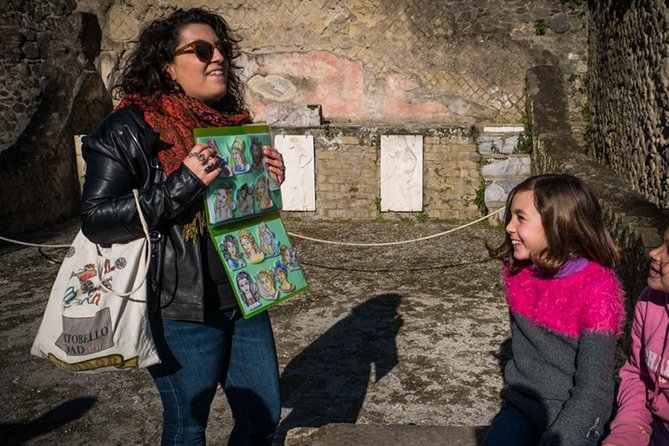
Your guide is an English-speaking Blue Badge-accredited professional, and the private setup means only your group takes part. This matters with children. A guide can pause for questions, shorten a section, or turn a wall painting into a quick guessing game instead of pushing ahead with a fixed group.
Paola, one guide associated with this experience, used simple games and activities to keep seven and eight-year-old girls involved. Another family found that Antonella made the history work for adults and children at the same time. Guide assignment is not guaranteed, but those examples show the style you should expect: active explanation rather than a long speech.
Antiquarium and Boat Pavilion: objects children can understand
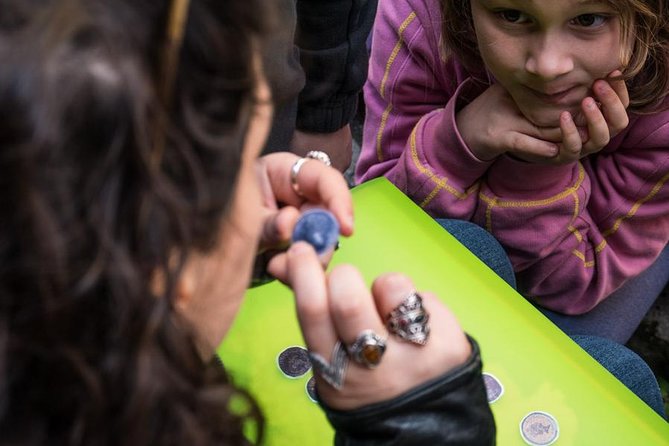
The Antiquarium is a useful opening because it introduces Herculaneum through objects rather than only buildings. You may see jewelry, coins, writing tools, household objects, and items linked to children’s lives. These are easy starting points for a family conversation because they connect with things you still recognize today.
The charred wood deserves special attention. Intense heat from the eruption carbonized wooden items instead of reducing them completely to ash. A guide can use a door, piece of furniture, or architectural fragment to explain how unusual this survival is.
Then comes the Boat Pavilion, one of the site’s most memorable family stops. A wooden Roman boat is preserved there, along with equipment used by sailors. The vessel helps you picture Herculaneum as a coastal community connected to movement, trade, and the Bay of Naples.
For children, the boat is a welcome change from another painted wall. For adults, it adds a human scale to the eruption. This was not only a town of villas and temples. It was also a place where people worked, traveled, sold goods, and lived near the water.
Elegant homes: Casa dei Cervi and Casa del Bicentenario
Casa dei Cervi gives you a look at upper-class Roman living. Its courtyard and marble statues of stags attacked by hunting dogs are the obvious attention grabbers, but the house also shows how rooms, thresholds, mosaics, and frescoes expressed status.
Ask your guide to explain how the layout may have separated public reception from more private areas. Children can imagine where people gathered, while adults can notice that a Roman home was also a setting for social display.
Casa del Bicentenario offers another strong view of domestic life. The rooms arranged around a central courtyard suggest a home used for both family routines and formal entertaining. The survival of charred doors, window frames, and partitions makes the house especially useful for understanding Roman interiors.
Wooden writing tablets found here contained court records. That detail may appeal to parents because it breaks the old picture of ancient life as only temples and battles. Romans dealt with contracts, paperwork, disputes, and legal business, just as people do now.
A few more Naples trips worth weighing up
- Exclusive Naples Private Food Tour: 6 or 10 Tastings
★ 5.0 · 596 reviews - Private Day Tour: Sorrento, Positano, Amalfi, Ravello from Naples
★ 4.5 · 546 reviews - Private Day tour of Positano, Amalfi and Ravello from Naples
★ 5.0 · 522 reviews - Private Amalfi Coast Tour – Enjoy it with our local english speaking driver
★ 5.0 · 475 reviews
Gymnasium, mosaics, and the Roman love of display
At the Palestra, you see the large open space where young Romans trained and socialized. Running, wrestling, and ball games took place here, while porticoes provided shade for rest and conversation.
This is a good place to connect ancient life with your child’s own interests. The equipment and rules were different, but young people still exercised, met friends, and spent time in shared public spaces.
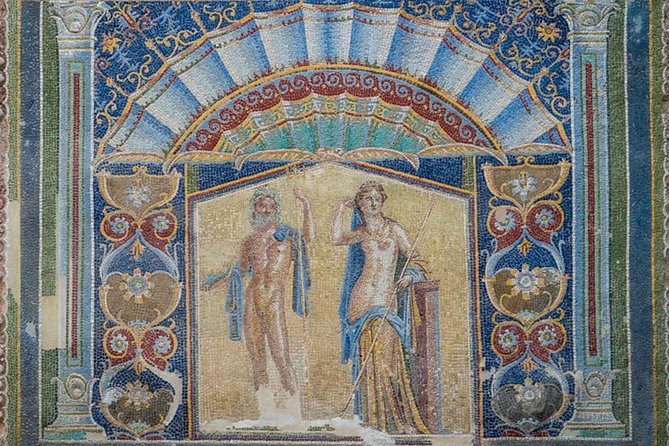
Casa di Nettuno e Anfitrite shifts the focus from activity to decoration. Its famous mosaic of Neptune and Amphitrite uses small glass pieces to create an image that still catches the eye after two millennia. Children often notice the colors first. That is useful because many kids arrive with the mistaken idea that Roman ruins were always plain stone.
The house also shows how decoration carried meaning. Mythological images were not random wallpaper. They told stories and helped owners show taste, wealth, and interests. A family guide can keep this explanation short, then let children identify figures and details for themselves.
Baths, wine signs, and ancient fast food
The Women’s Baths reveal the practical engineering behind Roman comfort. Families move through changing rooms, warm rooms, and hot rooms, seeing mosaic floors, marble benches, and heating systems beneath the floors.
The comparison to a modern spa makes the baths easy to explain. Romans came to wash, relax, and meet other people. Children can focus on the engineering question: how did hot air move under the floor, and why were several rooms needed?
The Ad Cucumas wine advertisement offers a lighter stop. Painted directly onto a shop façade, it shows how Roman businesses used images and symbols to tell passersby what they sold. Children can look for clues and guess the purpose of the shop before the guide explains it.
The Thermopolium makes the ancient town feel even more familiar. This street-food counter served hot meals from large terracotta jars set into a decorated counter. You can ask children what they would order and compare the shop with a modern takeaway.
The preserved jars, painted signs, and traces of ingredients help you picture the smells and noise of a working Roman street. It is one of the best places to explain that many residents did not prepare every meal in a private kitchen.
Wooden screens and Roman religion
Casa del Tramezzo di Legno contains one of Herculaneum’s most striking wooden survivals: a large folding screen. Carbonized by the eruption, it still keeps its shape and decorative details.
This is more than an impressive object. The screen shows how a Roman household divided space and controlled privacy. Children often understand it at once because it resembles a room divider, while adults can use it to discuss how homes balanced family life, visitors, and formal gatherings.
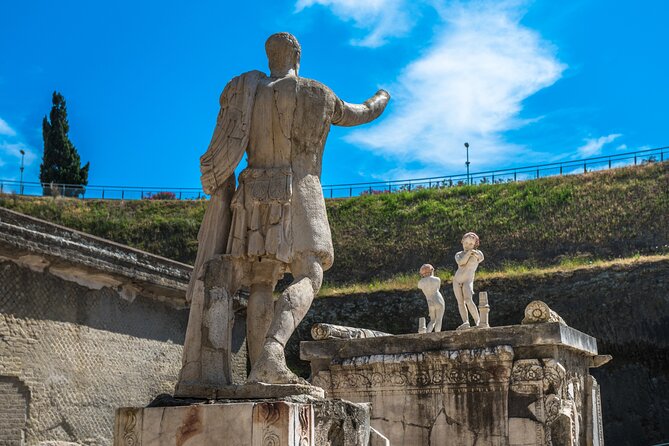
At the Sacello Augustali, the subject turns to religion and public identity. The small shrine was linked to the worship of the emperor, and its statues and decorated panels show how religious practice and civic loyalty overlapped.
A guide can explain this without turning the stop into a lecture on Roman politics. The key point is simple: religion was part of public life, and honoring the emperor helped express membership in the town and the wider Roman state.
Casa dello Scheletro adds a note of mystery. Its name comes from a skeleton found during early excavations. Inside, you see painted walls, decorative niches, and rooms that help reconstruct the lives of the people who lived there.
The human remains are presented as part of the archaeology, but this is a moment to watch your younger children. A sensitive guide can explain the discovery without making it frightening. You can also use it to remind kids that Herculaneum belonged to real families, not just to buildings.
The shoreline shelters and the human cost of AD 79
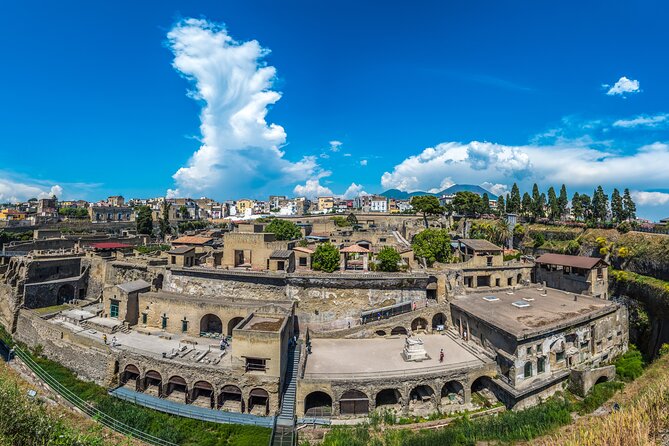
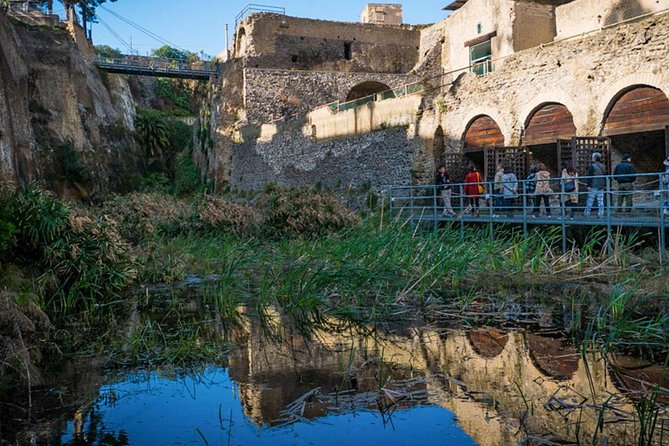
The ancient shoreline is a powerful final stop. Vaulted chambers here held hundreds of skeletons, showing that people sought shelter as the eruption overwhelmed the town.
This is not a cheerful ending, but it gives the visit its human weight. The preserved houses and objects are fascinating, yet the shelters remind you that the eruption was a disaster involving ordinary people.
For younger children, you may want to keep the explanation simple and let the guide set the tone. Older children can ask how archaeologists work out what happened from bones, buildings, and volcanic deposits. The point is not shock. It is understanding that history includes individual lives.
The view back toward Vesuvius makes the scene even more direct. You are looking at the volcano that shaped the town’s fate, while standing among the remains of the people who lived below it.
Cost, walking, and who gets the best value
At $221.70 per person, this is not a budget way to see Herculaneum. The price is easier to justify if you value a private guide, family-specific activities, included admission, and the ability to set a pace that suits your children.
It is less attractive if your children are old enough to enjoy a self-guided visit and your main goal is simply to enter the site. A standard admission and independent visit will cost less, but you will need to explain the ruins yourself and keep the group moving.
The tour is best for families with children who need stories, puzzles, and regular changes of focus. It also suits parents who want a serious historical visit without asking children to listen to an adult lecture for two hours.
Expect moderate physical activity. Wear proper shoes, and from May through September bring sun protection, water, and hats. One family found that a four-year-old tired before the visit ended, while seven-year-olds remained focused with the right guide and activities. That is a useful guide to the age range: younger children may need breaks, while school-age children are likely to get the most from the program.
The experience is offered in English, and service animals are allowed. It is near public transportation. Confirmation is normally immediate, but a booking made within one day of the visit is confirmed as soon as possible, subject to availability. Free cancellation is available up to 24 hours before the start time.
Should you book this Herculaneum tour?
Book it if your family wants Herculaneum to feel like a place where people cooked, bathed, shopped, trained, prayed, and raised children. The boat, carbonized wood, food counter, mosaics, and shoreline shelters give the guide plenty of material, and the private format lets the visit bend around your children.
I would be more cautious with toddlers, families watching every euro, or anyone expecting a no-walking outing. The site is compact, not effortless, and the price is high.
For families with children roughly in the early school years, this is a strong choice. Paola’s games helped one seven-year-old stay focused, while Antonella’s storytelling made the visit work for adults as well. If you plan to visit Pompeii too, the lessons here can give your children useful reference points for spotting Roman homes, shops, and public spaces there.
FAQ
Where does the tour begin?
The stated starting point is 80056 Ercolano, in the Metropolitan City of Naples, Italy. Pickup can be arranged, and the premium option includes pickup.
Where does the tour end?
The activity ends back at the meeting point.
How long does the tour last?
The experience lasts approximately two to four hours. About two hours are allocated to the Herculaneum archaeological park.
Is admission to Herculaneum included?
Yes. Admission to Parco Acheologico Di Ercolano is included.
Is this a private tour?
Yes. Only your group participates in the activity.
Is the tour offered in English?
Yes. The tour is offered in English.
Does the tour include activities for children?
Yes. The experience includes fun activities, a keepsake site map, and a Herculaneum4Kids package.
What should I wear and bring?
Wear appropriate shoes. From May through September, bring sun protection, water, and a hat because the visit includes walking outdoors.
Can I cancel for a full refund?
Yes. You can cancel at least 24 hours before the experience start time for a full refund. Changes or cancellations made less than 24 hours before the start time are not accepted for a refund.
Just added around Naples
- Full-Day Tour of the Amalfi Coast and Pompeii from Naples★ 4.5 · 3 reviews
- The Ultimate Neapolitan Cooking Class with Local★ 5.0 · 3 reviews
- Naples: Old City Center Street Food Tour with Spritz★ 4.7 · 3 reviews
- Visit in Pompeii – Naples Private Tour with Ada★ 5.0 · 3 reviews
- Transfer from Naples to Sorrento or viceversa★ 5.0 · 3 reviews
- Naples: National Gallery of Capodimonte Tour★ 5.0 · 3 reviews
- Visit 2 wine producers with tasting and transportation included★ 5.0 · 3 reviews
- Naples: Mozzarella experience★ 5.0 · 3 reviews
Herculaneum Tours, compared.
Herculaneum Small Group Tour and Ticket With an Archaeologist
Read our review →
Pompeii & Herculaneum with Archaeologist Guide
Read our review →
Pompeii, Herculaneum, & Vesuvius Full-Day Tour
Read our review →
Day Trip of Pompeii, Herculaneum and Vesuvius from Naples
Read our review →
Pompeii & Herculaneum Day Trip from Naples with Lunch
Read our review →Browse the lists this tour appears in