

Reviewed · POMPEII TOURS
Private Pompeii, Herculaneum and Winery Tour from Naples
Pompeii gives you the grand Roman story, while Herculaneum brings you closer to everyday life in a smaller town buried by Vesuvius in AD 79. This private outing adds a vineyard stop, so you can trade dusty ruins for a glass of wine grown on the volcano’s slopes.
I like the private air-conditioned vehicle, especially on a hot day, and I like having control over how you use your time at both archaeological parks. Drivers such as Carmine and Francesco add local color between stops, sharing information about Naples, Vesuvius, and the area.
The main catch is that this is driver-led, not a fully guided archaeological tour. Your driver can provide commentary on the road, but you explore Pompeii and Herculaneum on your own unless you hire a guide at Pompeii. Entrance fees and lunch are also extra.
In This Review
- Key points to know before booking
- Why this private Pompeii and Herculaneum day works
- Pompeii in two hours: Start with the city’s public heart
- Herculaneum in two hours: Smaller, sharper, and easier to read
- The vineyard stop and wine from Mount Vesuvius
- What your driver does, and what your driver does not do
- Transport from Naples, or a long day from Rome
- Timing, tickets, clothing, and practical details
- Who gets the best value from this tour
- Should you book this Pompeii and Herculaneum tour?
- FAQ
- How long does the tour last?
- Where does the tour start and finish?
- Is pickup included?
- Is this a private tour?
- Are entrance tickets included?
- Is a guide included inside Pompeii and Herculaneum?
- How much time is planned at Pompeii?
- How much time is planned at Herculaneum?
- Is lunch included?
- Can I take this tour from Rome?
- Do I need identification?
Key points to know before booking

- Two major Roman sites in one day: Allow about two hours at Pompeii and two hours at Herculaneum, with time set aside for the winery.
- A private day out: Only your group participates, with pickup and drop-off at designated points in Naples.
- Driver commentary, not site guiding: Your English-speaking driver shares information during the ride, but does not escort you through the ruins.
- Herculaneum feels smaller and more detailed: Its preserved houses, mosaics, baths, and wooden features can make the ancient town easier to read.
- Bring your identity card: You need ID to enter the archaeological sites.
- Rome is possible, but the day is long: A fast train from Rome Termini at 7:35 a.m. reaches Naples at 8:45 a.m., with a suggested return train from Naples at 6:30 p.m.
Why this private Pompeii and Herculaneum day works
Pompeii and Herculaneum are close enough to pair, but they offer different kinds of ancient experience. Pompeii is the large, famous city, with a forum, amphitheater, theaters, baths, shops, and grand private homes spread across a broad archaeological area.
Herculaneum is smaller. That can be a relief after Pompeii, especially if you want to spend less time marching along ancient streets and more time looking closely at walls, mosaics, rooms, and household details. The volcanic mud that covered Herculaneum helped preserve parts of the town with remarkable clarity.
A private tour makes the connection between the two sites simple. You do not need to work out local transport, parking, or the best order of stops. The air-conditioned vehicle also gives you a quiet break between long periods outdoors.
That convenience comes at a price. At $349.21 per person, this is not a budget excursion, particularly because entrance tickets, lunch, and any site guide are not included. The cost makes more sense for a small group that values a private vehicle and flexible attention from a driver. If you are traveling alone or as a couple and feel comfortable using public transport, you may find cheaper ways to visit.
More ways to see Pompeii:
- From Naples: Pompeii Ruins & Mount Vesuvius Day Tour
★ 4.3 · 11,459 reviews - Naples or Sorrento: Full-Day Pompeii and Mount Vesuvius Tour
★ 4.6 · 4,235 reviews - Pompeii & Mt.Vesuvius Day Tour from Naples with Pizza Lunch
★ 4.0 · 2,901 reviews
Pompeii in two hours: Start with the city’s public heart
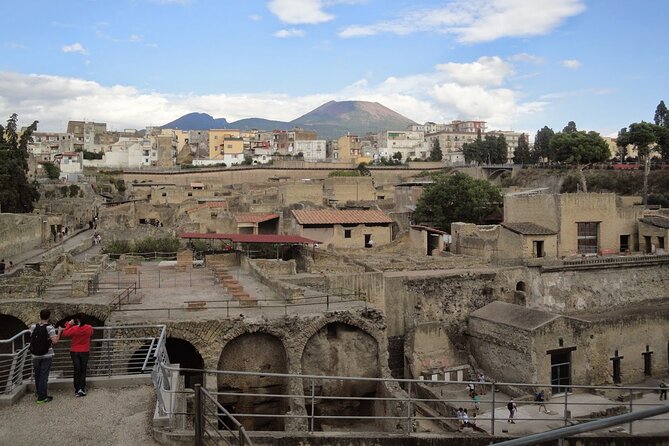
Pompeii is large enough to overwhelm you. With roughly two hours, you need to be selective rather than attempt every street and building. The driver can get you to the site, but the time inside is your own.
Start around the Pompeii Forum, the city’s political, economic, and religious center. The open space was surrounded by important buildings, including the Temple of Jupiter and the Basilica. It is the best place to understand Pompeii as a functioning city rather than a collection of scattered ruins.
From there, look for the House of the Vettii. This well-preserved home is known for refined frescoes and luxurious decoration. It gives you a sense of how wealthy Roman residents lived, and its rooms are more personal than the broad civic spaces around the forum.
The Pompeii Amphitheater is another strong stop. Dated to 70 BC, it is among the oldest surviving amphitheaters of its kind and hosted gladiator contests. Its scale helps you picture the public spectacles that brought residents together.
The Lupanar, an ancient brothel with erotic frescoes, offers a different view of Roman daily life. It is brief but memorable, and the images provide direct evidence of the services offered there.
The Stabian Baths show how much public bathing mattered in Roman society. You can see spaces connected with hot and cold bathing, along with pools and rooms that once served a regular social function.
If time permits, add the Teatro Grande and the nearby smaller theater area. The site’s theaters help round out the picture of Pompeii as a place for entertainment as well as politics, business, worship, and domestic life.
Two hours is enough for highlights, but not for a full study of Pompeii. You may need to choose between seeing more buildings and lingering over the ones that interest you most. That is where a private schedule helps, but it also means you should agree on the plan before entering.
Entrance tickets are not included. The instructions also ask you to coordinate the entrance time in Pompeii with the office before buying tickets. Do this early, because a delay at the entrance can eat into your limited time inside.
Herculaneum in two hours: Smaller, sharper, and easier to read
Herculaneum is less famous than Pompeii, but I find its compact scale appealing. The town was sealed by volcanic mud during the eruption of Vesuvius in AD 79, helping preserve domestic spaces and decorative details.
The House of Neptune and Amphitrite is one of the key stops. Its mosaic of Neptune and Amphitrite is paired with a luxurious nymphaeum decorated with shells and colored glass tiles. This is the sort of place where you will want to pause and inspect the color and pattern rather than simply walk past.
The Central Baths show another side of Roman life. Changing rooms, tubs, and mosaics reveal how public bathing worked and why these buildings mattered beyond simple washing.
The House of the Deer was one of Herculaneum’s grand residences. Its scale and decoration give you a useful counterpoint to the more modest rooms elsewhere in the town.
Herculaneum’s smaller footprint can make two hours feel more productive than two hours at Pompeii. You still need comfortable shoes and sensible clothing, but the visit is less about covering vast distances and more about reading the surviving rooms.
The tradeoff is that Herculaneum may feel less sweeping. Pompeii gives you the sense of an entire city laid out before you, while Herculaneum rewards close attention to individual homes and public buildings. Seeing both is worthwhile because the sites complement each other rather than repeat the same experience.
The vineyard stop and wine from Mount Vesuvius
The wine break changes the rhythm of the day. After several hours among stone streets and ancient walls, you visit a vineyard and taste wine grown on the slopes of Vesuvius.
The supplied details do not specify the winery’s name, tasting format, or food pairing, so you should not book this expecting a particular number of pours or a full meal. Lunch is not included. Think of this as a regional wine stop, not a guaranteed restaurant lunch.
Its value is partly geographic. You are tasting a product tied to the volcanic area you have been exploring. The visit gives you another way to understand the region, through its agriculture and local production rather than only through ancient monuments.
If wine is not a priority for you, this part may feel less essential than the ruins. If you enjoy regional food and drink, it is a welcome pause and a pleasant reason not to rush straight back to Naples.
More Herculaneum visits from Naples:
- Herculaneum: Skip-the-Line Guided Tour with Archaeologist
★ 4.8 · 3,439 reviews - Herculaneum Small Group Tour and Ticket With an Archaeologist
★ 5.0 · 994 reviews - Herculaneum: Skip-the-Line Entry Ticket with Audio Guide
★ 4.3 · 870 reviews - From Naples: Pompeii & Herculaneum with Archaeologist Guide
★ 4.8 · 665 reviews
What your driver does, and what your driver does not do
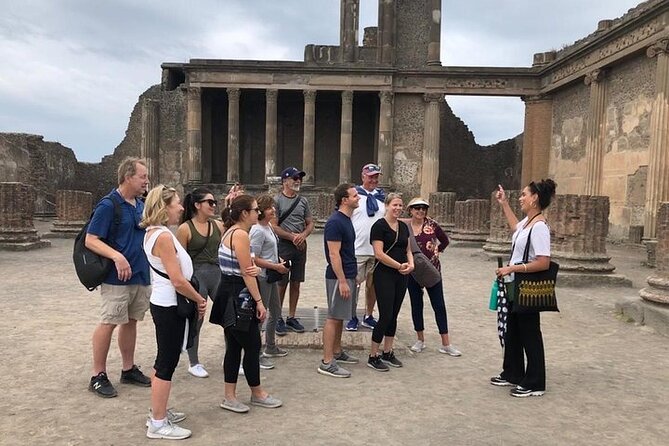
Your English-speaking driver handles the vehicle, tolls, parking, petrol, taxes, and transport between stops. Live commentary is provided on board, so the journey is not silent. Drivers Carmine and Francesco are specifically praised for being friendly, sharing information about Naples and the surrounding area, and speaking with enthusiasm about Vesuvius and local history.
That said, the tour information is clear: the driver does not escort you during your visits to the attractions. You are on your own inside Pompeii and Herculaneum.
This distinction matters. If you want detailed explanations of frescoes, building plans, religious practices, or the eruption, arrange a licensed archaeological guide separately. A guide can also help you use a short visit more efficiently.
If you prefer independence, the arrangement may suit you perfectly. You can move at your own pace, stop for photographs, and focus on the buildings that interest you without staying with a larger group. Just do not mistake on-board commentary for a guided walk through the ruins.
Transport from Naples, or a long day from Rome

The tour begins and ends at designated meeting points in Naples. Pickup and drop-off are included there, and the vehicle is air-conditioned. The private format means only your group participates, which is useful if you are traveling with family or friends and want to keep the day together.
The tour can also work as a day trip from Rome, but this requires careful timing. The suggested plan uses the Freccia Rossa fast train from Rome Termini at 7:35 a.m., arriving at Naples Centrale at 8:45 a.m. The driver can pick you up at Naples train station.
At the end of the day, you are driven back in Naples for a suggested return train at 6:30 p.m. That leaves little room for mistakes, so you should confirm the meeting details and allow time at Naples station. The tour provider says it will ensure a timely return to your port for this activity, but a Rome train connection still requires you to watch the clock.
For a Naples-based visitor, the schedule is easier. For a Rome-based visitor, the train plan adds a second layer of logistics and makes the day quite full. I would choose this option from Rome only if Pompeii and Herculaneum are a high priority.
Timing, tickets, clothing, and practical details
The full experience lasts about eight hours. The stated itinerary gives approximately two hours at Pompeii and two hours at Herculaneum, with the rest used for driving, pickup, drop-off, and the winery stop.
Entrance fees are not included. You need an identity card to enter the archaeological sites, so bring it with you. The instructions also advise coordinating your Pompeii entrance time with the office before purchasing tickets.
Dress casually, but dress for the weather. The tour operates in all weather conditions, and much of the archaeological visiting takes place outdoors. Comfortable shoes are a sensible choice, and sun protection or rain gear may be useful depending on the forecast.
The activity is near public transportation, and most people can participate. Pickup is offered from designated meeting points rather than every possible address, so confirm your exact pickup location before the day begins.
The provider offers free cancellation if you cancel at least 24 hours before the start time. Cancellations or changes made less than 24 hours in advance are not accepted for a refund. Also keep valuables with you, since the provider accepts no responsibility for personal items left in the vehicle.
Who gets the best value from this tour
I would recommend this for a family, two couples, or a small group that wants private transport without hiring a vehicle. The air conditioning, simple transfers, and freedom to explore independently are practical advantages in summer.
It also suits people who want both headline attractions in one day. Pompeii alone can fill a day, but adding Herculaneum lets you compare a large city with a smaller, more finely preserved town. The winery stop gives the day a welcome change of pace.
This is less suitable if your main goal is expert archaeological interpretation. Since the driver does not accompany you inside the sites, you must either research beforehand, use available information at the parks, or hire a guide at Pompeii.
The price is easier to justify when divided among several people. For a solo visitor, the private arrangement may be hard to defend financially. For a group that would otherwise arrange multiple train or taxi trips, the included vehicle, tolls, parking, fuel, and driver service provide real convenience.
Should you book this Pompeii and Herculaneum tour?
Book it if you value a private air-conditioned ride, want to see both archaeological parks, and like the idea of finishing with wine from the Vesuvius area. Drivers such as Carmine and Francesco can add useful local context during the road portions, and the private format gives you control over the day.
Think twice if you want a fully guided history lesson, a cheap excursion, or a generous amount of time at either site. The best way to improve this experience is to arrange entrance tickets carefully, bring your ID, and decide in advance whether you need a separate guide.
For a small group based in Naples, this is a convenient way to connect three very different parts of the region: the public life of Pompeii, the household details of Herculaneum, and the local wine grown near Vesuvius.
FAQ
How long does the tour last?
The experience lasts approximately eight hours.
Where does the tour start and finish?
It starts in Naples, in the Metropolitan City of Naples, and ends back at the meeting point.
Is pickup included?
Pickup and drop-off are included from designated meeting points.
Is this a private tour?
Yes. Only your group participates in the activity.
Are entrance tickets included?
No. Entrance fees for the archaeological sites are not included.
Is a guide included inside Pompeii and Herculaneum?
No. The driver provides commentary on board but does not escort you during visits to the attractions. A Pompeii guide can be hired at the site.
How much time is planned at Pompeii?
The planned visit to Pompeii lasts about two hours.
How much time is planned at Herculaneum?
The planned visit to Herculaneum lasts about two hours.
Is lunch included?
No. Lunch is not included.
Can I take this tour from Rome?
Yes. The suggested plan is to take the Freccia Rossa train from Rome Termini at 7:35 a.m. to Naples Centrale, arriving at 8:45 a.m. A return train from Naples at 6:30 p.m. is suggested.
Do I need identification?
Yes. An identity card is required to enter the archaeological sites, so bring it on the day of the tour.
More Wine Tours in Naples
- Authentic Naples Food Tour with 8+ Tastings of Pizza, Wine & More
★ 5.0 · 824 reviews - From Naples: Wine Tasting Tour on Vesuvius Slopes with Lunch
★ 4.5 · 330 reviews - Naples Scenic E-Bike Ride to a Local Vineyard with Meal
★ 5.0 · 288 reviews - Naples: Tour of Mt Vesuvius and Pompeii w/ Lunch & Wine tasting
★ 5.0 · 241 reviews
Just added around Naples
- Full-Day Tour of the Amalfi Coast and Pompeii from Naples★ 4.5 · 3 reviews
- The Ultimate Neapolitan Cooking Class with Local★ 5.0 · 3 reviews
- Visit in Pompeii – Naples Private Tour with Ada★ 5.0 · 3 reviews
- Transfer from Naples to Sorrento or viceversa★ 5.0 · 3 reviews
- Naples: Old City Center Street Food Tour with Spritz★ 4.7 · 3 reviews
- Naples: National Gallery of Capodimonte Tour★ 5.0 · 3 reviews
- Visit 2 wine producers with tasting and transportation included★ 5.0 · 3 reviews
- Naples: Mozzarella experience★ 5.0 · 3 reviews
Pompeii Tours, compared.
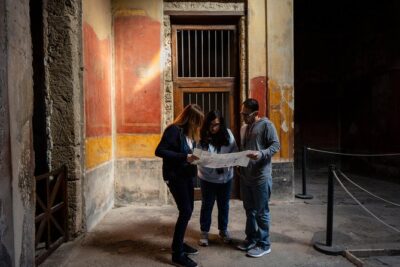
Pompeii & Mt.Vesuvius Day Tour from Naples with Pizza Lunch
Read our review →
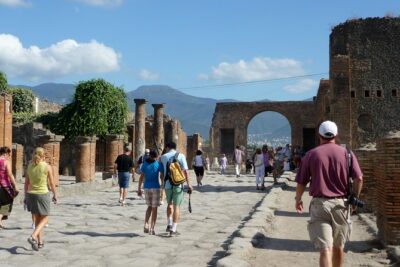
Pompeii & Mt Vesuvius All-Inclusive Small Group w/ Lunch
Read our review →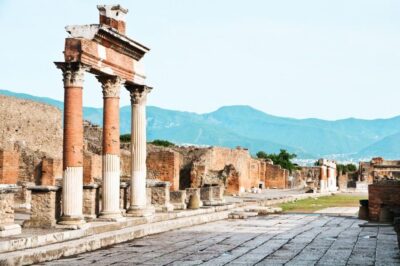
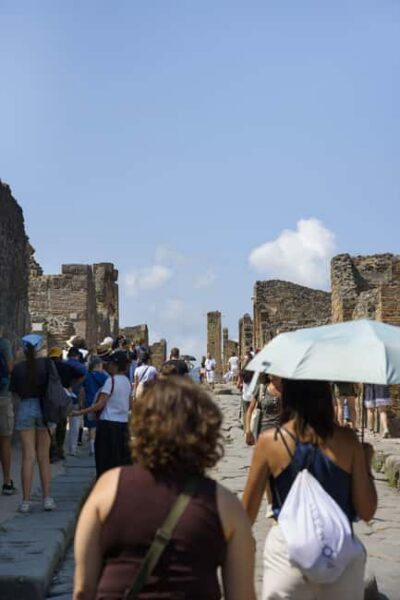

Pompeii & Amalfi Coast Full-Day Trip with Lunch
Read our review →Browse the lists this tour appears in