
Reviewed · HERCULANEUM TOURS
Private Walking Tour through the Historical City of Herculaneum
Herculaneum feels less like a field of ruins and more like a Roman town paused in time. Charred furniture, painted walls, marble floors, drainage channels, and even a wooden boat give the ancient city an unusual human scale. A private guide helps you spot those details instead of wandering past them.
I like the small-group format, which lets you ask questions and slow down for the houses that catch your eye. I also like the carefully chosen route, from the Forum Baths and Samnite House to the mosaic of Neptune and Amphitrite and the boat museum. The main catch is that the €16 archaeological park ticket is extra, and two hours goes quickly.
In This Review
- Key points at a glance
- Why Herculaneum feels different from Pompeii
- Meeting your guide at Corso Resina
- Forum Baths: a clear introduction to Roman daily life
- House of the Wooden Partition: rare furniture in a private home
- Neptune and Amphitrite: mosaics with real visual punch
- House of the Deer: marble, views, and social display
- Samnite House: an older layer of Herculaneum
- The ancient boat museum: a small stop with a powerful story
- College of the Augustales: frescoes in a public building
- House of the Black Hall: preserved decoration on the main street
- Antiquarium: optional objects after the ruins
- The pace, walking, and summer heat
- Transport from Naples and cruise timing
- Who gets the best value from this tour
- Should you book the Herculaneum private walking tour?
- FAQ
- How long does the private Herculaneum tour last?
- What is the price of the tour?
- How much is admission to the Archaeological Park of Herculaneum?
- Is the tour private?
- Is the tour offered in English?
- Where does the tour begin?
- Where does the tour end?
- Is transportation included?
- Can I cancel for a full refund?
Key points at a glance
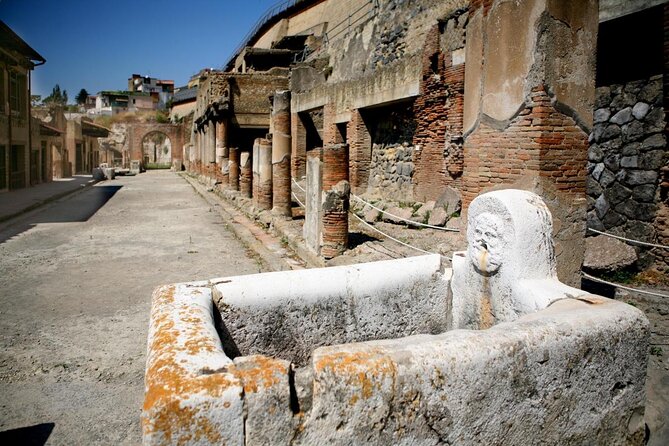
- See Roman wood preserved by the eruption: Visit the House of the Wooden Partition and view charred furniture that rarely survives at ancient sites.
- Follow a private route: Only your group takes part, so your guide can focus on your questions and adjust the pace.
- Compare Herculaneum with Pompeii: Guides such as Carmine put the two Vesuvian towns into context without turning the visit into a lecture.
- Look beyond the famous mosaics: The tour includes baths, frescoes, marble decoration, plumbing, jewelry, skeletons, and everyday objects.
- Allow for the separate entrance fee: The tour price is $102.12 per person, while entry to the archaeological park costs €16 per person.
- Plan for a walking visit: Wear sturdy, comfortable shoes and bring a hat, sunglasses, and water or another drink for warm weather.
Why Herculaneum feels different from Pompeii
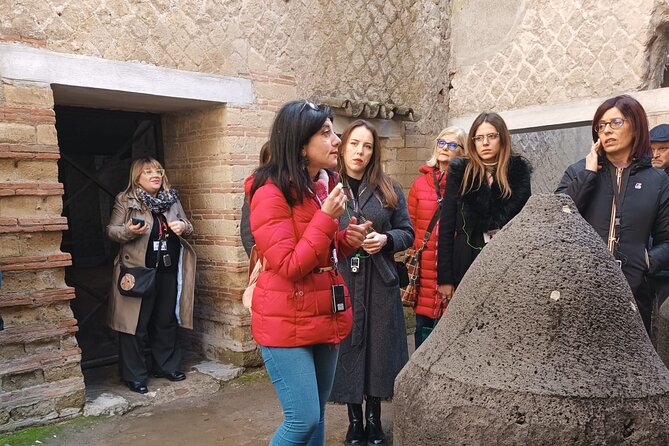
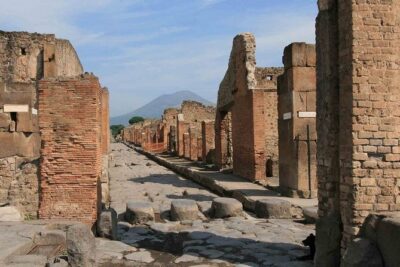
Herculaneum was also buried by Mount Vesuvius in AD 79, but the two sites offer different experiences. Pompeii is much larger and can feel like a broad urban map. Herculaneum is smaller, more compact, and known for the remarkable condition of many buildings and household objects.
That difference matters when you have only a few hours. You can spend less time crossing long stretches of exposed streets and more time studying a painted wall, a mosaic floor, or a Roman doorway. The tour is designed to take you quickly to major houses and public buildings, which suits anyone who wants a strong introduction without spending a full day at the site.
Much of ancient Herculaneum remains buried. What you see is only part of the city, but the excavated section contains a striking concentration of private homes from the imperial period. Their surviving decoration and fittings make it easier to picture daily life than at many ancient sites where only foundations remain.
A guide is especially useful here because the ruins do not always explain themselves. A worn threshold may be part of a carefully planned house. A high wall may once have carried a second story. A small object in a display case can tell you more about cooking, bathing, trade, or family life than a grand monument does.
More Herculaneum visits from Naples:
- Herculaneum: Skip-the-Line Guided Tour with Archaeologist
★ 4.8 · 3,439 reviews - Herculaneum Small Group Tour and Ticket With an Archaeologist
★ 5.0 · 994 reviews - Herculaneum: Skip-the-Line Entry Ticket with Audio Guide
★ 4.3 · 870 reviews
Meeting your guide at Corso Resina
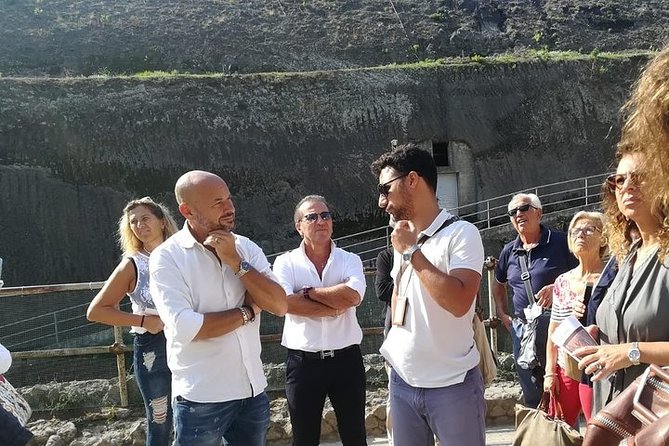
The tour begins at the entrance to the Archaeological Park of Herculaneum, at Corso Resina 187 in Ercolano. The activity ends at the same meeting point, so you do not need to arrange a second pickup within the town.
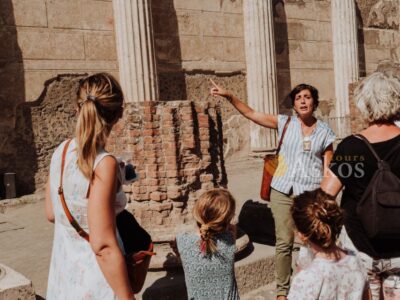
Your guide is a licensed archaeology professional, and the tour is offered in English. The guide may be Martina, Carmine, Francesca, Annalisa, Alessandro, Ernesto, Anna, Fabrizio, or another member of the team. The names vary, but the strongest pattern is clear: the guides focus on explaining the site in plain language and answering questions rather than simply reciting dates.
Several guides have also handled practical needs well. Francesca and other guides have adjusted the route for people with limited walking ability, while Ernesto has taken extra care with families using strollers. One guide stayed with a group until its arranged transport was confirmed, a small but useful touch if you are visiting as part of a cruise stop.
The entrance ticket is not included in the tour price. Budget €16 per adult for the Archaeological Park, with free entry for visitors under 18 who present a document. The advertised tour price is $102.12 per person, so the value depends heavily on your group size. For two people, it is a significant outlay. For a family or group of friends sharing a private guide, it becomes easier to justify.
Forum Baths: a clear introduction to Roman daily life
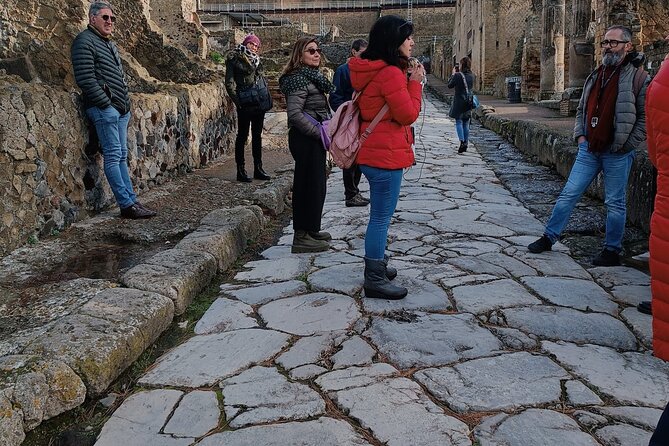
The Forum Baths are a smart first stop because they show how ordinary Roman routines were organized. The complex includes a gym, changing room, and rooms for warm and hot bathing.
You can expect about 15 minutes here. That is enough for a guide to explain the sequence of the bathing complex and point out how the rooms worked. The appeal is not just the surviving walls. It is the chance to see a public service that sat at the center of Roman social life.
This stop also helps you understand why Herculaneum was more than a collection of grand houses. People came to bathe, exercise, meet friends, and conduct business. If you are interested in engineering, look closely at how the building handled heat and water. If you prefer social history, ask your guide how public bathing fit into the Roman day.
House of the Wooden Partition: rare furniture in a private home
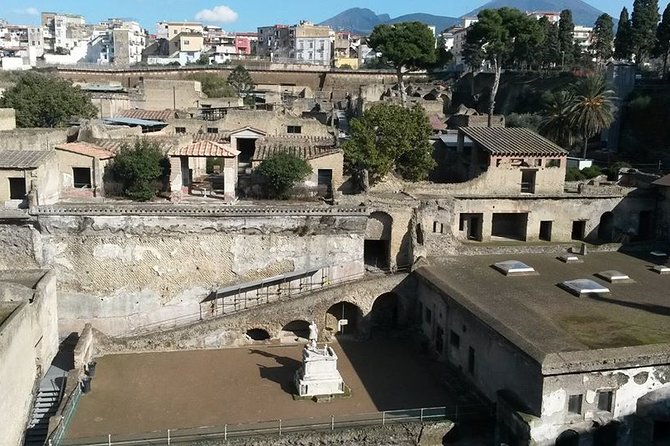
The House of the Wooden Partition is one of the tour’s most memorable stops. It is among the best-preserved homes in Herculaneum and is known for its charred wooden furniture.
Wood usually disappears over time, especially in an ancient city exposed to weather and later excavation. Here, the eruption created conditions that preserved carbonized wood. The result is an unusually direct look at domestic interiors.
The scheduled visit is about 15 minutes, but this is a good place to ask questions. The house helps you picture rooms as living spaces rather than empty shells. A door, screen, table, or partition can reveal how Roman homes divided public and private areas.
The term charred can sound bleak, but the objects are also practical and oddly familiar. They bring you closer to the people who lived here than a marble statue alone can. I would pay close attention to your guide’s explanation of how preservation affects what you see, since the darkened wood is part of the eruption story as well as the household story.
More walking tours in Naples:
- Naples: Street Food Walking Tour with Local Guide
★ 4.8 · 4,256 reviews - Naples Spanish Quarters Walking Tour Street Art, Folklore & Sweet
★ 5.0 · 797 reviews - Naples: Old Town Guided Walking Tour
★ 4.8 · 553 reviews - Naples: Panoramic Walking Tour with Funicular
★ 4.8 · 543 reviews
Neptune and Amphitrite: mosaics with real visual punch
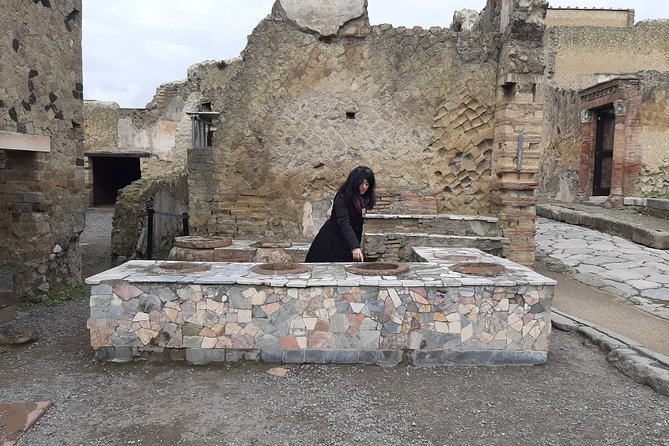
The House of Neptune and Amphitrite contains one of the most beautiful mosaics in the Vesuvian sites. The decoration gives this house its name and makes it a natural highlight on a short route.
Plan on about 15 minutes. Your guide can explain the mythological figures and the role of decoration in a Roman home. The mosaic was not simply a piece of art placed in a museum. It formed part of the house’s design, helping create an impression for residents and visitors.
This is one of the places where a private visit earns its keep. You can stop to study the small details, ask about the colors and materials, and hear how the room may have functioned. The house is popular for good reason, but a quick photo does not explain why it mattered to its owners.
House of the Deer: marble, views, and social display
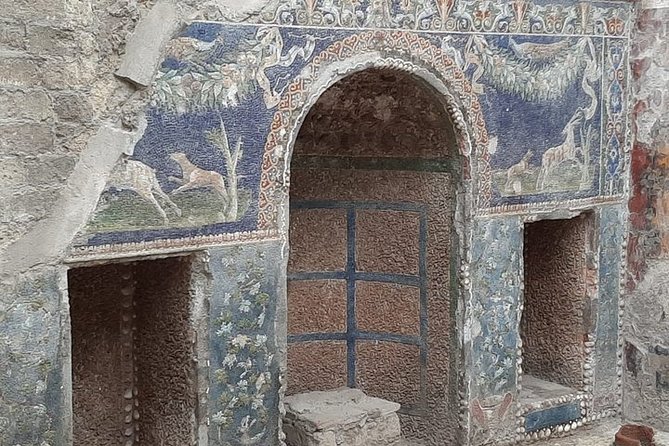
The House of the Deer occupies a striking position between the Gulf of Naples and Capri. Its setting would have been a major part of its appeal, and its decoration includes fine polychrome marble.
The scheduled time is about 10 minutes, so this is a brisk stop. Look for the contrast between the house’s setting and its interior display. Roman homeowners used architecture, views, and costly materials to show status, taste, and access to wealth.
The short visit means you may not have time to linger over every detail. If the view or marble catches your attention, tell your guide. A private tour gives you a better chance of shaping the explanation around what interests you instead of following a fixed group script.
Samnite House: an older layer of Herculaneum
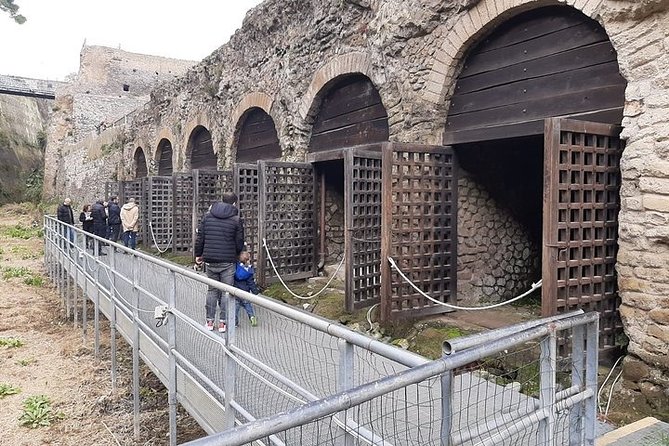
The Samnite House is one of the oldest homes in the excavated area. It is known for painted decoration in the First Pompeian Style, making it a useful stop for anyone curious about how Roman interiors changed over time.
The visit lasts around 10 minutes. That is enough to introduce the house and its wall decoration, though not enough for a long art-history lesson. Ask your guide to explain what makes the First Pompeian Style different from later Roman painting. The answer can help you read other decorated rooms during the rest of the tour.
This stop adds variety to the route. You move from a house famous for wood to one valued for early painted decoration, then to homes with mosaics and marble. That sequence shows how Herculaneum’s residences differed in age, wealth, and taste.
The ancient boat museum: a small stop with a powerful story
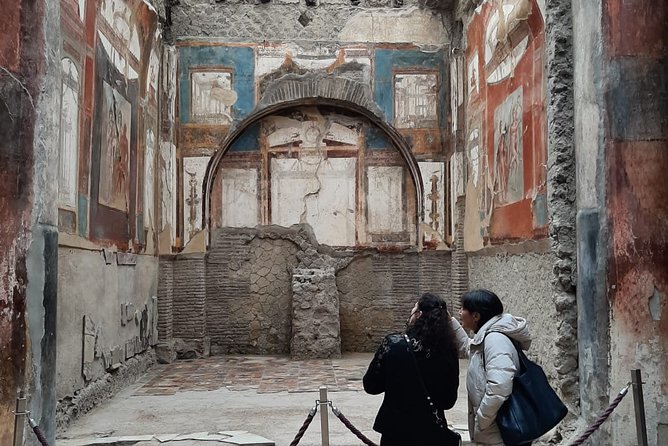
Outside the main archaeological area, a small museum displays an ancient charred Roman boat along with other finds. The visit is planned for about 15 minutes.
The boat is a strong reminder that Herculaneum was a coastal town, not an isolated inland settlement. It also adds a human element to the disaster. A boat is a working object, tied to movement, trade, fishing, and the water that shaped the town’s life.
The museum also contains other finds, including jewelry, everyday objects, and charred wooden furnishings. You might see objects that are easy to miss among the larger buildings, such as jewelry, storage vessels, statues, or household pieces. If you have already visited Pompeii, this smaller collection can provide a different sense of the eruption’s effect on people and property.
College of the Augustales: frescoes in a public building
The College of the Augustales is one of the few excavated public temples that can be visited. Its mythological frescoes make it a useful counterpoint to the private homes.
You will spend about 15 minutes here. The guide can help you separate religious, civic, and domestic spaces, which is not always obvious when you are walking through ancient ruins. The building also gives you a better idea of how public identity and Roman belief appeared in painted form.
The frescoes are important visually, but the setting matters just as much. After seeing several homes, entering a public building changes the scale of the story. Herculaneum was not only about private comfort and family life. It also had shared institutions and public rituals.
House of the Black Hall: preserved decoration on the main street
The House of the Black Hall overlooks one of Herculaneum’s main streets and reflects the Vitruvian model. Its frescoes are in notably good condition.
The stop lasts about 10 minutes. That is enough time to see the relationship between the street and the house, then study the decorated interior. Ask your guide what the Vitruvian model means in this context and how the house’s layout reflects Roman ideas about proportion and design.
This is another stop where context makes a difference. Without help, you may see a dark room with painted walls. With an explanation, you can begin to understand how the house was planned, how visitors might have moved through it, and why the decoration survived as such an important part of the building.
Antiquarium: optional objects after the ruins
At the Antiquarium, you may choose to visit the permanent and temporary exhibitions. The museum contains unusual finds such as jewelry, daily-use objects, and charred wooden furnishings.
The planned time is about 15 minutes, but the stop is at your discretion. That flexibility is welcome because some people want every artifact after walking the site, while others would rather finish outdoors or meet arranged transport.
If you are interested in the details of Roman life, do not dismiss this as a quick add-on. The buildings show where people lived, while the museum helps show what they used. Jewelry and everyday objects can fill in parts of the story that walls and mosaics cannot.
The pace, walking, and summer heat
The tour lasts about two hours, with individual stops ranging from 10 to 15 minutes. That makes the route efficient, but it also means the schedule is fairly full. You will see many highlights, yet you should not expect a slow study of every house.
The private format helps. You can ask for more time at a favorite stop, and the guide can skip details that do not interest you. Annalisa, Carmine, Martina, and other guides have been praised for keeping explanations lively, patient, and easy to follow. Some have also started early when conditions called for it.
Wear comfortable clothing and proper walking shoes. A hat and sunglasses are useful, especially on a hot day. One guide even carried water spray to help cool a group, but you should still arrive prepared for sun and heat.
Most people can take part, and service animals are allowed. The route can work for families, including groups with teenagers and strollers, though the site is still an archaeological area with uneven surfaces. If someone in your group has limited mobility, mention it ahead of time so the guide can shape the visit around that need.
Transport from Naples and cruise timing
The meeting point is in Ercolano, near public transportation. The tour itself does not include transport, so you must make your own way to the park.
A taxi from Naples is one option, especially if you have limited time. If you are arriving by cruise ship, allow room for the transfer from the port, the tour, and your return journey. One useful approach is to arrange a taxi driver for the return and keep the driver’s number, though that arrangement is separate from the tour.
Confirmation is sent within 48 hours, subject to availability. Since the experience is often booked well ahead, securing your preferred date early makes sense, particularly for cruise days or family visits.
The cancellation policy is straightforward: cancel at least 24 hours before the start time for a full refund. Changes or cancellations inside that window are not accepted for a refund. The deadline uses local time.
Who gets the best value from this tour
I would choose this experience if you want a clear introduction to Herculaneum and prefer a guide who can explain what you are seeing. It suits families, couples, small groups of friends, and cruise passengers with a limited window.
It is especially useful if you are choosing Herculaneum over Pompeii for one day. The compact site lets you see a lot in two hours, and guides such as Carmine can explain how the two towns differed and how both fit into the eruption of Vesuvius.
Families with teenagers can also get good value here. Martina has been praised for making the site engaging for young people, while other guides have stayed patient through many questions. The private setting avoids the stop-and-go feel of a large group.
I would hesitate if you want a full-day archaeological study or prefer to explore completely alone. Two hours is an introduction, not an exhaustive visit. You will also need to add the €16 entrance fee and arrange your own transport.
Should you book the Herculaneum private walking tour?
Book it if you care about understanding the site, not just photographing it. The strongest part of the experience is the guide’s ability to connect small finds, decorated rooms, public buildings, and daily routines into a readable story.
The private format is the real reason to pay more. You can ask questions, adapt the pace, and receive help with mobility or transport details. The tour has earned a 5.0 rating from 49 reviews, with 100 percent recommending it, and the repeated praise centers on clear English, patience, enthusiasm, and strong archaeology knowledge.
Just budget correctly. The $102.12 per-person price does not cover the €16 park ticket, and transport is also separate. If your group can share the private experience and you have only a morning or afternoon, this is a practical and worthwhile way to see Herculaneum.
FAQ
How long does the private Herculaneum tour last?
The tour lasts approximately two hours.
What is the price of the tour?
The listed price is $102.12 per person. The archaeological park entrance fee is separate.
How much is admission to the Archaeological Park of Herculaneum?
Admission costs €16 per person. Entry is free for visitors under 18 who present a document.
Is the tour private?
Yes. Only your group takes part in the activity.
Is the tour offered in English?
Yes. The experience is offered in English.
Where does the tour begin?
It begins at the Archaeological Park of Herculaneum, Corso Resina 187, 80056 Ercolano, Italy.
Where does the tour end?
The activity ends back at the meeting point.
Is transportation included?
No transportation is listed as included. You must arrange your own way to and from the archaeological park.
Can I cancel for a full refund?
Yes. You can cancel at least 24 hours before the experience start time for a full refund. Cancellations or changes made less than 24 hours before the start time are not accepted for a refund.
More Historical Tours in Naples
- Naples: Street Art & History Tour in the Spanish Quarters
★ 4.9 · 540 reviews - Naples: Historic Center and Sansevero Chapel Walking Tour
★ 4.8 · 208 reviews - 360 ° Naples. THE historic center of the city
★ 5.0 · 85 reviews - Naples Walking tour of the Historical Center
★ 5.0 · 75 reviews
Just added around Naples
- Full-Day Tour of the Amalfi Coast and Pompeii from Naples★ 4.5 · 3 reviews
- The Ultimate Neapolitan Cooking Class with Local★ 5.0 · 3 reviews
- Naples: Old City Center Street Food Tour with Spritz★ 4.7 · 3 reviews
- Visit in Pompeii – Naples Private Tour with Ada★ 5.0 · 3 reviews
- Transfer from Naples to Sorrento or viceversa★ 5.0 · 3 reviews
- Naples: National Gallery of Capodimonte Tour★ 5.0 · 3 reviews
- Visit 2 wine producers with tasting and transportation included★ 5.0 · 3 reviews
- Naples: Mozzarella experience★ 5.0 · 3 reviews
Herculaneum Tours, compared.
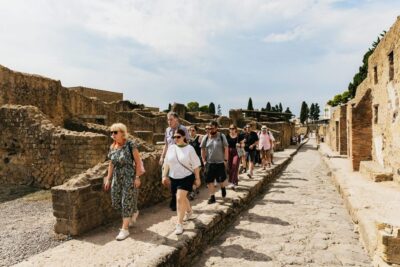
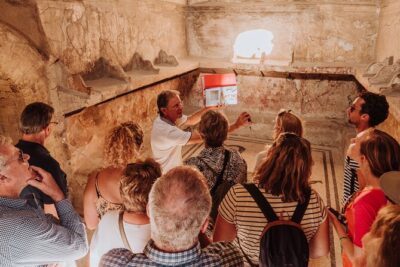
Herculaneum Small Group Tour and Ticket With an Archaeologist
Read our review →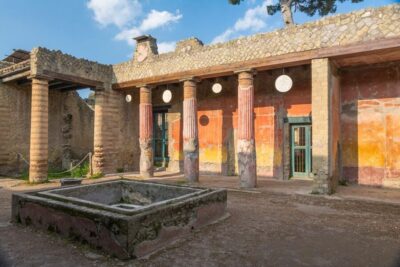
Pompeii & Herculaneum with Archaeologist Guide
Read our review →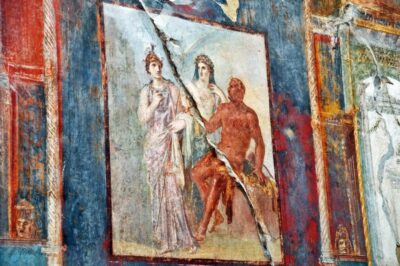
Pompeii, Herculaneum, & Vesuvius Full-Day Tour
Read our review →
Day Trip of Pompeii, Herculaneum and Vesuvius from Naples
Read our review →
Pompeii & Herculaneum Day Trip from Naples with Lunch
Read our review →Browse the lists this tour appears in