
Reviewed · HERCULANEUM TOURS
Secret Herculaneum: The Hidden Treasure of Ancient Roman Civilization
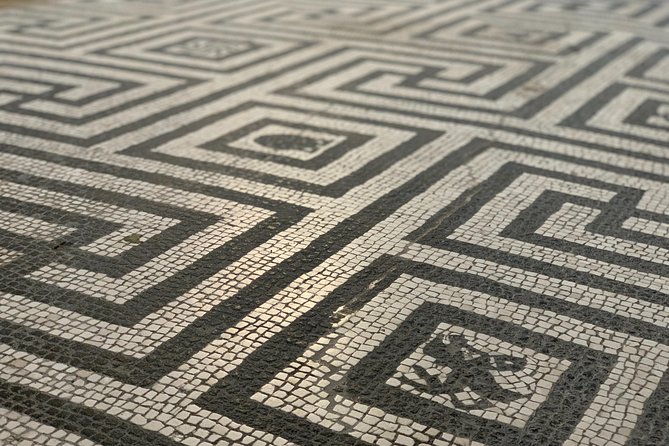
Herculaneum gives you one of the clearest looks at Roman home life anywhere near Naples. Mount Vesuvius buried this seaside town in 79 AD, preserving doors, bedrooms, painted walls, shops, mosaics, and even a wooden partition. The site is smaller than Pompeii, but its compact streets make the ancient town easier to grasp.
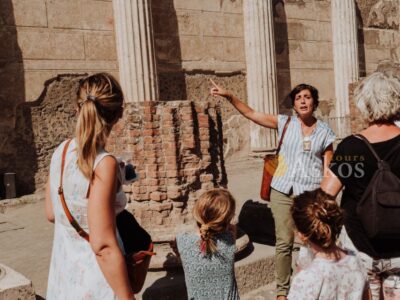
I like the small group limit of 10 people and the fact that an archaeologist leads the walk. I also like the focus on ordinary details, from household rooms to baths and workshops, rather than just grand monuments. The main drawback is that the €34.84 tour price does not include the €16 entrance ticket, and some visitors may find the steps and uneven paving tiring.
In This Review
- Key points before you book
- Why Herculaneum feels different from Pompeii
- Meeting at the Herculaneum ticket office
- The first streets and the ancient beach
- House of the Deer and the House of the Wooden Partition
- Neptune and Amphitrite’s mosaic
- The Samnite House and the main Roman street
- The Augustales and Casa d’Argo
- The boat pavilion and the final stop
- What the guides add
- Walking conditions and who will enjoy it
- Herculaneum compared with Pompeii
- Is the $34.84 tour good value?
- Should you book Secret Herculaneum?
- FAQ
- How long does the Herculaneum tour last?
- What language is the tour offered in?
- How much is the tour?
- Is the Herculaneum entrance ticket included?
- Where does the tour start?
- Where does the tour end?
- How many people can join the tour?
- Can wheelchair users take the tour?
Key points before you book
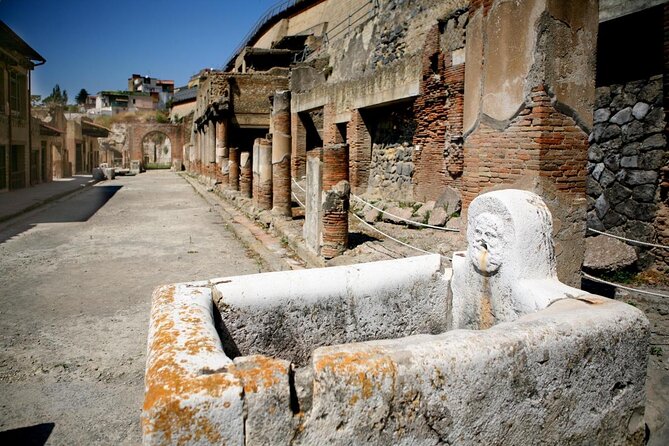
- You see exceptionally preserved Roman houses: Frescoes, mosaics, doors, bedrooms, and timber features remain unusually clear.
- An archaeologist leads the tour: Guides such as Luigi, Ornella, Riccardo, Raffaele, Corrado, and Arcangelo have been praised for clear explanations, humor, and enthusiasm.
- The route covers more than houses: You visit the ancient beach, a Roman boat pavilion, baths, the Augustales, and major streets.
- The site is compact: About two hours gives you a useful introduction without the long walks needed at Pompeii.
- Entry costs extra: Add €16 per person to the tour price.
- Good shoes matter: Expect paved streets, stairs, and uneven surfaces. Report wheelchair use at least 24 hours before the visit.
Why Herculaneum feels different from Pompeii
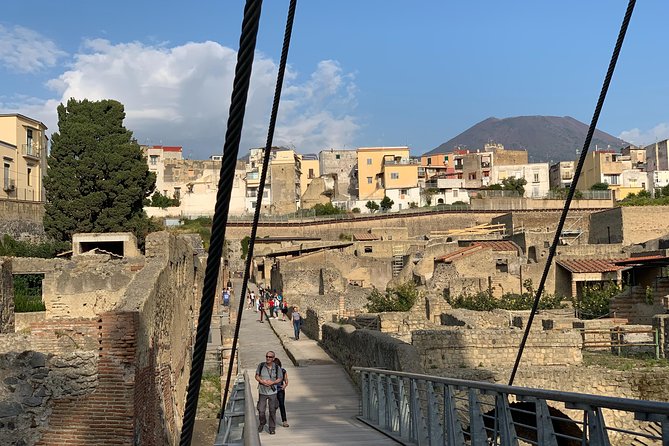
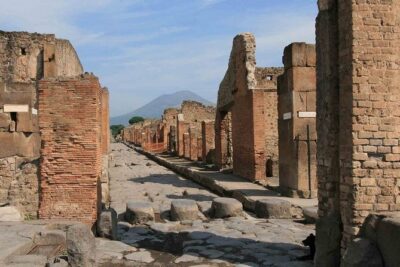
Pompeii is the larger name, but Herculaneum often makes a faster and more immediate impression. The town is smaller, and much of its urban and civic structure remains visible. You can look from one building to the next and understand how homes, public spaces, shops, and streets fit together.
The eruption did not preserve the two towns in exactly the same way. Herculaneum was buried under a dense volcanic material that helped protect wood, upper floors, furniture, and other delicate objects. That is why a visit here can feel unusually close to domestic Roman life. You are not simply looking at foundations. You can see thresholds, rooms, wall decoration, and pieces of construction that give the place scale.
I find the guided format especially useful here. Without an explanation, a painted room can look like a nice old wall. With the guide pointing out how the room worked, who used it, and how it fitted into the house, the remains become far easier to read.
The tour is offered in English and lasts about two hours. With a maximum of 10 people, you should have a better chance of hearing the guide and asking questions than on a large coach excursion. Still, one guide was described as soft spoken, so stand close if you have trouble hearing in open spaces.
More Herculaneum visits from Naples:
- Herculaneum: Skip-the-Line Guided Tour with Archaeologist
★ 4.8 · 3,439 reviews - Herculaneum Small Group Tour and Ticket With an Archaeologist
★ 5.0 · 994 reviews - Herculaneum: Skip-the-Line Entry Ticket with Audio Guide
★ 4.3 · 870 reviews
Meeting at the Herculaneum ticket office
The tour starts at the Herculaneum ticket office in Ercolano, at 80056 Ercolano, Metropolitan City of Naples. The activity ends back at the same meeting point, which makes it simple to continue your day from there.
The experience is near public transportation, but the supplied information does not specify a particular train, bus, or walking route. Check your own route before setting out, and allow time to find the ticket office. Confirmation arrives when you book.
The tour price is $34.84 per person, with the €16 park admission paid separately. That makes the total cost higher than the advertised tour price, so include both amounts when comparing options. For a small group led by a certified guide and archaeologist, the price can be good value if you want context rather than a self-guided walk.
The start time can affect the feel of the visit. One afternoon tour began at 4:00 p.m., when there was no ticket-office queue. A later start may help you avoid some crowds, but you should confirm the exact time and check the site’s opening arrangements before booking.
The first streets and the ancient beach
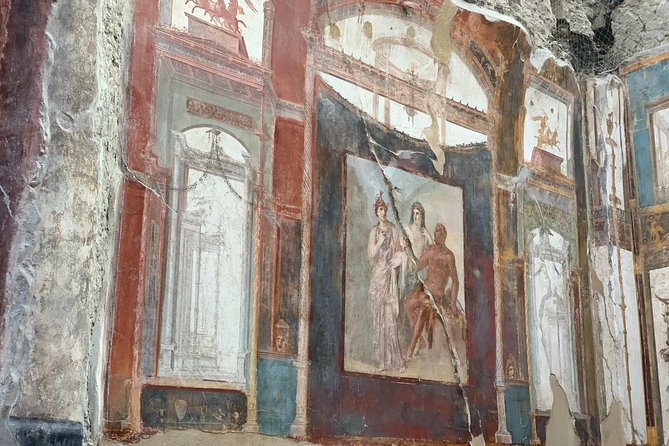
The walk begins inside the Archaeological Park of Herculaneum. Your guide introduces the town as a place of memory, then takes you along its paved streets and through the remains of daily life.
One of the most powerful early stops is the ancient beach. This is the waterfront of the Roman town, preserved below the modern city. Herculaneum was a seaside settlement, and seeing the old shoreline helps explain why the town had a different character from Pompeii.
The beach area also brings the eruption into sharper focus. The remains are not only about attractive houses. This is a place shaped by sudden destruction, and the waterfront connects the town’s pleasant setting with the disaster that ended it.
Next comes the terrace of Marcus Nonius Balbus. Herculaneum honored this important citizen and patron with a terrace overlooking the sea as it existed in Roman times. The stop adds a civic and political layer to the visit. You are not only seeing private homes, but also how the town honored people who supported it.
House of the Deer and the House of the Wooden Partition
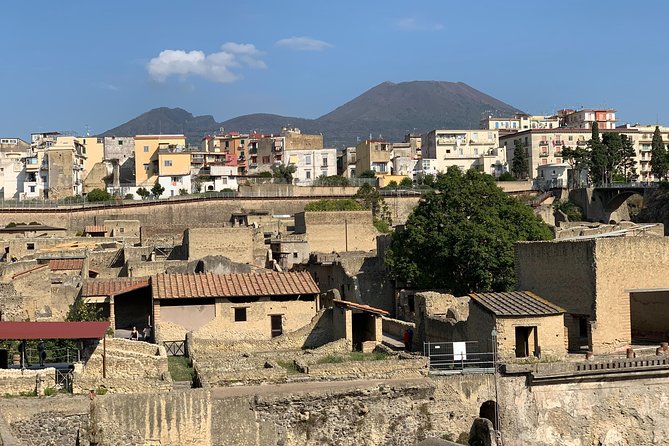
The House of the Deer is described as the finest and wealthiest residence found within the excavation area. Its name comes from two marble groups showing deer attacked by dogs.
The house helps you picture the lifestyle of Herculaneum’s prosperous residents. Look for the way the rooms relate to one another and notice the decorative choices. The guide’s role matters here, since the remains can otherwise seem like a series of disconnected walls and courtyards.
The House of the Wooden Partition offers a different kind of detail. Its name comes from a folding wooden structure that separated the atrium from the tablinum, the homeowner’s study. That surviving timber feature is valuable because it shows how a Roman house could be divided and managed in daily use.
I particularly like this stop because it moves the discussion away from marble and painted decoration. A wooden partition sounds modest, but it tells you about privacy, household routines, and the way rooms were used. Small surviving objects can sometimes explain a house better than its grandest room.
A completely different sort of day out of Naples:
- From Naples: Pompeii Ruins & Mount Vesuvius Day Tour
★ 4.3 · 11,459 reviews - From Naples: Sorrento, Positano and Amalfi Full-Day Tour
★ 4.6 · 10,988 reviews - From Naples: Sorrento, Positano & Amalfi Coast – Small Group Tour
★ 5.0 · 8,643 reviews - Naples: Catacombs of San Gennaro Entry Ticket & Guided Tour
★ 4.6 · 7,941 reviews
Neptune and Amphitrite’s mosaic
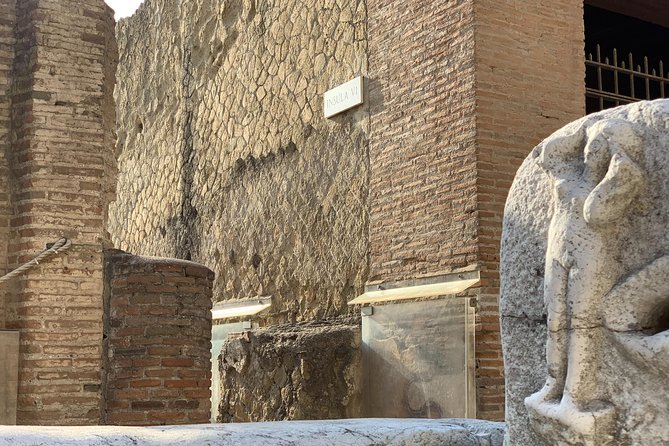
The House of Neptune and Amphitrite belonged to a wealthy merchant. Its best-known feature is the mosaic of Neptune and Amphitrite, the sea god and his companion.
This is one of the stops where a guide can save you time and confusion. You will want to look closely at the mosaic and the surrounding decoration, but the important point is how the artwork fitted into a private Roman home. The house reflects both wealth and the seaside identity of Herculaneum.
The tour does not treat the town as a row of famous images. It connects decoration to the people who lived there. That approach helps you understand why the house was built and decorated as it was, instead of simply collecting photographs of mosaics.
The Samnite House and the main Roman street
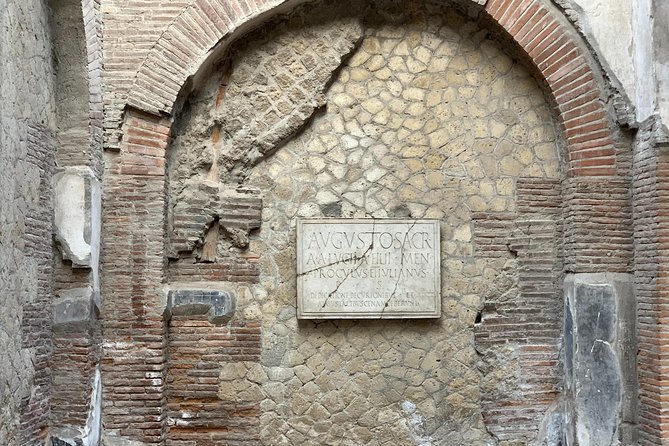
The Samnite House is considered one of the oldest dwellings at Herculaneum and is among the site’s best-known remains. Its age gives the guide a chance to discuss how the town developed over time.
From there, the route includes the decumanus maximus, the main street of a Roman city. Herculaneum’s most prestigious homes lined this important road. It is an easy place to see how the town was organized, with private life pressed close to public movement.
Walking along the street is one of the tour’s most useful moments. You can study the paving and building fronts while the guide explains how the town functioned. The experience is not just about standing in rooms. It is about seeing connections between streets, homes, public buildings, and the waterfront.
The Augustales and Casa d’Argo
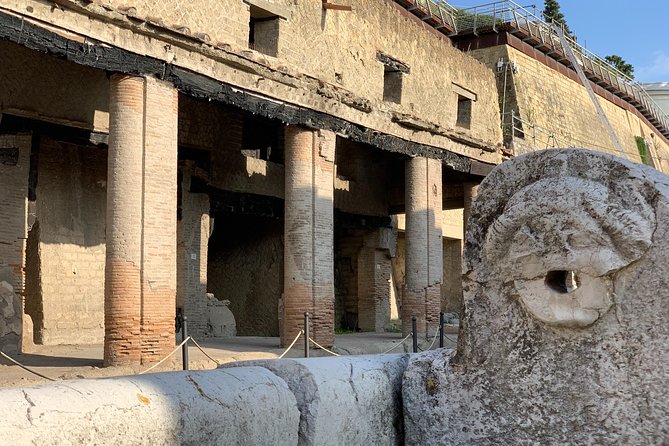
The College of the Augustales, also called the Sacellum of the Augustals, was used for rites honoring the Roman emperors. Priests known as Augustals tended the cult.
This stop gives you a look at Roman public religion and political loyalty. The buildings at Herculaneum were not only practical places for business and housing. Imperial worship formed part of civic life, and the Augustales shows how power and religion met in the town.
Casa d’Argo takes its name from a fresco that has disappeared. It once showed Argus Panoptes, a giant with a hundred eyes, in the peristyle.
The missing fresco is worth noting. Herculaneum is famous for preservation, but not everything survived intact. A guide can help you understand what is still visible and what is known from earlier evidence. That distinction keeps the visit honest and prevents you from imagining decoration that is no longer there.
The boat pavilion and the final stop
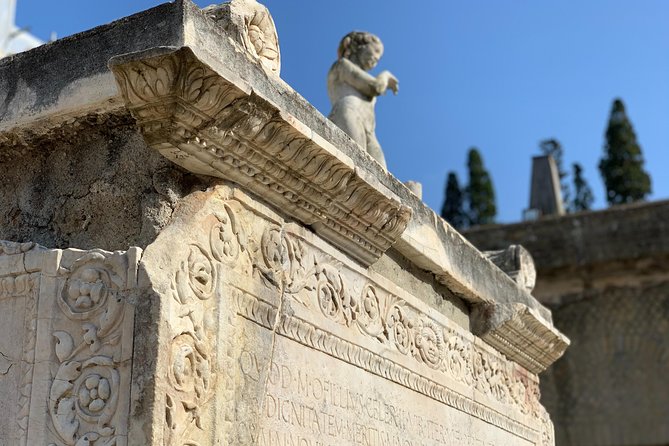
The boat pavilion holds a charred boat found along Herculaneum’s beach during excavations in 1981. It is one of the tour’s most unusual displays.
A preserved boat gives the eruption a physical scale that walls alone cannot provide. You can see that the catastrophe affected the waterfront as well as the houses inland. The stop also connects the town to the sea, trade, and movement.
This is a strong ending because it brings several parts of the visit together: the beach, the town’s coastal setting, the eruption, and the surviving objects. The tour then returns to the starting point.
The itinerary lists each major stop at about 10 minutes, but the overall experience lasts around two hours. That means the guide must keep the walk moving. You should expect a focused introduction to the site, not an exhaustive study of every open room.
What the guides add
The strongest part of this experience is the human explanation. Guides including Luigi, Ornella, Riccardo, Raffaele, Corrado, and Arcangelo have been praised for making the ancient town understandable, answering questions, and adding humor without losing the subject.
Riccardo is an archaeologist, which can add useful detail when you want more than a basic timeline. Ornella has been noted for her energy and personal approach in a group of only six. Corrado has a gift for explaining how people lived, while Raffaele has been praised for bringing the town and its residents to life.
These names do not guarantee who will lead your particular visit, so book this experience for the format and subject rather than for one specific person. The consistent advantage is having a trained guide who can explain what you are seeing in real time.
There is one practical issue. A small group may still wait if someone arrives late or fails to check in correctly. One group waited nearly 20 minutes for several people. Arrive early, confirm the meeting point, and make sure your booking details are in order.
Walking conditions and who will enjoy it
The site is compact and manageable, especially compared with Pompeii. You can see major houses and public buildings without spending the entire day crossing a huge excavation area.
That does not mean it is effortless. The streets are paved with ancient stone, and some houses involve steps or stairs. Wear sturdy walking shoes. If you use a wheelchair, report that need at least 24 hours before the visit so the operator can address access arrangements.
Most people can take part, but you should be comfortable walking and standing for roughly two hours. Because the route moves between open streets and preserved buildings, hearing the guide is important. Stay near the guide, especially if the group is spread out.
This tour suits first-time visitors, history fans, and anyone who wants a clear introduction before exploring alone. It is also a good fit if Pompeii feels too large for your schedule. If you prefer to wander silently and stop for as long as you wish, a self-guided visit may give you more freedom.
Herculaneum compared with Pompeii
I would not treat Herculaneum as a replacement for Pompeii. Pompeii is larger and offers a broader sense of a whole Roman city. Herculaneum is smaller, more concentrated, and often stronger for close views of homes and preserved household features.
The best choice depends on your time and interests. Choose Herculaneum if you want a manageable route, detailed domestic remains, and a guide who can explain the site as you go. Choose Pompeii if you want a longer day with more streets and a larger range of buildings.
If you have time for both, the contrast is useful. The guide also explains differences between the two towns, which helps you avoid treating every Roman ruin as the same.
Is the $34.84 tour good value?
The value depends on how much help you want. You pay $34.84 for the guided experience, then add the €16 entrance fee. In return, you get about two hours with a certified guide and archaeologist, in a group capped at 10 people.
For a site with painted rooms, mosaics, religious buildings, a historic street plan, and a preserved boat, that can be worthwhile. You are paying for interpretation, not transport or a full-day outing. The compact route also lets you see the main features without spending hours on foot.
I would be less enthusiastic if you already have strong archaeological knowledge and prefer to set your own pace. But for most first visits, the guide helps you notice details you might otherwise pass without understanding.
Should you book Secret Herculaneum?
I would book this tour if you want the ancient town explained clearly and you value a small group. The strongest reasons are the archaeologist-led format, the compact route, and the range of stops, from wealthy houses to the ancient beach and charred boat.
Plan for the separate admission fee, solid shoes, and a moving two-hour walk. Arrive early to avoid delays at check-in. If you want a focused look at Roman domestic life near Naples, this is a sensible and well-priced way to see Herculaneum.
Free cancellation is available if you cancel at least 24 hours before the start time. Changes made inside that window are not accepted, and poor weather may lead to a new date or full refund.
FAQ
How long does the Herculaneum tour last?
The tour lasts approximately two hours.
What language is the tour offered in?
The tour is offered in English.
How much is the tour?
The listed price is $34.84 per person.
Is the Herculaneum entrance ticket included?
No. Admission to the Archaeological Park costs an additional €16 per person.
Where does the tour start?
It starts at the Herculaneum ticket office in Ercolano, at 80056 Ercolano, Metropolitan City of Naples, Italy.
Where does the tour end?
The activity ends back at the meeting point.
How many people can join the tour?
The maximum group size is 10 people.
Can wheelchair users take the tour?
Wheelchair use must be reported at least 24 hours before the visit.
Just added around Naples
- The Ultimate Neapolitan Cooking Class with Local★ 5.0 · 3 reviews
- Full-Day Tour of the Amalfi Coast and Pompeii from Naples★ 4.5 · 3 reviews
- Naples: Old City Center Street Food Tour with Spritz★ 4.7 · 3 reviews
- Visit in Pompeii – Naples Private Tour with Ada★ 5.0 · 3 reviews
- Transfer from Naples to Sorrento or viceversa★ 5.0 · 3 reviews
- Naples: National Gallery of Capodimonte Tour★ 5.0 · 3 reviews
- Visit 2 wine producers with tasting and transportation included★ 5.0 · 3 reviews
- Naples: Mozzarella experience★ 5.0 · 3 reviews
Herculaneum Tours, compared.
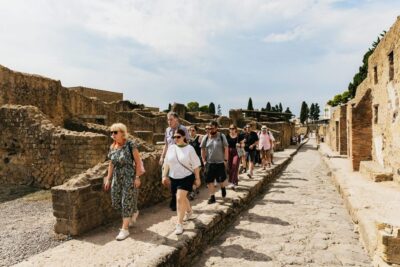
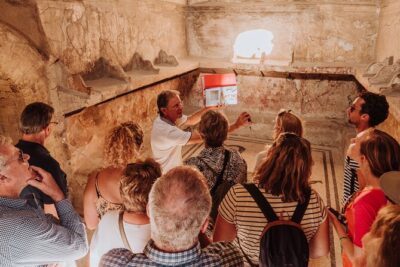
Herculaneum Small Group Tour and Ticket With an Archaeologist
Read our review →
Pompeii & Herculaneum with Archaeologist Guide
Read our review →
Pompeii, Herculaneum, & Vesuvius Full-Day Tour
Read our review →
Day Trip of Pompeii, Herculaneum and Vesuvius from Naples
Read our review →
Pompeii & Herculaneum Day Trip from Naples with Lunch
Read our review →Browse the lists this tour appears in