
Reviewed · HERCULANEUM TOURS
Herculaneum small group tour with an archaeologist – skip the line
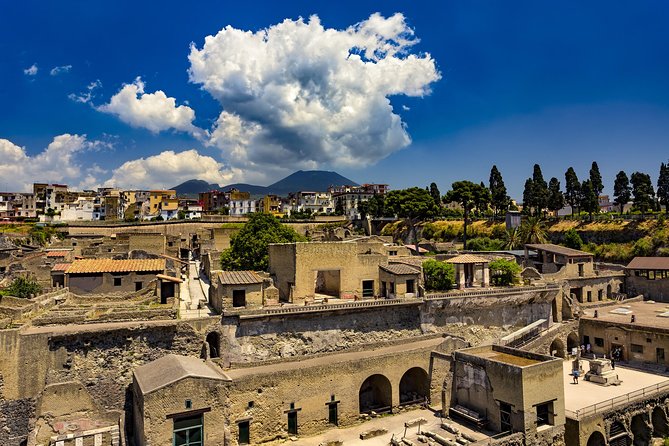
Herculaneum feels startlingly personal. The volcanic material preserved wooden doors, partitions, and furniture, not just walls and broken columns. In two hours, an archaeologist leads you through villas, bathhouses, shrines, and a house named for human remains, explaining how this Roman resort town met its fate.
I like the guaranteed skip-the-line entry, especially when you have limited time around Naples. I also like the small-group limit of 20, which gives you a fair chance to ask questions about carbonized objects, Roman homes, and the choices residents faced during the eruption. The main drawback is practical: one booking reported incorrect meeting information, so confirm the exact meeting point before you set out.
In This Review
- Key points to know before you book
- Why Herculaneum feels different from Pompeii
- What the two-hour format gives you
- Casa dei Cervi and the terrace of M. Nonius Balbus
- The College of the Augustales and the House of Telephus Relief
- The Wooden Partition and House of the Skeleton
- The Central Thermae and the House of the Black Hall
- Casa Sannitica and Casa del Bel Cortile
- The House of the Grand Portal
- The guide’s role and the strongest part of the experience
- Is $57.26 good value?
- Sun, timing, and practical preparation
- Who should book this Herculaneum tour?
- FAQ
- Where does the Herculaneum tour begin?
- Where does the tour end?
- How long does the experience last?
- Is admission to Herculaneum included?
- Is transportation included?
- How large is the tour group?
- Who leads the tour?
- Is the tour available as a mobile ticket?
- Can most people participate?
- What is the cancellation policy?
Key points to know before you book
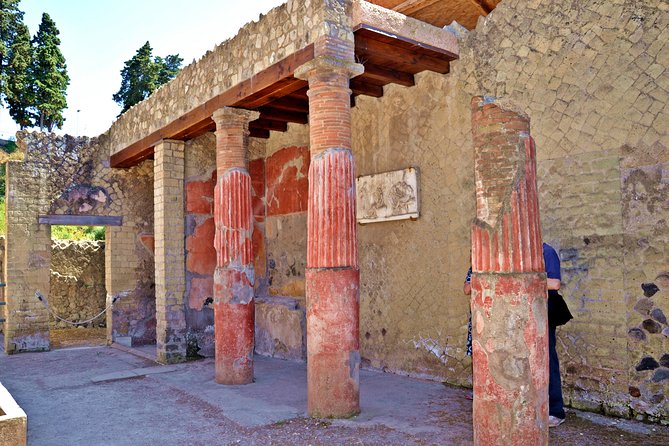
- Carbonized wood gives Herculaneum its power: The preserved wooden partition, doorposts, and other objects make the ancient town feel unusually close to everyday Roman life.
- An archaeologist leads the two-hour visit: You get historical context at each major building rather than simply walking past ruins.
- Skip-the-line admission is included: You do not need to buy a separate entry ticket for the archaeological park.
- The group is capped at 20 people: That is small enough for questions, though not a private tour.
- The route covers 11 important buildings and monuments: Expect villas, baths, a cult building, a terrace, and houses with different designs.
- Bring a hat or cap: Sun can be fierce in the exposed ruins, and one attendee strongly wished they had better protection.
Why Herculaneum feels different from Pompeii
Herculaneum was a smaller seaside resort town for wealthy Romans, and its destruction produced a different kind of archaeological record. Pompeii is famous for streets, public buildings, and broad city views. Herculaneum gives you more intimate details of domestic life.
The eruption buried the town under a thick layer of volcanic material. That helped preserve items that usually disappear: wooden doors, beams, partitions, and carbonized household objects. You can see the remains of a wooden screen in the House of the Wooden Partition and carbonized door elements in the House of the Black Hall.
That is the reason I find an archaeologist especially useful here. Without explanation, a dark strip of wood or a half-preserved doorway can be easy to miss. With context, it becomes evidence of how Roman homes were built and furnished.
The tour also asks you to think about human decisions. Some residents may have fled quickly, while others appear to have stayed or sought shelter. The guide’s job is not only to identify buildings, but to explain what the physical evidence suggests about the final hours of the town.
More Herculaneum visits from Naples:
- Herculaneum: Skip-the-Line Guided Tour with Archaeologist
★ 4.8 · 3,439 reviews - Herculaneum Small Group Tour and Ticket With an Archaeologist
★ 5.0 · 994 reviews - Herculaneum: Skip-the-Line Entry Ticket with Audio Guide
★ 4.3 · 870 reviews
What the two-hour format gives you
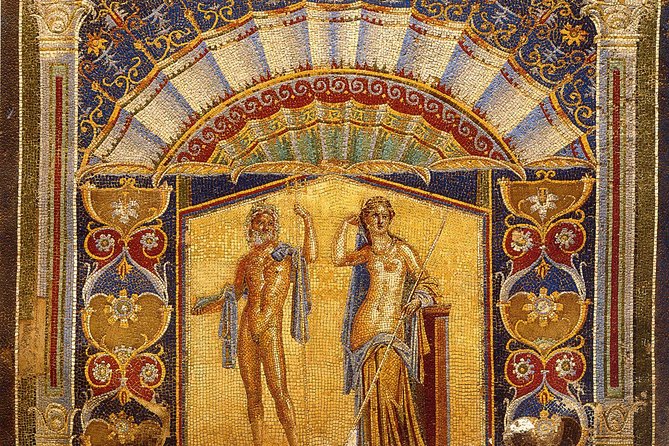
The stated duration is about two hours, and the route includes 11 stops. That makes this an efficient introduction rather than an exhaustive archaeological study. The listed stops allow roughly 10 to 15 minutes at each place, though the guide will need to manage the pace.
I like this format for a first visit. You see a wide range of Herculaneum without spending half the day trying to decide which lanes and buildings matter most. The tradeoff is that you may not linger as long as you wish at every fresco, courtyard, or architectural detail.
The group can include up to 20 people. That is not the same as a private visit, but it is more manageable than a large coach group. You should be able to hear the live guidance in most situations, and the tour specifically allows time for questions.
The meeting and ending point are both at the Archaeological Park of Herculaneum, on Corso Resina 187 in Ercolano. Transportation is not included. The site is near public transportation, so you need to arrange your own way to the entrance and allow enough time to find the correct meeting point.
Because one booking had trouble locating the tour after receiving incorrect information on the ticket, I would check the meeting instructions carefully before leaving Naples. If anything looks inconsistent, contact the provider, PompeiIn, rather than guessing at the gate.
Casa dei Cervi and the terrace of M. Nonius Balbus
The visit begins at Casa dei Cervi, or the House of the Deer. Its name comes from marble statues of stags or deer found in the peristyle, the open courtyard around which parts of a Roman house were arranged.
This is a useful opening stop because it introduces the scale and polish of Herculaneum’s private homes. You can begin to picture a residence designed not only for shelter, but also for display and entertaining. The deer sculptures gave the house a decorative focus, while the courtyard helped organize the rooms around it.
Next comes the terrace of M. Nonius Balbus. Balbus was one of the town’s leading benefactors, funding repairs and public construction. After his death, the city honored him with a funeral altar and a long inscription describing his honors.
This stop adds an important civic layer to the visit. Herculaneum was not only a collection of private mansions. It was a community shaped by wealthy patrons who paid for public works and gained lasting status in return. The inscription gives you a direct look at how public gratitude and personal reputation worked in Roman towns.
The College of the Augustales and the House of Telephus Relief
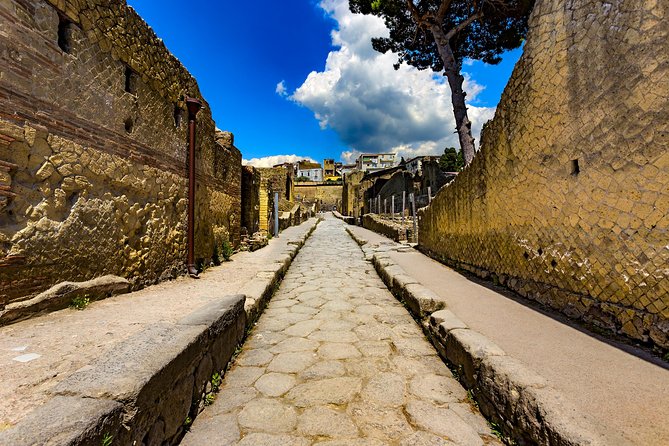
The College of the Augustales is linked to the worship of Emperor Augustus. Archaeologists believe it may have served as a center for the imperial cult and possibly as the local curia, or council building.
The site helps explain how politics and religion overlapped in the Roman world. Honoring the emperor was not simply a private matter of faith. It also connected local civic life with the wider Roman state. Listen closely here, since the building’s possible functions are part of the interest.
The House of the Telephus Relief is thought to have belonged to one of Herculaneum’s leading citizens, possibly M. Nonius Balbus. Its unusual feature is a private entrance to the nearby Suburban Baths.
That private access tells you something about comfort and status. Roman bathing was a public social activity, but the wealthy could also arrange their homes for greater privacy and convenience. The connection between the house and the baths gives the guide a chance to explain how domestic and public spaces worked together.
A few more Naples trips worth weighing up
- Mount Vesuvius: Skip-the-Line Ticket and Smart Digital Guide
★ 4.2 · 2,780 reviews - From Naples: Pompeii Skip-the-Line Entry Ticket and Tour
★ 4.4 · 2,753 reviews - Pompeii: Skip-the-Line Entry Ticket with Audio Guide or Tour
★ 4.1 · 1,364 reviews - From Naples: Pompeii Guided Tour with Skip-the-Line Tickets
★ 4.8 · 1,171 reviews
The Wooden Partition and House of the Skeleton
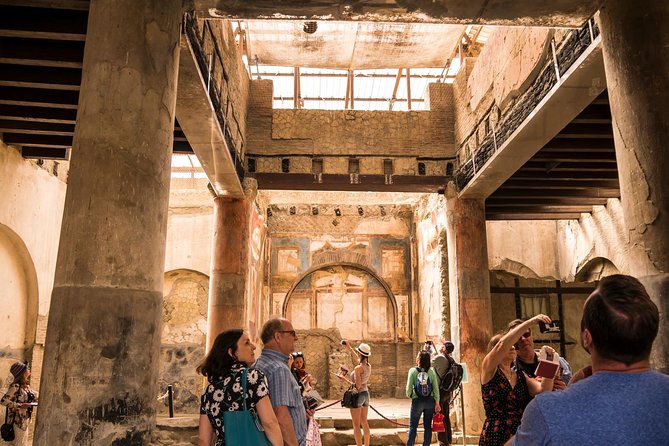
The House of the Wooden Partition is one of the most important stops for anyone interested in ordinary building materials. Its elegant wooden screen survived in carbonized form, a rare survival after the eruption.
Stone ruins can make ancient life seem distant. A wooden partition brings it closer. It reminds you that Roman interiors included doors, screens, furniture, and fittings that usually vanish from archaeological sites. This is a place where a few preserved fragments can tell you more than a grand but empty wall.
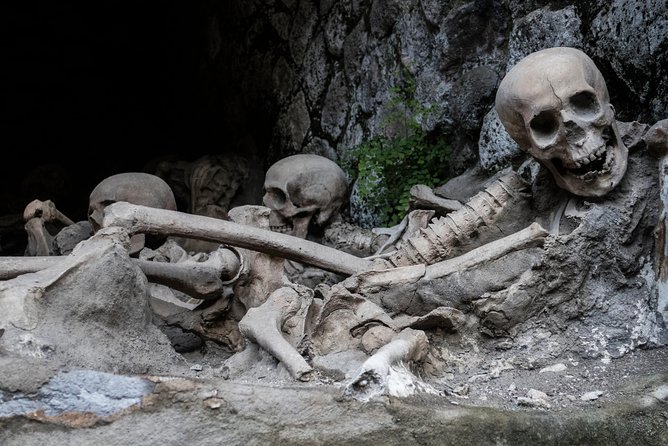
The House of the Skeleton takes its name from human remains found in an upper-floor room in 1831. The building may have formed by joining three smaller structures.
The name is blunt, and the subject is sobering. This is not a place to treat the eruption as a special effect. Human remains show that Herculaneum was a lived-in town whose residents faced a sudden and deadly event. Your guide can help separate documented evidence from speculation about exactly how people responded.
These two houses work well together. One shows the fragile objects that survived. The other shows the human cost behind the ruins.
The Central Thermae and the House of the Black Hall
The Central Baths were built around the start of the first century AD. As was common at the time, the complex had separate entrances and bathing areas for men and women.
Bathhouses were central to Roman social life. They were places to wash, exercise, meet people, and spend leisure time. A guided explanation helps you see the baths as a daily institution rather than a set of rooms with old floors.
The House of the Black Hall was one of Herculaneum’s more luxurious mansions. Its monumental entrance still preserves carbonized remains of the doorposts and lintel.
This is another stop where preservation changes the mood of the visit. A doorway is a simple object, but it marks the boundary between public street and private home. The surviving wooden elements show that the eruption captured parts of the entrance as they were, rather than leaving only stone foundations.
The name comes from the Black Hall, a richly appointed part of the house. You may find that the details are easiest to appreciate when the guide points out how the entrance, rooms, decoration, and status of the owner fit together.
Casa Sannitica and Casa del Bel Cortile
Casa Sannitica has a layout associated with the Samnites, an ancient people linked to the mountainous region of central Italy. Its atrium is surrounded by a gallery with Ionic columns, and the rooms retain fresco decoration.
The house is useful for understanding that Herculaneum was not built in one uniform style. Its architecture reflects older local traditions as well as Roman influence. The gallery around the atrium also shows how a home could frame its central space with columns and upper-level circulation.
Casa del Bel Cortile is unusual because it lacks the standard atrium arrangement. Instead, it has a courtyard with a staircase and stone balcony.
I like this stop because it breaks the rhythm of grand atriums. Roman houses were adaptable, and this design shows that residents worked with different layouts. The stone balcony and courtyard also give you a clearer sense of how people moved through the home.
At both houses, the frescoes and architectural details reward patience. Still, the two-hour schedule means you should focus on the guide’s main points rather than trying to study every decoration.
The House of the Grand Portal
The House of the Grand Portal sits near the center of the archaeological area. It includes several rooms, colonnades, frescoes, and charred wooden remains.
Its name points to the entrance, but the broader value is the combination of features in one residence. You can see how a substantial home used decoration, columns, rooms, and wooden fittings to create a formal impression.
By this stage of the route, the earlier stops begin to connect. You have seen a benefactor’s public honors, religious and civic space, baths, luxury homes, unusual floor plans, and evidence of working materials. The Grand Portal gives you one more example of how much survives when volcanic material seals a town in place.
The guide’s role and the strongest part of the experience
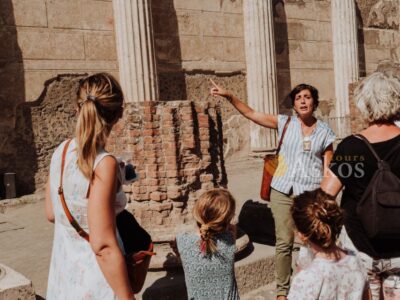
The most highly praised feature of this tour is the archaeologist’s explanation. The experience works best when you listen for the links between objects and larger questions: How did homes function? Why did a town honor one benefactor so heavily? What does carbonized wood reveal? Why were some residents able to reach shelter while others did not?
The guide is also valuable because Herculaneum’s buildings can look confusing at first. Rooms open onto courtyards, houses combine older and newer structures, and the names do not always tell you what you are looking at. A specialist can turn a complicated layout into a story you can follow.
The tour is not designed as a quiet, self-paced museum visit. You will move with the group and share the guide’s attention. If you already have a strong background in Roman archaeology, you may prefer more time alone. If this is your first visit, the two-hour structure gives you a useful framework.
There is a small museum connected with the archaeological experience, but it was described as limited and not a major source of additional information. Plan to treat the guided walk through the site as the main event.
Is $57.26 good value?
At $57.26 per person, this tour costs more than simply entering an archaeological site alone, but the price includes admission and two hours of guidance from a licensed archaeologist. The value depends on how much explanation you want.
For me, the strongest part of the price is not the skip-the-line feature by itself. Herculaneum is compact enough that the guide’s interpretation matters more than simply getting through the entrance quickly. The preserved wood, household layouts, baths, inscriptions, and human remains make more sense when someone explains what you are seeing.
A group of up to 20 keeps the cost below a private tour while still allowing questions. You should not expect a fully tailored route or unlimited time at one house, though. The price makes most sense for a first visit, a short stay in Naples, or anyone who wants structure without paying for a private archaeologist.
The tour does not cover transportation or personal expenses. Include the cost and time of reaching Ercolano when planning your day.
Sun, timing, and practical preparation
Much of the archaeological park is exposed. Bring a cap or hat, as the sun can be harsh, and use sensible sun protection. Comfortable footwear is also a practical choice for walking through an ancient site, though the supplied information does not specify the exact surface conditions.
Allow time to reach the Archaeological Park of Herculaneum at Corso Resina 187. The start and finish are at the same location, and public transportation is nearby. The tour does not provide transport from Naples.
Confirmation arrives at booking, and mobile tickets are accepted. Check the ticket details against the actual meeting instructions, since incorrect information created confusion for one booking.
Most people can participate, and the maximum group size is 20. Free cancellation is available if you cancel at least 24 hours before the start time. Changes or cancellations inside that window are not accepted for a refund.
Who should book this Herculaneum tour?
Book it if you want the main sights explained by an archaeologist and prefer an organized route. It suits first-time visitors, people staying in Naples, and anyone who wants to understand the domestic details that make Herculaneum different from a larger ruin site.
It is also a good choice if you have only two hours and do not want to spend your visit choosing among dozens of buildings. The skip-the-line entry removes one chore, while the group limit keeps the experience reasonably focused.
Think twice if you want to explore entirely at your own pace, spend a long time photographing one house, or avoid group schedules. Also be ready to handle your own transportation and double-check the meeting information.
For most visitors interested in Roman daily life, I would book it. The preserved carbonized wood, unusual house plans, baths, and personal evidence of the eruption deserve more than a quick walk past. An archaeologist-led route helps you notice the details that are easiest to miss, and the included admission makes the price reasonable for a short, focused introduction.
FAQ
Where does the Herculaneum tour begin?
The tour begins at the Archaeological Park of Herculaneum, Corso Resina 187, 80056 Ercolano, Italy.
Where does the tour end?
The tour ends at the Archaeological Park of Herculaneum, the same place where it begins.
How long does the experience last?
The guided visit lasts approximately two hours.
Is admission to Herculaneum included?
Yes. Skip-the-line admission fees are included in the tour price.
Is transportation included?
No. Transportation to and from the archaeological park is not included.
How large is the tour group?
The group can include a maximum of 20 people.
Who leads the tour?
A licensed archaeologist guide provides two hours of live guidance.
Is the tour available as a mobile ticket?
Yes. The experience provides a mobile ticket.
Can most people participate?
Yes. The activity information says that most people can participate.
What is the cancellation policy?
You can cancel for a full refund up to 24 hours before the experience begins. Cancellations or changes made less than 24 hours before the start time are not accepted for a refund.
Just added around Naples
- Full-Day Tour of the Amalfi Coast and Pompeii from Naples★ 4.5 · 3 reviews
- The Ultimate Neapolitan Cooking Class with Local★ 5.0 · 3 reviews
- Naples: Old City Center Street Food Tour with Spritz★ 4.7 · 3 reviews
- Visit in Pompeii – Naples Private Tour with Ada★ 5.0 · 3 reviews
- Transfer from Naples to Sorrento or viceversa★ 5.0 · 3 reviews
- Naples: National Gallery of Capodimonte Tour★ 5.0 · 3 reviews
- Visit 2 wine producers with tasting and transportation included★ 5.0 · 3 reviews
- Naples: Mozzarella experience★ 5.0 · 3 reviews
Herculaneum Tours, compared.
Herculaneum Small Group Tour and Ticket With an Archaeologist
Read our review →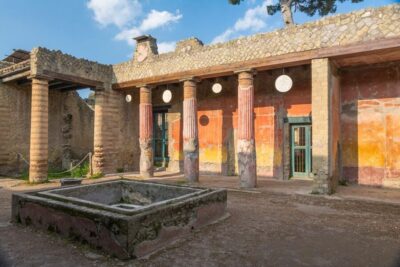
Pompeii & Herculaneum with Archaeologist Guide
Read our review →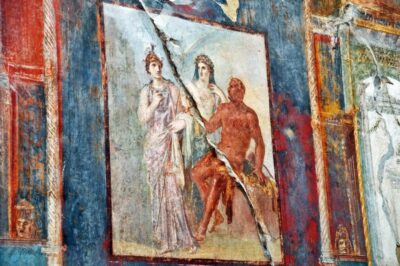
Pompeii, Herculaneum, & Vesuvius Full-Day Tour
Read our review →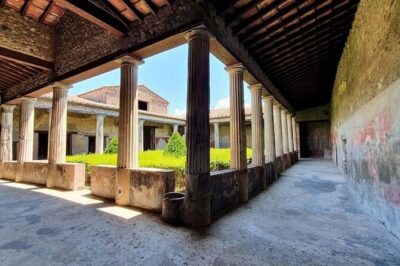
Day Trip of Pompeii, Herculaneum and Vesuvius from Naples
Read our review →
Pompeii & Herculaneum Day Trip from Naples with Lunch
Read our review →Browse the lists this tour appears in