
Reviewed · POMPEII TOURS
Private Tour to Pompei and Herculaneum: Skip-the-line Tickets
Pompeii and Herculaneum tell two very different stories of the eruption of Mount Vesuvius. Pompeii feels like a full Roman town, with its forum, bars, shops, brothel, grand houses, and amphitheater. Herculaneum is smaller and more refined, with remarkable wooden features, mosaics, frescoes, and household objects. Together, they offer a rare look at ordinary life, not just temples and emperors.
I like the private vehicle and pickup, which remove the hassle of arranging trains, taxis, and local transport. I also like having a guide at both sites, especially since the ruins can seem confusing without someone to explain who lived in each house and how the streets worked. The main drawback is the long day and the amount of walking, with lunch not included.
In This Review
- Key points at a glance
- Why seeing Pompeii and Herculaneum together works
- Leaving Naples with Mount Vesuvius ahead
- Pompeii: three hours on Roman streets
- The Forum and public life
- Shops, food, and entertainment
- Pompeii’s grand houses
- The lunch break between the two parks
- Herculaneum: smaller site, sharper details
- Wood, fabric, and food
- Water, baths, and social position
- The value of a private archaeological guide
- Is $148 a fair price?
- Timing, walking, and what to bring
- Who should book this Pompeii and Herculaneum tour?
- Should you book it?
- FAQ
- Where does the tour begin?
- How long does the experience last?
- Are Pompeii and Herculaneum admission tickets included?
- Is transportation private?
- Is a guide included at both archaeological parks?
- Is lunch included?
- What places are visited in Pompeii?
- What places are visited in Herculaneum?
- Can I cancel for a full refund?
Key points at a glance
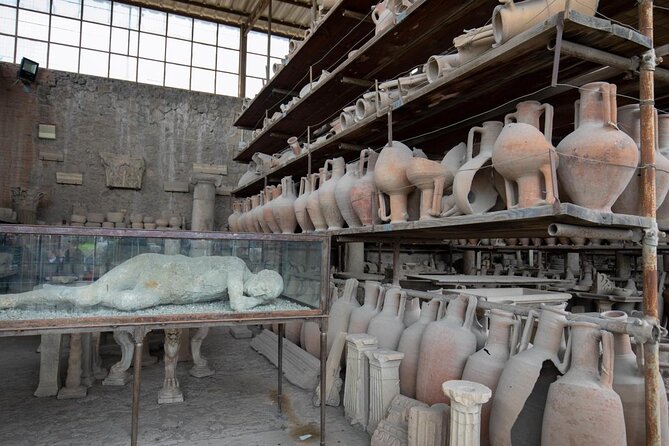
- Two cities, two kinds of preservation: Pompeii gives you a broad Roman street plan, while Herculaneum preserves more wood, fabric, food, and household detail.
- Private pickup from Naples: You travel in an air-conditioned vehicle with WiFi and parking included.
- About three hours at Pompeii: The visit covers major sights such as the Forum, Baths, Lupanar, House of the Vettii, House of the Faun, and Amphitheatre.
- About two hours at Herculaneum: Expect a shorter but highly detailed visit focused on houses, mosaics, frescoes, water systems, and baths.
- Skip-the-line admission: Tickets for both archaeological parks are included, helping reduce time spent waiting.
- A guide who can adapt the visit: Glauko is one guide associated with this experience, and his ability to explain background and answer questions was singled out as a major strength.
Why seeing Pompeii and Herculaneum together works
If you have time for only one ancient site near Naples, Pompeii is the larger and more famous choice. But the pairing with Herculaneum gives you a better picture of Roman society.
Pompeii was a working commercial town. Its streets led past shops, drinking counters, public baths, private homes, and places of entertainment. You can think of it as a Roman town where business and daily errands happened in public view. The scale matters. After several hours, you begin to understand how people moved through the city, where they gathered, and how homes fitted into the wider community.
Herculaneum offers a different mood. It was wealthier and more elegant, and its remains often feel more intimate. The volcanic material that covered it helped preserve wooden structures, fabrics, food, mosaics, and painted decoration. Instead of only looking at a street or a wall, you may find yourself studying the details of a private room or the remains of a household water system.
That contrast is the real value of the day. Pompeii shows you an entire urban system. Herculaneum brings you closer to the texture of domestic life.
More ways to see Pompeii:
- From Naples: Pompeii Ruins & Mount Vesuvius Day Tour
★ 4.3 · 11,459 reviews - Naples or Sorrento: Full-Day Pompeii and Mount Vesuvius Tour
★ 4.6 · 4,235 reviews - Pompeii & Mt.Vesuvius Day Tour from Naples with Pizza Lunch
★ 4.0 · 2,901 reviews
Leaving Naples with Mount Vesuvius ahead

The day begins with pickup from your accommodation in Naples. Your private driver takes you toward the archaeological parks in an air-conditioned vehicle, with WiFi on board and parking fees covered.
The drive also gives you a useful change of pace after time in Naples. You can look toward Mount Vesuvius and consider the force that changed these towns in a single eruption. The vehicle is especially useful if your group does not want to manage several train connections or work out the return journey after a tiring day on foot.
The tour lasts about seven to eight hours, including transportation, the two site visits, and a lunch break. That is a full day, so I would avoid scheduling an evening activity that requires you to arrive at a precise time. The private format gives your group more control than a large coach tour, though the basic timing still depends on the two parks and the transfer between them.
Pompeii: three hours on Roman streets
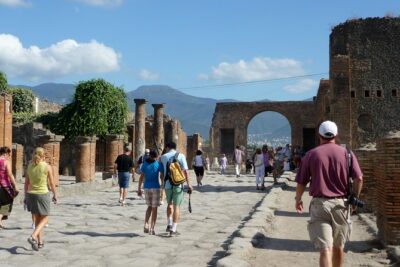
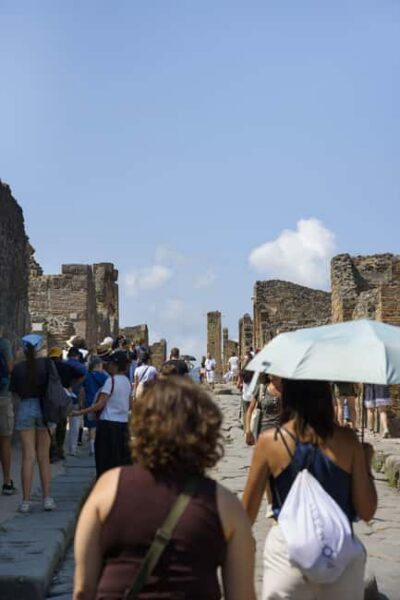
Pompeii is where the scale of the disaster becomes clear. Ash covered streets, walls, homes, public buildings, and objects, leaving a town that can be read almost like a Roman map.
Your guide leads a visit of about three hours. That is enough time to see important parts of the park, but not enough to inspect every open building. This is one reason a private archaeological guide matters. You need someone to help decide what deserves your attention instead of wandering from ruin to ruin without a sense of place.
The Forum and public life
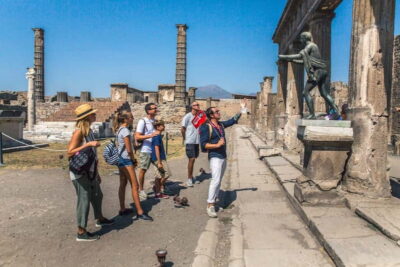
The Forum was the center of civic and public activity. It helps you understand Pompeii as a functioning town rather than a collection of isolated ruins. Your guide can connect the open public spaces with the people who used them, from citizens and senators to workers and slaves.
The Baths show another side of Roman life. Public bathing was not simply about washing. It was part of the social rhythm of the town, and the rooms give you a clearer idea of how Roman public buildings were designed and used.
More Herculaneum visits from Naples:
- Herculaneum: Skip-the-Line Guided Tour with Archaeologist
★ 4.8 · 3,439 reviews - Herculaneum Small Group Tour and Ticket With an Archaeologist
★ 5.0 · 994 reviews - Herculaneum: Skip-the-Line Entry Ticket with Audio Guide
★ 4.3 · 870 reviews - From Naples: Pompeii & Herculaneum with Archaeologist Guide
★ 4.8 · 665 reviews
Shops, food, and entertainment
Pompeii is unusually good at showing the commercial side of ancient life. The town had shops, bars, restaurants, and other businesses, so the visit is not limited to grand monuments.
You will also see the Lupanar, the famous brothel. It is a small but memorable stop, and your guide can place it within the wider setting of Pompeii’s streets and businesses. The site can be direct in its presentation, so families may want to consider how comfortable their children will be with that subject.
The Amphitheatre gives the day another strong visual point. It connects the town with gladiatorial entertainment and shows how large public events fitted into Roman life. Walking through an ancient street and then seeing the place where crowds gathered makes the history easier to picture.
Pompeii’s grand houses
The House of the Vettii and the House of the Faun reveal the differences between public and private life. Their size and decoration point to wealth, social rank, and the importance of receiving visitors at home.
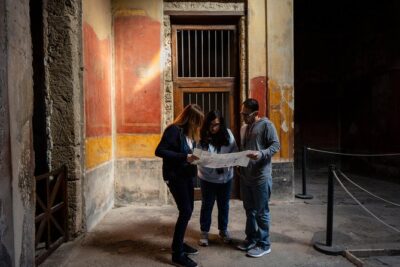
The preserved paintings, courtyards, and decorative details are more useful when you understand how the rooms were arranged. A guide can explain what you are looking at and why a particular mosaic or fresco mattered. Without that context, Pompeii can become a long walk past beautiful but difficult-to-read walls.
The park is large, and the ground can be uneven. Wear sturdy shoes and expect sun exposure. A moderate level of fitness is required, and you should be ready to walk for much of the three-hour visit.
The lunch break between the two parks
After Pompeii, the schedule includes a break for lunch before the short drive to Herculaneum. Lunch is not included in the tour price, so plan to pay for your own meal.
Because no restaurant or fixed lunch stop is specified, you should treat this as a flexible pause rather than a planned food experience. Ask your driver or guide about the timing on the day. Keep the meal sensible and not too long, since Herculaneum still deserves a full two hours.
The break is welcome. Pompeii is physically demanding, and a pause lets you rest before the second archaeological park. It also gives you a chance to ask questions that came up during the first visit.
Herculaneum: smaller site, sharper details
Herculaneum takes about two hours and rewards close attention. It was a wealthier town than Pompeii, and its preservation often feels more immediate because so many household details survived.
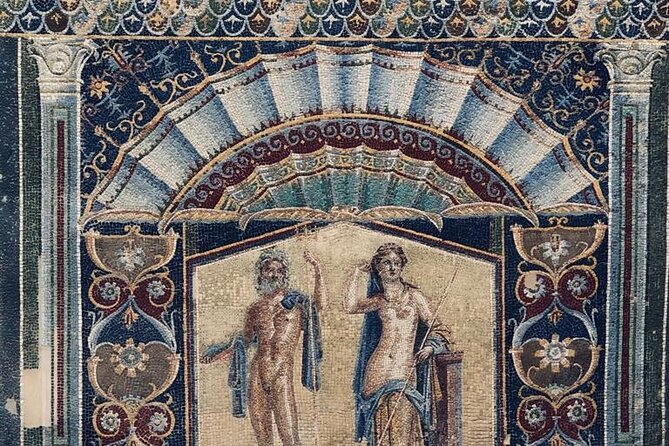
The House of the Mosaic Atrium is one of the key stops. The House of Neptune and Amphitrite is another, with mosaics and painted decoration that show the care wealthy residents gave to their homes. The thermal baths add a public dimension and help balance the private houses.
Wood, fabric, and food
Pompeii is often remembered for its streets and buildings. Herculaneum can surprise you with smaller surviving objects and materials. Wooden structures, fabrics, and even food were preserved by the different volcanic deposits that covered the town.
These details make the ancient residents feel less distant. A wall can tell you how a building was made, but a household object hints at how people actually lived. This is where a guide’s explanation adds real value. You can ask about construction, storage, decoration, and the daily use of rooms rather than simply taking photographs.
Water, baths, and social position
The town’s water system shows the level of planning behind Roman urban life. The baths show how engineering, leisure, and social contact came together in one part of town.
Your guide also discusses the social and economic structure of Herculaneum. That context helps you compare the town with Pompeii. The two sites were not identical communities, and their houses and surviving objects reflect different levels of wealth and different patterns of life.
Herculaneum is smaller, but do not mistake smaller for easier. You still walk across ancient surfaces, and the remaining walls can require careful attention. Two hours is a reasonable length for a guided introduction, especially after three hours at Pompeii, but you may want more time if you are an especially serious archaeology fan.
The value of a private archaeological guide
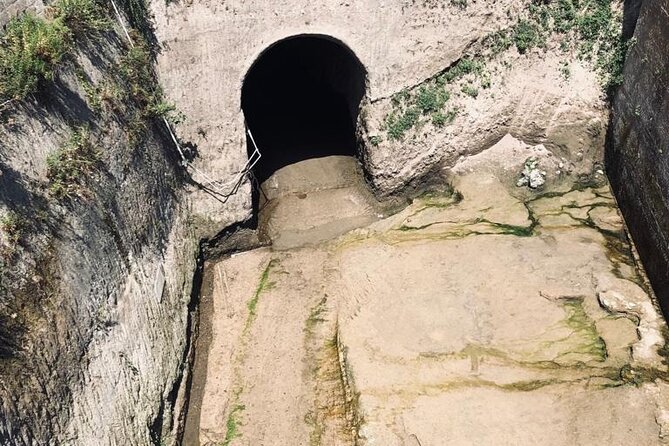
The strongest reason to choose this tour rather than arrange the sites on your own is the guide. Pompeii and Herculaneum contain a huge amount of information, and signs alone cannot always explain how one building relates to another.
The tour uses a guide at both archaeological parks, with the visit tailored to your group’s interests. If you care about architecture, Roman engineering, art, gladiators, social classes, or household life, you can ask for more attention in that direction.
Glauko is one guide connected with the experience. His ability to provide background, answer detailed questions, and make a small group easy to hear was specifically praised. That matters in open-air ruins, where a large group can quickly lose the guide’s voice.
A private tour also means only your group participates. That does not guarantee a particular guide or a particular route, but it does give you a more personal setting than a large shared excursion. You can ask questions without waiting for a long line of people to finish taking photographs.
Is $148 a fair price?
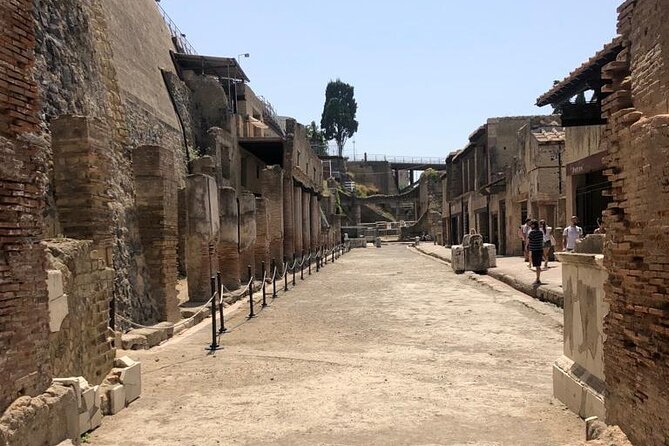
The listed price is $148 per person. Value depends on your group size and what you would otherwise spend on transport, admission, and guiding.
The price includes private transportation, pickup, parking, WiFi in the vehicle, skip-the-line tickets for both parks, and guided visits at Pompeii and Herculaneum. Lunch is extra. If you value convenience and want both sites explained properly, the package can make sense because the main practical pieces are handled in one booking.
It is less attractive if you mainly want a cheap transfer or prefer to explore at your own pace. Independent visitors may spend less, but they would need to arrange their own transport, buy admission, manage timing, and interpret two large archaeological sites without the same built-in guidance.
The private format is most useful for couples, families, and small groups who want to stay together. A group that can split the cost of a private vehicle may find the arrangement easier to justify than a solo visitor.
Timing, walking, and what to bring
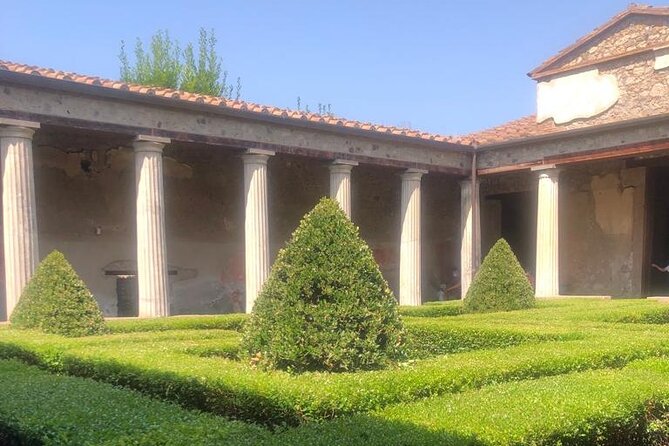
Plan for a substantial amount of walking. The experience requires a moderate level of physical fitness, and both parks include ancient streets and uneven surfaces.
Wear comfortable shoes with good support. Bring water, sun protection, and a phone with enough battery for a mobile ticket and photographs. The exact weather can change your comfort level, so light layers are sensible.
The skip-the-line tickets reduce waiting at admission points, but they do not turn the archaeological parks into quick stops. You still need time to walk between buildings and listen to the guide. The real benefit is keeping more of your limited day for the sites themselves.
Since the tour begins and ends in Naples, pickup is a major convenience. The return drive gives you time to rest, but you may be tired by the time you reach your accommodation. Keep the evening simple.
Who should book this Pompeii and Herculaneum tour?
I would choose this experience if you are staying in Naples and want both parks in one day without handling the transport yourself. It suits first-time visitors who want the major sights explained clearly, as well as families or friends who value a private setting.
It is a particularly good fit if you like asking questions. The guide can adjust the focus to your interests, and the smaller group makes it easier to hear and participate.
I would think twice if you dislike long walking days, want a leisurely lunch, or prefer to spend an entire day at only one site. Pompeii alone can fill many hours, and Herculaneum deserves more than a rushed glance. This tour gives you a strong comparison, but the schedule is active.
The experience has a rating of 4.8 from six submitted ratings, including praise for the guide’s explanations, the ease of a small group, and the emotional effect of seeing ancient streets, buildings, and artwork still in place. The most useful takeaway is simple: the guide and the Pompeii-Herculaneum comparison are the main reasons to book, not just the transport.
You can cancel for a full refund up to 24 hours before the start time. Cancellations or changes made within 24 hours are not refunded or accepted, and the experience requires a minimum number of participants.
Should you book it?
Book this tour if you want a well-organized private day from Naples, prefer to see Pompeii and Herculaneum together, and value clear explanations over wandering alone. The included tickets, pickup, parking, and private vehicle remove several common headaches.
Skip it if your priority is the lowest possible cost, a slow pace, or a long lunch. For everyone else, this is a practical way to compare Pompeii’s broad commercial town with Herculaneum’s finely preserved homes and objects in one memorable day.
FAQ
Where does the tour begin?
The day begins with pickup from your accommodation in Naples.
How long does the experience last?
The full experience lasts approximately seven to eight hours.
Are Pompeii and Herculaneum admission tickets included?
Yes. Skip-the-line admission tickets for both archaeological parks are included.
Is transportation private?
Yes. The tour includes private transportation in an air-conditioned vehicle.
Is a guide included at both archaeological parks?
Yes. The experience includes a guided tour in Pompeii and a guided tour in Herculaneum.
Is lunch included?
No. The itinerary includes a lunch break, but lunch is not included in the price.
What places are visited in Pompeii?
The Pompeii visit includes major sights such as the Forum, Baths, Lupanar, House of the Vettii, House of the Faun, and Amphitheatre.
What places are visited in Herculaneum?
Key Herculaneum sights include the House of the Mosaic Atrium, House of Neptune and Amphitrite, and the thermal baths.
Can I cancel for a full refund?
Yes. You can cancel at least 24 hours before the experience start time for a full refund. Cancellations made less than 24 hours before the start time are not refunded.
More Skip the Line in Naples
- Mount Vesuvius: Skip-the-Line Ticket and Smart Digital Guide
★ 4.2 · 2,780 reviews - From Naples: Pompeii Skip-the-Line Entry Ticket and Tour
★ 4.4 · 2,753 reviews - Pompeii: Skip-the-Line Entry Ticket with Audio Guide or Tour
★ 4.1 · 1,364 reviews - From Naples: Pompeii Guided Tour with Skip-the-Line Tickets
★ 4.8 · 1,171 reviews
Just added around Naples
- Full-Day Tour of the Amalfi Coast and Pompeii from Naples★ 4.5 · 3 reviews
- The Ultimate Neapolitan Cooking Class with Local★ 5.0 · 3 reviews
- Naples: Old City Center Street Food Tour with Spritz★ 4.7 · 3 reviews
- Visit in Pompeii – Naples Private Tour with Ada★ 5.0 · 3 reviews
- Transfer from Naples to Sorrento or viceversa★ 5.0 · 3 reviews
- Naples: National Gallery of Capodimonte Tour★ 5.0 · 3 reviews
- Visit 2 wine producers with tasting and transportation included★ 5.0 · 3 reviews
- Pompeii Vesuvius Sorrento from Naples★ 5.0 · 3 reviews
Pompeii Tours, compared.
Pompeii & Mt.Vesuvius Day Tour from Naples with Pizza Lunch
Read our review →
Pompeii & Mt Vesuvius All-Inclusive Small Group w/ Lunch
Read our review →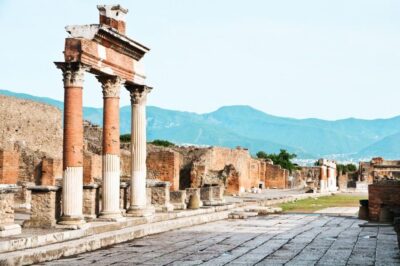

Pompeii & Amalfi Coast Full-Day Trip with Lunch
Read our review →Browse the lists this tour appears in